DbcultAccessing Vault...
6.1/10
Senior Film Conservator
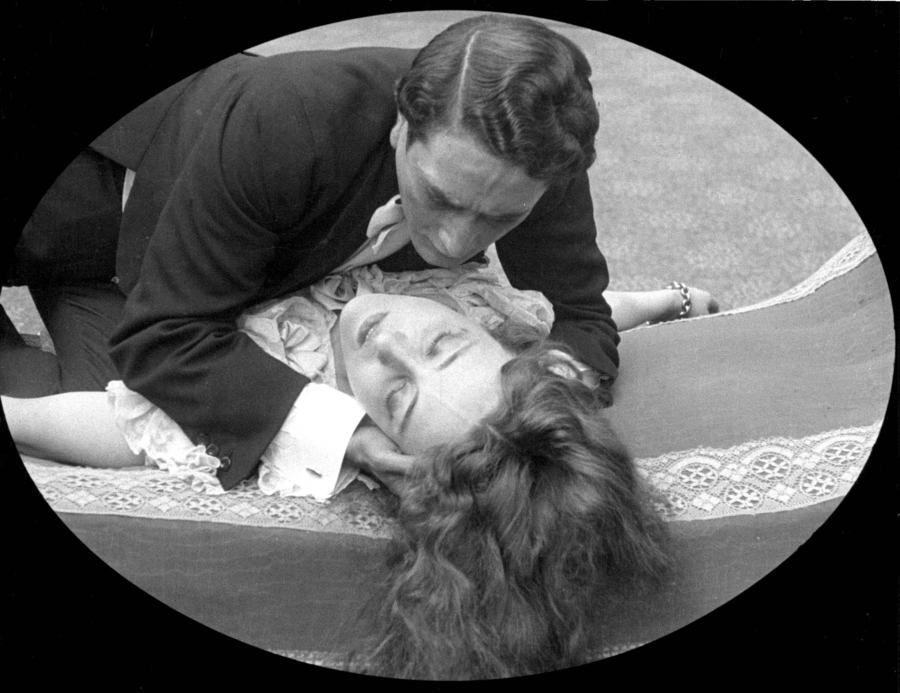
A definitive 6.1/10 rating for a film that redefined the boundaries of cult cinema. Love Everlasting remains a cornerstone of transgressive art.
The first image that scalds itself into memory is a woman’s glove sliding across treasonous parchment—an emblem, perhaps, of cinema’s newborn capacity to make skin the parchment upon which guilt is inked. Love Everlasting (original Italian title Il rifugio dell’amore) is a 1913 phantasmagoria that refuses to behave like the polite historical curio it ought to be; instead it lunges, wolf-like, at the jugular of melodrama and drains every last drop of crimson flourish.
Shot through with the feverish cosmopolitanism of pre-war Turin, the picture glides from fortress ramparts to Riviera terraces with the languid ease of a sleepwalker who nevertheless keeps a revolver tucked beneath the negligee. Lyda Borelli—quivering diva of the Italian divismo—does not merely play Elsa; she exhales her, a pale wraith whose vertebrae seem carved from candle-wax. Every tilt of her swan neck, every spasm of those long fingers spells ruin written in rose-water.
What begins as a routine act of espionage—a swaggering adventurer filching fortress plans—mutates into something far more toxic: the theft of innocence itself. Director/writer Emiliano Bonetti stages the initial theft like a chiaroscuro waltz; moon-bathed cloisters, sabres clicking against stone, and a single ribbon of cigarette smoke curling around state secrets. Yet the moment Swayne pockets the documents, the film sheds its cloak of intrigue and dons the gossamer of doomed amour fou.
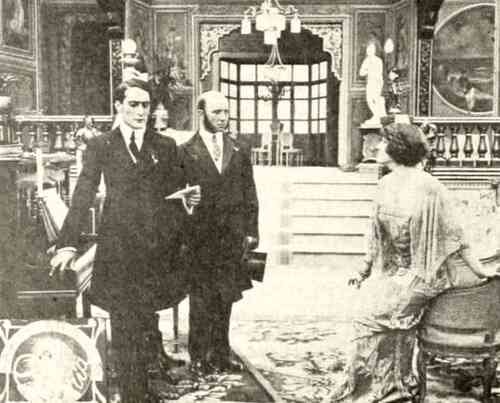
The transition is so seamless you feel the genre dissolve inside your mouth—part sulphur, part powdered sugar. One instant we’re crouched behind arrases; the next we’re drowning in Elsa’s oceanic eyes as she registers the perfidy of her beloved. Cinema itself seems to hyperventilate.
Silent-era acting is often caricatured as brows-above-the-forehead hokum. Borelli annihilates that slur. Watch the sequence where Elsa, banished to the railway siding, clutches her father’s blood-spattered epaulette. The actress lets her left hand spasm—just once—like a dying sparrow. The gesture is microscopic, yet the lens magnifies it into a seismic confession of grief. This is not the semaphore of melodrama; this is neurosis rendered as poetry.
Scholars have traced Borelli’s influence directly to Victor Sjöström’s austerity and even to Caligari’s angular hysteria. She weaponises stillness; when the camera inches closer, her pupils seem to dilate until the screen itself becomes a black hole sucking every photon of hope.
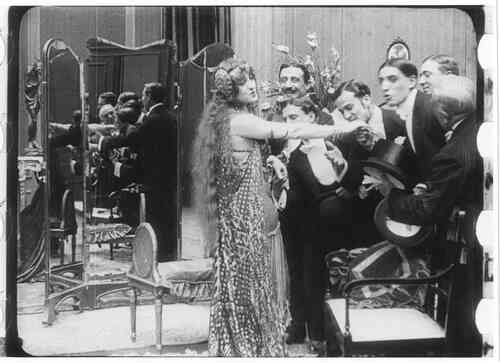
Once Elsa reinvents herself as Marjorie Manners, the film’s palette flips from tungsten gloom to magnesium glare. terraces, parasols, orchidées wilting in champagne buckets—yet the opulence feels cryogenic, as though every pleasure has been embalmed rather than lived. Vittorio Rossi Pianelli’s Prince Arthur arrives like a pallid Keats hero, cheeks hollowed by consumption, eyes burning with that peculiar fin-de-siècle languor that mistakes tuberculosis for transcendence.
Their courtship is a series of stolen ocular feasts across opera boxes, telegram ink, and sea-spray. The camera, drunk on Louise gloria swanson luminosity, lingers on Borelli’s nape as if kissing her through celluloid. When the lovers finally press mouths, the intertitle simply reads: “Un bacio—e il mondo si ferma.” One kiss—and the world stands still. For once the hyperbole feels earned.
Narrative engines rarely idle in Italian patine. Swayne’s resurrection aboard the ocean liner is handled with spectral economy: a tilt of the ship’s gangway, a puff of coal-smoke, and there he stands—Lucifer in yachting flannel. The ensuing love-triangle combusts not with gunshots but with rumours, those corrosive whispers that travel faster than any torpedo. The recall telegram dispatched to Prince Arthur is shot in extreme close-up, its Morse dots hammering the lens like metal hail. Modern thrillers would drown this moment in orchestral stings; Bonetti lets the silence of the telegraph machine scream instead.
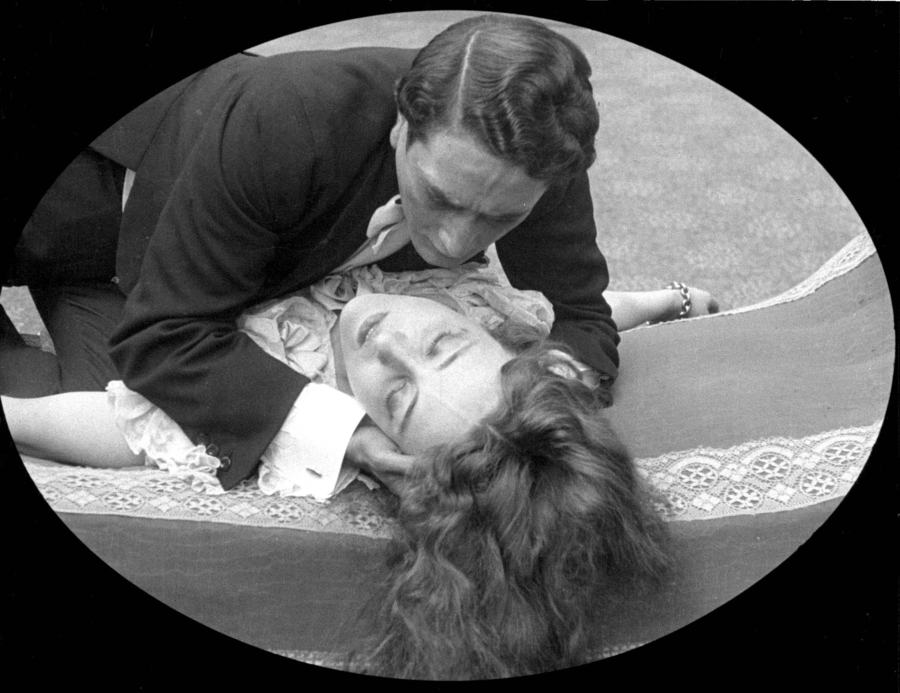
Elsa’s suicide on stage is filmed in a single, unbroken tableau that lasts a full ninety seconds—an eternity for 1913. Footlights bleach her face to alabaster; a real orchestra pit is visible, musicians frozen like taxidermied angels. Borelli sinks to the boards in real time, torso convulsing with a verisimilitude that rumours claimed was achieved by the actress actually ingesting diluted ipecac. (Studio memos deny this, but the myth endures—as it must for all saints who die young.)
Her dying line, delivered in an intertitle superimposed over Arthur’s shattered profile: “Ma il mio amore non muore mai.” But my love shall never die. The words hover, burn, then fade—yet the film slyly undercuts its own transcendence. Love does die; what survives is celluloid, a ghost made of silver halide that can be rewound, re-watched, re-mourned ad infinitum.
Bonetti’s mise-en-scène oscillates between Biblical tableaux and proto-Expressionist diagonals. Watch the shot where Elsa wanders the railway tracks: rails converge in razor-sharp perspectival lines, sky bleached to a dead-white slab, a single black cross-tie jutting like a gash. The frame anticipates the angular nightmares of Caligari by six full years, proof that Italian cinema incubated modernism in its marrow long before German studios gave it a name.
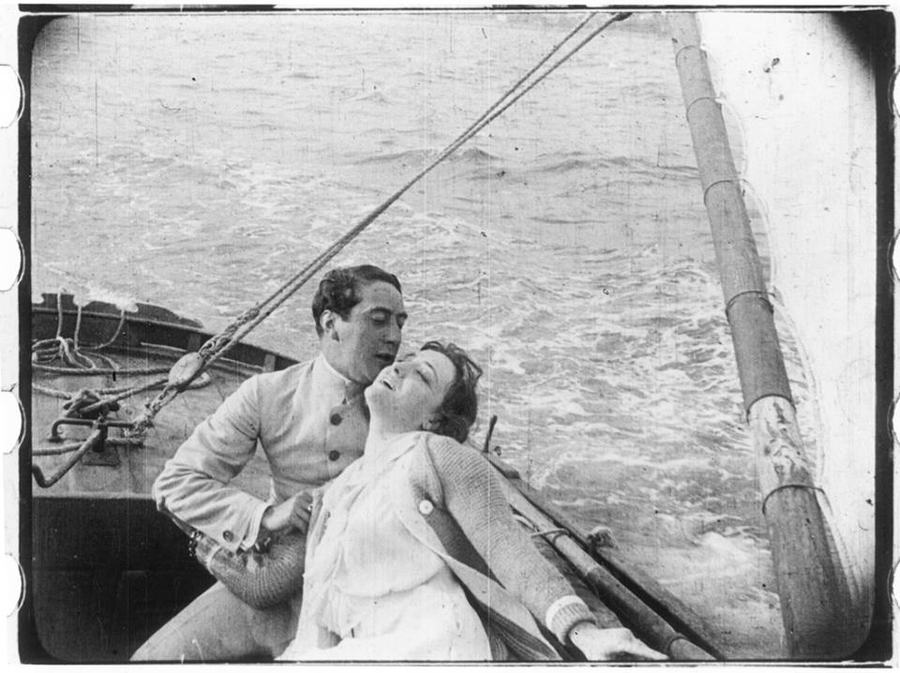
Equally striking is the repeated visual motif of water: rippling harbour waves, rain streaks on train windows, the final poison goblet that mirrors a tiny tidal pool. Water becomes the film’s stealth narrator—an amoral element that reflects faces yet erases footprints, promising rebirth while delivering annihilation.
For all its corseted trappings, Love Everlasting hands the steering wheel to a woman. Elsa’s moral arc—from naïf to pariah to self-immolating artist—traces the first genuinely tragic parabola in Italian narrative cinema. Unlike Oliver’s blameless waif or Kelly’s bushranging rebel, Elsa chooses her downfall. She drinks poison not from victimhood but from a sovereign refusal to live inside a lie—an existential mic-drop that feels almost noir avant-la-lettre.
Survival rates for pre-1915 Italian features hover around fifteen percent; nitrate fires, wars, and plain neglect have scythed the canon. A 1998 Bologna archival report lists a severely shrunken 35 mm negative held in the Cineteca Italiana vault, deemed unprojectable. Yet rumours persist of a complete 157-minute tinted print seized by customs in Marseilles during 1922, only to vanish into a Corsican private collection. Until a 4K resurrection surfaces, cinephiles must content themselves with bootleg DVDs cobbled from archival 16 mm reductions, their intertitles French-scrawled, their tinting reduced to urine-yellow murk. Even in this mutilated form the film detonates—imagine what a pristine restoration could do.
Original screenings travelled with a full ensemble da camera: piano, violin, and glass harmonica. Contemporary notices rave about a leitmotif for Elsa based on Chopin’s E-minor prelude, slowed to narcotic tempo. Modern festival showings often resort to generic lounge-jazz, a crime against the film’s baroque melancholy. If you curate a micro-cinema, do this masterpiece a favour: pair it with Arvo Pärt’s Fratres or Max Richter’s On The Nature of Daylight—anything that understands ache as geometry.
Place Love Everlasting beside The Cheat (1915) and you witness two divergent philosophies of tragic womanhood: where Griffith’s heroines plead for divine pardon, Bonetti’s embraces the brand of scarlet letters and perishes by her own decree. Compare its poisoning finale to Madame Butterfly’s and you’ll find the same operatic nihilism, only here stripped of Puccini’s cathartic aria—silence itself becomes the swan song.
Great art is not a window but a wound; it cuts, then cauterises, then cuts again. Love Everlasting leaves you haemorrhaging sympathy for every rogue who ever bartered love for leverage, for every daughter who paid the debt of the father’s sin. It is a film that knows the most corrosive agent on earth is not acid but memory—memory that can be projected, rewound, monetised, yet never finally exorcised.
Seek it out, even in butchered bootleg form. Let Lyda Borelli’s mascara-streaked visage burn itself onto your irises. And when someone claims silent cinema is a quaint relic, switch off the lights, press play, and watch them drown in the monochrome tempest of a love that, indeed, never dies—because celluloid has granted it the devil’s own immortality.
IMDb 5.8
1926
Community
Log in to comment.