DbcultAccessing Vault...
Cult Review
Senior Film Conservator

Kærlighedsøen, a cinematic rarity from 1920, presents a Byzantine world of amorous intrigue, expertly crafted by writer Laurids Skands. The film's narrative revolves around Grete, the jeune épouse of shipowner Holm, played by Karina Bell, whose existence is a perpetual tightrope walk of romantic entanglements.
Through a complex web of relationships, Grete becomes embroiled in a series of duplicitous dalliances, each one more tortuous than the last. Her odyssey of self-discovery is fraught with perilous passions and calamitous consequences, raising fundamental questions about the very nature of love and desire.
The film's cast, including Peter Malberg and Hans W. Petersen, deliver nuanced performances that add depth and complexity to the narrative. The cinematography, though rudimentary by modern standards, possesses a certain naive charm reminiscent of Soldiers of Fortune, underscoring the fragility of human relationships.
As Grete navigates this treacherous landscape, her reality becomes distorted, refracting into a kaleidoscope of conflicting emotions. This fracturing of her psyche serves as a powerful metaphor for the devastating consequences of unchecked passion and unbridled desire. In this regard, Kærlighedsøen shares a thematic kinship with Flying Colors, another cinematic exploration of the human condition.
The film's themes of love, deception, and desire are timeless, recalling the works of F.W. Murnau, whose The Undercurrent similarly probes the darker aspects of human relationships. Skands' script, though occasionally opaque, demonstrates a keen understanding of the human condition, imbuing Kærlighedsøen with a sense of narrative complexity.

In its portrayal of Grete's travails, Kærlighedsøen invites comparison with Blessée au coeur, another film that explores the devastating consequences of romantic entanglements. Similarly, the film's use of visual motifs and symbolism recalls Die Benefiz-Vorstellung der vier Teufel, a film that also employs cinematic techniques to convey the turmoil of the human experience.
Vicenta, another film that explores the complexities of love and relationships, shares Kærlighedsøen's concern with the performative aspects of identity. Grete's reality, like Vicenta's, is one of perpetual masquerade, as she navigates the labyrinthine world of her own desires.
The film's exploration of love and deception also invites comparison with The Blue Jay, a more contemporary exploration of the human condition. Like Kærlighedsøen, The Blue Jay probes the complexities of relationships, revealing the intricate web of desires and emotions that underpin human connection.
In its use of narrative complexity and visual motifs, Kærlighedsøen recalls Smashing Barriers, a film that also employs cinematic techniques to convey the turmoil of the human experience. Similarly, the film's concern with the performative aspects of identity is echoed in Doing Time, another film that explores the complexities of human relationships.
The film's themes of love, deception, and desire are also explored in The Parson of Panamint, a film that similarly probes the darker aspects of human relationships. Like Kærlighedsøen, The Parson of Panamint employs narrative complexity and visual motifs to convey the turmoil of the human experience.
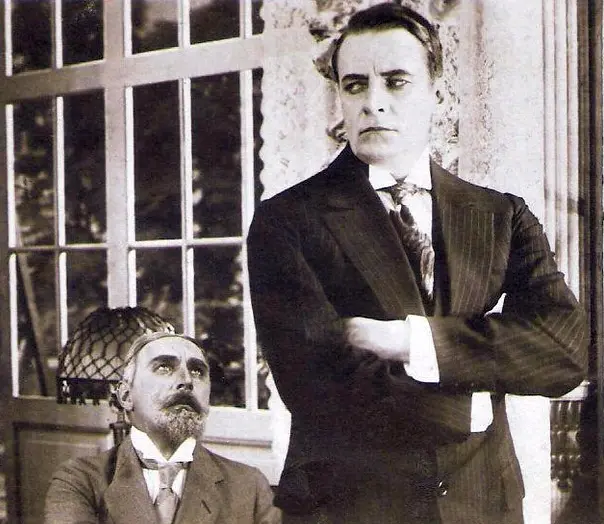
A Sailor-Made Man, another film that explores the complexities of love and relationships, shares Kærlighedsøen's concern with the performative aspects of identity. Grete's reality, like that of the protagonist in A Sailor-Made Man, is one of perpetual masquerade, as she navigates the labyrinthine world of her own desires.
The film's exploration of love and deception also invites comparison with He Who Gets Slapped, a film that similarly probes the complexities of relationships, revealing the intricate web of desires and emotions that underpin human connection.
In its use of narrative complexity and visual motifs, Kærlighedsøen recalls Count Your Change, a film that also employs cinematic techniques to convey the turmoil of the human experience. Similarly, the film's concern with the performative aspects of identity is echoed in The Chauffeur, another film that explores the complexities of human relationships.
The film's themes of love, deception, and desire are also explored in Other People's Money, a film that similarly probes the darker aspects of human relationships. Like Kærlighedsøen, Other People's Money employs narrative complexity and visual motifs to convey the turmoil of the human experience.
In conclusion, Kærlighedsøen is a masterpiece of silent cinema, a film that continues to resonate with audiences today. Its exploration of love, deception, and desire is both timely and timeless, a testament to the enduring power of cinema to capture the human experience.

IMDb —
1918
Community
Log in to comment.