DbcultAccessing Vault...
2.2/10
Senior Film Conservator
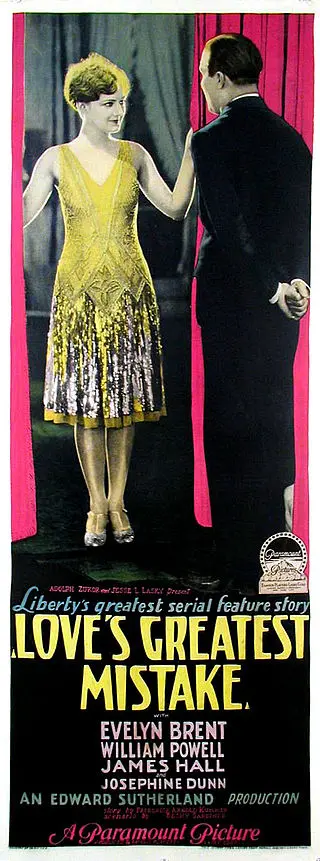
A definitive 2.2/10 rating for a film that redefined the boundaries of cult cinema. Love's Greatest Mistake remains a cornerstone of transgressive art.
Is 'Love's Greatest Mistake' worth watching in the modern era? Short answer: yes, but with significant caveats. This 1924 silent drama offers a fascinating, if sometimes frustrating, window into early 20th-century American morality and ambition, making it an essential watch for cinephiles and historians, but a challenging one for casual viewers seeking contemporary pacing.
This film works because of its surprisingly progressive portrayal of female agency for its time, anchored by Evelyn Brent's compelling performance. This film fails because its narrative contrivances and often melodramatic pacing can feel dated and clunky to a modern audience. You should watch it if you are a dedicated student of silent cinema, interested in the evolution of character-driven drama, or a fan of early Hollywood's often bold, sometimes clumsy, storytelling.
The silent era, often dismissed as quaint, frequently tackled themes that resonate even today. 'Love's Greatest Mistake' is a prime example, delving into a young woman's struggle for independence and integrity in a world where financial security often came at the cost of personal liberty. It’s a narrative steeped in the social anxieties and burgeoning freedoms of the Jazz Age, presenting a heroine who, despite her vulnerabilities, possesses a remarkable inner strength.
Honey McNeil, portrayed with captivating resilience by Evelyn Brent, arrives in New York with aspirations that quickly collide with harsh realities. Her journey is not merely a quest for love, but for a life built on her own terms. This film, for all its antiquated trappings, captures a very modern dilemma: how does one maintain self-respect when powerful men hold all the cards?
The plot, initially seeming like a straightforward romantic drama, quickly morphs into something more complex, even noir-ish in its undertones. The advances from financier William Ogden (William Powell) are less about genuine affection and more about possession, a common power dynamic explored in silent cinema, notably echoed in films like Only a Shop Girl, which also explored class distinctions and predatory male figures. Honey's repeated rejections of both Ogden's opulence and Harvey Gibbs's more conventional, if initially uninspired, proposals highlight her fiercely independent spirit.
The film’s true dramatic core ignites with the introduction of Don Kendall and Sara Foote’s blackmail scheme. This shift from romantic entanglement to outright criminal conspiracy is jarring, yet effective. It exposes the underbelly of societal ambition, demonstrating how easily desire can curdle into avarice and violence.
I'd argue that the film's ultimate resolution feels less like earned triumph and more like a convenient narrative neatening, especially considering the trauma Honey endures. The brutal beating sequence, though brief, leaves an indelible mark, making the subsequent 'happily ever after' feel somewhat rushed and perhaps, a touch unconvincing in its swiftness. This tonal whiplash is a notable characteristic of many films from this period, where moral lessons often trump nuanced character development.
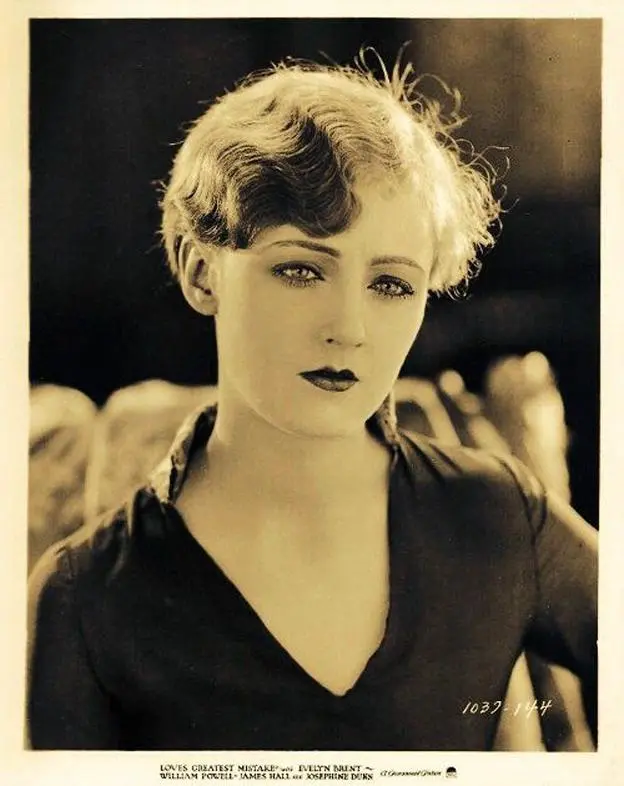
The strength of 'Love's Greatest Mistake' largely rests on its cast, particularly Evelyn Brent. As Honey, Brent delivers a performance of remarkable depth and nuance, especially considering the limitations of silent acting. Her expressions, often subtle yet intensely communicative, convey a rich inner life for a character who could easily have been a one-dimensional ingenue.
Her transformation from hopeful ingénue to a woman hardened by betrayal is palpable, particularly in the harrowing sequence where Don Kendall brutalizes her. Brent doesn't just react; she embodies the shock and subsequent resolve with a raw intensity that transcends the limitations of silent film acting, her eyes conveying volumes that dialogue cards alone could not. This scene is pivotal, showcasing Brent's ability to convey profound suffering without a single spoken word, a testament to her command of the medium.
William Powell, in an early career role as the suave yet predatory William Ogden, is undeniably charismatic. His charm is a thin veneer over a calculating nature, and Powell excels at conveying this duality. He brings a sophisticated menace to the financier, making his rejection by Honey all the more impactful because he is not easily dismissed. Powell's portrayal here hints at the urbane, complex characters he would perfect later in his career.
Frank Morgan, as the villainous Don Kendall, is suitably slimy. He embodies the opportunistic schemer with a chilling lack of remorse, making his actions genuinely repulsive. James Hall, as the steadfast architect Harvey Gibbs, provides a necessary grounding presence. While his character initially comes across as somewhat bland, Hall imbues Gibbs with a quiet sincerity that ultimately wins over both Honey and the audience, representing a more wholesome, if less exciting, alternative to the glittering temptations of New York.
Director A. Edward Sutherland, working with writers Becky Gardiner and Frederic Arnold Kummer, crafts a visually coherent, if not always groundbreaking, narrative. The film's direction is competent, utilizing the established visual grammar of the silent era to propel the story forward. Close-ups are employed effectively to emphasize emotional beats, particularly during Honey's moments of despair or resolve. The visual storytelling is clear, ensuring that even without dialogue, the audience understands the characters' motivations and conflicts.
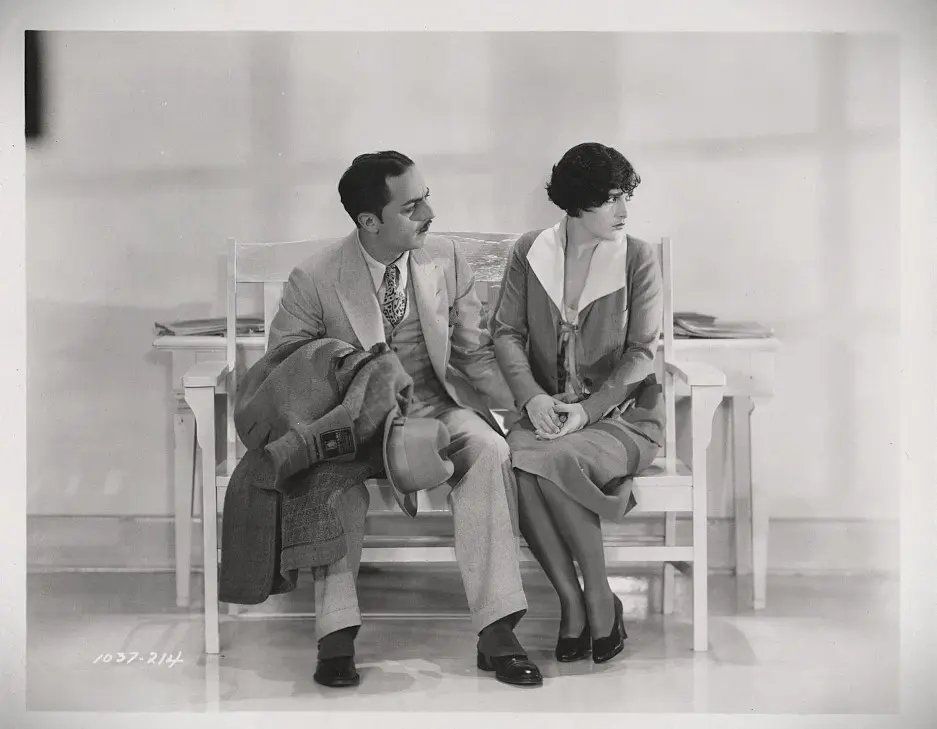
The cinematography, while not revolutionary, is solid. It captures the contrasting worlds of Honey’s initial innocence, Ogden’s opulent lifestyle, and the grittier underbelly of the city. Consider the scene where Honey rejects Ogden's luxurious offer. The camera often frames Honey in a way that emphasizes her isolation amidst opulence, visually reinforcing her moral stand against the gilded cage being presented. This isn't just dialogue; it's a visual argument about integrity. Lighting is used to create mood, though it rarely reaches the dramatic heights seen in contemporary German Expressionist films.
The set designs, particularly Ogden’s lavish apartment, serve as effective backdrops for the moral struggles playing out. They communicate wealth and status, underlining the temptations Honey faces. While the film doesn't boast the elaborate sequences of a D.W. Griffith epic or the intricate character studies of a F.W. Murnau, it capably tells its story through careful composition and a reliance on its performers.
Yes, for specific audiences, this film is absolutely worth watching. It offers a unique historical perspective. It showcases early performances from future stars. It delves into societal issues that remain relevant.
However, it is not for everyone. If you struggle with the pacing of silent films, or if you require constant dialogue to remain engaged, this might be a difficult watch. It demands patience and an appreciation for a different cinematic language. But if you're a student of film history, a fan of early Hollywood, or simply curious about how narratives were constructed before the advent of sound, then it's a valuable experience. It works. But it’s flawed.
The pacing of 'Love's Greatest Mistake' is decidedly a product of its era. Silent films often relied on a more deliberate rhythm, allowing audiences to absorb visual information and read intertitles. For modern viewers accustomed to rapid-fire editing and constant auditory input, this can feel slow. There are moments where the narrative meanders slightly, particularly in the initial development of Honey’s various romantic entanglements, before the central conflict takes hold.
The narrative structure, while generally linear, occasionally relies on abrupt plot developments to move the story forward. Jane's sudden elopement with Don, for instance, feels less like an organic character choice and more like a device to clear the stage for Honey's ultimate resolution. This isn't a flaw unique to this film, but rather a common characteristic of storytelling in the 1920s, where plot efficiency often took precedence over psychological realism.
Despite these characteristics, the film's ability to maintain a sense of moral tension, particularly around Honey's steadfast refusal to compromise her integrity, keeps the viewer engaged. The dramatic stakes, though sometimes heightened by melodramatic flourishes, are always clear: will Honey succumb to temptation or find happiness on her own terms?
The film’s title, "Love's Greatest Mistake," initially suggests a romantic misstep, but it’s arguably a profound misdirection. The greatest mistake isn't a choice of lover, but rather the societal expectation that traps women like Honey between financial precarity and moral compromise. The true villain isn't just Don Kendall, but the system that allows men like Ogden to wield power with impunity. This film, in its quiet way, critiques the very structures of power and gender that defined the era, making it far more than just a period romance. It’s a curious watch. But it’s flawed.
'Love's Greatest Mistake' is a fascinating relic from the silent era, one that offers more than just historical curiosity. While its pacing and some narrative choices will undoubtedly challenge contemporary viewers, its core themes of female agency, moral integrity, and the allure of wealth remain strikingly relevant. Evelyn Brent's performance alone is worth the price of admission (or the effort of streaming). It’s a film that asks important questions about what we value most, even if its answers sometimes feel a little too neat. For those willing to engage with its particular cinematic language, it’s a rewarding, if imperfect, journey into the heart of early 20th-century ambition and resilience. This film is a compelling piece of history. You should see it, but adjust your expectations accordingly.
IMDb —
1927
Community
Log in to comment.