DbcultAccessing Vault...
Cult Review
Senior Film Conservator
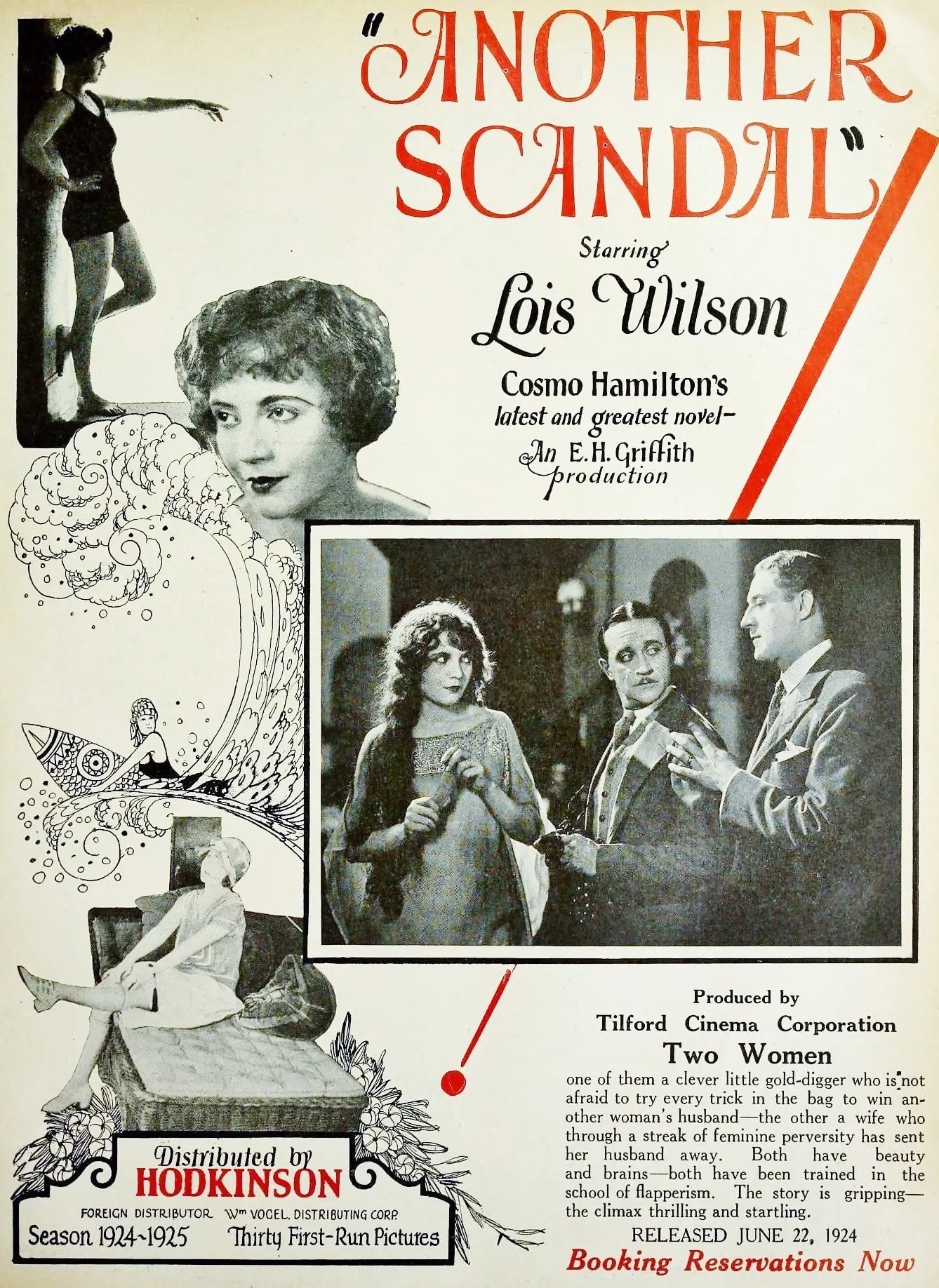
The year 1924 stood as a precipice for American silent cinema, a moment where the crude tropes of the previous decade were being distilled into a more nuanced exploration of the human psyche. Another Scandal emerges from this era not merely as a melodrama, but as a razor-sharp dissection of the marital contract under duress. It is a film that understands the precariousness of fidelity when it is tested by the twin pressures of physical absence and social expectation. Unlike the visceral horror found in During the Plague, this film finds its terror in the quiet rustle of silk and the sharp clink of a cocktail glass in a drawing room.
At the heart of the narrative is Beatrix Franklin, portrayed with a luminous yet steely vulnerability by Lois Wilson. The premise is deceptively simple: a pregnant wife, feeling the weight of her condition, encourages her husband Pelham (Holmes Herbert) to seek leisure elsewhere. This act of self-abnegation is the catalyst for the entire structural collapse that follows. It raises a fascinating question about the 'New Woman' of the 1920s—how much agency does she truly possess when her primary role is still defined by the domestic and the maternal? Beatrix’s decision is an attempt to control the narrative of her marriage, yet she inadvertently invites the very chaos she seeks to avoid.
Pelham’s encounter with May Beamish (Flora Le Breton) on the cruise is filmed with a certain predatory elegance. May is the quintessential 'vamp,' a character archetype that was becoming increasingly complex during this period. She isn't just a villainess; she is a disruptor of the status quo. Her pursuit of Pelham is less about love and more about the acquisition of status and the thrill of the hunt. This dynamic reminds one of the social stratagems seen in The City of Masks, where identity and intent are constantly veiled by the requirements of high society.
When Beatrix learns of May’s machinations, the film pivots from a standard drama into something far more intellectually stimulating. Rather than retreating into the role of the weeping, discarded spouse—a trope explored with far more sentimentality in The Faded Flower—Beatrix chooses to fight fire with fire. Enter Alec Greenwood (Allan Simpson), the former admirer who becomes the instrument of her revenge. This is where the film’s title, Another Scandal, takes on its dual meaning. Beatrix creates a synthetic scandal to neutralize a real one.
The scenes between Beatrix and Alec are charged with a performative tension. Every gesture, every lingering look is designed to be seen, to be reported, and to eventually reach the ears of her wayward husband. It is a masterful display of social engineering. The film suggests that in the world of the Franklins, truth is secondary to perception. This obsession with the external facade of morality is a theme that echoes through The Honor of His House, though here it is handled with a lighter, more satirical touch.
The screenplay, penned by G. Marion Burton and Cosmo Hamilton, avoids the cloying didacticism often found in silent features. Hamilton, known for his explorations of the aristocratic and upper-middle-class foibles, brings a cynical wit to the intertitles. The dialogue—or what we perceive of it through the actors' expressive faces and the occasional text—is sharp and devoid of the flowery excess that plagued earlier productions like The Torch Bearer. There is a modernity to the character motivations that feels surprisingly contemporary.
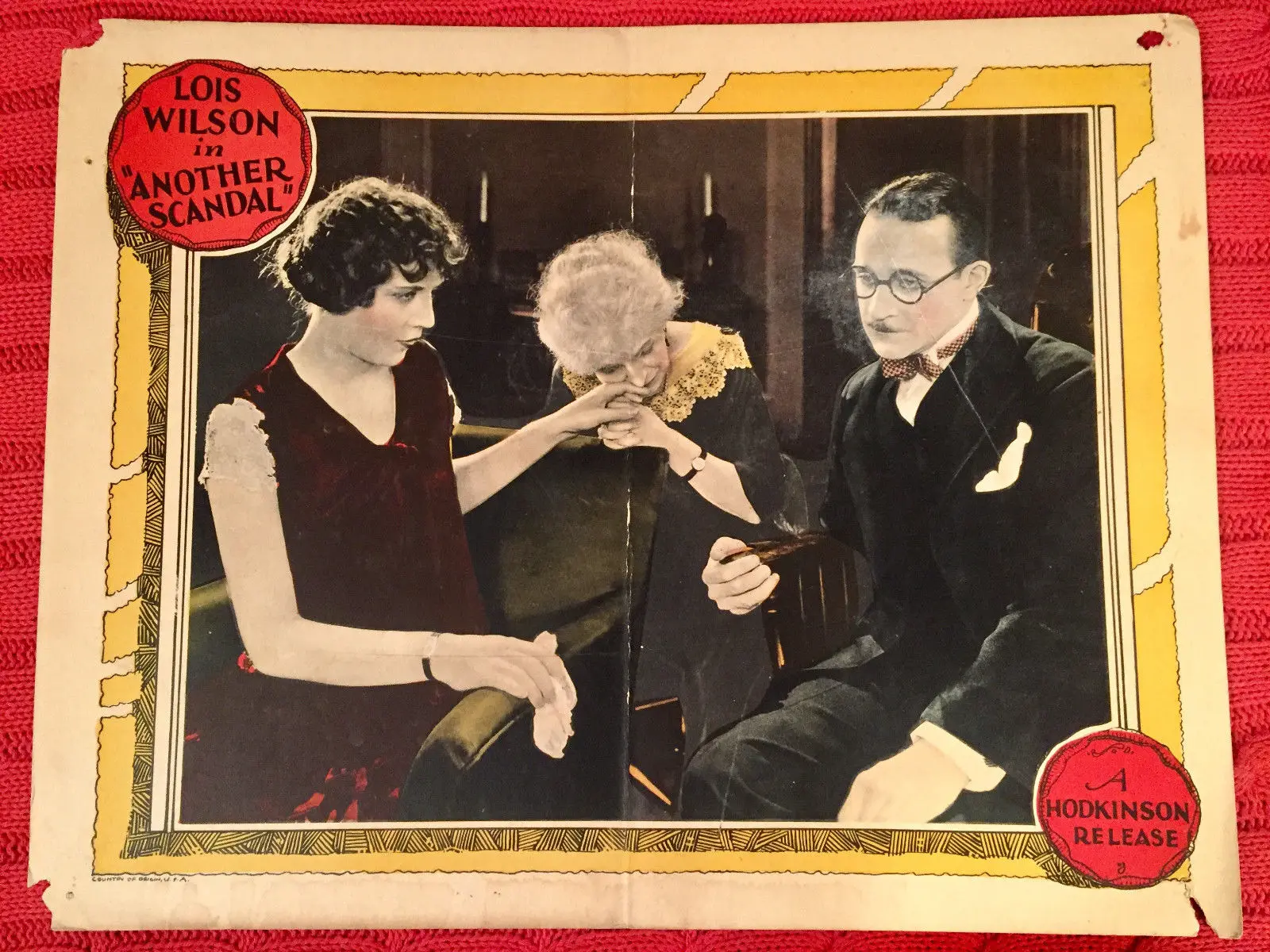
Visually, the film utilizes light and shadow to demarcate the different worlds of the characters. The cruise ship is a place of bright, harsh sunlight and open spaces—vulnerable and exposed. In contrast, the Franklin home is often depicted with softer, more controlled lighting, suggesting a sanctuary that has been violated. The use of close-ups on Lois Wilson’s face allows the audience to track the precise moment her character shifts from grief to cold, calculating resolve. It’s a masterclass in silent acting that rivals the technical precision of Der Mann ohne Namen - 1. Der Millionendieb.
The presence of Hedda Hopper in the cast adds another layer of intrigue. Before she became the queen of Hollywood gossip, Hopper was a formidable screen presence, and here she embodies the judgmental gaze of the social set. Her character serves as a reminder that the 'scandal' is not just a private matter; it is public property. This collective surveillance is what makes Beatrix’s gambit so risky. If she fails to outsmart May, she loses not just her husband, but her place in the world.
We also see strong character work from Zeffie Tilbury and Bigelow Cooper, who provide the necessary social background noise against which the main drama unfolds. Their performances help ground the film in a reality that feels lived-in. The film avoids the slapstick tendencies of Be a Little Sport or the broad comedy of Once a Mason, maintaining a sophisticated tone even when the plot verges on the theatrical.
The climax of Another Scandal is a subversion of the 'fallen woman' narrative. Instead of the wife being punished for her proximity to another man, she is celebrated for her ingenuity. The 'vamp' is discarded not by a moralistic decree from the husband, but by the superior strategic mind of the wife. It is a proto-feminist ending that suggests a woman’s power lies in her ability to navigate and manipulate the very systems designed to keep her in check. This thematic resonance is much deeper than the simple deceptions found in Somebody Lied or the identity swaps of Alias Mary Brown.
As the credits roll—or would have rolled in the contemporary sense—one is left with a profound appreciation for the film's restraint. It doesn't need the surrealist flourishes of La luz, tríptico de la vida moderna to convey the complexity of modern life. It does so through the steady gaze of Lois Wilson and the meticulous pacing of a story that knows exactly when to reveal its hand. Even when compared to international efforts like Boman på utställningen or the mysterious allure of The White Masks, Another Scandal stands out as a uniquely American exploration of the domestic battlefield.
In the end, Pelham returns to the fold, chastened and perhaps a little bit terrified of the woman he thought he knew. Beatrix has preserved her family, but at the cost of a certain innocence. The film leaves us with the unsettling realization that every marriage is a series of negotiations, and sometimes, the only way to save a union is to threaten its very existence. It is a cold, brilliant, and utterly captivating piece of silent cinema that deserves a place in the pantheon of great marital dramas, right alongside Queens Are Trumps. For those seeking a film that challenges the intellect as much as it engages the emotions, Another Scandal is an essential viewing experience, a winter of the soul that eventually gives way to a calculated spring, much like the transition depicted in Winter Has Came.
IMDb —
1919
Community
Log in to comment.