DbcultAccessing Vault...
6.2/10
Senior Film Conservator
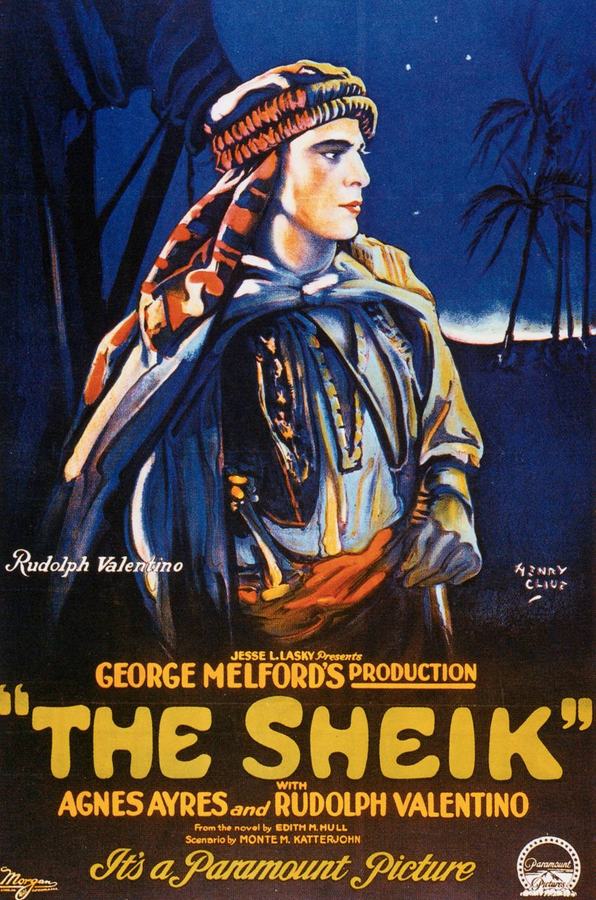
A definitive 6.2/10 rating for a film that redefined the boundaries of cult cinema. The Sheik remains a cornerstone of transgressive art.
Rudolph Valentino’s kohl-ringed smolder arrives like a heat mirage in George Melford’s The Sheik (1921), a film that liquefied the celluloid morals of the Jazz Age and still scalds any viewer who assumes silent cinema to be a quaint relic. Adapted from Edith Maude Hull’s torrid bestseller, the picture feints at escapade—caravans, scimitars, tents billowing like lung tissue—yet its true engine is dialectic: the friction between oriental fantasy and occidental dread, between erotic autonomy and colonial entitlement.
Melford orchestrates the abduction set-piece with sadistic patience: the camera lingers on Diana’s gabardine-clad calves as she climbs a dune, cuts to the Sheik’s gloved fingers drumming a saddle horn, then resumes her trajectory—an eyeline match that stitches predator and prey into the same visual sinew. The desert is no backdrop; it is a co-conspirator, its golds and ambers graded so that every grain of sand seems individually hand-tinted to seduce. Critics who dismiss the film as rape fantasy lite overlook how the mise-en-scène indicts the viewer: we, too, occupy the vantage of the voyeur, our pleasure purchased at the price of complicity.

The film weaponizes the very act of looking; the screen becomes a harem curtain we part with our gaze.
It is impossible to overstate the seismic jolt Valentino delivered to the WASP-ish leading-man template. Where Douglas Fairbanks grinned through swashbuckles and Harold Lloyd scaled skyscrapers with geeky aplomb, Valentino offered languid sensuality—hips swiveling as if to a phonograph only he could hear. Off-camera, the Italian immigrant endured xenophobic barbs (the Latin Lover was originally a slur), and that outsider ache seeps into his performance: the Sheik’s braggadocio is a couture cloak stitched over raw need for acceptance.
Watch the micro-movement when Diana first calls him savage: his left eyebrow arches not in anger but in recognition—he has heard this epithet in dockside taverns and Ellis Island queues. That flicker humanizes the cardboard exotic villain and foreshadows the film’s last-act twist: the Sheik is half-British, his chiseled profile a palimpsest of empire’s hypocrisies. The revelation lands like a coup de grâce to racialized desire; suddenly the abductor is the colonized subject cosplaying mastery.
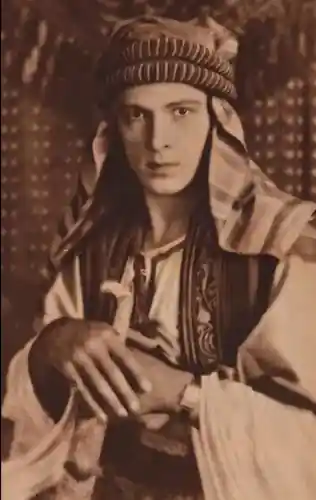
Diana Mayo enters clad in jodhpurs, a sartorial manifesto against the flapper uniform of beads and drop-waist frocks. Agnes Ayres plays her with chin-forward velocity, eyes that appraise men the way appraisers size up thoroughbreds. The abduction sequence risks disempowering her, yet Ayres weaponizes silence: every withheld sentence feels like a dagger hurled against the velvet-cushioned cage. When she finally whispers I stayed because I chose to, the line detonates the narrative’s patriarchal scaffolding. Contemporary reviewers fixated on Valentino’s erotic charisma; they overlooked that the film’s emotional gravity pivots on Ayres’ slow-burn metamorphosis from captive to cartographer of her own pleasure.
Yes, the film traffics in hookah-puffing caricatures and the tired trope of the hyper-sexualized Arab. Yet to file it under problematic and walk away is to miss its self-reflexive fissures. The Sheik’s palace—part Art-Deco fever dream, part Bedouin tent—is a mise-en-abyme of colonial fetish: Persian rugs overlap with French chaise lounges, Moroccan lanterns dangle above British tea service. Production designer Wilfred Buckland imagines the harem as a thrift store of empire’s loot, a visual confession that orientalist fantasy is itself a patchwork of stolen signifiers.
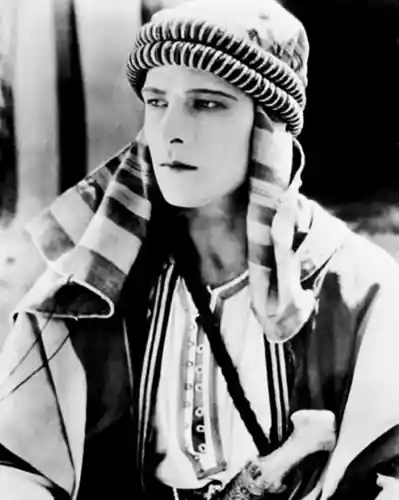
Compare this with The Grasp of Greed (1916), where opulence equals moral rot, or The City of Illusion (1923) whose carnivalesque sets mock American consumerism. Paramount’s marketers peddled The Sheik as escapism, yet the film keeps tripping over its own critical ankle.
What unnerved censors was not the abduction but the pleasure Diana gradually extracts from her captivity. A 1922 Chicago board report frets over scenes where she languorously stretches upon silk cushions, fearing such images enflame prurient curiosity. Translation: female desire outside wedlock becomes a theological contagion. The film’s erotic grammar is tethered to religious iconography—Diana bathed in gauzy light evokes Madonna frescoes, while the Sheik’s arms-spread silhouette atop a dune quotes cruciform iconography. Sacred and profane intermingle until kissing resembles prayer and prayer resembles surrender.
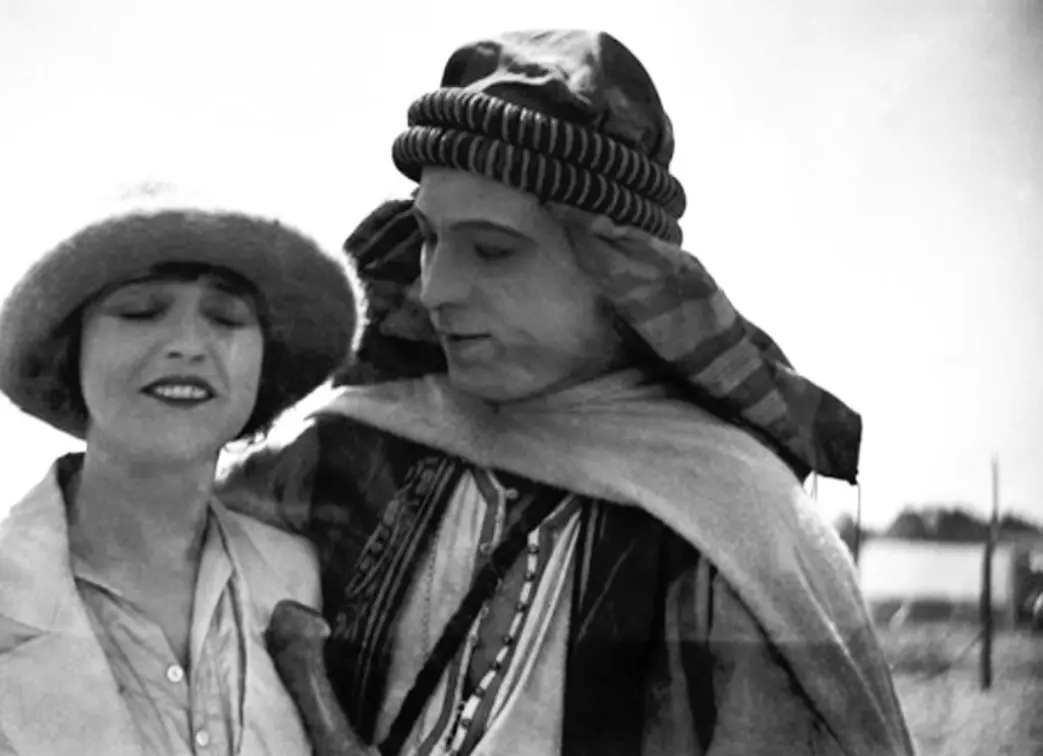
Melford’s camera repeatedly frames Diana through embroidered screens, tent flaps, and horse corrals—apertures that replicate the harem’s lattice. The device literalizes male gaze theory fifteen years before Laura Mulvey’s seminal essay. Yet the final act reverses the aperture: the Sheik, wounded and feverish, is watched by Diana through a cracked doorway, her gaze now the surveilling force. The power inversion is so understated many viewers miss it, but therein lies the film’s stealth feminism: the observer becomes the observed, the jailer finds himself imprisoned by love’s discourse.
Though released sans synchronized dialogue, The Sheik was always meant to be sounded. Theatres engaged live orchestras performing Hugo Riesenfeld’s score—Arabian modes twisted into foxtrot rhythms. Such sonic hybridity underscores the film’s thematic creed: identity is fluid, cobbled together from borrowed chords. Contemporary restorations on Turner Classic Movies pair the images with a new orchestral track; listen for the moment when violins slide into a minor key as Diana reaches for the revolver—music doesn’t just illustrate, it warns.
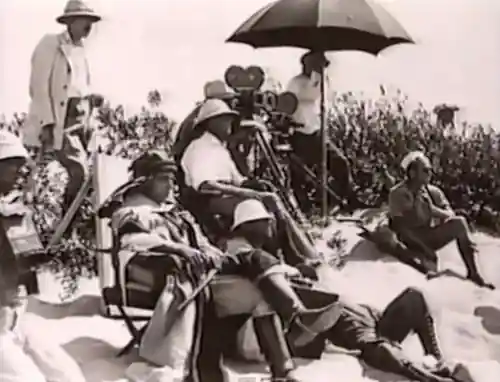
Amazon Prime’s 4K transfer amplifies the desert’s ocher palette to retina-scorching intensity, turning racial subtext into supratext. In TikTok reaction videos Gen-Z viewers alternate between heart-eyes emojis and trigger warnings—testament to the film’s bipolar appeal. Hashtag #SheikTok juxtaposes thirst memes with essays on orientalist violence, proving that cultural critique and erotic fascination can cohabitate in the same swipe.
Valentino’s sudden death in 1926 at age 31 transfigured The Sheik into secular scripture. Mourners swamped funeral parlors; some women swore off marriage, claiming no living male could rival the phosphorescent memory on celluloid. The studios, smelling franchise, cranked out Son of the Sheik (1926) with Valentino in dual paternal-avuncular roles—an eerie posthumous resurrection that predates hologram Tupac by nearly a century.
Watch Son alongside Torchy in High (1931) and you’ll detect the genealogy of Hollywood’s obsession with legacy sequels: nostalgia marinated in necrophilia.
Modern critics brand the central relationship abduction romance, a subgenre critics shorthand as rapsploitation. Yet the film eludes that taxonomic cage. Diana’s final volitional return collapses the captor-captive binary, relocating the drama to the interior battleground of consent as process, not singular contractual handshake. Feminist scholar Rana Kabbani reads the Sheik’s unveiling of his British parentage as colonialism’s comeuppance: the white savior myth implodes when salvation arrives via miscegenated identity.
David Lean studied The Sheik’s dune silhouettes while prepping Lawrence of Arabia (1962); the dissolve from match-cut sun to human iris originates here. Likewise, the kinetic sandstorm that buries the lovers prefigures the apocalyptic weather in The World and Its Woman (1926), where climate operates as moral adjudicator. Even Disney’s animated Aladdin lifts the Sheik’s flying-carpet romanticism, though scrubbed of adult erotic tension.
As of 2024 The Sheik streams in HD on Kanopy via public-library cards—an ironic twist given that libraries once banned Hull’s novel for corrupting young women. Warner Archive offers a Blu-ray replete with audio commentary by Gaylyn Studlar, whose feminist reading reframes the abduction as proto-BDSM power play. Pair your viewing with TCM podcast episode 47 for a deep-dive into Riesenfeld’s score, then chase it with Never Say Quit (1919) for a palate-cleansing slapstick chaser.
A century on, The Sheik remains an exquisite conflagration: politically cringe-worthy yet cinematically trail-blazing, misogynist on the surface yet subterraneously laced with liberation theology for both genders. It is a film that kidnaps its audience the way its protagonist kidnaps Diana—by the time you wrestle free, the desert has already rewritten your coordinates of longing. Approach it not as relic but as raw nerve; let its contradictions sting, let its silences roar, let Valentino’s mascara’d gaze remind you that cinema’s first responsibility is not to moralize but to mesmerize.
IMDb —
1936
Community
Log in to comment.