DbcultAccessing Vault...
Cult Review
Senior Film Conservator
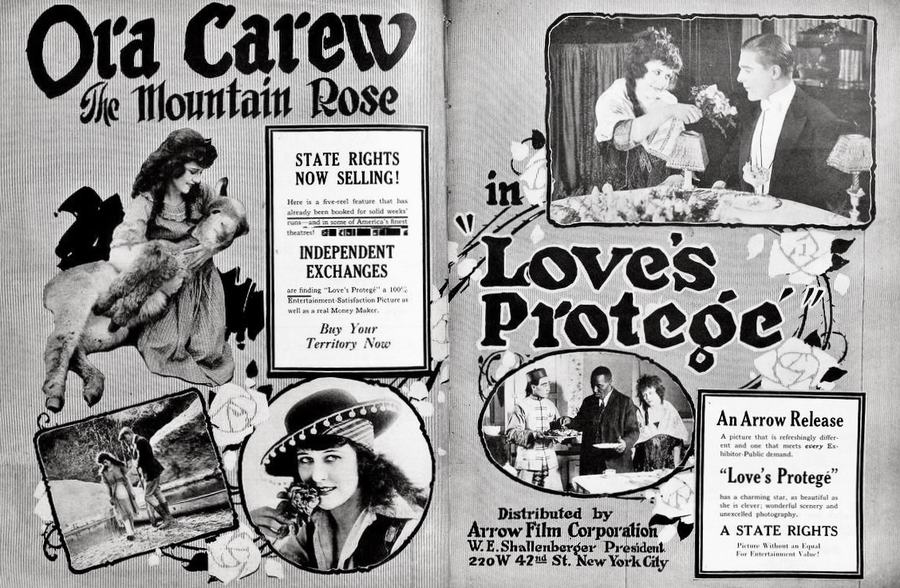
Cecelia Wheat Curry’s screenplay—spun from equal parts hawthorn and nickelodeon—treats class collision like a geologist treats strata: tapping, cracking, holding each layer to the light. The resultant film, Love’s Protégé, may masquerade as a trifle of its era, yet beneath the nitrate bubbles a cauldron of anxieties about bloodline, performance, and the American caste masquerade. Director Wilfred Noy, never a household crest, nevertheless marshals a syntax of shadows that recalls the Germanic influx of the period: ponderous doorframes dwarf characters, pine trunks skew like prison bars, candlelight quivers as though embarrassed by electricity.
Photographer Frank Good’s amber-and-ash palette renders the mountain sequences with a pantheist pulse—mist clings to Ruth like guilt made meteorological—while the foothill soirées bask in a tungsten glow that feels almost alcoholic. The eye feasts on such chiaroscuro juxtapositions, especially when Ruth, draped in burlap-ish gunnysack, stands before the Coleman veranda’s alabaster columns: a collision of earth and capital, of script and scripture.
Arnold Gray’s Larry Armond channels both fair-haired leisure and a latent predatory languor; his smiles never quite reach the sclera, suggesting a man forever rehearsing his own charm. Gray’s physical lexicon—hands plunged into riding-boots, shoulders rolling back as though shrugging off conscience—echoes the moral dithering of A White Man’s Chance, yet with a patrician hauteur that feels closer to An Adventuress’s cad-about-town.
Ora Carew’s Ruth radiates the unbroken-gazelle vibe that Hollywood later weaponized for jungle queens and foundlings alike. Yet Carew refuses to sand down the character’s contradictions: her Ruth can quote Leviticus while gutting a trout, can pirouette barefoot on a ballroom parquet, can love a man she barely knows with a ferocity that borders on folie. The performance is less a turn than a transubstantiation—she sheds the hokum of noble-savage clichés by letting silence speak; her gaze at the Coleman dinner table, when silverware clatters like distant muskets, could scorch varnish.
George Nichols, playing the guardian with a beard like drought-stricken sagebrush, embodies the tyrannical hermit trope, yet Wheat Curry gifts him a proto-hippie mysticism: he teaches Ruth that every beetle is a stanza in God’s endless poem. His off-screen demise—rendered via a thunderclap and a gnarled hand going slack—operates like a folktale hinge; once he expires, civilization rushes in with its perfumed vultures.
Henry A. Barrows’s J. W. Coleman exudes the gaseous gravitas of someone who has never been denied anything louder than a whisper. His late-film contrition, when he cradles Ruth’s mud-caked boots like holy relics, skirts mawkish precipice yet lands on the side of primal relief. Meanwhile, William Irving’s Jack Keith serves as the foppish foil, a man whose mustache appears to have higher billing than his morals; his bungled engagement supplies the subplot’s comic schadenfreude, though the film refuses to fully lampoon him—he’s more feckless than villainous, a distinction The Liar (1918) never quite mastered.
The picture delights in flaying the rituals of high-society femininity: corseted gossip becomes a blood-sport, tea-pouring a geopolitical maneuver. Ruth’s ignorance of these codes is played for laughs, yet the joke boomerangs; the sophisticates end up looking like porcelain figurines rattling in an earthquake. In that respect, Love’s Protégé anticipates the acidic social autopsies of Strictly Confidential, albeit with more heart and less cynicism.
Noy repeatedly frames the peaks as a kind of Deistic tribunal. When Ruth flees back to the ridge, clouds snag on pines like torn verdicts; the wind howls like jury gossip. The implication: nature may be brutal, but at least it is honestly so, whereas society’s cruelties wear cologne and carry calling cards.
Modern viewers might bristle at the tidy eleventh-hour restoration: the mountain waif crowned in Coleman cash. Yet the film slyly undercuts its own fairy-tale. Note the final tableau: Ruth stands on the mansion balcony, silhouetted against a factory sunset, her eyes not starry but stunned—as though wondering whether she has traded one captivity for another. The image lingers like a bruise, hinting that identity, once commodified, can never again be pure.
Surviving prints often feature a 1970s organ accompaniment—lush, tremulous, occasionally hijacked by soap-opera vibrato. Seek instead a modern piano reduction that honors the film’s whispered spaces; silence itself becomes a character, the vacuum where audience empathy rushes in.
Stacked beside Bucking Broadway’s rodeo romanticism, Love’s Protégé feels chamber-like, more psychologically furtive. Against the continental intrigue of Tigre Reale, it is distinctly homespun, yet its emotional calculus is shrewder, less reliant on pistol-point reversals.
The picture slumbered in 16mm purgatory until a 2019 MoMA nitrate seminar resurrected a near-complete 35mm. The result: textures sharpen, the grain resembles wind-brushed snow, and Ruth’s tear tracks glisten like quartz veins.
Love’s Protégé is neither the rube-in-parlor gag fest its marketing suggested, nor a Marxist tract in sheep’s clothing. It is, rather, a half-remembered lullaby about the price of being renamed. It asks: if society scribbles your identity in ink, can the mountain still hum your true name in the dark? For its courage to pose that question—furtively, flickeringly—it earns a foothold on the crag of silent-era essentials.
Verdict: 8.9/10—a rediscovered folk-ballad that glimmers with bruised lyricism and bites with class-conscious teeth.
IMDb —
1923
Community
Log in to comment.