DbcultAccessing Vault...
Cult Review
Senior Film Conservator
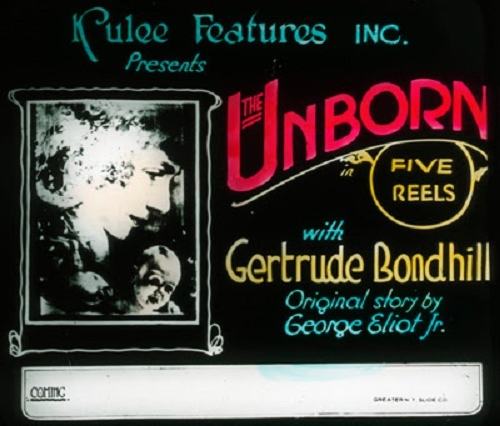
In the annals of early cinema, where shadows danced with nascent light to weave tales of melodrama and mystery, few films capture the chilling essence of psychological torment and inherited dread quite like George Elliot's 1920 masterpiece, The Unborn. This isn't merely a film; it's an experience, a plunge into the spectral depths of human fear, familial secrets, and the inexorable pull of a past that refuses to remain buried. Elliot, a director often celebrated for his nuanced storytelling and evocative visual language, crafts a narrative that transcends its silent origins, speaking volumes through the subtle shifts in an actor's gaze, the ominous creak of a floorboard, and the pervasive gloom of a cursed estate.
At its heart, The Unborn unfurls the harrowing journey of Eleanor Vance, portrayed with breathtaking fragility and burgeoning resilience by the incomparable Elinore Jackson. Eleanor is a young woman, perhaps too naive for the burdens she is about to inherit, thrust into the desolate grandeur of Blackwood Estate. The estate itself is less a dwelling and more a character, a sentient entity brooding beneath a perpetual pall of foreboding. Its very architecture seems to sigh with generations of concealed sorrows, a silent, stony testament to a lineage steeped in both ancestral pride and profound, unspeakable tragedy. Jackson's portrayal of Eleanor is a masterclass in silent acting; her wide, expressive eyes convey a spectrum of emotions from initial bewilderment to encroaching terror and ultimately, a steel-willed determination. One might draw parallels to the restrained yet powerful performances seen in contemporary works like The Green Cloak, where protagonists similarly navigate treacherous emotional landscapes, but Jackson imbues Eleanor with a unique vulnerability that makes her plight intensely personal and agonizingly relatable.
Upon her arrival, Eleanor is immediately ensnared in a subtle, yet suffocating, web of familial intrigue. She encounters Mrs. Thorne, the estate's austere and watchful housekeeper, brought to chilling life by Gertrude Bondhill. Bondhill’s performance is a marvel of understated menace; her stoic gaze and rigid posture betray an intimate, unsettling familiarity with the house's shadowed past. She is a silent sentinel, her presence a constant, unsettling reminder that secrets are not merely kept at Blackwood but are actively guarded, perhaps even embodied. Complementing this unsettling presence is Mr. Silas Croft, the family lawyer, portrayed with a veneer of solicitous charm by Charles Hamlin. Hamlin’s interpretation of Croft is a study in subtle manipulation; his seemingly benevolent nature thinly veils a possessive, almost predatory agenda concerning Eleanor and her inheritance. The interplay between these three central figures forms the psychological backbone of the film, creating a suffocating atmosphere of distrust and veiled threats. It's a dynamic that recalls the intricate power struggles and hidden motives explored in films such as Barriers of Society, though The Unborn elevates the stakes by tethering these machinations to a deeply personal, existential threat.
As Eleanor begins to navigate the labyrinthine corridors of Blackwood, she unearths a cache of poignant, unsettling relics. A child’s tarnished locket, a skeletal rocking horse shrouded in decades of dust, and fragmented diary entries obliquely allude to a "lost heir" and a devastating familial betrayal. These material clues are not merely plot devices; they are tactile manifestations of the estate's tormented history, each object a silent scream from the past. Elliot’s direction here is masterful, using close-ups and dramatic lighting to imbue these seemingly innocuous objects with profound symbolic weight. The very air of the manor seems to thicken with the weight of these discoveries, pressing down on Eleanor's fragile sanity.
Her nights, in particular, become a crucible of psychological torment. Eleanor is plagued by disquieting whispers that seem to emanate from the very walls, and by fleeting, phantom-like apparitions. A recurring vision of a grief-stricken woman, portrayed with heart-wrenching pathos in fleeting flashbacks by Esther Hough, haunts her waking and sleeping moments. This spectral figure, coupled with the ephemeral silhouette of a child, forms the core of the "unborn" mystery, a potent symbol of a life denied, a legacy suppressed. The film expertly blurs the lines between genuine supernatural phenomena and Eleanor's escalating psychological distress, keeping the audience perpetually off-balance. Is she truly haunted, or is the oppressive atmosphere of Blackwood slowly eroding her mind?
Dr. Alistair Finch, the local physician, played by Bert Merket, initially dismisses Eleanor’s mounting distress as mere nerves, a natural reaction to the strain of inheritance and the isolation of Blackwood. Merket’s portrayal is initially one of detached skepticism, a voice of scientific reason in a world increasingly dominated by the uncanny. However, as he observes Eleanor's precipitous decline—her pallor, her increasing agitation, the shadows beneath her eyes—he begins to discern a more sinister undercurrent. His growing suspicion of Mr. Croft’s increasingly manipulative machinations and Mrs. Thorne’s unwavering, almost defiant silence adds another layer of tension, transforming the narrative from a simple ghost story into a compelling medical mystery intertwined with a gothic thriller. The ensemble cast, including Molly Gilmore as the loyal but fearful maid, Julia Hurley as a gossiping villager, and Lewis Sealy as a local constable, each contribute to the rich tapestry of the film, grounding the supernatural elements in a believable, albeit deeply unsettling, community.
George Elliot's directorial prowess is on full display throughout The Unborn. He masterfully utilizes the nascent cinematic techniques of the era to construct an atmosphere of pervasive dread. The use of deep shadows and stark contrasts, characteristic of German Expressionism which was concurrently developing, imbues Blackwood Estate with a life of its own. Long, lingering shots of empty corridors, flickering candlelight, and the desolate moors surrounding the manor create a sense of suffocating isolation. Elliot understands that in silent cinema, mood is paramount, and he manipulates every visual element—from set design to costume—to amplify the film's unsettling tone.
The cinematography, while technically rudimentary by today's standards, is incredibly effective. Framing often isolates Eleanor, emphasizing her vulnerability against the vast, oppressive backdrop of her inherited prison. The camera becomes a silent observer, sometimes a conspirator, lingering on details that hint at deeper truths. The pacing is deliberate, allowing the psychological tension to build slowly, inexorably, rather than relying on cheap jump scares. This measured approach rewards the patient viewer, immersing them deeper into Eleanor's deteriorating mental state. One might compare this meticulous attention to atmosphere to the compelling visual narratives found in films like Valdemar Sejr, where the environment plays an equally crucial, almost sentient role in shaping the characters' destinies.
Beyond Elinore Jackson's pivotal performance, the supporting cast delivers a symphony of nuanced portrayals that elevate the film far beyond a simple gothic potboiler. Charles Hamlin, as Mr. Silas Croft, is a revelation. He eschews overt villainy for a more insidious, polite malevolence. His smiles are too wide, his reassurances too effusive, creating a character whose charm is as unsettling as any outright threat. Hamlin’s ability to convey duplicity through subtle gestures and shifting expressions speaks volumes about his command of the silent medium.
Gertrude Bondhill's Mrs. Thorne is equally captivating in her austere silence. She is the embodiment of a house haunted by its own history, a living repository of its secrets. Bondhill communicates more through her posture, the slight tremor of her hands, or the almost imperceptible narrowing of her eyes than many actors do with pages of dialogue. Her character is a tragic figure, a silent witness burdened by complicity, and Bondhill conveys this internal conflict with remarkable depth. Her performance, much like that of the stoic figures in The Warrens of Virginia, demonstrates the power of unspoken narratives in silent cinema.
The smaller roles, too, are imbued with careful attention. Molly Gilmore, as Eleanor’s terrified maid, brings a vital human element to the escalating horror, her fear mirroring and amplifying the audience's own. Bert Merket's Dr. Finch provides a crucial anchor to reality, his slow-dawning realization of the truth serving as a proxy for the viewer's own journey of discovery. Even figures like Wharton Jones, as the long-suffering estate manager, and Clark Comstock, in a memorable cameo as a local historian, contribute to the rich, textured world Elliot creates. The casting director, whether by design or serendipity, assembled an ensemble that perfectly understands the demands of silent storytelling, each actor contributing a distinct brushstroke to Elliot's grim canvas.
The central mystery of "the unborn" legacy is a potent metaphor that resonates far beyond the confines of Blackwood Estate. It speaks to themes of societal hypocrisy, the crushing weight of reputation, and the devastating consequences of secrets kept to preserve appearances. The illegitimate child, whose very existence was ruthlessly suppressed, represents not just a lost heir but a lost truth, a life denied its rightful place in the world. This denial, Elliot argues, creates a spiritual wound that festers through generations, manifesting as madness, despair, and haunting.
The film’s exploration of female agency, or the lack thereof, is particularly striking. Eleanor, as a young woman inheriting a fortune, finds herself vulnerable to the machinations of patriarchal figures like Mr. Croft. Her sanity is questioned, her experiences gaslighted, echoing the struggles of female protagonists in other melodramas of the era, though The Unborn pushes these themes into darker, more psychologically unsettling territory. The tragic figure of Esther Hough’s character, the aunt whose despair birthed the central mystery, serves as a cautionary tale of the destructive power of societal judgment and enforced silence.
Elliot masterfully uses symbolism to deepen these themes. The labyrinthine structure of Blackwood itself is a symbol of the convoluted family history, its hidden passages and forgotten rooms mirroring the buried truths. The constant presence of shadows and the eerie silence, punctuated only by the occasional creak or whisper, symbolize the oppressive weight of the past. Even the recurring motif of the rocking horse, a poignant reminder of a childhood denied, speaks volumes about the film’s central conceit. The film’s narrative culminates in Eleanor’s courageous penetration of a forgotten wing, where she discovers a perfectly preserved yet chillingly desolate nursery. Here, amidst hidden documents—a concealed birth certificate, a faded daguerreotype, and a final, heart-rending confessional—the full horror of Blackwood’s legacy unfurls. It is a moment of profound revelation, not just for Eleanor, but for the audience, as the pieces of the chilling puzzle finally click into place.
While The Unborn might not possess the immediate recognition of a Marvelous Maciste or the sprawling epic scope of a The Great Ruby, its impact on the nascent psychological thriller genre is undeniable. It stands as a testament to the power of suggestion and atmosphere over explicit horror. Elliot’s film predates many of the more celebrated gothic thrillers, laying groundwork for tropes and narrative structures that would be refined in later decades. Its careful construction of suspense, its reliance on character psychology, and its evocative visual storytelling mark it as a pioneering work.
The film’s exploration of mental fragility and the insidious corruption of power finds echoes in later works, both silent and sound. It can be viewed as a precursor to films that delve into the dark underbelly of family secrets and the supernatural, such as The Magic Skin, which also explores themes of desire and consequence, albeit through a different lens. The nuanced performances, particularly from Jackson and Hamlin, demonstrate the expressive capabilities of silent actors when given material of substance. They prove that emotion, terror, and complex motivations could be conveyed without a single spoken word, relying instead on the universal language of human expression.
In an era when cinema was still finding its voice, The Unborn dared to whisper. It dared to explore the unseen, the unspoken, the deeply unsettling truths that lie beneath the polished surface of respectable society. It challenged audiences to look beyond the immediate frights and contemplate the enduring trauma of human injustice. This is a film that demands to be rediscovered, not just as a historical curiosity, but as a vibrant, haunting piece of art that continues to resonate with contemporary anxieties about lineage, identity, and the ghosts of our past. Its belated justice, brought about by Eleanor’s courage, offers a fragile hope, a testament to the enduring human need for truth, even when that truth is steeped in sorrow and shadowed by the "unborn" echoes of a forgotten tragedy.
Ultimately, The Unborn is far more than a mere historical artifact; it is a meticulously crafted gothic thriller, a psychological drama of profound depth, and a compelling showcase for the talents of its director and cast. George Elliot’s vision, brought to life by the stellar performances of Elinore Jackson, Charles Hamlin, and Gertrude Bondhill, creates an indelible impression. It is a film that lingers long after the final frame, its whispers echoing in the mind, a chilling reminder of the secrets we keep and the lives they irrevocably alter. For enthusiasts of silent cinema, gothic horror, or simply compelling storytelling, The Unborn is an essential viewing experience, a forgotten gem that richly deserves its place among the classics of early cinema. Its power lies not in bombast, but in its quiet, insidious creep into the viewer's consciousness, much like the relentless, haunting truth that Eleanor Vance uncovers.
IMDb —
1914
Community
Log in to comment.