DbcultAccessing Vault...
Cult Review
Senior Film Conservator
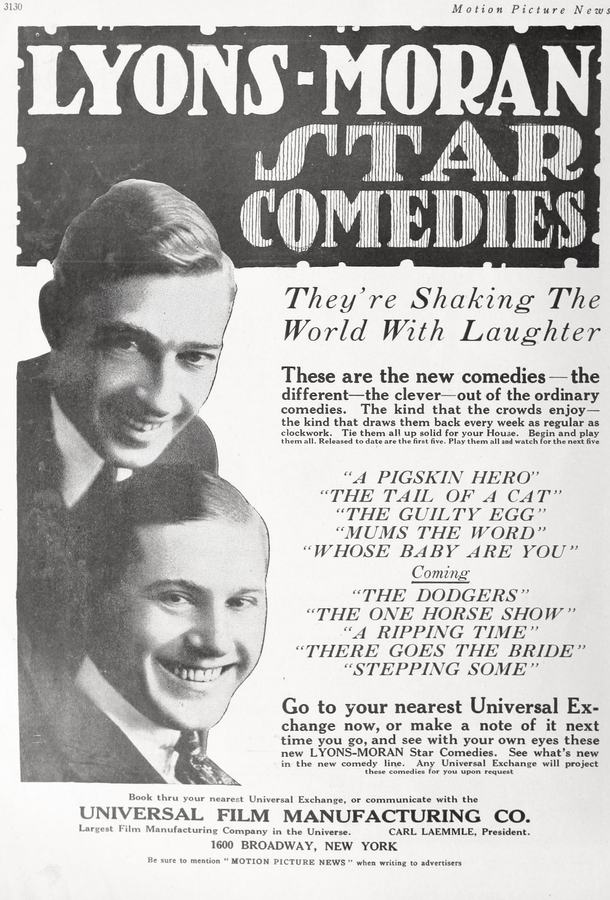
Ah, the silent era! A period often romanticized, sometimes misunderstood, and frequently relegated to the dusty archives of cinematic history. Yet, within its flickering frames lie countless treasures, narratives that, despite their age, resonate with universal truths and timeless humor. Today, we're unearthing one such gem, a delightful escapade titled The Dodgers, a film that, even a century after its inception, offers a vibrant commentary on societal pressures, the pursuit of love, and the exquisite art of evasion. Penned by the ingenious C.B. Hoadley, this picture is a testament to the era's storytelling prowess, blending comedic farce with genuine emotional beats, all delivered through the expressive language of gesture and glance.
From the outset, The Dodgers plunges us into a world teetering on the cusp of modernity, where rigid social expectations clash spectacularly with individual desires. We are introduced to Jack Thorne, brought to life with an infectious, almost impish charm by the incomparable Eddie Lyons. Lyons, a veteran of numerous comedies and melodramas, possesses an innate ability to convey a whirlwind of emotions with a mere tilt of his head or a widening of his eyes. Here, he is at the peak of his physical comedy, embodying a character who is both a victim of circumstance and a master manipulator of it. Jack’s predicament is instantly relatable: a young man, full of life and burgeoning romance, finds himself entangled in the financial machinations of his formidable Uncle Silas.
Uncle Silas, portrayed with a magnificent blend of authoritarian bluster and underlying vulnerability by Lee Moran, is the quintessential silent film patriarch. Moran, known for his versatility, leans into the comedic potential of his character's rigidity. Silas's insistence on Jack marrying the demure Henrietta Finch is not merely a plot device; it’s a reflection of an era where familial alliances and financial stability often superseded personal affection. The arranged marriage, a common trope in early cinema, is given a fresh spin here, primarily due to Jack’s audacious, often ill-conceived, attempts to sidestep his impending nuptials. This dynamic sets the stage for much of the film’s comedic brilliance, as Jack’s increasingly elaborate schemes unravel with delightful unpredictability.
And then there's Henrietta Finch, played by Mattie Witting. Witting’s portrayal is subtle yet effective. Henrietta is not merely a foil for Jack’s affections; she is a character burdened by her own set of societal expectations. While she appears passive, Witting imbues her with a quiet dignity, suggesting an inner world that hints at more than just a desire for a respectable marriage. Her gradual realization of Jack’s disinterest, and her own quiet contemplation of the situation, adds a layer of unexpected depth to what could have been a one-dimensional character. It’s a testament to Hoadley’s writing and Witting’s nuanced performance that Henrietta never descends into caricature, maintaining a degree of sympathy even as she unwittingly becomes an obstacle to true love.
The true heart of the film, however, beats with the vibrant spirit of Lily Maxwell, brought to incandescent life by Edith Roberts. Roberts, a radiant presence on the silent screen, embodies Lily with a fierce independence and artistic passion that feels remarkably modern for the time. Her Lily is not a damsel in distress; she is a woman who paints, who dreams, and who demands genuine affection. Her chemistry with Eddie Lyons’ Jack is palpable, a spark that ignites every scene they share. Roberts’ expressive face conveys a range of emotions, from joyous love to frustrated bewilderment, as she grapples with Jack’s mysterious absences and peculiar behavior. Her performance grounds the film’s comedic excesses in an authentic emotional core, ensuring that the audience remains invested in their budding romance.
C.B. Hoadley’s screenplay is a masterclass in comedic construction. The plot, while seemingly straightforward, is interwoven with intricate subplots and unexpected twists. The pacing is brisk, a hallmark of silent comedies, ensuring that the audience is constantly engaged. The introduction of a bumbling private investigator, hired by Uncle Silas, elevates the slapstick elements to new heights. These chase sequences, a staple of early cinema, are executed with a verve and inventiveness that prevent them from feeling stale. We see Jack dodging the detective through crowded city streets, grand ballrooms, and even a bustling market, each encounter a ballet of near-misses and farcical misunderstandings. The visual storytelling, characteristic of the era, is particularly strong here, relying on exaggerated gestures and clever sight gags to convey the narrative without the need for intertitles to explain every beat.
Thematic resonance is also surprisingly rich within The Dodgers. Beyond the surface-level comedy, the film explores the tension between individual autonomy and societal obligation, a theme that remains profoundly relevant. Jack’s relentless efforts to 'dodge' his responsibilities are not merely selfish; they are an assertion of his right to choose his own path, his own love. This echoes sentiments found in other films of the period that questioned rigid social structures, albeit often with a lighter touch. One might draw a parallel to the struggles against convention seen in films like The Hater of Men, though The Dodgers approaches these themes with a more whimsical, less overtly dramatic sensibility. It champions the idea that true happiness stems from genuine connection, not from inherited wealth or arranged convenience.
The climax of the film, a grand society masquerade ball, is where all the narrative threads converge in a glorious explosion of chaos and revelation. The masquerade setting itself is a brilliant choice, allowing for mistaken identities, hidden emotions, and the dramatic unveiling of truths. Jack’s desperate, final 'dodge' at the ball, inadvertently aided by Lily, leads to a cascade of events that expose not only his affections but also, quite ironically, Uncle Silas’s own youthful indiscretions. This revelation about Silas, that he too was once a 'dodger' of romantic commitment, adds a wonderful layer of irony and humanizes the previously stern patriarch. It underscores the cyclical nature of human experience and the enduring power of youthful rebellion against expectations. This moment of shared vulnerability between uncle and nephew is surprisingly touching, transforming what could have been a purely comedic resolution into something more meaningful.
The film’s resolution, while satisfyingly tying up all loose ends, does so with a sense of earned triumph for the lovers. It’s a classic Hollywood ending, perhaps, but one that feels genuinely earned through the trials and tribulations of Jack and Lily. The triumph of true love over financial expediency is a message that, despite its simplicity, continues to resonate deeply with audiences. The performances throughout are uniformly strong, with Edith Roberts and Eddie Lyons delivering an endearing central romance that anchors the film’s more farcical elements. Their ability to convey complex emotions without dialogue is a testament to their skill and the power of silent acting.
Visually, the film, while not groundbreaking in its cinematography for the era, utilizes its sets and locations effectively. The bustling cityscapes and opulent interiors provide a rich backdrop for the unfolding drama. The costumes, too, are period-appropriate and contribute to the overall aesthetic, particularly during the elaborate masquerade ball. One can imagine the sensory experience of watching this film in its original theatrical setting, with a live orchestra providing the emotional score, enhancing every comedic pratfall and every tender glance. The craft of filmmaking in this period, often overlooked, was about constructing a vivid, immersive world through visual cues and the sheer magnetic presence of its stars.
Comparing The Dodgers to other films of its time helps contextualize its charm. While it shares the comedic spirit of films like The Five Faults of Flo, which also explored humorous social missteps, The Dodgers feels a bit more robust in its narrative structure and character development. It manages to balance its lightheartedness with moments of genuine emotional conflict, preventing it from becoming merely a string of gags. One might also consider it alongside character-driven dramas like A Man of Sorrow, not for plot similarities, but for its commitment to exploring the internal lives of its characters, even within a comedic framework. The film avoids the overt melodrama of some contemporary productions, opting instead for a more nuanced, character-driven approach to its comedy.
The enduring appeal of The Dodgers lies in its ability to tell a universal story with boundless energy and genuine heart. It’s a reminder that the struggles for love, acceptance, and self-determination are not new phenomena, but rather threads woven through the fabric of human experience across generations. C.B. Hoadley’s vision, brought to life by a talented ensemble cast, crafts a narrative that is both entertaining and subtly profound. It’s a film that deserves to be rediscovered, not just as a historical artifact, but as a vibrant piece of storytelling that continues to charm and amuse.
In an age saturated with special effects and rapid-fire dialogue, there’s a quiet power in returning to the roots of cinema, to films like The Dodgers. They invite us to engage with storytelling on a different level, to appreciate the artistry of visual communication, and to marvel at the talent of performers who could convey so much without uttering a single word. It’s a film that leaves you with a smile, a chuckle, and perhaps a renewed appreciation for the timeless art of dodging life’s more inconvenient demands, all in the name of love.
The legacy of such films, often overshadowed by the more prominent classics, is crucial to understanding the evolution of the medium. They represent the foundational experiments, the testing grounds for narrative techniques and character archetypes that would later become staples of cinematic language. The Dodgers, with its clever plot and engaging performances, is a shining example of the ingenuity and creative spirit that defined the silent era. Its light touch on serious themes makes it an accessible entry point for those new to silent cinema, while its intricate comedic timing offers plenty for seasoned enthusiasts to appreciate.
Moreover, the film implicitly comments on the economic anxieties and social stratification prevalent at the turn of the century. Uncle Silas’s obsession with securing Jack’s financial future through marriage is not merely personal quirk; it reflects broader societal pressures where wealth dictated status and opportunity. Jack's rebellion, therefore, can be viewed as a subtle critique of these very structures, advocating for a more egalitarian approach to love and partnership. This underlying social commentary, woven subtly into the comedic fabric, elevates The Dodgers beyond simple entertainment, granting it a lasting resonance.
The work of C.B. Hoadley, as demonstrated here, showcases a keen understanding of both comedic timing and character motivation. The dialogue, though absent audibly, is masterfully implied through the actors’ expressions and gestures, a testament to Hoadley’s ability to craft a compelling narrative through visual means. The script’s structure, with its escalating complications and satisfying climax, is a blueprint for effective storytelling that filmmakers still draw upon today. It’s a reminder that the fundamentals of good writing – compelling characters, clear stakes, and a well-paced plot – transcend technological advancements.
In conclusion, The Dodgers is more than just a relic from a bygone era; it is a vibrant, engaging film that speaks to the enduring human desire for freedom and authentic connection. Its blend of spirited performances, clever plotting, and timeless themes makes it a delightful viewing experience. For those seeking to explore the depths of early cinema, or simply in search of a charming, well-told story, The Dodgers stands as a testament to the enduring power and universal appeal of silent film. It invites us to laugh, to empathize, and to remember that sometimes, the greatest victories are won by simply knowing when, and how, to dodge.
IMDb 5
1928
Community
Log in to comment.