DbcultAccessing Vault...
Cult Review
Senior Film Conservator
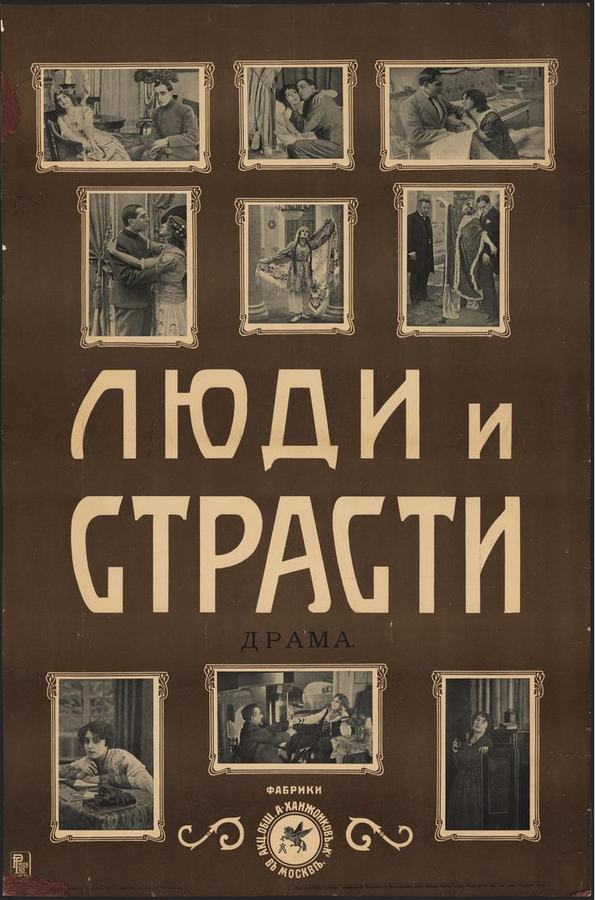
There are films that merely tell a story, and then there are cinematic experiences that claw their way into your subconscious, refusing to release their grip long after the credits roll. G. Smirnov's "Ludi i strasti" (Fools and Passions) unequivocally belongs to the latter category. This is not simply a historical drama; it is a searing, visceral exploration of the human spirit pushed to its absolute limits, a symphony of love, obsession, madness, and the inexorable march of societal change. From its opening frames, the film establishes an atmosphere of disquieting beauty, a world teetering on the brink, mirroring the tumultuous internal landscapes of its unforgettable characters.
Smirnov, a writer of profound psychological insight, crafts a narrative that is both epic in scope and intensely intimate in its emotional resonance. Set against the backdrop of a crumbling imperial city, a metropolis suffocating under its own opulence and simmering with revolutionary fervor, the story centers on Andrei (K. Dzhemarov), a sculptor of prodigious talent and tormented soul. His art is not merely a craft; it is a desperate quest to capture the raw, untamed essence of humanity, a pursuit that demands total immersion and often, self-destruction. Dzhemarov embodies Andrei with a magnetic intensity, portraying a man whose genius is inextricably linked to his fragility, his eyes burning with an almost frightening conviction. His performance is a tour de force, a study in the agony and ecstasy of creation, reminiscent of the raw, unvarnished portrayals seen in The Penitentes, where spiritual torment becomes a tangible, on-screen presence.
Andrei's world, already precariously balanced, is irrevocably altered by the arrival of Elara (L. Bauer), a dancer whose ethereal grace conceals a dangerous, enigmatic allure. Bauer's portrayal of Elara is a masterclass in subtle complexity; she is at once an innocent muse and a femme fatale, a vessel for Andrei's artistic vision and an unwitting catalyst for his descent. Their romance is not one of gentle affection but of incandescent, volatile passion, a force that consumes them both. It is in Elara that Andrei finds the ultimate inspiration for his magnum opus, a sculpture he names "The Folly of Desire," a piece destined to become a haunting emblem of their doomed affair and the era's spiritual desolation.
Yet, their fragile world is not immune to the machinations of power. Enter Count Volkov (P. Knorr), a powerful aristocrat whose patronage of the arts masks a predatory, possessive nature. Knorr delivers a chilling performance, imbuing Volkov with a suave menace that makes him a truly formidable antagonist. He is not merely a villain but a symbol of the decaying aristocracy, a man who believes that beauty, talent, and even human souls can be bought and owned. Volkov's interest in Andrei's art quickly morphs into an obsessive desire for Elara, setting in motion a tragic triangle that echoes the grand, operatic betrayals found in classics like The Lady of Lyons; or, Love and Pride, though with a distinctly more psychological edge.
As Elara finds herself ensnared in Volkov's gilded cage, torn between her love for Andrei and the impossible choices presented by her precarious situation, Andrei's grip on reality begins to fray. His art, once a vibrant expression of his soul, becomes a grotesque mirror of his escalating madness. The sculptures he creates are no longer merely beautiful; they are contorted, despairing reflections of a world spiraling into chaos. This descent is depicted with unflinching honesty, Dzhemarov's physical and emotional transformation being utterly convincing. The film masterfully blurs the lines between artistic genius and psychological instability, suggesting that for some, the two are inseparable.
Beyond the personal tragedy, Smirnov deftly weaves in the broader canvas of social unrest. Elara's pragmatic sister, Sofia (Zoya Barantsevich), watches helplessly as the grand tragedy unfolds, her grounded presence serving as a stark contrast to the heightened emotions around her. Barantsevich brings a quiet strength to Sofia, a woman caught in the periphery of a storm she cannot control. Meanwhile, Grigori (Pavel Biryukov), a revolutionary agitator and Andrei's friend, attempts to draw the artist into the burgeoning movement, seeing his powerful, albeit distorted, art as a potent tool for change. Biryukov portrays Grigori with a fervent idealism, a voice of the future attempting to penetrate the artist's consuming, internal apocalypse. The clash between personal passion and political imperative is a recurring theme, echoing the turbulent societal shifts explored in films like Revolución orozquista, but here, the revolution often feels like a distant thunder, secondary to the more immediate, devastating personal cataclysms.
Visually, "Ludi i strasti" is a triumph. The cinematography is breathtaking, employing deep shadows and dramatic lighting to create a sense of impending doom and heightened emotion. The decaying grandeur of the imperial city feels palpable, a character in itself, suffocating its inhabitants with its past while simultaneously being consumed by the future. The use of color, particularly in the costume design and set pieces, is symbolic, with rich, oppressive reds and golds giving way to somber, muted tones as the narrative progresses. The film's aesthetic often reminded me of the intricate visual storytelling found in The Sable Lorcha, where every frame is meticulously composed to convey mood and meaning.
G. Smirnov's writing is the bedrock upon which this edifice of passion and pain is built. His dialogue is sharp, often poetic, revealing layers of character and motivation with remarkable economy. He understands the power of unspoken words, the weight of a glance, and the devastating impact of a single, ill-fated decision. The screenplay is a masterclass in psychological realism, delving into the darkest corners of human desire and ambition without ever resorting to caricature. Smirnov explores themes of artistic integrity versus compromise, the destructive nature of possessive love, the corrupting influence of power, and the terrifying beauty of madness. The film challenges its audience to confront uncomfortable truths about human nature and the cyclical patterns of history.
The film culminates in a breathtaking, cataclysmic grand ball at Volkov's opulent estate. Here, all the simmering tensions, personal betrayals, and revolutionary unrest converge in a sequence of unparalleled dramatic intensity. Elara's climactic dance, performed amidst the oblivious revelry of the aristocracy, becomes a powerful, silent scream of defiance and despair. The visual and emotional crescendo of this scene is astounding, a perfect storm where individual fates collide with the broader forces of history. It's a moment that feels as raw and impactful as the prison revolt in Life in a Western Penitentiary, but here, the explosions are internal, shattering the fragile facade of an old world teetering on the precipice.
The performances across the board are uniformly excellent. K. Dzhemarov's Andrei is a portrayal of profound depth and searing emotion, a true tour de force. L. Bauer brings a captivating, almost spectral quality to Elara, making her both fragile and resilient. P. Knorr's Count Volkov is chillingly effective, a portrait of aristocratic depravity. Even in smaller roles, Zoya Barantsevich as Sofia and Pavel Biryukov as Grigori contribute significantly to the film's rich tapestry, grounding the more extravagant elements with their nuanced portrayals. Their collective efforts elevate "Ludi i strasti" beyond mere entertainment, transforming it into a profound meditation on the human condition.
"Ludi i strasti" is a demanding film, one that requires its audience to fully invest in its complex emotional landscape and moral ambiguities. It offers no easy answers, instead preferring to linger in the discomfort of its characters' choices and the inevitability of their fates. Yet, it is precisely this uncompromising vision that makes it such a powerful and enduring work. It is a film that speaks to the timeless struggle between creation and destruction, love and obsession, freedom and subjugation. Its echoes can be felt in the intense character studies of films like A Fool There Was, but with a grandeur and psychological depth that is uniquely its own.
In an era saturated with ephemeral content, "Ludi i strasti" stands as a monumental achievement, a testament to the power of cinema to explore the darkest corners of the human psyche and illuminate the grandeur of its passions. G. Smirnov, alongside his exceptional cast and crew, has crafted a work that is as intellectually stimulating as it is emotionally devastating. It is a film that will undoubtedly provoke discussion, inspire contemplation, and leave an indelible mark on all who experience its incandescent fury. A true masterpiece that demands to be seen, studied, and remembered.
IMDb —
1926
Community
Log in to comment.