DbcultAccessing Vault...
7.4/10
Senior Film Conservator
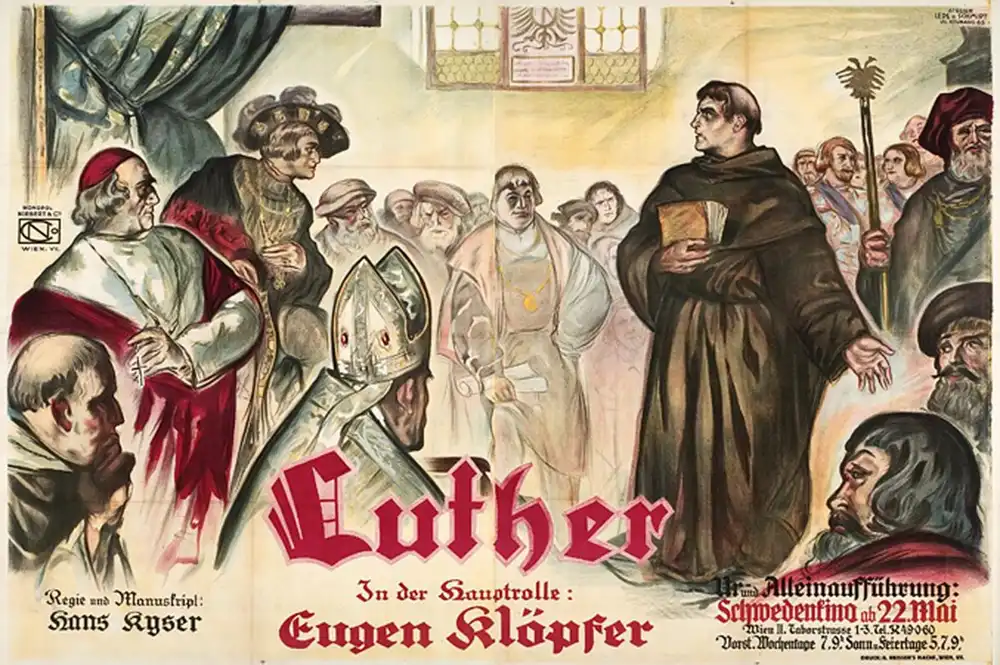
A definitive 7.4/10 rating for a film that redefined the boundaries of cult cinema. Luther remains a cornerstone of transgressive art.
If you have a spare afternoon and don't mind reading a lot of title cards, this 1928 version of Luther is actually worth your time. It is perfect for people who like that old-school German style where everything looks like a painting, but honestly, if you hate slow movies where nothing 'blows up,' you will definitely hate this.
It’s not trying to be a fast-paced thriller. It is mostly just a guy in a robe thinking very hard about God.
The first thing I noticed was the lighting. The director, Hans Kyser, really knew how to make a monastery look like the loneliest place on earth.
There is this one shot where the sun hits the floor through a tiny window and it feels more important than any of the dialogue. It reminded me a bit of the heavy atmosphere in Der Berg des Schicksals, though with less climbing and more praying.
Eugen Klöpfer plays Martin Luther and he has this incredibly round face. He spends a lot of time looking distressed, which I guess makes sense if you’re trying to change the whole world.
There’s a scene where he’s walking through a storm and it looks so fake but in a charming, theatrical way. You can tell they were filming on a stage, but the wind machine is working overtime.
One of the best parts is seeing Max Schreck show up in a small role. Yes, the Nosferatu guy.
Even when he is just playing a regular person, he has this creepy energy that makes you think he might bite someone’s neck at any second. He doesn't, though. He just stands there.
The movie gets a bit bogged down in the middle with all the political meetings. It’s a lot of guys in fancy hats sitting around tables looking angry at each other.
I found myself checking my phone a couple of times during the long debates about church law. It’s not exactly the same kind of drama you get in something like Annie Laurie, which feels much more like a 'movie-movie.'
But then it picks back up when Luther finally nails his papers to the door. I expected it to be this massive, cinematic moment with music swelling, but it’s actually pretty quiet.
He just walks up, hammers the nails, and leaves. It felt real, like something a tired guy would actually do on a Tuesday morning.
The costumes are amazing, though. Everyone looks like they haven't washed their clothes in three years, which feels very historically accurate for the 1500s.
I liked how they showed the contrast between the Pope's fancy life and Luther’s dusty little cell. The Pope’s scenes have so much stuff in them—gold, silk, servants—it makes you feel claustrophobic.
There’s a weirdly long sequence involving a lot of people walking in a line that felt like it went on for ten minutes. I think the editor might have fallen asleep or they just really liked the costumes they rented.
The ending is kind of abrupt. It just sort of stops after he does his big speech at the Diet of Worms.
I wanted to see a bit more of what happened after, but I guess the movie was already getting too long. It’s funny how silent films can feel longer than a three-hour modern blockbuster just because of the pacing.
Is it a masterpiece? Probly not.
But it’s a cool artifact. It feels like looking through an old, dusty window into how people in the 1920s viewed the 1500s.
If you like expressionism and guys with intense eyes, give it a go. Just make sure you have some coffee nearby for the slow parts in the middle. ☕
Oh, and the way the inkwell scene is handled is kind of funny. He just chucks it at the wall and you can see the stain is already there from a previous take, I think. Small mistakes like that make me love these old films more.
IMDb 5.7
1929
Community
Log in to comment.