DbcultAccessing Vault...
6/10
Senior Film Conservator
A definitive 6/10 rating for a film that redefined the boundaries of cult cinema. Social Briars remains a cornerstone of transgressive art.
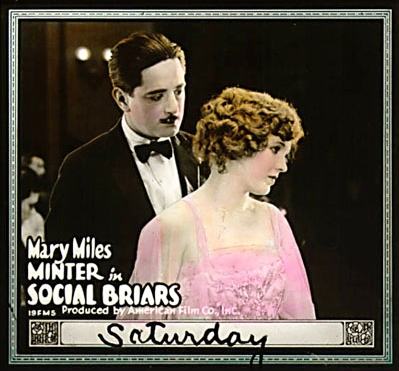
Ah, the silent era! A time when narratives unfolded through the sheer power of visual storytelling, where melodrama reigned supreme, and the subtle nuances of human emotion were conveyed through exaggerated gestures and the poignant gaze of an actor. Among the myriad films that graced the silver screens of the late 1910s, Social Briars emerges as a compelling, if somewhat overlooked, testament to the era's storytelling prowess, particularly in its exploration of a young woman's arduous journey toward self-determination and genuine affection. This cinematic offering, featuring the luminous Mary Miles Minter, weaves a tapestry rich with themes of societal expectation, urban allure, and the thorny path to personal fulfillment, all delivered with the earnest charm characteristic of its time.
Directed by Henry King and written by Edward Sloman and Jeanne Judson, Social Briars, though perhaps not as widely remembered as some of its contemporaries, offers a fascinating glimpse into the moral and social quandaries of early 20th-century America. It's a narrative that resonates with a timeless quality, despite its period-specific trappings, speaking to the universal human desire for autonomy and authentic connection. From the moment Iris Lee steps onto the screen, orphaned and under the watchful, increasingly cold eye of Martha Kane, we are invited into a world where personal desires frequently clash with the rigid dictates of community and family obligation.
At the heart of Social Briars lies the captivating performance of Mary Miles Minter as Iris Lee. Minter, a prominent figure in silent cinema, possessed a delicate beauty and an innate ability to convey a spectrum of emotions without uttering a single word. Her Iris is not merely a passive recipient of fate's whims but a young woman brimming with an understated resilience. From the initial scenes in Dalton, where her discomfort with Jim Kane's unrequited affection and Martha Kane's subsequent frosty demeanor is palpable, Minter masterfully communicates Iris's inner turmoil. Her eyes, often downcast yet capable of flashing with defiance, become windows into a soul yearning for something more profound than the suffocating provincialism of her upbringing.
Minter's portrayal of Iris's flight from Dalton is particularly striking. The desperation she projects when leaping from Jack Andrews's car, a desperate act to preserve her integrity, is a testament to her dramatic power. It's a moment that, even without spoken dialogue, screams of a woman asserting her agency in a world that often sought to circumscribe it. Later, as Iris finds her voice, quite literally, in the metropolitan choir, Minter imbues her character with a newfound confidence and grace. Her transformation from a timid village girl to a blossoming soloist is portrayed with a subtlety that avoids histrionics, making her eventual rise to theatrical stardom feel earned and authentic. It's a performance that, much like her work in Indiscreet Corinne, showcases her mastery of silent screen acting, relying on nuanced facial expressions and body language to tell a complex emotional story.
Social Briars is more than just a romantic melodrama; it's a keen observation of societal dynamics and personal growth. The dichotomy between the stifling rural environment of Dalton and the bustling, opportunity-laden metropolis forms the film's central thematic backbone. Dalton, with its gossiping neighbors and rigid social codes personified by Martha Kane, represents a past that Iris must shed to truly flourish. The city, on the other hand, symbolizes freedom and the chance for reinvention, albeit with its own set of challenges and moral quandaries, as evidenced by Jack Andrews's initial predatory behavior.
The film also delves into the theme of ambition, particularly for women in an era when their roles were often confined to the domestic sphere. Iris's journey from a choir singer to a light-opera star is a powerful narrative of a woman breaking free from conventions to pursue her artistic calling. This arc, while perhaps idealized, serves as an inspiring portrayal of female empowerment. Her success is not merely a stroke of luck but a culmination of her talent and the fortuitous patronage of Peter Andrews, a benevolent figure who recognizes her potential. This narrative thread, where a woman's talent elevates her societal standing, can be seen echoed in other dramas of the period, reflecting a growing fascination with female agency. Comparisons could be drawn to films like The Heart of Rachael, where women navigate complex social landscapes to achieve personal and professional fulfillment, often against considerable odds.
Perhaps the most compelling thematic element is the journey of redemption, primarily through the character of Jack Andrews. Initially presented as a rather unsavory character, his drunken intrusion on Iris's opening night is a moment of profound crisis for both characters. Yet, the film allows him a path to atonement. His subsequent remorse, his decision to give up drinking, and his dedication to a respectable career within his father's firm illustrate a belief in the possibility of personal transformation. This redemption arc is crucial, as it ultimately allows for the film's romantic resolution, suggesting that true love can only flourish on a foundation of respect and genuine change. This theme of a flawed character finding redemption through love and effort is a common, enduring trope in cinema, seen in various forms throughout film history, including more action-oriented narratives where a hero must overcome personal demons.
While Minter carries much of the film's emotional weight, the supporting cast provides crucial texture and conflict. Jacob Abrams as Jim Kane embodies the archetype of the spurned lover, his earnest yet ultimately unreciprocated affections serving as a catalyst for Iris's initial flight. Claire Du Brey, as Martha Kane, delivers a chillingly effective performance as the judgmental guardian whose 'love' is conditional upon Iris conforming to her desires. Her coldness is a palpable force, pushing Iris towards a future she could never have imagined within Dalton's confines. Du Brey's ability to convey disdain and moral superiority with subtle shifts in posture and expression is noteworthy.
Frank Whitsell's portrayal of Jack Andrews is a study in character evolution. He begins as a somewhat reckless and entitled young man, his attempted kiss a reflection of a casual disregard for Iris's boundaries. His arc from this initial transgression to a genuinely remorseful and reformed suitor is critical to the film's romantic conclusion. Whitsell manages to make Jack's transformation believable, showcasing a shift from superficial charm to profound sincerity. This journey from impetuous youth to responsible adulthood is a familiar cinematic motif, and Whitsell navigates it with a convincing earnestness that helps to sell the final reconciliation.
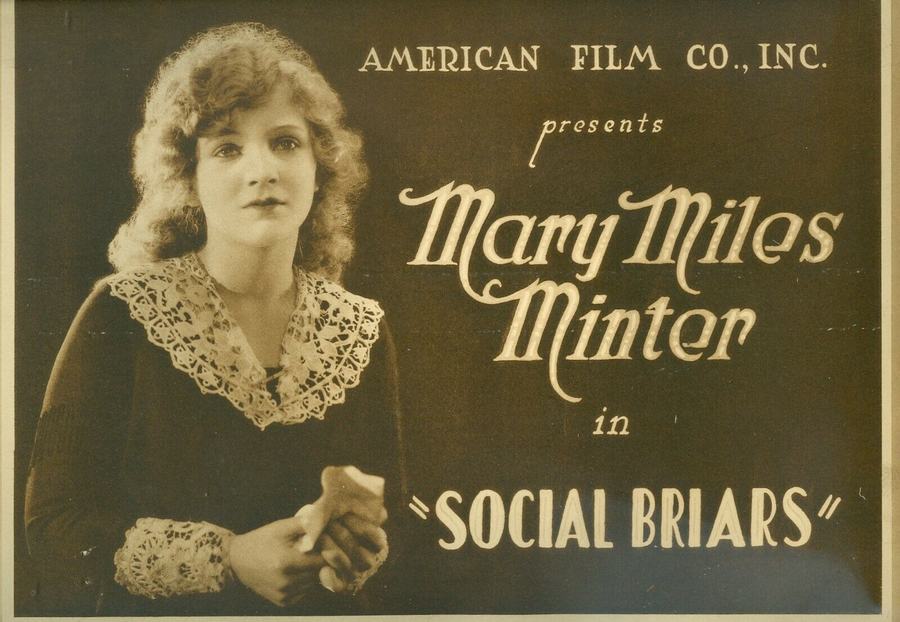
Allan Forrest as Peter Andrews plays the benevolent patron, a character essential for Iris's metropolitan ascent. His recognition of her talent is not merely a plot device but a representation of the opportunities that the city can offer, a stark contrast to the closed-off world of Dalton. George Periolat, Milla Davenport, Edmund Cobb, and Anne Schaefer round out the cast, each contributing to the rich tapestry of characters that populate Iris's world, from theatrical colleagues to Dalton's townsfolk. Their collective performances, though often brief, add depth and realism to the narrative, grounding Iris's extraordinary journey in a recognizable social fabric.
The screenplay by Edward Sloman and Jeanne Judson is a well-structured example of early cinematic storytelling. They effectively build Iris's character arc, establishing her initial vulnerability and then systematically presenting her with challenges that force her growth. The plot, while adhering to certain melodramatic conventions of the era, manages to feel organic. The transitions from the rural setting to the urban landscape are handled with a sense of purpose, each environment serving as a distinct stage for Iris's evolution. The writers skillfully employ cause and effect, where Martha Kane's coldness directly leads to Iris's departure, and Jack's misbehavior directly triggers his subsequent remorse and transformation.
The pacing of the narrative is also commendable. Despite the inherent limitations of silent film, Sloman and Judson manage to maintain audience engagement through a judicious balance of dramatic tension, moments of quiet reflection, and exhilarating sequences. The scene where Iris leaps from the car is a prime example of their ability to craft high-stakes drama. Moreover, the resolution, where Jack's transformation is convincingly portrayed, avoids a rushed or unearned happy ending, lending the conclusion a greater sense of satisfaction. It showcases a thoughtful approach to character development, allowing for a genuine, rather than superficial, change of heart, a nuanced approach that elevates it beyond mere pulp fiction.
While specific directorial credits for Social Briars often point to Henry King, the film's overall aesthetic and narrative construction are deeply embedded in the cinematic language of the late 1910s. The use of intertitles, though a necessity, is handled with an elegance that enhances rather than detracts from the visual narrative. These textual inserts provide crucial dialogue and exposition, but never overshadow the actors' performances. The cinematography, likely a collaborative effort, would have relied on established techniques of the time: clear, well-composed shots, often utilizing medium close-ups to capture the emotional nuances of the actors. The visual contrast between the cramped, rustic feel of Dalton and the expansive, glittering world of the metropolis would have been a deliberate choice, emphasizing Iris's journey both physically and metaphorically.
The acting style, characterized by its expressive quality and heightened gestures, is perfectly suited to the medium. Actors like Minter were masters of conveying complex emotions through facial contortions, body language, and dramatic pauses. This style, often misunderstood by modern audiences accustomed to naturalistic acting, was the very essence of silent film's power. It demanded a different kind of engagement from the viewer, one that involved interpreting visual cues and internalizing the emotional landscape presented on screen. In this sense, Social Briars is an excellent example of how effectively these conventions could be employed to tell a compelling human story, much like the expressive performances found in The Woman or Daredevil Kate, where the actors' physical presence was paramount.
Released in 1918, Social Briars arrived at a fascinating juncture in American history, just as the nation was grappling with the tail end of World War I and the burgeoning social changes that would define the Roaring Twenties. Films like this, which depicted women seeking independence and navigating complex social landscapes, resonated with audiences who were witnessing similar shifts in real life. The theme of escaping small-town constraints for urban opportunities was a powerful one, reflecting the mass migration from rural areas to cities during this period. Iris's journey, therefore, taps into a collective aspiration for progress and self-improvement that was very much in the air.
The film's exploration of class differences, the moral pitfalls of wealth, and the redemptive power of love also speaks to universal human experiences that transcend time. While the specific social codes and sartorial styles might seem antiquated, the underlying emotional struggles of Iris and Jack remain remarkably relatable. The desire to be loved for who you are, the struggle to overcome personal flaws, and the courage to pursue one's dreams are themes that continue to resonate with audiences today. Social Briars, in its quiet way, reminds us that the human heart's desires and dilemmas have remained largely unchanged, even as the world around us transforms. Its narrative structure, focusing on a protagonist's struggle against societal expectations and a journey of self-discovery, can be seen as a precursor to countless modern dramas. The idea of 'rebellion' against a restrictive environment, though more subtly portrayed here than in a film explicitly titled Clover's Rebellion, is nonetheless a driving force for Iris.
In conclusion, Social Briars stands as a compelling example of silent cinema's ability to craft intricate human dramas. Mary Miles Minter's performance as Iris Lee is a beacon of expressive acting, carrying the film's emotional weight with grace and conviction. The narrative, penned by Edward Sloman and Jeanne Judson, is a thoughtful exploration of ambition, class, and the arduous path to genuine affection and personal redemption. While it might not possess the grand scale of some epic silent films, its strength lies in its intimate portrayal of a young woman's struggle for independence and happiness.
For enthusiasts of classic cinema, and particularly those with an appreciation for the silent era, Social Briars offers a rewarding viewing experience. It's a film that, despite its age, resonates with themes that are as relevant today as they were over a century ago. It invites us to reflect on the choices we make, the people who shape our journeys, and the enduring power of love and personal transformation. Its legacy, though perhaps not shouted from the rooftops of cinematic history, quietly endures as a testament to the evocative power of silent storytelling. It reminds us that even in the absence of spoken dialogue, the human spirit's triumphs and tribulations can be conveyed with profound emotional depth and lasting impact. The journey of Iris Lee, fraught with peril yet ultimately culminating in self-discovery and enduring love, remains a poignant and inspiring cinematic experience, a quiet gem in the vast, glittering treasury of early film.
IMDb —
1917
Community
Log in to comment.