DbcultAccessing Vault...
6.5/10
Senior Film Conservator
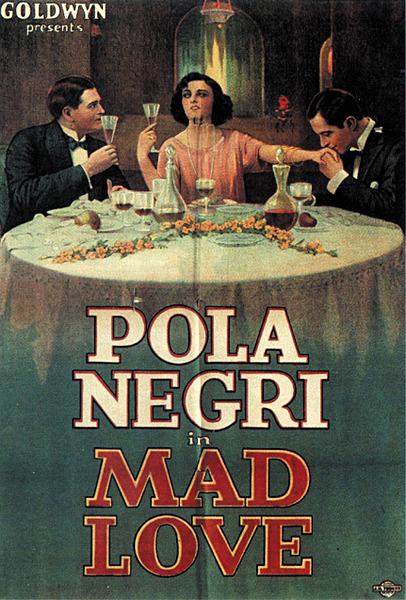
A definitive 6.5/10 rating for a film that redefined the boundaries of cult cinema. Mad Love remains a cornerstone of transgressive art.
Berlin, 1923: inflation papered the cafés like wallpaper, cocaine replaced sugar in espresso, and cinema, still mute, screamed louder than any talkie ever would. Into this cracked prism storms Mad Love (German title: Die gelbe Fahne), a film that arrived carrying whispers of scandal—reports that three viewers in Munich fainted when Sappho first peels off her elbow-length gloves frame by frame. Those stories may be apocryphal, yet the celluloid itself feels fevered, as if every grain were soaked in absinthe and phosphorus.
Director Dmitriy Bukhovetskiy, imported from Kiev with a reputation for orchestrating chaos like Tchaikovsky conducting dynamite, opens on a tracking shot that glides past a row of gas lamps, each flame shivering as though forewarned. We land inside the Odeon, a nightclub that never existed on any municipal map but has since become the phantom blueprint for every fictional Berlin den of iniquity. Velvet everywhere, yet the velvet looks wet, as if the walls perspire gin. The camera tilts up to a mezzanine where Pola Negri—billed simply as Sappho—reclines against a balustrade, a cigarette holder angled like a conductor’s baton. She doesn’t enter the film; the film leans toward her.
Forget the cardboard succubi of American melodrama. Negri’s Sappho is an ontological event: she alters the room’s barometric pressure. When her pupils dilate, the iris of the lens seems to dilate with them. She speaks the silent era’s most erotic language—gesture at the velocity of thought. Watch the micro-movement when she learns the earnest, square-shouldered Richard (Johannes Riemann) is Andreas’s brother: a single pearl earring trembles, betraying a heartbeat beneath the marble façade. In that quiver lies the film’s thesis—even Aphrodite can bruise.
The screenplay, adapted loosely from Alexandre Dumas fils’ La Dame aux Camélias yet hurled head-first into post-war nihilism, jettisons redemption. Where Marguerite Gautier consumptively exhales last breaths of moral clarity, Sappho inhales the ashes and grins. The intertitles—some of which survive only in Russian cyrillic—read like fragments from a suppressed psychiatric casebook: "Desire is a bone one cannot digest."
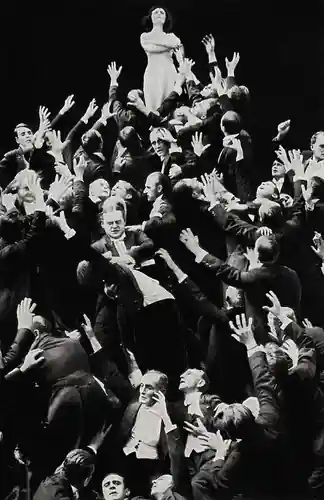
Production designer Alfred Abel (doubling as the film’s scheming Count Lasky) constructs spaces that prefigure the characters’ breakdowns. Andreas’s cell is a cylindrical silo: the camera peers down from a godlike height as he scrawls Sappho’s name in concentric circles, a human zoetrope. The asylum’s corridor bends subtly, a trick accomplished with convex set pieces; when Richard paces it in despair, the world appears to buckle, as though sanity were a poorly tacked backdrop.
Compare this to the domestic flat Richard calls home: symmetrical, rectilinear, boring—a mausoleum of reason. Sappho visits once, at the 42-minute mark, and the set literally warms: Abel floods the space with amber gels so that the wallpaper seems to perspire honey. She leaves behind a cigarette burn on the chaise longue; the camera lingers on the smoldering crater, a solar flare amid order.
Otto Treptow plays Andreas like a violin that has learned to scream. His hands—always the hands in silent cinema—flutter as if trying to shake off invisible manacles. In the celebrated mirror scene, he confronts his reflection while Sappho’s off-screen laughter is suggested by a superimposed ripple across the glass. The image doubles, triples, quadruples; we witness a man arguing with a prism of himself. Reports claim Treptow fasted for 48 hours before filming to achieve that papery translucence; whether myth or method, the cheeks look candle-hollow.
Negri, by contrast, works with the precision of a watchmaker placing explosives. She modulates her shoulders, not her face, when she wishes to convey triumph: the collarbones rise like drawn daggers. Critics of the period accused her of theatrical excess; viewed today, her stylization feels eerily contemporary—she is acting for the GIF era before the format existed.
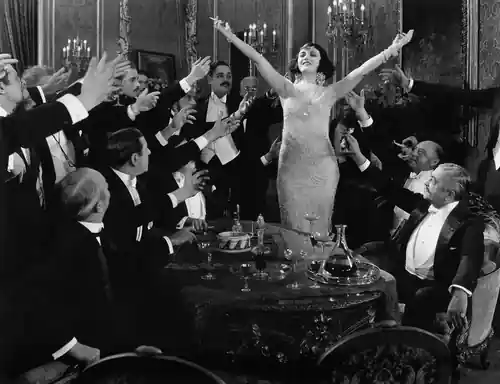
One cannot overstate how radically Mad Love inverts the scopophilic machinery of 1920s cinema. The camera repeatedly frames Richard through Sappho’s gaze: he becomes the object, shoulders squared, hair parted like a schoolboy prepped for inspection. In a taunting reversal of von Sternberg’s later Dietrich iconography, Sappho dons a top-hat and tails for a private tableau vivant, turning Richard into the exposed ingénue. She circles him, riding-crop in hand, while the camera assumes her POV—we are invited to savor the discomfort of a man learning what it feels like when vision itself undresses.
This proto-feminist current likely stems from co-writer Helga Molander, an avant-garde playwright who publicly debated Freud in Vienna. Molander’s fingerprints appear in intertitles that read like aphorisms from The Second Sex yet to be written: "To be looked at is a debt women pay with flesh; to look back is theft."
Cinematographer Guido Seeber, Weimar’s unsung alchemist, shoots faces as topographies rather than portraits. He employs the rare Ortho-chromatic stock that renders skin lunar and lips obsidian. Candlelight becomes a character; shadows possess texture. In the climactic séance—yes, the film detours into spiritualism—Sappho’s profile bisects the frame: half bathed in gold, half drowning in umber. The moment she learns Andreas has hanged himself with his bedsheet, the candle gutters, and the screen drops four shades darker without a cut. We feel the news before we read the intertitle.
No definitive score survives, though censorship cards list a commissioned waltz by Kurt Weill—lost in a warehouse fire. Modern restorations often default to period-appropriate cabaret pastiche, yet the film defies accompaniment; its rhythms are internal. Watch the montage where Richard frantically searches the city: shots last 12, 8, 6, 4, 2 frames—accelerating like a heart palpitating. The editing becomes the score.
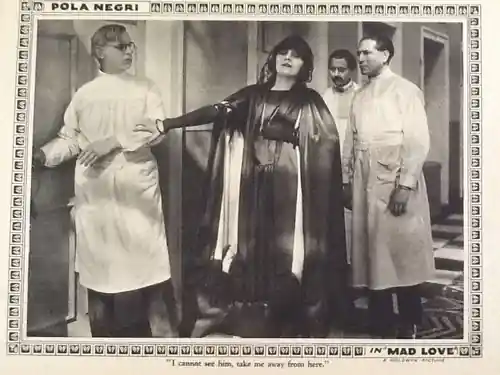
At The Storm we see similar rhythmic hysteria, but where that rural tale uses weather as percussion, Mad Love employs urban neurosis: clanging tram bells, typewriter hammers, the hiss of a syringe—all implied visually yet percussively heard by the viewer willing to listen.
Place it beside Less Than the Dust—both feature femme fatales, yet the latter moralizes, allowing Mary Pickford’s betrayed innocent a closing shot of sunlit redemption. Mad Love offers no such balm; its final image is Sappho boarding the night-express to Vienna, her face unreadable behind a veil of Belgian lace. The camera cranes up to the station clock: midnight plus one—time itself has become an accomplice.
Or stack it against Die Liebe der Bajadere, where Pola Negri again plays a temptress, but within the safely exoticized confines of imperial India. Here, the danger is domestic, bourgeois, modern—your neighbor could be Sappho, your brother her next casualty.
Premiering 17 October 1923 at the Ufa-Palast am Zoo, the screening ended with fistfights between Expressionist poets and Catholic youth groups. The Deutsche Film-Zeitung called it "a syphilitic carnival destined to unhinge the last moral vertebra of the nation." Censors in Bavaria excised 312 meters of footage—mostly the asylum sequences—consequently rendering later reels incoherent. The film vanished by 1927; Negri’s Hollywood contracts buried it further.
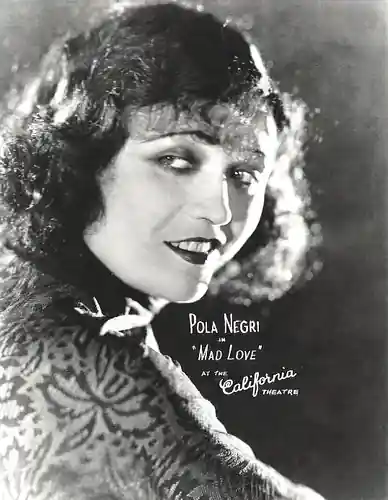
Rediscovery came in 1989 when a Portuguese print surfaced in the abandoned Cine-Teatro Joaquim. Though re-translated back into German, the tinting was miraculously preserved—sea-foam green for exteriors, rose for interiors, amber for moral twilight. The restored version now circulates via 2K DCP, yet I urge cinephiles to seek 35mm if possible; the flicker of celluloid reawakens the film’s pulse.
Viewed post-2017, Mad Love complicates the conversation. Sappho wields sexuality as currency, yet the film refuses to punish her with death—a fate routinely dealt to Cheated Love’s fallen women. Instead, she glides onward, unpossessed. Some scholars label the character misogynist projection; I read her as a warning that the patriarchy’s own Frankenstein refuses to bow. She is not evil for evil’s sake, but because the system that forged her left no other toolkit for agency.
Contemporary directors mining similar veins—think Denis in Trouble Every Day, or Refn’s The Neon Demon—owe a debt. Where they use gore, Bukhovetskiy uses absence: the empty space where Andreas’s body once swung remains off-screen, imagined, thus infinitely more terrifying.
Notice the recurrence of blood-orange: Sappho’s fan, Andreas’s cravat, the asylum gate. It signals contamination. Whenever the hue appears, a character crosses a moral event horizon. Conversely, sea-blue emerges only in moments of self-deception—Richard’s study lamp, the doctor’s spectacles—blue as the color of plausible deniability.
Yellow, the shade of caution tape, paints the Odeon’s chandeliers, the satin lining of Sappho’s opera cloak. It warns: approach, but at peril.
If your idea of silent cinema is Charlie Chaplin’s slapstick or Lillian Gish stranded on ice floes, brace yourself. Mad Love offers no safety nets, no comic relief, no orchestral swell to reassure you virtue survives. It is, instead, a 104-minute masterclass in cinematic sadism—not the Tarantino brand that winks at carnage, but the colder variety that asks: how much of someone else’s madness are you willing to wear before calling it love?
Stream it legally via Kanopy’s silent collection, or hunt the Flicker Alley Blu-ray. Pair with a gin blanc, no chaser; let the juniper mimic the film’s medicinal sting.
And when the lights rise, resist the urge to google "whatever happened to Sappho?" The picture’s triumph lies in denying you closure. Like Richard, you will exit muttering the brother’s name, half-hoping the next stranger’s smile does not cut quite so deep. That is the last, most exquisite cruelty of Mad Love: it makes voyeurs of us all, and accomplices of our memories.
IMDb —
1916
Community
Log in to comment.