DbcultAccessing Vault...
Cult Review
Senior Film Conservator
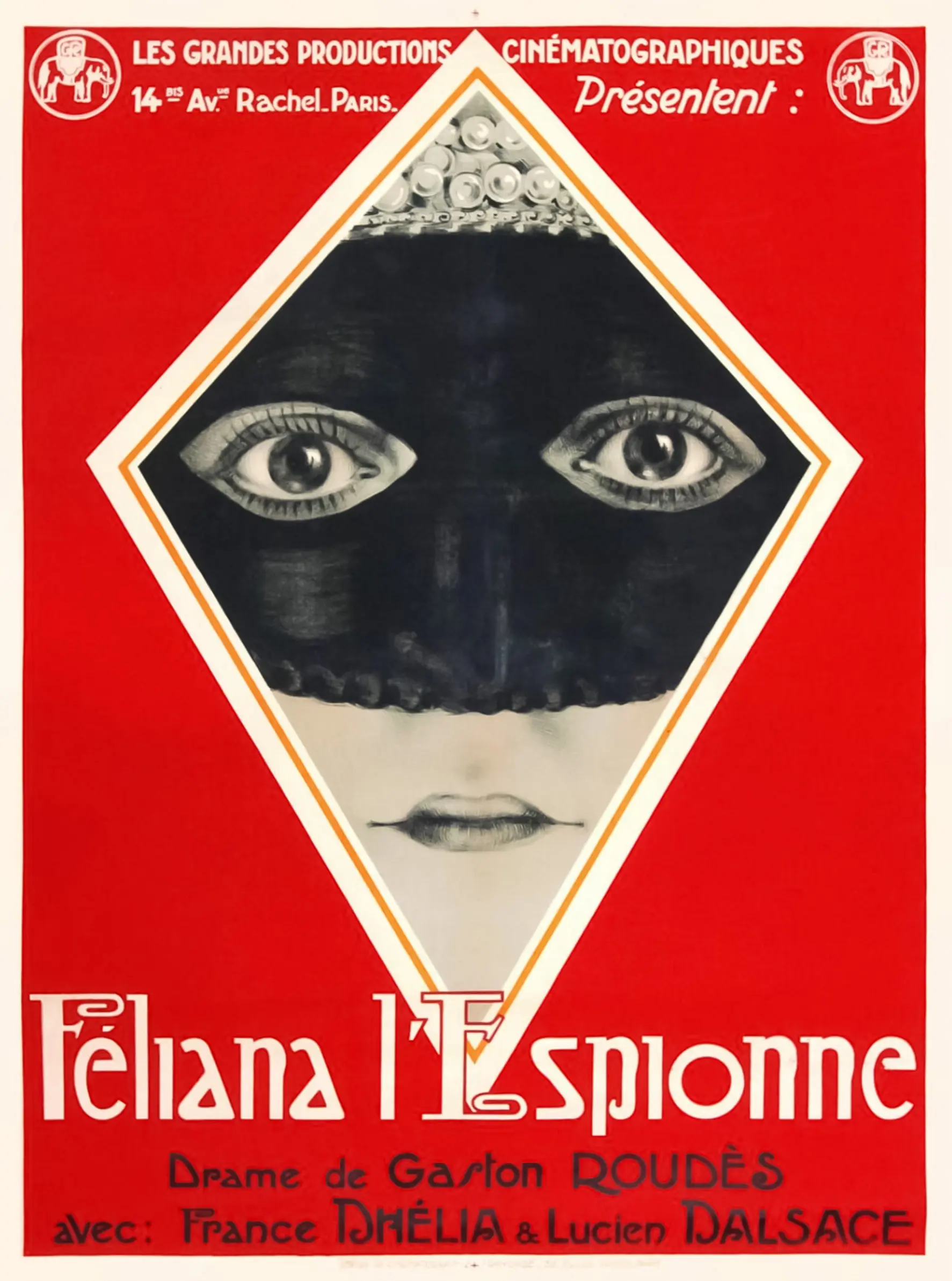
Stepping back into the cinematic annals of a bygone era, one often encounters forgotten gems, films whose flickering images once captivated audiences but have since receded into the periphery of popular memory. Yet, every so often, a title emerges, demanding a fresh look, a re-evaluation of its artistic and historical significance. Such is the case with Gaston Roudès's audacious silent epic, Féliana l'espionne, a film that, even a century after its initial release, pulses with a vibrant energy and a surprising modernity that belies its vintage. This isn't merely a period piece; it's a pulsating testament to the foundational power of visual storytelling, a masterclass in suspense that leverages the unique strengths of the silent medium to weave a narrative of espionage, intrigue, and human frailty.
The film plunges us headfirst into a world teetering on the precipice of global conflict, where the elegant salons of Parisian high society serve as a deceptive facade for a brutal game of international espionage. At its heart is Féliana, portrayed with captivating grace and fierce intelligence by the inimitable France Dhélia. Dhélia's performance is a revelation, a nuanced portrayal that transcends the often broad theatrics of silent acting. She imbues Féliana with a magnetic allure, a woman whose public persona as a dazzling cabaret dancer is a perfectly crafted illusion, a shield behind which she operates as a formidable agent for French intelligence. Her eyes, even without spoken dialogue, convey a complex spectrum of emotions – determination, vulnerability, and a profound weariness that hints at the heavy toll of her clandestine life. This duality is not merely a plot device; it's the very core of her character, making her far more compelling than many of her contemporaries.
The narrative itself, crafted by Gaston Roudès, is a marvel of intricate plotting. It eschews simplistic hero-villain dynamics in favor of a more elaborate dance of deception. Baron von Kessel, played with chilling aristocratic menace by Léon Malavier, is no mere mustache-twirling antagonist. Malavier crafts a villain whose charm is as disarming as his ambition is ruthless, making him a truly formidable adversary. Kessel's network of industrial espionage, aimed at pilfering vital defense blueprints, feels remarkably prescient, echoing anxieties that continue to resonate in contemporary geopolitics. The stakes are palpable, and Roudès ensures that every stolen document, every intercepted message, carries significant weight, propelling the story forward with relentless momentum.
What truly elevates Féliana l'espionne beyond a mere historical curiosity is its masterful deployment of cinematic technique to build suspense. Roudès, as a writer, understood the power of visual suggestion, allowing the camera to linger on meaningful glances, furtive hand gestures, and the subtle shifts in an actor's posture. The editing, while perhaps not as frenetic as later thrillers, is judiciously paced, building tension through sustained shots and deliberate cuts that maximize dramatic impact. There are moments of breathtaking stillness, where the audience is invited to scrutinize every detail, searching for clues alongside Féliana. This approach stands in stark contrast to some of the more overtly theatrical silent films of the era, offering a more immersive and psychologically engaging experience. Comparisons could be drawn to the subtle, creeping dread found in films like Der grüne Skarabäus, which also relied on atmosphere and visual cues to create its thrills, though Féliana leans more into outright action.
The supporting cast, too, delivers performances that enhance the film's rich tapestry. Léonce Cargue as Captain Armand Dubois embodies the conflicted hero archetype with conviction. His character's evolving relationship with Féliana, fraught with suspicion and burgeoning affection, adds a compelling layer of emotional complexity to the espionage narrative. Dubois is not a straightforward romantic interest; his allegiances are tested, and his moral compass is frequently challenged, creating a dynamic tension that keeps the audience guessing. Henri Janvier, as Féliana's enigmatic handler, Monsieur Duval, provides a steady, authoritative presence, a vital anchor in the turbulent world of espionage. His quiet intensity grounds the more flamboyant elements of the plot, reminding us of the serious implications of Féliana's mission.
The production design and cinematography of Féliana l'espionne are equally commendable. The film transports viewers to a meticulously recreated Belle Époque Paris, from the glittering lights of the cabaret stage to the shadowed cobblestone streets. The opulent interiors of Baron von Kessel's chateau are particularly striking, serving as both a symbol of his power and a gilded cage for Féliana. The use of natural light and carefully constructed sets adds a layer of verisimilitude that draws the audience deeper into the narrative. One can almost feel the chill of the Alpine air, or the hushed tension of a clandestine meeting in a dimly lit café. The visual language is rich with symbolism, using architectural details and even costume choices to inform character and plot, a sophistication often underestimated in early cinema. This attention to detail creates an immersive experience, a fully realized world that feels both grand and intimately dangerous.
The action sequences, while constrained by the technical limitations of the era, are remarkably well-staged and exciting. The climactic infiltration of Kessel's chateau is a particular highlight, featuring daring escapes and tense cat-and-mouse games that keep pulses racing. Féliana is depicted not just as a master of disguise, but as a resourceful and physically capable agent, a proto-feminist icon who holds her own in a male-dominated world. Her ingenuity in moments of peril is genuinely thrilling, showcasing a character who relies on her wits as much as her charm. This portrayal of a strong, independent female protagonist was quite progressive for its time, setting a precedent for future spy heroines.
Placing Féliana l'espionne within the broader context of silent cinema, it's clear that Gaston Roudès and his team were pushing boundaries. While earlier serials like Fantomas: The Man in Black had explored criminal masterminds and intricate plots, Féliana brought a more refined psychological depth to the espionage genre. It moved beyond sensationalism to explore the personal costs and moral ambiguities inherent in a spy's life. The film's exploration of identity, loyalty, and betrayal feels remarkably modern, echoing themes that would be revisited in spy thrillers for decades to come. It’s a testament to Roudès’s vision that the film manages to be both a thrilling adventure and a thoughtful character study.
The performances, particularly France Dhélia's, warrant further discussion. In an era where many actors relied on exaggerated gestures to convey emotion, Dhélia's subtle expressiveness is a breath of fresh air. Her ability to communicate complex internal states through minimal movement and poignant facial expressions is a masterclass in silent acting. She understands that less can often be more, allowing the audience to project their own understanding onto her enigmatic character. This nuanced approach allows Féliana to transcend the archetype and become a fully realized individual, a woman burdened by her dangerous profession but driven by an unwavering sense of duty.
The supporting roles, from Lucien Dalsace's conflicted Dr. Moreau to the various minor players like Lavallée, Paul Ollivier, and Sambi, all contribute to the film's rich texture. Dalsace, in particular, portrays the scientist's moral quandary with a quiet desperation that adds another layer of human drama to the espionage plot. These characters are not mere props; they are integral components of Kessel's network or Féliana's support system, each with their own motivations and vulnerabilities. This meticulous attention to character development, even for secondary figures, is a hallmark of Roudès’s storytelling and elevates Féliana l'espionne beyond a simple action vehicle.
Ultimately, Féliana l'espionne stands as a powerful reminder of the sophisticated storytelling that existed in the silent era. It’s a film that, despite its age, feels remarkably current in its themes and its execution. The tension it builds, the characters it explores, and the moral ambiguities it presents are timeless. It's a film that speaks to the enduring human fascination with secrets, betrayal, and the individuals brave enough to navigate their perilous waters. For enthusiasts of early cinema, or indeed, anyone with an appreciation for well-crafted thrillers, Féliana l'espionne is an essential viewing experience. It's not just a historical artifact; it's a vibrant, engaging piece of cinematic art that continues to resonate.
Its influence, though perhaps not overtly acknowledged in mainstream film history, can be felt in the DNA of countless spy thrillers that followed. The concept of the glamorous, multi-faceted female agent, the intricate web of international intrigue, the race against time to prevent a catastrophic event – these are all tropes that Féliana l'espionne helped to solidify. While one might look to more well-known films for comparison, such as the dramatic intensity of The Lion and the Mouse for its moral complexities, or the adventurous spirit of Maciste turista for its larger-than-life heroics, Féliana carves out its own unique niche with its blend of high-stakes espionage and compelling character depth. It’s a film that deserves to be rediscovered, celebrated for its originality, and recognized for its significant contribution to the evolution of the spy genre. Its intricate plot, compelling performances, and masterful direction ensure its place as a cornerstone of early cinematic suspense, a true triumph of visual storytelling that continues to captivate and thrill a century later.
IMDb 5.2
1932
Community
Log in to comment.