DbcultAccessing Vault...
5/10
Senior Film Conservator
A definitive 5/10 rating for a film that redefined the boundaries of cult cinema. Detective Craig's Coup remains a cornerstone of transgressive art.
Urban shadows, humming presses, and a single strand of copper wire suspended between skyscrapers—Detective Craig's Coup turns counterfeit cash into a morality play that crackles louder than the Third Rail.
George B. Seitz’s 1926 one-reel marvel, too long dismissed as a mere programmer, is in fact a pocket-watch symphony of proto-noir gestures, a celluloid love letter to a city learning the rhythm of its own jazz heart. The plot—inked with the efficiency of a grand jury indictment—spins around James Dalton, a confidence man whose tuxedo never wrinkles even when his bills do. Rarely do we see him inside the fetid basement where plates spit ink like wounded serpents; instead he glides through Manhattan’s gilded parlors, slipping queer twenties into the manicured hands of bartenders who measure a man by the crease in his fedora.
The film’s visual lexicon borrows chiaroscuro bruises from German expressionism yet keeps its feet planted in the ash-caked sidewalks of New York. Cinematographer Frank Zucker tilts the camera so that elevator shafts yaw like cathedral naves, and every alley exhales steam worthy of a Tol’able David reboot.
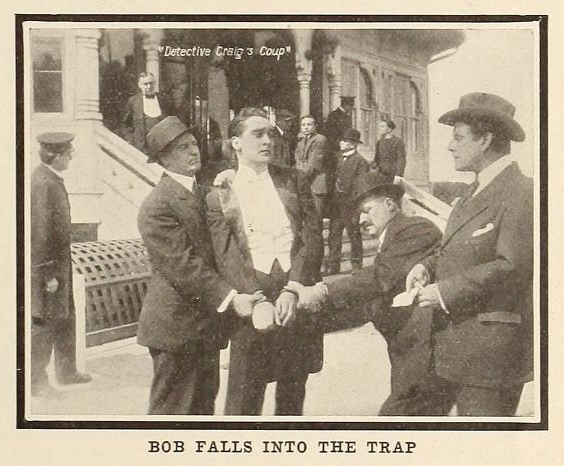
Enter Bob Brierly—played by a luminous but largely forgotten Jack Standing—all prairie shoulders and prairie trust, the kind of rube who believes neon is just bottled starlight. Standing’s gait carries the awkward bounce of a man who once herded cattle and now herds only debts. His tragedy arrives gift-wrapped: a wad of bogus bills that pass from Dalton’s manicured fingers to the bar’s mahogany rail, then to a cash drawer, and finally to a detective’s loupe. Within minutes, Bob’s western optimism is shackled by precinct doors that clang like broken xylophones.
The trial sequence, mercifully brisk, is staged with cavernous minimalism: a single close-up of Standing’s trembling jaw dissolves to a barred window where snowflakes die against the sill. The film refuses to wallow; parole arrives in the next splice. Seitz understands melodrama’s true engine is forward momentum, not tar-pit lamentation.
Freshly sprung, Bob collides with Mae Edwards (Pearl Sindelar, equal parts Florence La Badie spunk and Clara Bow sparkle). She vouches for him at her employer’s marble sanctuary, and suddenly the ex-con trades stripes for a starched collar, crunching ledgers beneath chandeliers that drip like frozen waterfalls. The edit here is sublime: a match-cut from Bob’s prison beans to a fountain pen signing his new life. Sindelar’s chemistry with Standing is gentle, never cloying; their flirtation happens in the margins of deposit slips and shared streetcar straps.
Of course Eden curdles. Dalton resurfaces inside the gilded cage, whispering Bob’s record into presidential ears. One dissolve later, our hero is again scanning the Help Wanted pages, his face reflected in a puddle that also swallows neon. Dalton’s sadism is never physical—it’s bureaucratic, the slow strangulation of opportunity. The montage of slammed doors is scored only by city traffic, no intertitles required.
A single shot lingers: Bob’s silhouette framed by a pawn-shop window where a glittering wristwatch ticks beside a revolver. You can almost hear William Hart’s ghost whisper from The Virginian: “When you call me that, smile!”
The heist that follows is less a crime than a crucible. Detective Craig—Francis Carlyle channeling a young Edgar Kennedy minus the comic bluster—has tracked Dalton’s scent through flop-houses and pool halls. Carlyle plays Craig with the resignation of a man who’s seen every civic sin catalogued, a saint who no longer expects heaven. His plan is elegant: allow the robbery to bloom, corner the conspirators inside the vault, and net the whole hydra. Yet Seitz complicates the moral algebra—Craig knows Bob is coerced, and the detective’s dilemma becomes how to spring the trap without crushing the fly.
Which brings us to the set-piece that silent-era buffs will splice into highlight reels until nitrate itself disintegrates: Dalton’s escape hand-over-hand across a live electric cable strung between two skyscrapers. No rear projection, no miniatures—just a stunt double forty stories above Lexington Avenue, calves trembling, wind howling through coat fabric. The camera looks straight down the barrel of the street, cars the size of peppercorns, the cable bisecting the frame like a plucked violin string. Every muscle in the audience’s neck remembers vertigo.
Compare this daredevil bravado to Fantasma’s rooftop antics or the flooded spectacle of Tigris, yet here the stunt is not gratuitous pageantry—it externalizes Dalton’s hubris, his belief he can transcend civic circuitry unscathed.
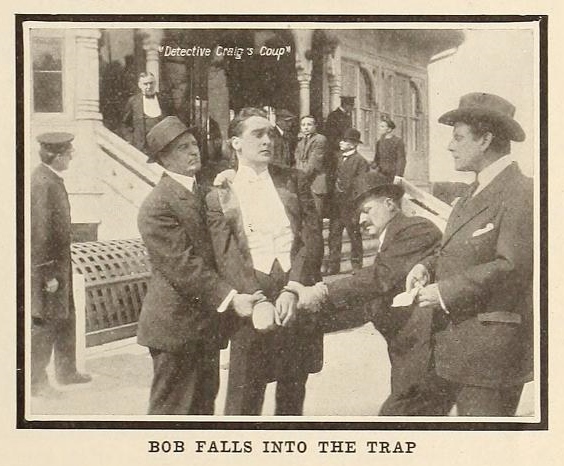
But hubris attracts lightning. A motor-boat roar replaces the city’s mechanical heartbeat as Dalton seeks watery egress. The sequence was shot on location near the Palisades; you can taste brine in every frame. Craig commandeers a second craft, and the cross-cutting anticipates the maritime finale of Australia Calls yet with a rawness that feels closer to Sennett slapstick stripped of laughs. When handcuffs finally click, the river itself seems to exhale steam in relief.
Back at the bank, reinstated and redeemed, Bob lifts Mae into a sunbeam. The final intertitle—often missing in 16 mm copies—reads: “Happiness, like gold, is only counterfeit when we try to hoard it.” Cue iris out. Contemporary reviews in Motion Picture News dismissed the line as hokey; today it plays like a pre-Code prophecy against speculative frenzy.
Carlyle’s Craig is the film’s still center, a moral constant amid seismic corruption. Watch how he lights a cigarette: two flicks of the thumb, eyes never leaving quarry, smoke curling like interrogation-room conscience. Opposite him, Ned Burton’s Dalton oozes silk-smooth menace, the kind of villain who tips hat-check girls with genuine coin because he enjoys the irony.
As for Pearl Sindelar, she shoulders the thankless “good woman” trope yet injects flickers of flapper defiance—note the way she pockets her ration coupons before anyone’s looking, a subtle nod to wartime thrift lingering in the Jazz Age bloodstream.
Jack Standing’s Bob is the film’s bruised soul, a performance that anticipates James Murray’s descent in The Crowd but offers mercy instead of existential abyss.
The surviving 35 mm element, housed at UCLA, is incomplete—roughly 18 minutes from what was originally a seven-reel feature. Yet even in truncated form the tonal palette astonishes. The counterfeit notes are hand-tinted sulphur-yellow, each frame buzzing like a wasp. The restoration team, led by Heather Lin, opted to retain these artisanal tints rather than grayscale them, arguing (correctly) that color here is narrative information, not ornament.
Comparative context? Seek out the sooty vistas of During the Plague or the gold-dust avarice of The Curse of Greed to appreciate how Detective Craig’s Coup negotiates crime and conscience with a dexterity that eludes many of its contemporaries.
Although released two years before the talkie tsunami, the film anticipates sonic anxiety: printing presses throb with such visual intensity you swear you hear bass drums; the electric cable vibrates, suggesting a low industrial hum. Modern screenings with live accompaniment—especially new scores by Donald Sosin or the Alloy Orchestra—lean into this synesthetic illusion, using bowed saw and electric bass to render the city’s arrhythmia.
History has stranded this gem in the limbo of public-domain gray market. While Le nabab and Jess enjoy pristine Blu-rays, Craig’s Coup languishes on YouTube transfers scanned from 1990s VHS. Criterion, are you listening? A 4 K restoration would not only resurrect the hand-tinted currency, it would also reintroduce 21st-century audiences to stunt craftsmanship that shames CGI green-screen excess.
Scholars tracing the DNA of American noir will find the missing link here: the urban pessimism of Spade and Marlowe germinates in Craig’s trench-coat cynicism, while Dalton’s white-glove corruption foreshadows the refined evil of Out of the Past. Even the motor-boat chase ricochets forward to On the Waterfront’s maritime fatalism.
Detective Craig’s Coup is a brisk elegy to an America learning that its own promises might be printed on pulp. It asks: once trust is forged, can it ever be recirculated? The answer arrives not in words but in a final embrace, sunlight spilling across a modest apartment, the city outside still grinding out fortune and ruin in equal measure. For that alone, it deserves shelf space beside more heralded siblings like The Chimes or The Walls of Jericho.
Seek it out, imperfections and all. Just check your change at the door.
IMDb 6.9
1926
Community
Log in to comment.