DbcultAccessing Vault...
6.1/10
Senior Film Conservator
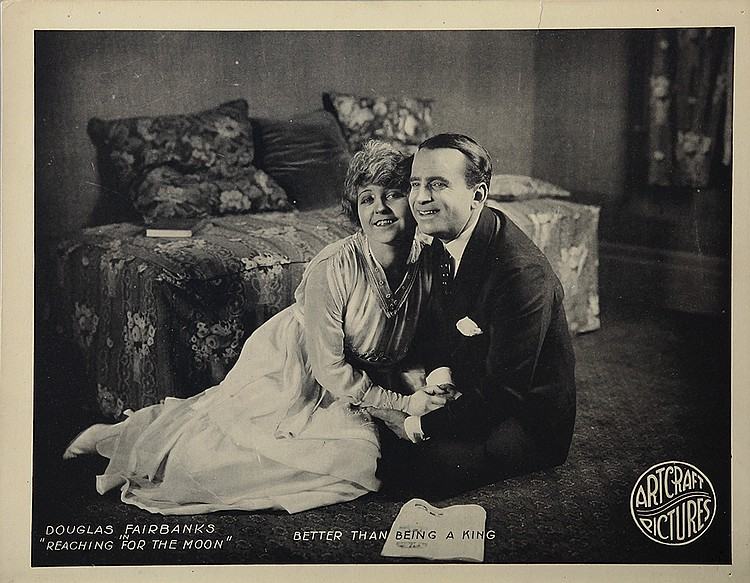
A definitive 6.1/10 rating for a film that redefined the boundaries of cult cinema. Reaching for the Moon remains a cornerstone of transgressive art.
To understand Reaching for the Moon is to understand the tectonic shifts in early American cinema. Douglas Fairbanks, before he became the definitive swashbuckler of the 1920s, occupied a unique space as the hyper-masculine, optimistic 'go-getter.' In this 1917 production, directed by John Emerson and penned by the razor-sharp Anita Loos, Fairbanks’ character, Alexis Caesar Napoleon, embodies a peculiar brand of proletarian yearning. Unlike the heavy, socially-conscious drama found in Germinal; or, The Toll of Labor, which treats the worker's plight with somber gravitas, Reaching for the Moon utilizes the factory floor as a mere springboard for a leap into the transcendental.
Fairbanks doesn't just act; he vibrates. His movements are a choreographed rebellion against the gravity of his social standing. When he discovers his supposed heritage as the heir to the throne of Vulgaria, the transition is not portrayed as a stroke of luck but as an inevitable correction of the universe. This film captures a moment in history where the lines between the self-made man and the divinely ordained ruler were being blurred by the burgeoning celebrity culture of Hollywood.
The screenplay by Anita Loos is a marvel of wit, providing a sophisticated framework for Fairbanks’ physical histrionics. While many contemporary films like The Secret Orchard or Gladiola leaned heavily into the sentimentalism of the Victorian era, Loos injects a modern, cynical edge. She mocks the American obsession with titles and the 'company of kings,' suggesting that the desire for royalty is a form of collective neurosis. This thematic depth elevates the film beyond a simple adventure, placing it in conversation with works that explore the darker side of ambition, such as A Wall Street Tragedy.
The dialogue intertitles are punchy and irreverent, characteristic of the Emerson-Loos collaboration. They serve to ground the high-flying fantasy of Vulgaria with a distinctly American pragmatism. Even as Alexis faces the 'forces at work' who seek his demise, the tone remains light, almost mocking the very tropes of the Ruritanian romance that it so expertly employs.
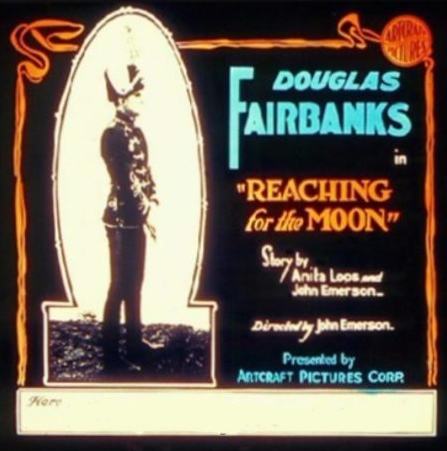
One cannot discuss Reaching for the Moon without acknowledging the presence of Erich von Stroheim. Long before he became the 'man you love to hate' or the director of sprawling epics, his influence here as both an actor and an assistant is palpable. The depiction of the Vulgarian court, with its rigid hierarchies and lurking assassins, bears the early hallmarks of the European decadence he would later perfect. The contrast between the industrial grit of the early scenes and the sybaritic opulence of the palace is starker than the moral dichotomies found in Her Bitter Cup or The Rosary.
The supporting cast, including Richard Cummings and the formidable Bull Montana, provides a necessary weight to the proceedings. Montana, in particular, offers a physical counterpoint to Fairbanks’ agility, representing the brute force of the old world that threatens to crush the naive optimism of the new. The tension within the kingdom is palpable, creating a sense of genuine peril that mirrors the suspense found in detective narratives like Detective Brown or the mystery of Tigris.
Visually, the film is a testament to the evolving language of cinema in 1917. The cinematography manages to capture the claustrophobia of the factory and the expansive, dreamlike quality of the royal estate with equal finesse. The use of lighting to differentiate between reality and the heightened state of Alexis’ delusions is subtle yet effective. While it may not possess the experimental fervor of Das schwarze Los, its technical competence ensures that the audience remains fully immersed in Alexis’ journey.
The pacing is relentless, a hallmark of Fairbanks’ early work. There is little time for the static contemplation found in Life of Christ. Instead, the film moves with the speed of a locomotive, mirroring the rapid modernization of the era. This frantic energy is what made Fairbanks a superstar; he was the human personification of the 20th century’s burgeoning momentum.
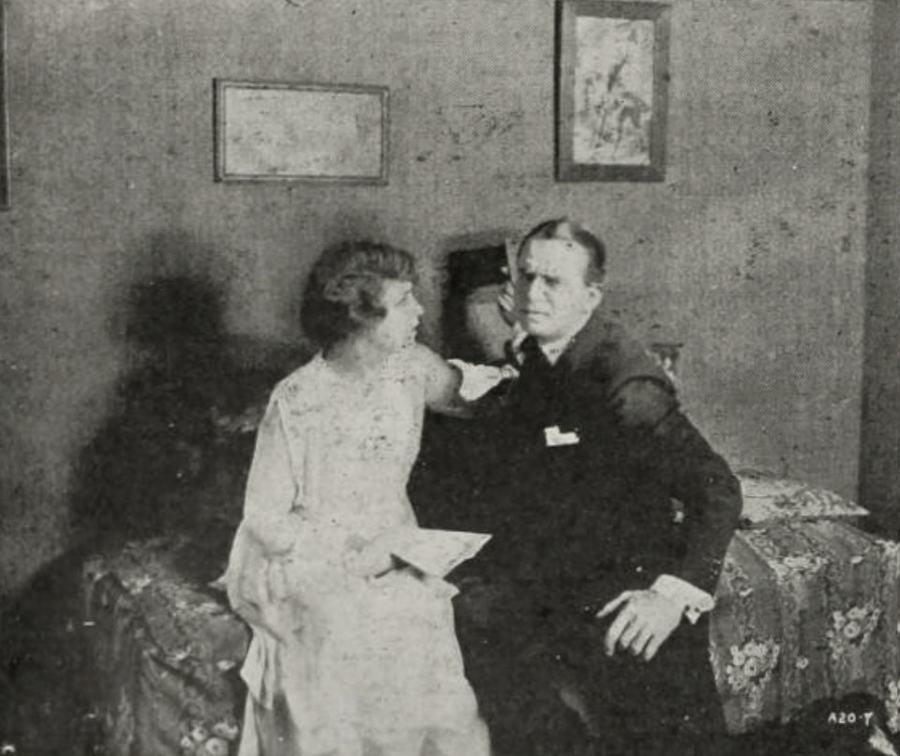
The narrative pivot of Reaching for the Moon is its most enduring legacy. Without spoiling the specific mechanics for the uninitiated, the film’s conclusion serves as a profound commentary on the nature of escapism. It suggests that the 'reaching' is more important than the 'attaining.' This psychological nuance is what separates it from more straightforward romances like Gloria's Romance or Kärleken segrar. It forces the viewer to confront the absurdity of their own aspirations.
By framing the adventure within the context of a dream or a delusion, the film reflects the anxieties of a nation on the brink of world war. The desire to be 'somewhere else' or 'someone else' was a powerful force in 1917, and Emerson and Loos tap into this zeitgeist with surgical precision. The film doesn't just entertain; it diagnoses a cultural condition. It shares a certain thematic DNA with Alexandra, where identity and social expectation collide in unexpected ways.
When placed alongside other 1910s staples such as C.O.D. or the crime-focused Big Jim Garrity, Reaching for the Moon stands out for its sheer imaginative breadth. It refuses to be pigeonholed into a single genre, blending comedy, action, and social satire into a seamless whole. Eileen Percy provides a charming performance that anchors the film’s romantic elements, ensuring that even at its most absurd, there is a core of human emotion.
Ultimately, the film is a celebration of the 'Fairbanks smile'—that iconic expression of confidence that suggested any obstacle could be overcome with enough vigor. It is a reminder of a time when cinema was discovering its power to not only reflect reality but to distort it in ways that revealed deeper truths. Whether Alexis is a king or a commoner becomes irrelevant; what matters is the audacity of his reach.
In the grand tapestry of silent film, Reaching for the Moon remains a vibrant, essential thread. It captures the transition from the theatricality of the early 1900s to the cinematic dynamism of the 1920s. It is a work of high lexical diversity in its visual storytelling, demanding that we look closer at the myths we construct for ourselves. As we revisit this gem, we find that the moon is still just as far away, and the reaching is just as necessary as it was over a century ago.
IMDb 4.4
1931
Community
Log in to comment.