DbcultAccessing Vault...
6.3/10
Senior Film Conservator
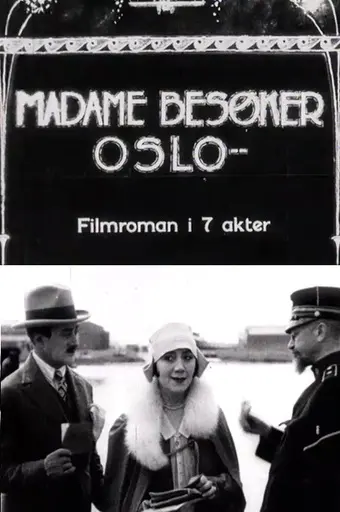
A definitive 6.3/10 rating for a film that redefined the boundaries of cult cinema. Madame Visits Oslo remains a cornerstone of transgressive art.
Is 'Madame Visits Oslo' worth watching today? Short answer: yes, but with significant caveats that demand a particular kind of viewer. This film is a delightful, if dusty, curio for classic cinema aficionados and those with a keen interest in early Scandinavian filmmaking, but it will likely test the patience of viewers accustomed to modern narrative pacing and production values.
It's a film best suited for those who appreciate the historical context of cinema, enjoy character-driven stories over plot-heavy narratives, and have a soft spot for the gentle humor of a bygone era. Conversely, if you prefer high-octane action, rapid-fire dialogue, or special effects that push boundaries, 'Madame Visits Oslo' is emphatically not for you.
This film works because of its undeniable period charm and the captivating presence of Naima Wifstrand, who elevates the material with her nuanced performance. It offers a rare glimpse into a specific moment in Norwegian cinematic history, rich with cultural detail and a quaint, understated humor that occasionally sparkles.
This film fails because its pacing is undeniably sluggish by contemporary standards, its comedic beats are often drawn out, and the central conflict, while engaging for its time, feels remarkably low-stakes today. The technical limitations of its era are also frequently apparent, demanding a generous viewing.
You should watch it if you are a dedicated cinephile, particularly interested in European pre-war cinema, or if you're a student of acting eager to see Naima Wifstrand in a leading role. It’s also for those who enjoy a leisurely, character-focused narrative that slowly unfolds.
The narrative of "Madame Visits Oslo" unfurls with the elegant simplicity characteristic of many films from its period, yet beneath its calm surface lies a simmering conflict over legacy and belonging. Madame Vera, portrayed with an air of sophisticated intrigue by Naima Wifstrand, and her steadfast companion, the Baron, drift into the lives of others with a quiet, almost imperceptible influence. Their encounter with Wagelstein, a banker returning from the Antipodes, is the catalyst, an unassuming ripple that eventually becomes a small wave of domestic upheaval. Wagelstein's intention to reclaim his family's ancestral farm is presented not as a grand declaration, but as a matter-of-fact statement that carries the weight of destiny for some, and a cruel joke for others.
The true heart of the story lies in the plight of Helge, who has long considered the farm his rightful inheritance, a cornerstone of his identity. Wagelstein’s arrival is a direct challenge to Helge’s established world, a sudden and unwelcome disruption to a life built on assumed certainties. The film cleverly uses this seemingly minor dispute to explore themes of tradition, modern ambition, and the subtle power dynamics within familial and social circles. Madame Vera, with her discerning eye and quiet authority, becomes an almost accidental arbiter, her presence subtly guiding the unfolding drama. It's less about dramatic twists and turns, and more about the delicate dance of social graces and underlying tensions.
The screenplay, penned by Harry Ivarson, embraces a theatrical quality, allowing characters to reveal their motivations through extended conversations and nuanced reactions rather than overt action. The 'farm' itself transcends its literal meaning, becoming a symbol of heritage, security, and a way of life under threat. It's a testament to the film's understated approach that such a seemingly small stakes premise can carry the emotional weight it does, particularly for Helge, whose quiet despair is palpable. The plot isn't designed to shock or surprise, but to gently draw the viewer into a world where polite society often masks deeper emotional currents.
The strength of "Madame Visits Oslo" rests squarely on the shoulders of its cast, particularly Naima Wifstrand as Madame Vera. Wifstrand, a formidable stage actress, brings a magnetic presence to the screen. Her Vera is not merely a visitor but an observer, a quiet force of nature whose wisdom and wit are conveyed through subtle glances and perfectly timed pauses. There’s a particular scene where she simply listens to Wagelstein describe his plans, her expression shifting from polite interest to a knowing skepticism – a masterclass in non-verbal communication. Her performance, while undeniably theatrical in the style of the era, avoids becoming a caricature, instead lending Vera a charming authenticity.
Fridtjof Mjøen, as the Baron, provides an excellent foil to Wifstrand's Vera. His understated, often dry, humor balances Vera's more pronounced elegance. Their chemistry is that of long-standing companions, a comfortable shorthand of shared glances and knowing smiles that adds a layer of warmth and sophistication to the film. The supporting cast, including Sonja Mjøen and Erling Krogh, deliver performances that are competent and fitting for the period, though they rarely achieve the same level of captivating presence as the leads. Erling Krogh, as Helge, manages to convey a quiet desperation without resorting to melodrama, making his character's predicament genuinely sympathetic.
However, it must be acknowledged that the acting style of the 1930s can feel somewhat alien to modern audiences. Dialogue delivery can be more formal, gestures more pronounced, and emotional expressions less internalised than what we've grown accustomed to. For instance, some of Wagelstein's early pronouncements about his Sydney successes feel delivered with an almost declamatory flourish that might strike a contemporary viewer as overly earnest. This isn't a flaw in the performances themselves, but rather a stylistic difference that requires a certain adjustment from the audience. Those willing to make that adjustment will find genuine charm and skill on display.
Harry Ivarson's direction in "Madame Visits Oslo" is a fascinating study in early talkie filmmaking. The film often feels like a stage play brought to the screen, with static camera setups and prolonged takes that allow the actors to command the frame. This isn't necessarily a criticism, as it lends an intimacy to the performances and encourages the viewer to focus on the subtleties of character interaction. There are moments, however, where the lack of dynamic camera work can lead to a visual monotony, particularly in scenes that involve extended dialogue in a single location, such as the initial meeting in the hotel lounge.
The cinematography, while not groundbreaking, effectively captures the atmosphere of 1930s Oslo. The black and white palette is utilized to create a sense of classic elegance, with careful attention paid to lighting interiors to highlight facial expressions and period details. A particularly memorable shot involves Madame Vera looking out over the city from a balcony, the cityscape rendered in soft, almost painterly tones, offering a brief but beautiful glimpse of the film's setting. The exterior shots of Oslo provide a valuable historical document, showcasing the architecture and street life of the era, which adds an unexpected layer of documentary value to the film.
Ivarson's choice to prioritize narrative clarity and character over visual experimentation is evident throughout. While it might lack the avant-garde flourishes of some of his contemporaries, his approach ensures that the story remains the focal point. The film's transitions are straightforward, often employing simple cuts or fades, further reinforcing its conventional, yet effective, storytelling style. It works. But it’s flawed. The overall visual language serves the story well, even if it doesn't push the boundaries of cinematic artistry.
The pacing of "Madame Visits Oslo" is, without mincing words, leisurely. This is a film that takes its time, allowing scenes to breathe and characters to develop at a measured pace. For audiences accustomed to the rapid-fire editing and constant narrative propulsion of modern cinema, this can be a significant hurdle. There are long stretches of dialogue where the camera remains largely static, inviting the viewer to settle in and absorb the nuances of conversation and reaction. A prime example is the extended dinner scene, where the tension between Wagelstein and Helge slowly builds through polite but pointed exchanges, rather than sudden outbursts.
The tone is consistently lighthearted, bordering on gentle comedy, even when addressing the underlying conflict of inheritance. The humor is often derived from social misunderstandings, subtle ironies, and the charming eccentricities of its characters, particularly Madame Vera and the Baron. It’s a sophisticated brand of humor that relies on wit and observation rather than slapstick or overt gags. This makes the film feel remarkably civil, a stark contrast to the often cynical or aggressive comedies of later decades. The stakes, while important to the characters, are never presented with melodramatic urgency, maintaining the film's overall placid disposition.
However, this consistent tone, while charming, can occasionally border on the monotonous. The film rarely deviates from its genteel register, which means moments that could benefit from heightened emotional impact are often played with the same quiet restraint. This artistic choice might frustrate viewers looking for more dramatic peaks and valleys in the narrative arc. It’s a film that demands patience and a willingness to simply exist within its world, rather than expecting it to constantly entertain with overt spectacle. It’s a film that knows what it is, and unapologetically sticks to it.
For cinephiles interested in early European cinema and fans of Naima Wifstrand, 'Madame Visits Oslo' offers a charming, if somewhat dated, viewing experience. However, viewers seeking fast-paced plots or contemporary humor may find it challenging. It requires a specific mindset.
This film is absolutely worth watching if you approach it as a historical artifact as much as a piece of entertainment. It offers invaluable insights into the social mores, fashion, and even the urban landscape of 1930s Norway. It’s a window into a past that is both familiar and profoundly different.
If you enjoy films like The Love Girl, or other character-driven, pre-war comedies that prioritize dialogue and performance over action, then you will likely find something to appreciate here. It's a film for quiet contemplation, not for popcorn-fueled thrills.
"Madame Visits Oslo" is not a film for everyone, and it certainly won't be topping any 'must-see modern classics' lists. It is, however, a valuable and often charming piece of cinematic history that rewards a specific, patient audience. Its true appeal lies in its ability to transport you to a different time and place, to observe a nuanced performance from a forgotten star, and to appreciate a style of storytelling that has largely faded from mainstream cinema. It's an acquired taste, perhaps, but one that offers a unique flavor.
While its slow pace and low-key drama might deter many, its quiet elegance and the magnetic presence of Naima Wifstrand make it a worthwhile watch for those with a genuine interest in the evolution of film. It serves as a gentle reminder that not all cinematic value comes from explosions and special effects; sometimes, it's found in the delicate interplay of character and the subtle unfolding of human nature. Give it a chance, but adjust your expectations accordingly. You might just find yourself charmed by its understated allure. It’s not groundbreaking. But it’s endearing.
IMDb —
1931
Community
Log in to comment.