DbcultAccessing Vault...
6.1/10
Senior Film Conservator
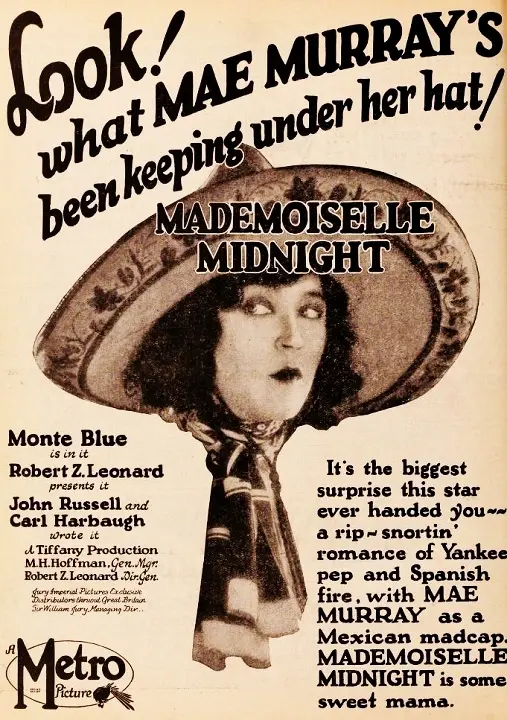
A definitive 6.1/10 rating for a film that redefined the boundaries of cult cinema. Mademoiselle Midnight remains a cornerstone of transgressive art.
The silent era was rarely as effervescent or as perilously poised between whimsy and visceral violence as in the 1924 production of Mademoiselle Midnight. This was a period when the 'Gardenia of the Screen,' Mae Murray, reigned supreme, her bee-stung lips and idiosyncratic dancing providing a visual shorthand for a specific brand of Jazz Age decadence. Yet, in this particular vehicle, the decadence is filtered through a lens of atavistic inheritance and revolutionary Mexican fervor, creating a cinematic cocktail that is as intoxicating as it is narratively chaotic.
The screenplay, penned by Carl Harbaugh and John Russell, posits a fascinating, if somewhat pseudo-scientific, premise: that a penchant for midnight escapades can be passed down through the bloodline like a silver heirloom. Renée de Quiros (Murray) is the beneficiary—or perhaps the victim—of this Gallic grandmother's legacy. This 'midnight madness' serves as more than just a plot device; it acts as a thematic anchor, justifying the film's shift from the structured decorum of the de Quiros estate to the lawless shadows of the Mexican night. Unlike the more grounded explorations of character found in The Little Fool, Mademoiselle Midnight embraces a dreamlike logic where the moon dictates the rhythm of the heart.
Murray’s performance is a masterclass in silent-era histrionics, though I use that term with the utmost respect. She moves with a kinetic energy that suggests she is always on the verge of a pirouette, even when the stakes are life and death. Her Renée is not merely a damsel; she is a creature of impulse, a stark contrast to the more traditional heroines seen in contemporary works like Her Five-Foot Highness. There is a palpable sense of danger in her pursuit of the American diplomat, a role played with steady, if somewhat overshadowed, charm by Monte Blue.
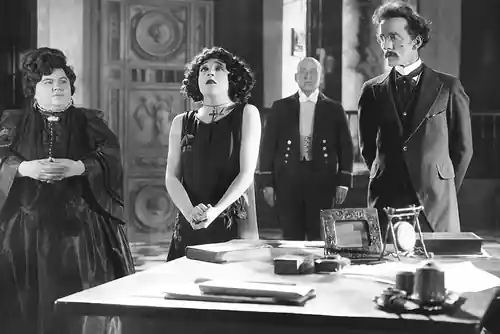
The introduction of João, portrayed with a snarling, magnetic menace by Nick De Ruiz, shifts the film from a lighthearted romance into a gritty Western-adjacent melodrama. The raid on the de Quiros home is staged with a surprising amount of brutality for a Mae Murray vehicle. The death of Renée’s father (Paul Weigel) provides the necessary emotional weight to ground the subsequent flight and pursuit. Here, the film touches upon the rugged textures found in The Bargain, though it never fully abandons its glossy, high-fashion aesthetic.
The cinematography captures the stark contrasts of the Mexican terrain—the blinding white of the hacienda walls against the deep, ink-black shadows of the midnight hours. This chiaroscuro effect emphasizes the moral duality at play. João is not just a bandit; he is a symbol of the encroaching chaos that threatens Renée’s sheltered existence. His attempt to force a marriage, sanctioned by a weak-willed uncle, highlights the precarious position of women in this cinematic landscape—a theme also explored, albeit in a more domestic setting, in The Career of Katherine Bush.
The ensemble cast is a veritable 'who’s who' of character actors from the 1920s. J. Farrell MacDonald and Otis Harlan provide the necessary texture to the world-building, while Mathilde Comont and Clarissa Selwynne offer nuanced performances that elevate the domestic scenes. The presence of Nigel De Brulier and John St. Polis adds a layer of gravitas that prevents the film from spinning off into pure fluff. One cannot help but compare this rich tapestry of characters to the ensemble in A Gentleman from Mississippi, where the interplay of political and personal interests creates a similar tension.
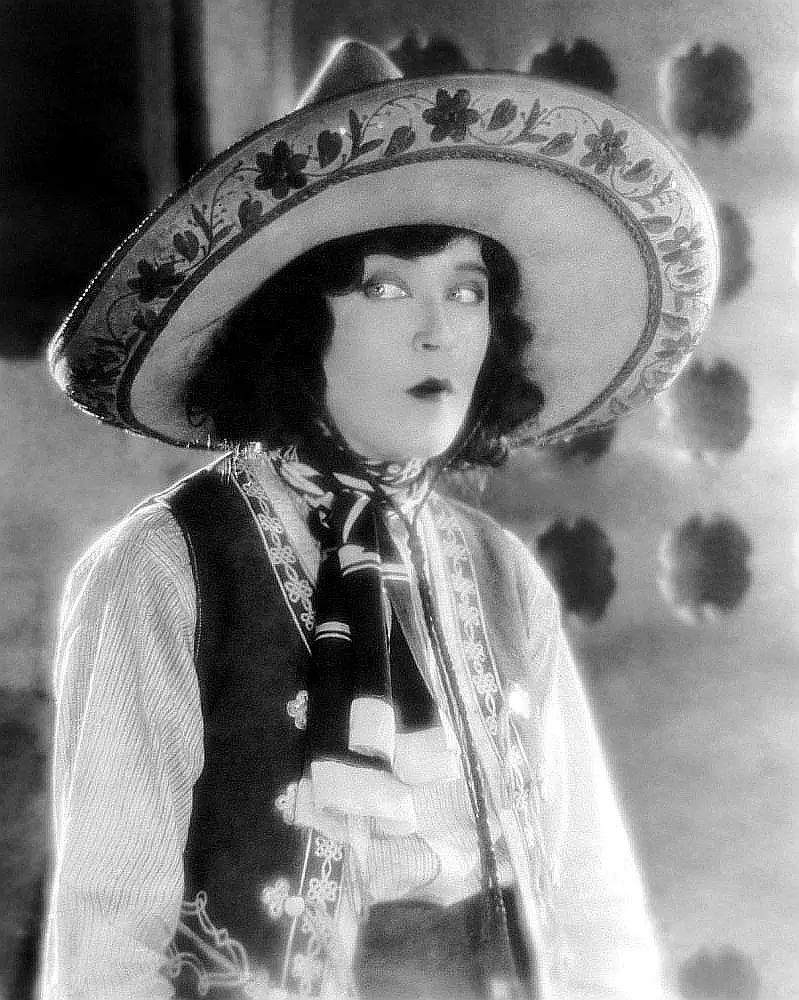
Special mention must be made of Robert McKim and Don Alvarado, who navigate their roles with a precision that speaks to the high production standards of the time. Even in the smaller roles, such as those filled by Evelyn Selbie and Earl Schenck, there is a commitment to the reality of the scene that allows the audience to suspend their disbelief despite the more fantastical elements of the plot. This is a far cry from the more simplistic characterizations seen in In Bad.
The journey of Renée de Quiros is one of self-actualization through the embrace of her own 'madness.' Initially, her midnight excursions are presented as a quirk, a charming but dangerous eccentricity. However, as the plot tightens its noose around her, these traits become her greatest weapons. Her ability to operate in the shadows, to outwit the masculine brutality of João, suggests a proto-feminist subtext that is often overlooked in Murray’s filmography. While Her First Kiss might focus on the innocence of early romance, Mademoiselle Midnight is concerned with the grit required to maintain one's agency in a world of wolves.
The pacing of the film is relentless. Once the raid occurs, the narrative moves with the speed of a locomotive, pausing only briefly for moments of high-tension negotiation. This briskness is reminiscent of the survivalist energy in Robinson Crusoe Hours, though the isolation here is social and political rather than literal and geographical. Renée is an island unto herself, surrounded by enemies and dubious allies.
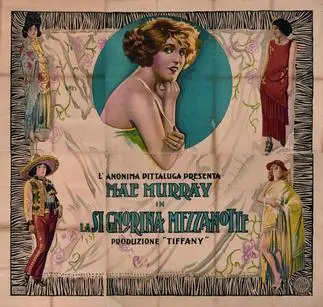
The costume design, as one would expect from a Mae Murray film, is nothing short of spectacular. Each gown is a character in itself, reflecting Renée’s shifting state of mind. From the flowing, ethereal fabrics of her early scenes to the more practical, yet still undeniably stylish, attire of her escape, the wardrobe serves to emphasize her status as an outsider in the rugged Mexican landscape. This visual opulence stands in stark contrast to the more utilitarian aesthetic of The Alaskan, reminding the viewer that they are watching a curated fantasy, not a documentary.
The set design also deserves commendation. The de Quiros hacienda is a sprawling labyrinth of courtyards and balconies, providing the perfect stage for the film’s various pursuits and confrontations. The use of depth in the frame—often having action occur in both the foreground and background—creates a sense of a living, breathing world. This level of technical sophistication is comparable to the atmospheric work in Blind Man's Holiday, where the environment is as much a character as the actors themselves.
The final act of the film is a masterstroke of tension and release. The midnight wedding is not just a romantic resolution; it is a defiance of João’s tyranny and a reclamation of the very hour that was supposed to be Renée’s curse. By choosing to marry the American diplomat at the stroke of midnight, she transforms her 'madness' into a celebration of choice. It is a far more satisfying conclusion than the somewhat predictable endings of Golden Dreams or The Whistle.
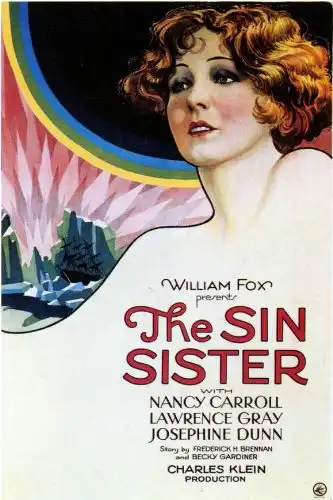
In the end, Mademoiselle Midnight stands as a testament to the power of the star vehicle. While it possesses all the hallmarks of a 1920s melodrama—the mustache-twirling villain, the heroic foreigner, the inherited 'curse'—it is elevated by the sheer force of Mae Murray’s personality and the high production values of the era. It is a film that understands the allure of the night and the necessity of a little bit of madness to survive in a world that demands conformity. It echoes the rebellious spirit of Devil McCare and the rugged romanticism of Nan of Music Mountain, yet it remains entirely its own beast.
For those seeking a journey into the heart of silent cinema's most vibrant excesses, Mademoiselle Midnight is an essential excursion. It is a reminder that before the talkies arrived to ground everything in literalism, the screen was a place of shadows, dance, and the intoxicating power of the midnight hour.
A lush, fever-dream of a film that balances the pulpy thrills of a bandit raid with the sophisticated charm of a high-society romance. Murray is at the peak of her powers, and the film's exploration of hereditary impulse remains surprisingly engaging nearly a century later. Much like the protagonist in The Halfbreed, Renée de Quiros must navigate a world of prejudice and violence to find her own truth, and she does so with a style that is uniquely, undeniably, midnight.
IMDb 6.4
1915
Community
Log in to comment.