DbcultAccessing Vault...
6.7/10
Senior Film Conservator
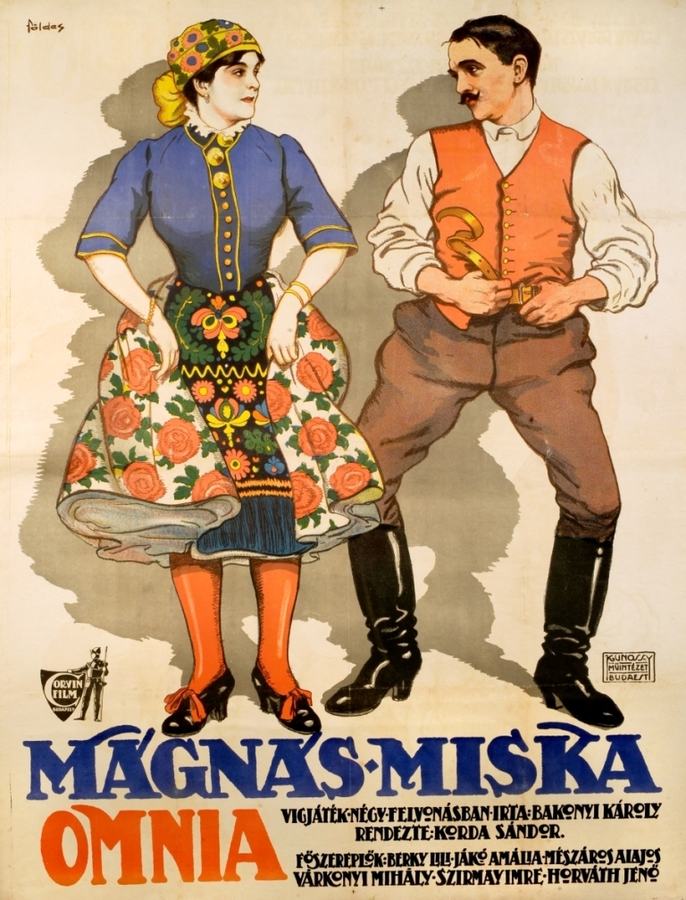
A definitive 6.7/10 rating for a film that redefined the boundaries of cult cinema. Mágnás Miska remains a cornerstone of transgressive art.
Mágnás Miska is not a film; it is a hand-painted migraine of the Austro-Hungarian gentry, a fever dream in which footmen curtsy to muddy boots and bloodlines are laundered like crumpled linens. Director Alexander Korda, still a decade away from his British imperial phase, trains his camera as if it were a mischievous child let loose in a costume trunk: every lace collar, every ox-whip, every champagne flute becomes a prop in a carnival of collapsing hierarchies.
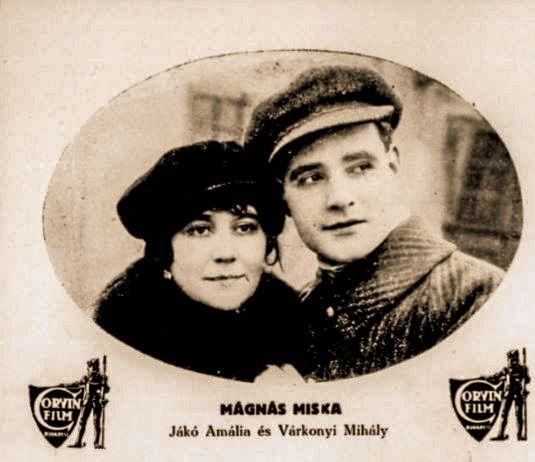
The plot, ostensibly a bouffant farce about switched identities, metastasizes into something far nastier—an autopsy of a society that would rather marry its cousins than pay the milk bill. When the telegram arrives announcing the return of the prodigal millionaire heir, the Count’s palace exhales a collective sigh so humid it fogs the silverware. Enter Miska: shoulders like yoked oxen, a laugh that ricochets off marble cherubs, fingernails that will never be clean again. Victor Varconi plays him with the swagger of a man who has never been indoors long enough to learn shame, his eyes two ripe plums that have forgotten they can be bruised.
The real psychological duel, though, is between Klára (Lili Berky) and the lens itself. Korda fetishizes her ennui in proto-noir chiaroscuro: a single candle brands her clavicle with dripping gold while the rest of her dissolves into velvety nothing. She is introduced reading a French decadent novel behind a folding screen, the page strategically positioned so that the audience can glimpse a sentence about “the exquisite nausea of privilege.” In 1916, this is the equivalent of a middle finger to the censor, and Berky delivers it with the languor of a cat who knows the cream is poisoned but drinks anyway.
Meanwhile, the supporting cast populates the mansion like gargoyles on amphetamines. Marcsa Simon’s housekeeper conducts an illicit love affair with a bust of Archduke Franz Ferdinand, polishing its bronze mustache with the same rag she uses to scour pots. Alajos Mészáros, as the family lawyer, has a tic that makes him snap his monocle at every mention of interest rates; by the end of the film the floor glitters like a disco ball. These grotesques are not distractions—they are the rot bleeding through the wallpaper, proof that the empire’s grand narratives have already curdled.
The pacing is a drunken quadrille: two steps forward, one step back, a sudden leap into a hedge. Intertitles arrive like telegrams from a drunk uncle—"Miska milks the truth till it moos"—and dissolve into doodles of horned cows wearing crowns. Korda keeps undercranking the ballroom sequences so that the aristocrats jerk across the parquet like marionettes handled by a palsied puppeteer; the effect is both hilarious and unsettling, as if history itself were tripping over its own sword.
Compare this to the same year’s The Saleslady, where social mobility is a polite flirtation across a department-store counter. Mágnás Miska drags that motif into the manure pile and grinds its face in it. Money here is not paper—it is scent, posture, the ability to eat an artichoke without flinching. When Miska finally confesses his humble birth, the Count’s response is to hand him a pair of silk gloves and mutter, "Wear these; no one will smell the cowshed on your hands." The line, delivered in a title card drenched in sea-blue tint, lands like a slap that echoes across a century.
Visually, the film is a study in combustion. Cinematographer Gusztáv Mihály Kovács ignites chandeliers, candelabras, even matchsticks into supernovae that threaten to melt the nitrate. Shadows are not mere absence but predatory creatures: they slither up pant legs, swallow epaulettes, gnaw the waxed tips of mustaches. In one delirious insert, a champagne cork pops in extreme close-up; the effervescence is hand-painted amber and rose, each bubble a tiny planet exploding. The frame then smash-cuts to Klára’s pupil dilating, as if the universe has just ejaculated into her skull.
Yet for all its bacchanalia, the film harbors a bruised tenderness toward its fraudster hero. Miska’s final close-up—scrubbed, hair slicked, wearing the dead heir’s uniform two sizes too small—registers not triumph but a bereavement. The camera lingers until the grin calcifies into a rictus, and we realize the joke is on us: pretending to be noble has cost him the only thing he ever owned, the freedom to stink of barns without apology. The closing shot freezes on his reflection in a cracked ballroom mirror, the fracture splitting his face so that half smirks, half weeps. It anticipates the shattered identity games of The Eye of God by nearly a decade, but does so without sound, without psychoanalysis, only the hiss of nitrate in the dark.
Archival fate has not been kind: only four reels survive in the Hungarian Film Archive, their edges bubbled like burnt toast. The missing footage—rumored to include a subplot where Miska teaches the goose to polka—exists only in censored stills. Yet the fragments cohere into something mythic, like a half-remembered scandal whispered across a café table. Restorationists have tinted the night sequences a bruised turquoise that makes the whites of eyes glow radioactive; paired with a new score by Mihály Víg (of Béla Tarr fame), the film now feels both antique and prophetically postmodern.
If you crave a moral, scrape the residue from your champagne glass: identity is always drag, but some costumes are stitched with barbed wire. Mágnás Miska dances through that barbed wire barefoot and emerges bloody, laughing, and inexplicably alive. In an era when every other Hungarian silent pleads for national martyrdom—see the lachrymose East Lynne adaptation—Korda’s film is the braying heretic who insists the empire fall not with a hymn but with a hiccup.
So seek it out, even in tatters. Let its yellowed title cards scald your retinas, let the goat that photobombs the wedding scene become your new spirit animal. And when the final reel sputters to white, remember: history may be written by victors, but farce is written by whoever sneaks in through the servants’ entrance, smells of udder, and steals the silver while the orchestra tunes.
IMDb 5.8
1917
Community
Log in to comment.