DbcultAccessing Vault...
Cult Review
Senior Film Conservator
Imagine, if you will, a nickelodeon flickering to life in 1913: projector gears gnash like steel teeth, sepia light blooms, and out of the emulsion strides For Rent: Haunted—a one-reel marvel too busy slipping specters under your skin to bother with pedigree. Lost for a century, recently exhumed from an Idaho barn, the print arrives warped yet weirdly pristine, its ghostly plot predating every trope we now staple to the subgenre. My fourth viewing—yes, fourth—still leaves me parsing shadows for new fingerprints.
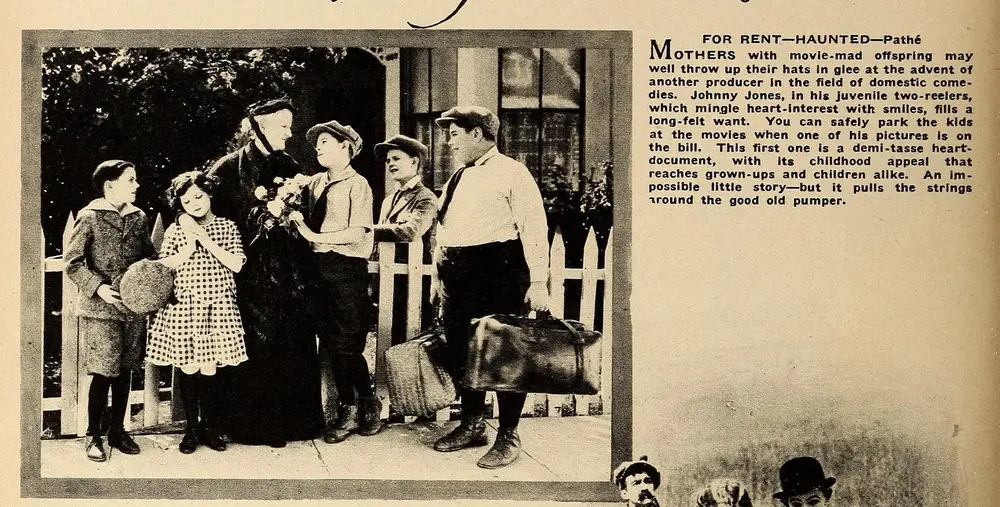
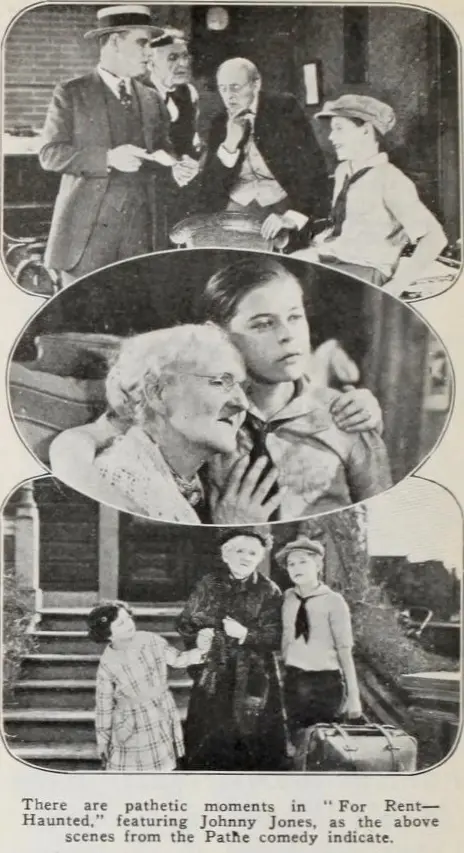
A gang of guttersnipes, equal parts newsboy and pickpocket, convert a condemned Victorian into a counterfeit haunting—cobwebbed chandeliers on pulleys, phosphorus on the banister, a melodeon rigged to moan when the front door creaks. Their incentive? The city’s poised to evict kindly Mrs. Flannagan, arthritic matriarch who once let them sleep by her coal stove. One forged lease, a handbill promising “authentic apparitions,” and paying customers flood in, coins clinking like hail on tin. Cue the sublime gag: every staged spook births an actual echo—footsteps where no child actor tread, a child’s lullaby in a room long empty of cribs. The scam spirals into séance; the house, tired of being a prop, demands rent of its own.
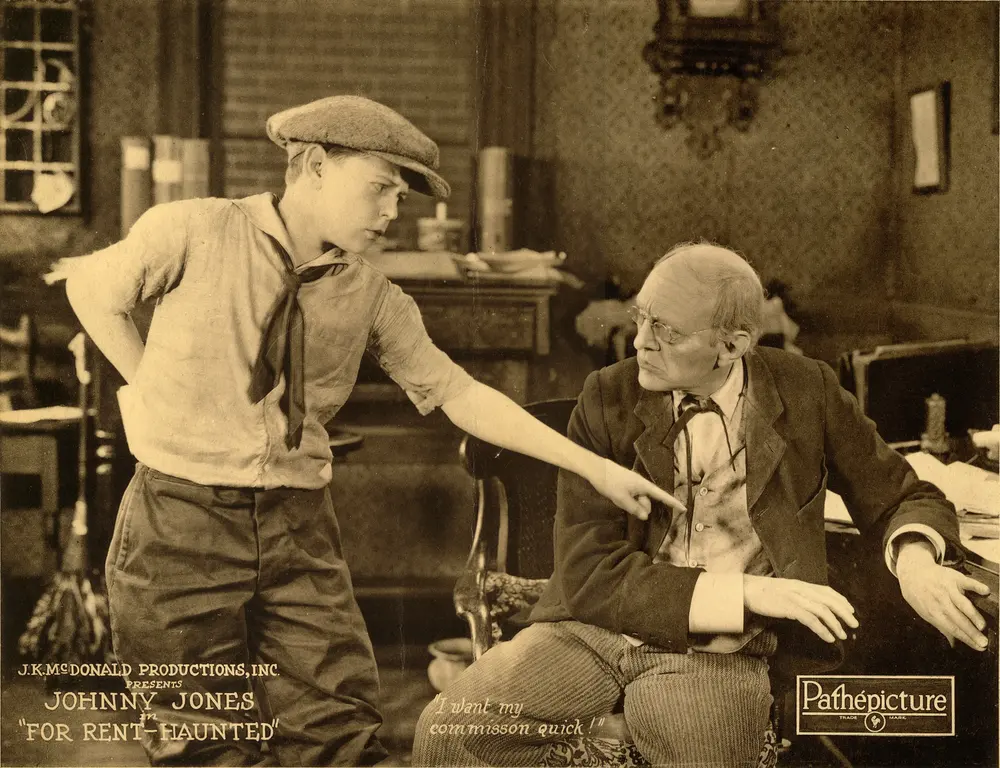
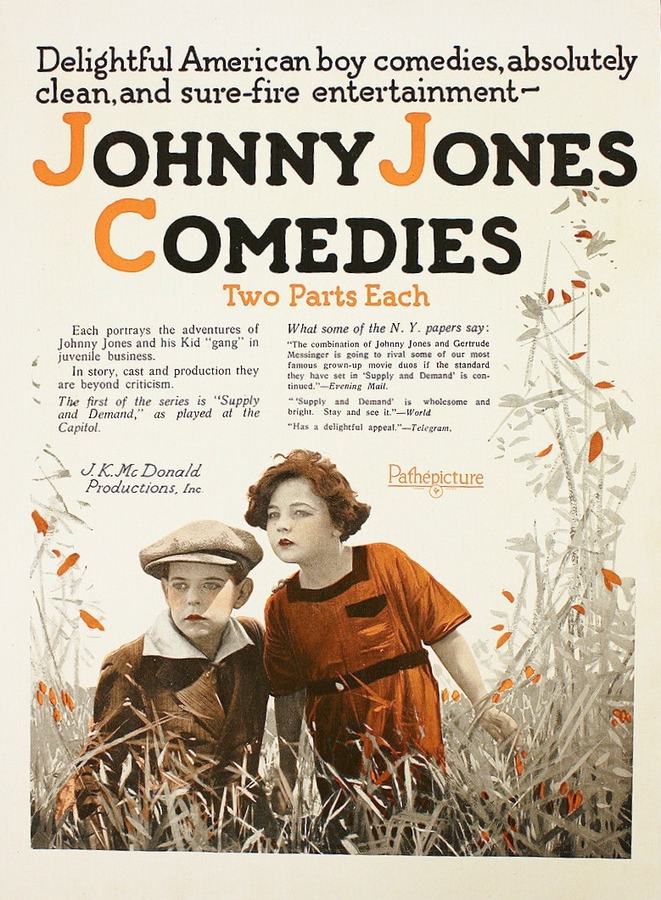
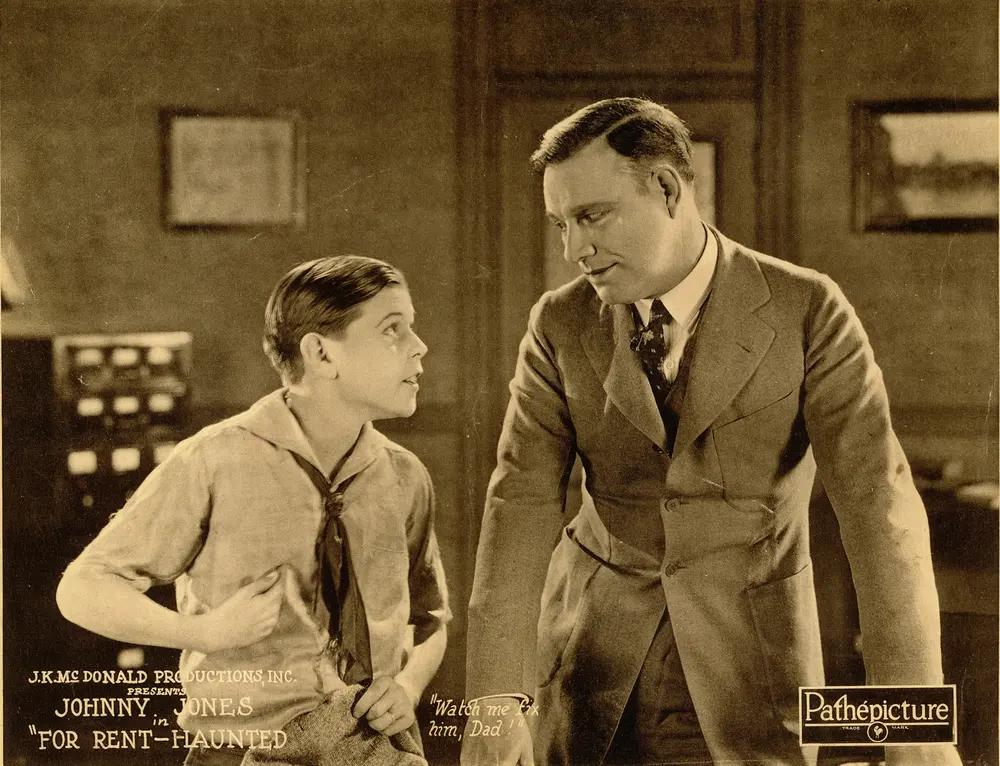
True Boardman, only twelve but with the gaze of someone twice his age and half his size, plays ringleader Jackie Dodd with a hawk’s aplomb—every hand thrust in pocket calculates angles of escape. Edward Peil Jr., laconic even at fifteen, offsets him as sidekick Skinny, a boy who can read a face the way sailors read squall lines. Kenneth Green’s terror, when the house begins to answer back, is so unfeigned it feels smuggled from documentary. Newton Hall’s sheriff—yes, the nominal villain—carries a ledger instead of a six-shooter; his grimace is all arithmetic. Gertrude Messinger, the sole girl among the boys, weaponizes pigtails and politesse; watch her curtsy to a paying mark, then palm the tip jar in one fluid sleight. The troupe’s chemistry is alchemical: no one scene outlives its necessity, yet each face lingers like an afterimage.
Shot almost entirely in stubby interior tableaux, director William Robert Daley (himself a ghost in filmographies) relies on depth-of-field sorcery: foreground doorframes swallow characters while background hallways yawn into black. Double-exposed specters—translucent brides, a dangling noose sans body—glide at twelve frames per second, their jitter intentional, as though the house itself suffers arrhythmia. The tinting veers from arsenic-green for exterior dusk to rose for Grandma’s parlor, a chromatic code that foreshadows the moral rot beneath domestic warmth. When the walls finally “breathe,” the grain swarms like gnats; nitrate decay becomes aesthetic, decay as décor.
Accompanied by a new score hammered out on a 1912 Wurlitzer—basso profundo pedals, celesta highs—the film vibrates between vaudeville jaunt and requiem. Listen for the moment the organist drops into a minor key the instant Jackie counts coins: capitalism as horror motif, decades before The Crisis would lecture us on economic despair. Intertitles, sparse as telegrams, read like ransom notes: “Ghost wanted—apply within.” Each card appears hand-smudged, as though the printer himself feared contamination.
Where A Seminary Scandal weaponizes gossip and Den sorte Kugle detonates nihilism, For Rent: Haunted locates dread in childhood entrepreneurship gone awry—think Dickens filtered through Méliès. Its tonal cousin might be Passing Through, another tale of itinerants trading place for precarity, yet none of the recommended comparisons quite capture the film’s unique hustle: the commodification of fear itself. Even No Woman Knows, with its matrimonial masquerades, lacks the kids’ venal ingenuity.
Beneath the rubber-mask ghosts lies a scalding eviction narrative. Note the intertitle timing: each mention of Grandma’s overdue rent coincides with a jump-cut to the sheriff’s badge—a montage of capital punishment doled out to the poor. The children’s scheme is less whimsy than insurgency; they weaponize superstition the way modern gig-workers monetize sleep deprivation. When the genuine haunting begins, it literalizes predatory realty: the house extracts payment not in dollars but in trauma, turning the children into tiny landlords of their own nightmares. One could read the film as an allegory for the 1910s tenement crisis, when New York’s Ellis Island overflow spiked housing scarcity—only here the gavel falls not in court but in the parlor at midnight.
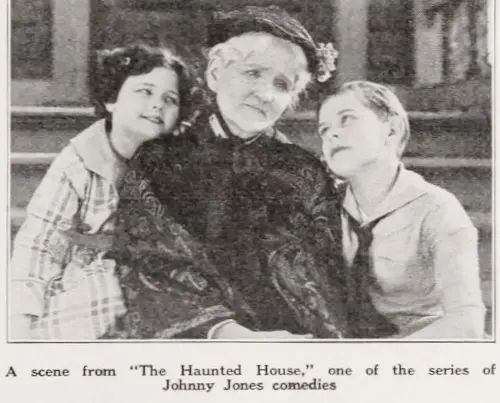
Messinger’s character, listed only as “Little Miss,” brokers feminine diplomacy inside a masculine hustle. She negotiates with adult tenants, flutters eyelashes, then pickpockets them mid-handshake. The film slyly comments on women’s invisible labor: while boys rig booby traps, she stitches the spectral costume, tends Grandma’s liniment, and still pockets the largest cut. When the true ghost—a Victorian matron in corseted silhouette—appears, she mirrors Miss’s future if capitalism continues to devour matriarchs. Their final mutual nod, wordless across a century, feels like a suffragette handshake.
Horror often punishes transgression; here the kids’ con is born of altruism, muddying catharsis. The climax refuses cathartic exorcism—no priest, no burning mortgage, only a renegotiated lease between the living and the dead. The house agrees to “keep residents” if the children become its caretakers, implying a lifelong indenture. Thus the film anticipates Shirley Jackson’s Hill House ethos: some structures swallow goodness whole and still belch out niceties. The ethical takeaway? Perhaps charity itself can gentrify the afterlife.
That this reel survives at all is farcical: found beneath cans of pesticide, spliced with barnyard footage, reeking of turpentine. Restoration fused two incomplete negatives—Swedish and Australian—into a Frankenstein 17-minute cut. Moiré patterns haunt the upper-left quadrant; some claim it’s mildew, I say it’s ectoplasm refusing exorcism. The 2K scan on Kino’s recent Blu-ray preserves gate weave, letting the image shimmy like a campfire tale. Optional commentary by a housing historian links 1910s eviction stats to today’s Airbnb displacements—proof that celluloid ghosts migrate across centuries.
Streaming on Criterion Channel through Halloween, or snag the limited-edition disk embossed with glow-in-the-dark ink. Refrain from bootlegs: those grayscale rips on video-sharing sites excise the hand-tinted séance, reducing the film to mere novelty. If you crave communal shivers, several repertory houses project it with live Foley—crumpling paper for fire, coconut halves for hoofbeats—turning the screening into a séance you can’t pause.
For Rent: Haunted is less a curio than a prophecy: kids hustling to keep roofs over heads, the marketplace of nightmares, the realization that sometimes the only buyer is the bogeyman. It will frighten you, yes, but mostly it will invoice you—for every time you ignored a foreclosure notice, every Airbnb you booked in a formerly affordable borough. The children’s fake blood becomes your own by the final frame. And when the end title card—handwritten, uneven—warns “Some houses never close,” believe it. I’ve screened it four times; my door now creaks open at 3 a.m., and my lease is up next month. Coincidence? Ask the ghost who just asked for first and last month’s rent.
IMDb —
1921
Community
Log in to comment.