DbcultAccessing Vault...
Cult Review
Senior Film Conservator
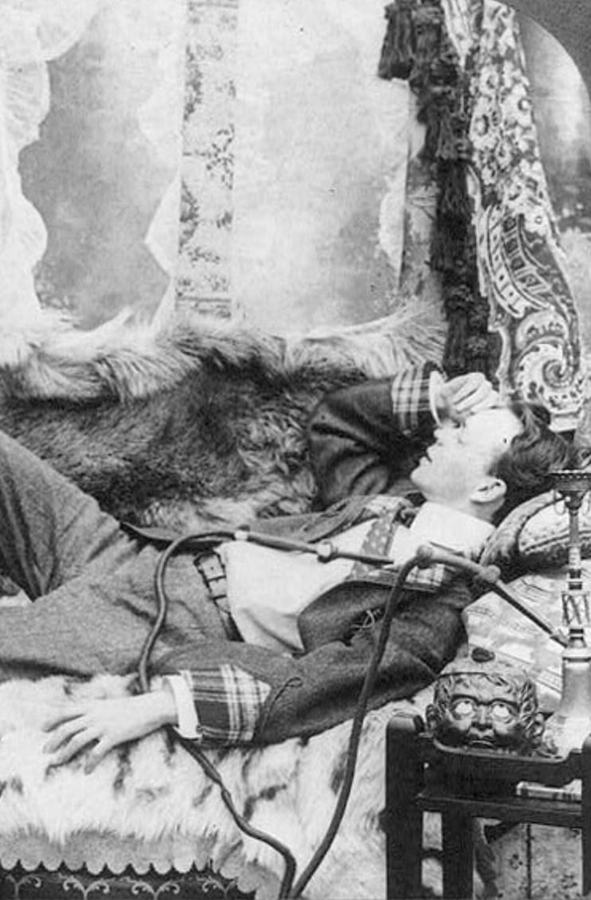
There are films you watch; then there are films that watch you back, their celluloid eyes blinking like the Irrlicht itself—German folklore’s treacherous lantern that lures night-wanderers into bogs.
In the glut of post-armistice European cinema, when cameras were still coughing up war-smoke, Das Irrlicht im Osten arrives as a sinister miracle: a provincial Gothic that refuses to behave like the calmer The Beautiful Adventure or the colonial hokum of The Opium Runners. Instead it stitches expressionist shadows onto the starched uniform of the Heimatfilm, producing a Frankenstein monster of genres—part ghost story, part drawing-room poison-pen, part anti-war elegy.
Cinematographer Willy Godlewski—doubling as the cyclopic servant—bathes manor interiors in mercury light that pools like liquid pewter. Doorframes appear to breathe; snowflakes, back-lit by tungsten, become a confetti of tiny skulls. Compare this to the more prosaic chiaroscuro of Behind the Door and you realise how daringly Irrlicht weaponises darkness as both veil and spotlight. A single lantern carried by Herold oscillates between hope and damnation; every time it swings, wallpaper roses wither into scar-abscesses.
Ludwig Herold—often dismissed as a matinee jawline—here fractures his screen persona into slivers. Watch the way his cheek trembles when Mahr accuses him of “bringing the front home inside your skin.” He ages a decade in five seconds without prosthetics, merely allowing the camera to harvest his terror. Opposite him, Mary Mahr balances on the knife-edge between porcelain doll and porcelain grenade. In the pivotal ballroom scene she waltzes with Haby while her eyes remain fixed on Herold’s reflection in a silver platter—polyamorous geometry choreographed to a Strauss loop that grows more detuned with every revolution, as if the orchestra itself were being strangled by barbed wire.
Benny Haby’s timber-baron is no oafish cuckold; he is capitalism in riding boots, convinced that every problem—love, death, folklore—can be logged, milled, and exported. His final soliloquy, delivered beside a roaring furnace that turns excess sawdust into ash, is the film’s most chilling anti-capitalist indictment this side of Strife.
The writers—names lost to Allied filing-error—smuggle coded debates on Article 231 (the war-guilt clause) into parlour banter. When Dely Delys purrs “Guilt is the only crop Germany still exports duty-free,” she is not merely flirting; she is translating treaty prose into aphor. Dialogue ricochets between French, fractured Polish, and Silesian dialect, creating a Tower of Babel effect that mirrors a borderland identity itself dissolving.
Folklore traditionally paints the Irrlicht as male, yet the film’s climactic unmasking reveals the ghostly lantern-bearer to be Pohl-Meiser’s housekeeper—wronged by both Herold’s aristocratic family and Haby’s timber syndicate. Thus the “swamp spirit” morphs into a proto-feminist avenger, anticipating the subversive gender politics of The Unknown but predating it by four years. She does not merely expose the men’s crimes; she rewrites the myth, proving that monsters are manufactured where justice is withheld.
While The Woman in Black weaponises the uncanny to lament maternal loss, Irrlicht weaponises it to indict class complicity. Its DNA also snakes through the claustrophobic carnality of Rupert of Hentzau, yet where that film relishes swashbuckling, this one prefers the slow garrotte of repressed memory. And if you thought The Greatest Question cornered the market on spiritualism, wait until you see séance candles here replaced by anti-aircraft flares—technology and occult fused like brass knuckles inside velvet mitts.
No extant score exists; archives list only “live musical accompaniment—director’s discretion.” Contemporary accounts mention chamber groups scraping altered national anthems into atonal mush, a proto-Bergian strategy that would make A Coney Island Princess’s jaunty marches feel like saccharine treason. Today you can sync it with anything from Arvo Pärt to Low’s Double Negative; the imagery is so musically intuitive it swallows whatever sonic graft you offer, then bleeds it back out repurposed.
Reels 3 and 5 survive only in French censorship transcripts, forcing viewers to navigate narrative sinkholes the size of shell craters. Instead of hobbling the film, these lacunae intensify its fever-dream torque. Imagine reading Herr und Diener with every third page torn out; the mind rushes to supply trauma, and the film becomes a co-author. Cine-nihilists claim this makes Irrlicht superior to its hypothetical complete version—an ethically troubling stance, yet hard to refute.
Shot while Versailles negotiators bickered over reparations, the production smuggled authentic military equipment—helmets, Pickelhauben, even a moth-eaten Pickelhaube for the ghost—onto sets built from requisitioned railway sleepers. The result is textural verisimilitude you can smell: rust, creosote, wet wool. Every creak of leather sounds like Europe cracking. British critics of 1920 dismissed the film as “Teutonic self-pity,” proving that imperial myopia did not end with the shooting.
Nitrate decomposition claimed 40% of original negative; what survives was pieced together from a Lithuanian church basement, a Buenos Aires flea-market, and a Canadian convent that thought the reel was meditations on St. Lucia. Digital restoration in 2019 opted to leave scratches intact—each scuff a battle scar, each flicker a heartbeat. The palette—ice-cyan shadows, arterial reds—was colour-graded to evoke early hand-tinting without slipping into the Instagram warmth that mars lesser restorations.
So is Das Irrlicht im Osten a masterpiece? The term feels puny, like calling a glacier a popsicle. It is a palimpsest where war trauma, gender insurgency, and expressionist horror bleed into one another until genre ceases to be shelf-label and becomes infection. It anticipates The Man o’ War’s Man’s maritime fatalism and The Law of Nature’s jungle amorality, yet remains rooted in a very specific frostbitten soil. If you emerge from its 97-minute maze without questioning every lantern you ever see—be it smartphone screen or pub neon—then congratulations, your sensibilities are already part of the swamp.
Watch it on a night when the wind howls through your keyhole, then walk outside and tell me you don’t glimpse a bobbing light receding toward the horizon—beckoning, mocking, forgiving nothing.

IMDb 5.7
1928
Community
Log in to comment.