DbcultAccessing Vault...
7/10
Senior Film Conservator
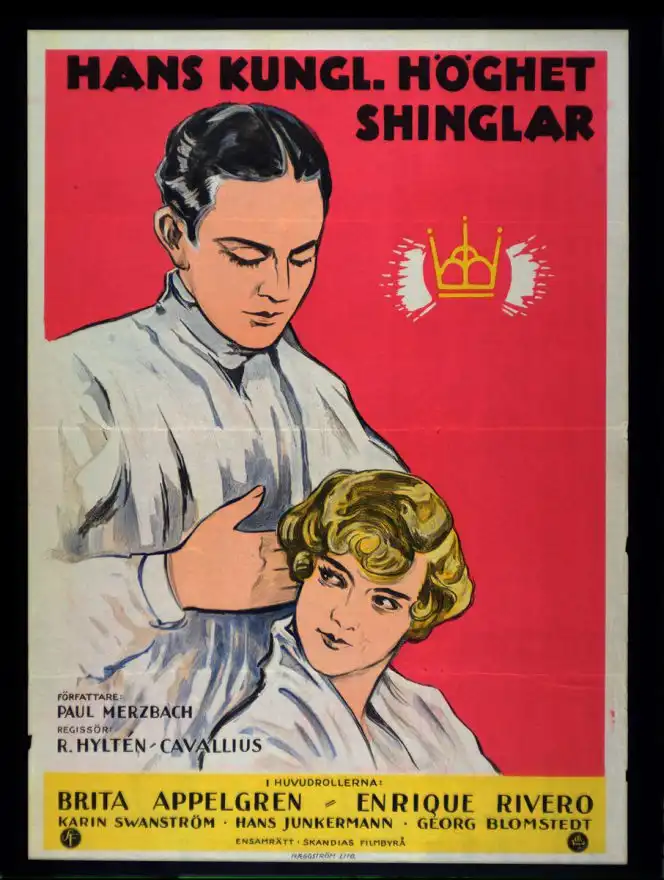
A definitive 7/10 rating for a film that redefined the boundaries of cult cinema. Majestät schneidet Bubiköpfe remains a cornerstone of transgressive art.
If you have any interest in the Weimar era or the kind of silent movies that feel like they were written on the back of a napkin during a very long lunch, you’ll probably find something to like in Majestät schneidet Bubiköpfe. It’s not a great film by any stretch of the imagination, but it has this nervous, frantic energy that kept me from checking my phone too often. If you’re looking for a tight plot or a deep political satire, you’re going to hate this. It’s mostly just Curt Bois looking stressed while holding a pair of scissors.
Curt Bois is the main reason to watch. Most people know him as the pickpocket from Casablanca, but here he’s young, skinny, and has a face that seems to be constantly vibrating with anxiety. He plays André, a barber in a sleepy Swedish coastal town called Salthamn. He’s been there for twenty years, just trimming beards and dealing with the local gossip. But, of course, because this is a 1920s comedy, he’s actually a prince from a place called Tiranaien. The movie doesn't really care about the logic of how a prince becomes a small-town barber for two decades without anyone noticing, and honestly, after ten minutes, I stopped caring too.
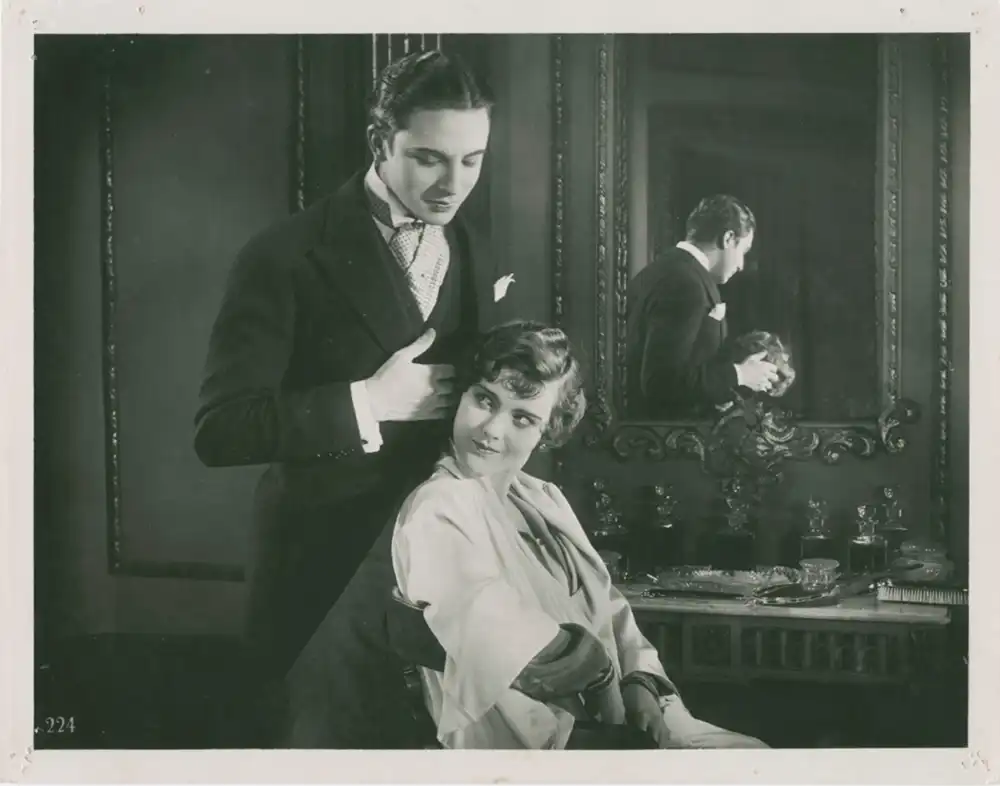
The title translates to "His Majesty Cuts Bobbed Hair," and the movie is weirdly obsessed with the "Bubikopf"—the bobbed hairstyle that was a huge deal back then. There is a scene early on in the barber shop where André is working on a woman's hair, and the camera just lingers on his hands. It’s not a particularly well-shot scene; the lighting is a bit flat and the focus feels a hair off, but you can feel the intensity of the moment. For a movie about a royal coup, it spends an enormous amount of time on the technicalities of 1920s hair styling. It’s those specific, oddly focused moments that make these old films feel human. You can tell someone on set really cared about how that hair looked.
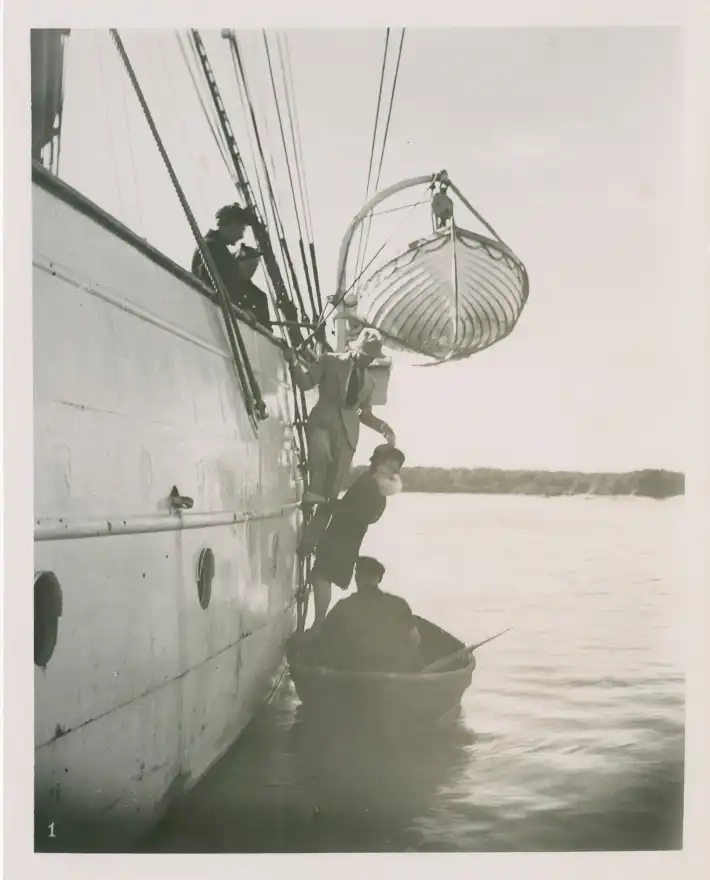
The town of Salthamn itself looks like a collection of very nice postcards. There’s a shot of the harbor that stays on screen for about five seconds too long, and you can see a couple of extras in the background who clearly didn't know they were being filmed. One of them is just leaning against a post, looking bored out of his mind, until he suddenly realizes the camera is rolling and tries to look "busy" by adjusting his hat. I love stuff like that. It breaks the illusion, but it makes the movie feel like a real artifact of a specific Tuesday in 1928.
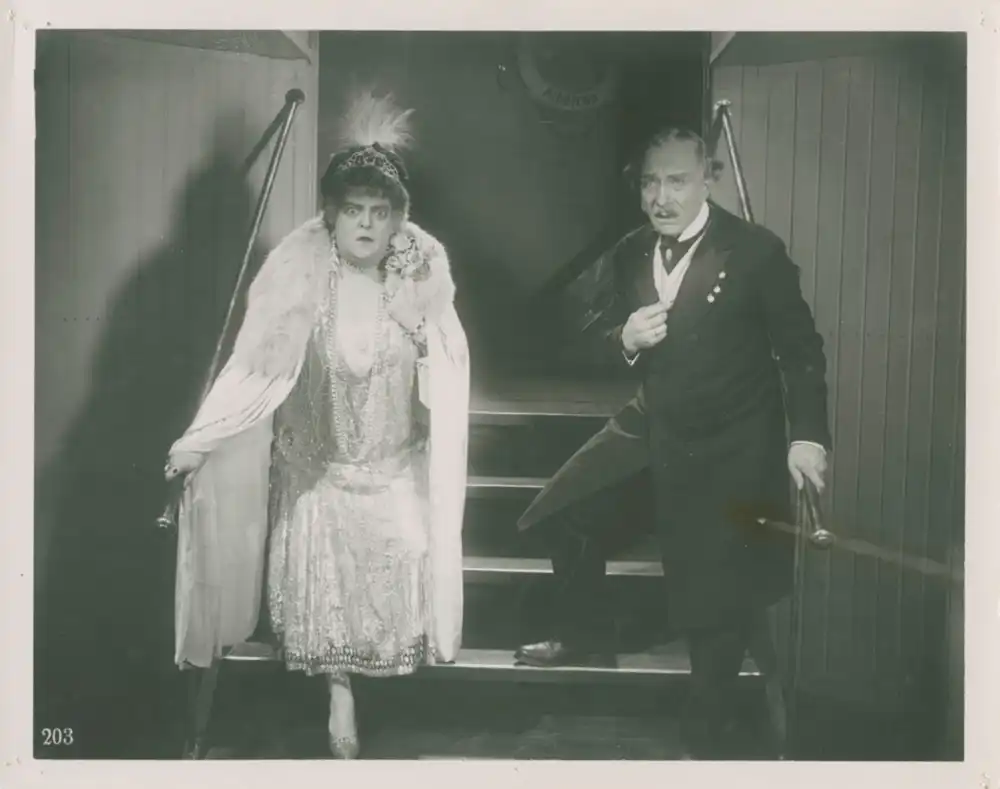
When the plot finally kicks in and the "royal coup" business starts, the movie gets a bit messy. The transition from the cozy barber shop to the political intrigue of Tiranaien is clunky. Suddenly there are all these men in uniforms and heavy capes running around. The costumes in the Tiranaien scenes are a bit much—everyone looks like they’re wearing three layers of wool and a hat that’s slightly too small for their head. Albert Steinrück shows up, and he has this way of staring into the middle distance that makes him look like he’s trying to remember if he left the stove on at home.
There is a sequence involving a chase that feels like it was edited by someone who was in a massive hurry. One moment a character is by a door, the next they’re across the room, and the spatial logic just completely evaporates. It’s not experimental or avant-garde; it’s just a bit sloppy. But in a weird way, the sloppiness fits the tone. The whole movie feels like a farce that’s accidentally stumbling into a drama every fifteen minutes.
I found myself thinking about A Girl in Every Port while watching the scenes in the harbor. There’s a similar vibe of "men in small towns dreaming of somewhere else," though this movie is much lighter and less interested in the actual grit of the sea. The chemistry between Bois and Maria Paudler is... fine. It’s not exactly electric. They have a scene together on a bench where they both seem to be waiting for the director to yell cut. They keep glancing at each other and then looking away, and the silence (well, the visual silence) becomes genuinely awkward. It’s one of those moments that was probably supposed to be romantic but ended up feeling like two strangers waiting for a bus in the rain.
The pacing drags significantly in the second act. There are a lot of intertitles explaining the political situation in Tiranaien, and unless you are deeply invested in the fictional history of made-up European micro-states, your eyes will probably glaze over. I started focusing on the wallpaper in the background of the palace sets. It’s incredibly ornate and looks like it was probably very expensive, which is funny because the "palace" itself feels like it only has three rooms. Every time they change scenes, it’s just the same hallway from a different angle.
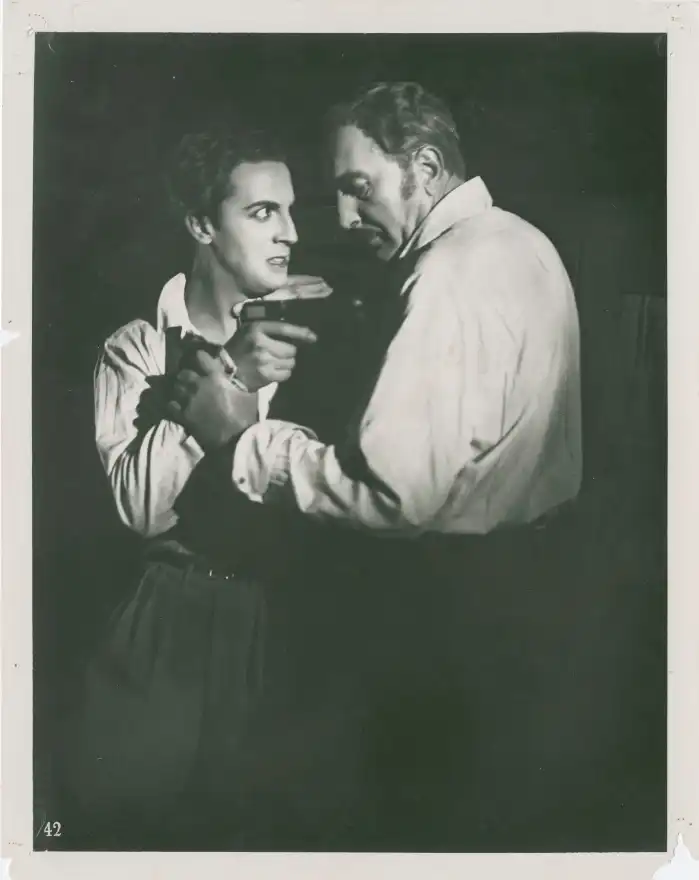
One thing that unexpectedly worked for me was the way the film handles the idea of André’s double life. There’s a shot where he’s looking at his old royal regalia while holding his barber’s shears. It’s a bit on the nose, sure, but the way the light catches the metal of the scissors is actually quite beautiful. It’s a rare moment where the cinematography feels intentional rather than just functional.
Is it as fun as something like The Digger Earl? Probably not. That movie has a bit more snap to it. Majestät schneidet Bubiköpfe feels a bit weighed down by its own premise. It wants to be a slapstick comedy and a royal romance and a political thriller all at once, and it doesn't quite have the runtime or the budget to pull all of that off. But there is a charm to its failure. It’s a movie that tries very hard to be sophisticated and ends up being endearing because it’s so clearly not.
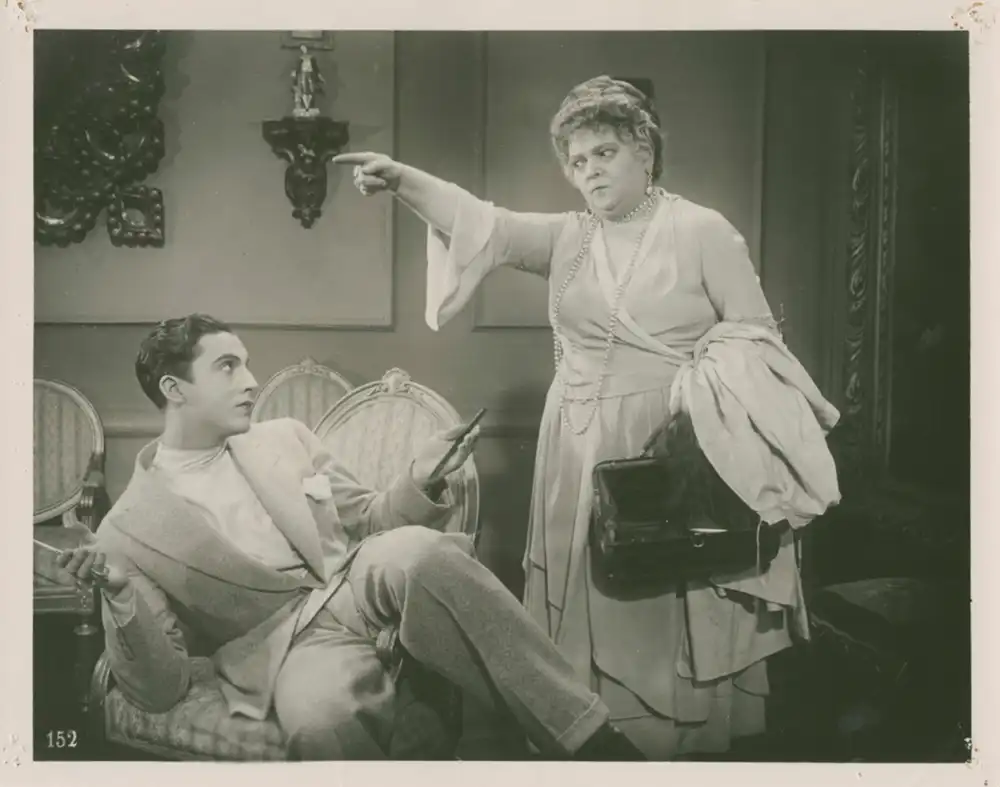
The ending is rushed. It’s one of those silent film finales where everything is resolved by a quick conversation and a couple of smiles, and then the screen just fades to black. I felt like I missed a scene. I actually went back and checked if the file had skipped, but no, that’s just how they ended movies back then sometimes. You get the resolution, and then you’re kicked out of the theater.
If you see it playing at a festival or find a decent restoration online, give it a look for Curt Bois alone. He’s such a strange, specific presence. Just don't go in expecting a masterpiece of Swedish cinema. It’s a movie about a guy who cuts hair and happens to be a king, and it’s exactly as silly as that sounds.
IMDb —
1919
Community
Log in to comment.