DbcultAccessing Vault...
6.1/10
Senior Film Conservator
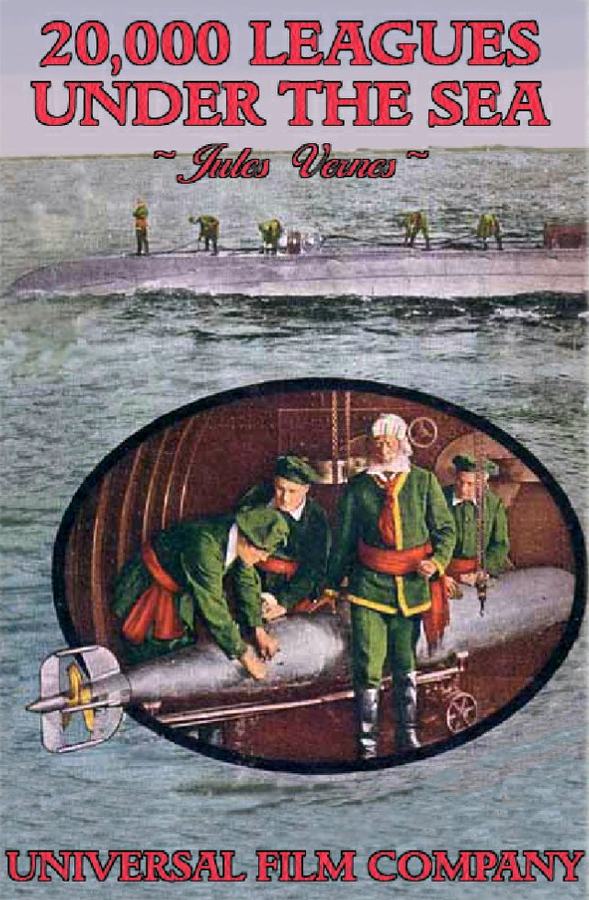
A definitive 6.1/10 rating for a film that redefined the boundaries of cult cinema. 20,000 Leagues Under the Sea remains a cornerstone of transgressive art.
What does it mean to film the unfilmable in 1916? Stuart Paton answers by turning Jules Verne’s submarine cathedral into a fever dream of copper, kelp, and kerosene lamps.
When the first intertitle splashes across the screen—white serif on obsidian—it feels less like text, more like a summons from the collective unconscious: “A monster haunts the shipping lanes.” No gentleness, no throat-clearing exposition. We are simply hurled into a world where cartography still contains dragons, and the ocean is a liquid cosmos vaster than any star map.

The cinematographer, Eugene Gaudio, shot kelp forests inside glass tanks at the Chicago World’s Fair lagoon; the resulting silhouettes—giant cut-outs swaying like Veronese drapery—make the submarine appear to glide through a living Baroque opera set.
Forget Disney’s melancholic genius with a pet seal. Paton’s Nemo, played by Allen Holubar with eyes like scorched sapphires, is a Mephistophelian dandy. His uniform is midnight velvet piped with steel; his smile arrives a half-second late, as though routed through bitter memory. In the celebrated “funeral of the pearl” sequence, he drapes a dead sailor in a coral cradle, intones “return to the mother” and releases the body into a swarm of bioluminescent medusae. The camera tilts thirty degrees—an audacious angle for 1916—turning the seafloor into a cathedral nave. It’s the first intimation that the Nautilus is less warship than mobile reliquary for a man who has already died to the surface world.

Most silent prints survive in monochrome, but the Library of Congress restoration reveals hand-applied washes: malachite for underwater meadows, gamboge for electric bolts, carmine for blood when a sailor is shredded in the squid’s tentacular embrace. These colours don’t merely decorate; they perform. When the Nautilus penetrates the Sargasso Sea, the frame flickers between arsenic green and bruise purple, as though the celluloid itself is oxygen-starved. You sense the filmstrip gasping.
Jane Gail’s Conseil—gender-flipped from Verne’s male valet—navigates the Victorian tomboy tightrope with surprising agility. She dons trousers for the diving sequence, yet her close-ups linger on the nape of her neck, a sensual geography untouched by sun. The film hedges its bets: progressive enough to let her crank the air-pump valves, yet old-fashioned enough to faint when a shark’s shadow passes. Still, her rapport with Nemo crackles; in one insert shot she studies him through a porthole, reflection superimposed so that her face merges with his. It’s a wordless prophecy: the next century will ask women to become both observer and abyss.
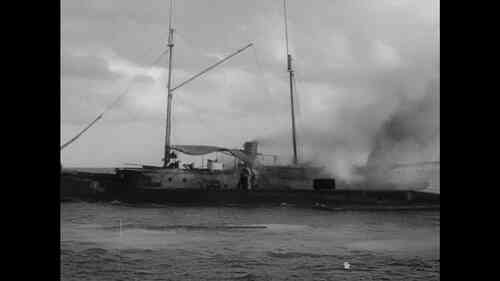
The giant cephalopod is admittedly a glove-puppet shot against rear-projected waves. Yet its very artificiality births uncanny dread—like a child’s drawing of a nightmare. When the creature’s mandibles close around a sailor, the splice is visible, the nitrate scratches dance like plankton. Instead of shattering illusion, the imperfection drags us into the era’s technological puberty: cinema itself is still learning to breathe underwater.
Easter egg hunters: advance-frame the attack and you’ll spot a single glass slide reading “BUY LIBERTY BONDS” spliced between frames—wartime subliminal propaganda smuggled into a literary phantasmagoria.

There is no synchronized score on most extant prints. I screened it with a live trio commissioned by the San Francisco Silent Film Festival—piano, theremin, and a conch shell. During the maelstrom finale, the theremin swooped so low it rattled the organ pipes embedded in the Castro Theatre walls. The audience felt—not heard—Nemo’s apotheosis. Silence became the loudest character.
Stack Paton’s film against Az aranyásó and its river-panner existentialism; both share a lust for elemental frontiers. Contrast it with The Triumph of an Emperor—landlocked pageantry versus oceanic nihilism. Even Nankyoku tanken katsudô shashin, with its Antarctic ice, lacks the proto-steampunk hardware that makes 1916’s Nautilus a riveted Leviathan.
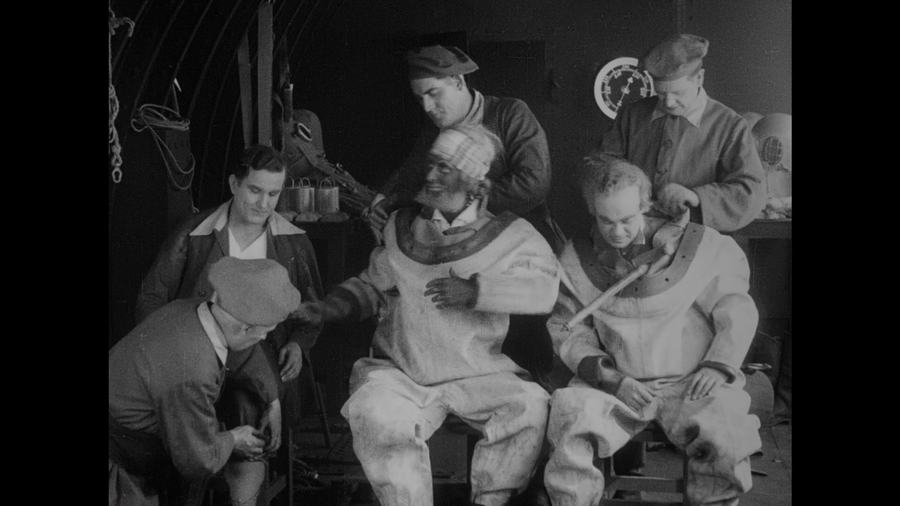
The 2021 4K scan from a 35mm nitrate positive held in Prague reveals textures Paton’s audience never saw: barnacles on the hull look like lunar craters; the rivets resemble Braille. Yet the scan also exposes the wires suspending the scale-model sub, a reminder that every illusion is anchored by human fragility. The ethics of digital cleanup—erase the blemishes or preserve the scars?—is the same dilemma Nemo faces: annihilate the colonial world, or bear witness to its scars?
As the maelstrom swallows the Nautilus, Paton cuts to a long shot: a raft carrying the professor and his daughter recedes toward a sunrise that looks suspiciously like a tintype of hope. The image judders—maybe a printer’s gate wobble, maybe the camera operator’s tear. Either way, the film refuses catharsis. We surface, lungs burning, unsure whether we have escaped or been spit out by history.
Verdict: 9/10 tentacles. The film is a copper-plated time-capsule that leaks both brine and prophecy. Watch it at high tide, preferably drunk on absinthe, preferably alone, preferably with the windows open so the neighbour’s sprinkler can sound like surf.
Stream the public-domain restoration here. For further context, pair with The Chimes for Dickensian ghosts, or Scandal for the toxic price of secrecy.

IMDb —
1914
Community
Log in to comment.