DbcultAccessing Vault...
Cult Review
Senior Film Conservator
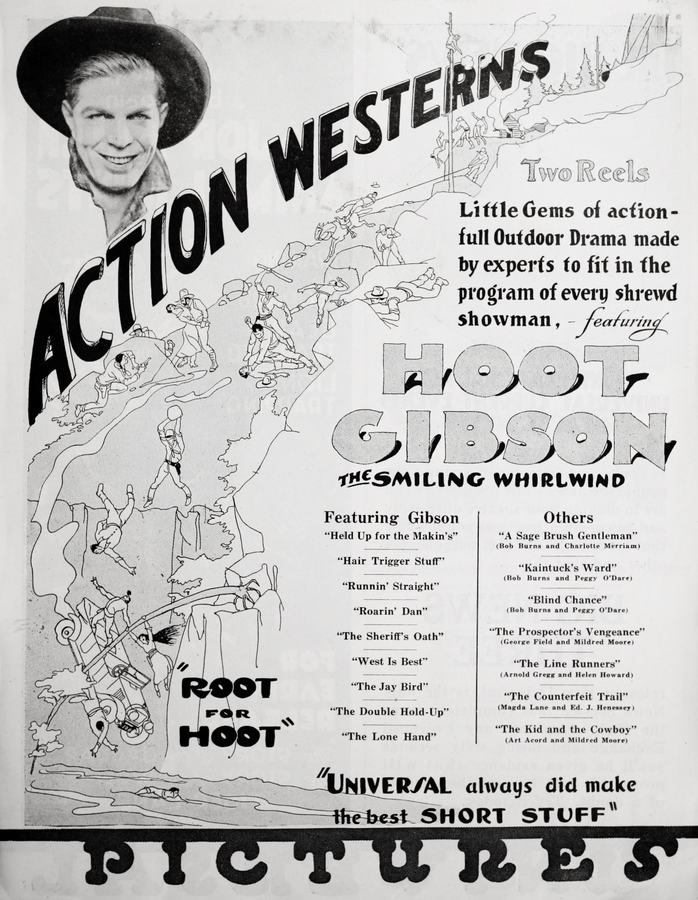
The year 1919 stood as a pivotal threshold in the evolution of American cinema, a moment where the crude visual grammar of the early nickelodeon era began to crystallize into a sophisticated narrative language. Within this transformative climate, The Kid and the Cowboy emerged not merely as a piece of ephemeral entertainment, but as a testament to the burgeoning maturity of the Western genre. To view this film today is to engage with a skeletal remains of a lost world, one where the dust of the frontier was still a living memory for many of its creators. The casting of Art Acord, a genuine rodeo champion, provides a level of verisimilitude that few modern recreations can hope to emulate. His movements are devoid of the theatrical affectations that plagued many of his contemporaries; instead, he possesses a kinetic economy that suggests a life lived in the saddle.
Often, silent Westerns are dismissed as simplistic morality plays, yet the narrative architecture provided by Dorothy Rockfort suggests a deeper preoccupation with the psychological underpinnings of the frontier mythos. Rockfort, a writer whose contribution to the silent era deserves a more rigorous academic reclamation, avoids the frantic pacing of contemporary serials. Unlike the urban tension found in Snares of Paris, which thrives on a labyrinthine plot of betrayal, Rockfort’s work here is expansive and atmospheric. She focuses on the quietude of the plains, allowing the relationship between the eponymous kid and his cowboy mentor to breathe. The script understands that in the vastness of the West, silence is not merely the absence of sound, but a character in its own right.
The dynamic between Acord and B. Reeves Eason Jr. is the emotional fulcrum of the piece. Eason Jr., often billed as 'Universal’s youngest star,' brings a startling lack of artifice to his role. There is a raw, unpolished quality to his performance that mirrors the rugged landscape. In an era where child actors were frequently directed to be saccharine or overly precocious, Eason Jr. remains grounded. His interactions with Acord feel less like scripted scenes and more like a captured apprenticeship. This bond provides a stark contrast to the more cynical explorations of human nature seen in European imports of the time, such as the existential dread present in Das Recht aufs Dasein.
Visually, the film is a masterclass in the use of natural light and deep focus, long before those terms became staples of the critical lexicon. The cinematography captures the shimmering heat of the desert and the jagged geometry of the rock formations with a clarity that feels almost tactile. There is a scene involving a cattle drive that possesses a documentary-like intensity, far removed from the choreographed spectacles of later decades. The camera remains a steadfast observer, refusing to indulge in unnecessary flourishes. This commitment to naturalism aligns the film more closely with the gritty realism of Rimrock Jones than with the more polished, studio-bound dramas of the late teens.
The supporting cast, featuring Mildred Moore and Dagmar Godowsky, adds layers of social complexity to the frontier setting. Moore provides a nuanced portrayal of frontier womanhood, eschewing the 'damsel in distress' archetype for something more resilient and weary. Godowsky, meanwhile, offers a hint of the exoticism that would later define her career, though here she is integrated into the dusty reality of the ranch. Their presence reminds the viewer that the West was not solely a masculine vacuum, but a community in the process of messy, often painful, formation. This ensemble work is far more sophisticated than the binary characterizations found in The Weakness of Man, where moral failings are telegraphed with heavy-handed symbolism.
When examining The Kid and the Cowboy within the broader context of 1917-1919 cinema, one notices a fascinating divergence between American regionalism and European formalism. While films like Aziade were exploring the lush, orientalist fantasies of the 'other,' the American Western was digging its heels into the dirt of its own history. There is a lack of pretension here that is refreshing. Even when compared to the high-stakes melodrama of The Grand Passion, this film feels more essential, more concerned with the fundamental mechanics of survival and mentorship.
Furthermore, the film’s pacing is worth noting. Unlike the frantic, almost slapstick energy of Susan Rocks the Boat, there is a deliberate, rhythmic quality to the editing. The sequences of riding and labor are given as much weight as the moments of dramatic confrontation. This creates a sense of lived-in reality; we understand the cowboy's world because we are forced to inhabit his tempo. The film doesn't rush to the climax; it earns it through a slow accumulation of character beats and environmental details.
It is impossible to discuss this film without acknowledging the poignant legacy of its young star. B. Reeves Eason Jr. was a prodigy of the silent screen, directed here by his father, a man known for his prowess in staging kinetic action sequences. The chemistry between father and son, though mediated through the lens and the presence of Art Acord, is palpable. There is a sense of genuine affection and protection that permeates the Kid's scenes. Tragically, Eason Jr.’s career would be cut short shortly after this period, lending a haunting quality to his performance. Every smile, every tumble in the dirt, is now colored by the knowledge of his untimely end, turning a simple Western adventure into a melancholic artifact of lost potential.
This emotional depth is something often lacking in more commercial ventures like The Marriage Market, which prioritizes social satire over visceral human connection. In The Kid and the Cowboy, the stakes are not merely financial or social; they are existential. The cowboy is teaching the kid how to be a man in a world that has no room for weakness. It is a harsh curriculum, but one delivered with a silent, stoic love that resonates across the century.
The direction—credited to Eason Sr.—displays a sophisticated understanding of spatial relationships. The way characters are positioned within the frame often tells us more about their internal states than the intertitles ever could. When the Kid is dwarfed by the massive horizon, we feel his vulnerability. When Acord occupies the foreground, his solid presence provides a literal and figurative shield. This use of blocking is far more advanced than the static, stage-like presentations found in Der Schloßherr von Hohenstein.
The film also benefits from the presence of George Field and Charles Newton, veteran performers who anchor the more traditional plot elements with a sense of gravity. Their contributions ensure that the film never drifts too far into the experimental, maintaining a sturdy narrative drive that satisfies the audience's desire for a coherent story while still pushing the boundaries of what a 'B-Western' could achieve. Even when compared to the whimsical nature of Surrogatet or the satirical bite of El apóstol, this film holds its own through sheer earnestness and technical competence.
Ultimately, The Kid and the Cowboy is a vital piece of the cinematic puzzle. It bridges the gap between the primitive shorts of the early 1910s and the epic Westerns of the 1920s. It showcases a writer in Dorothy Rockfort who understood the power of restraint, and a lead in Art Acord who brought the actual experience of the West to a medium that was still figuring out how to portray it. It lacks the melodrama of Ungdomssynd and the domestic focus of Kammerpigen, opting instead for a rugged, outdoor philosophy that feels uniquely American.
As we look back from a century’s distance, the film serves as a poignant reminder of the fragility of film history. Many works from this era, like Out of the Wreck or Joining the Tanks, provide glimpses into specific cultural anxieties, but The Kid and the Cowboy taps into something more primal: the universal need for connection in a vast, indifferent world. It is a film of grit, dust, and surprising tenderness, a seminal work that demands to be viewed not just as a historical curiosity, but as a living, breathing piece of art.
IMDb —
1922
Community
Log in to comment.