DbcultAccessing Vault...
Cult Review
Senior Film Conservator
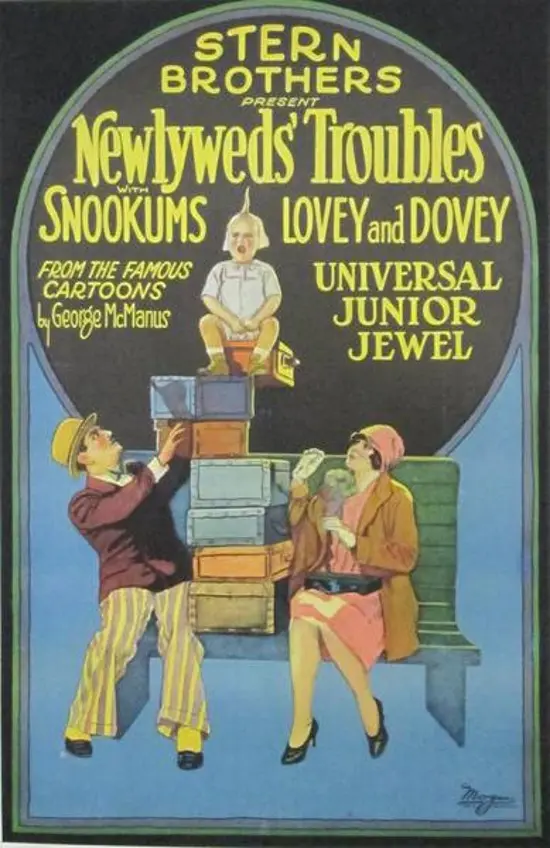
Is 'The Newlyweds' Troubles' worth watching today? Short answer: yes, but primarily for cinephiles and those with a deep appreciation for the foundational elements of screen comedy.
This film is a fascinating historical artifact for silent cinema enthusiasts, yet it will likely test the patience of mainstream viewers accustomed to modern narrative conventions. It’s a glimpse into the nascent stages of filmmaking, offering valuable lessons in comedic timing and physical performance, but it’s far from a universally engaging experience.
This film works because it distills the essence of early domestic comedy into a potent, if brief, package, showcasing the raw talent of its performers and the straightforward charm of its era.
This film fails because its narrative simplicity and reliance on broad physical gags can feel dated, lacking the nuanced character development or intricate plotting that contemporary audiences expect.
You should watch it if you are a student of film history, a silent cinema enthusiast, or someone curious about the origins of screen comedy, particularly the 'newlywed' trope that would later dominate decades of sitcoms and rom-coms.
'The Newlyweds' Troubles' arrives from an era where cinema was still finding its voice, often relying on vaudevillian sensibilities and broad physical humor to engage audiences. It’s not a film that attempts to redefine the medium; rather, it’s a confident, if conventional, exploration of a popular theme: the comedic friction of early marriage. George McManus, known for his prolific work in the silent short format, crafts a narrative that is less about plot complexity and more about situation-driven gags, a hallmark of the period.
The film’s very title sets a clear expectation, and it delivers precisely what it promises. We are invited to observe the minor squabbles and misunderstandings that inevitably arise when two distinct personalities attempt to merge their lives. This universal theme ensures a certain timelessness, even if the execution is firmly rooted in its temporal context.
It's startling how many modern rom-com tropes find their nascent forms here, albeit delivered with a bluntness that would make today's screenwriters blush. The foundational idea of domestic discord as entertainment is robustly present.
The charm, for those willing to engage with it, lies in its unpretentious nature. This is cinema as pure entertainment, designed for immediate laughs and quick resolutions, without the ponderous subtext or artistic pretensions that would later define more 'serious' works. It’s a snapshot of a particular cultural moment, reflecting societal norms and humorous archetypes of the early 20th century. While it may not possess the grandiosity of The Biggest Show on Earth or the dramatic tension of The Third Alarm, its modest ambitions are precisely its strength.
In silent cinema, the burden of communication falls squarely on the actors' physicality and facial expressions. Ethlyne Clair, a prominent figure in many short films of the era, brings a vivacious energy to her role as the newlywed wife. Her performance, likely characterized by wide-eyed exasperation, exaggerated gestures, and a rapid shift between annoyance and affection, would have been instantly recognizable and engaging for contemporary audiences. Clair’s ability to convey a range of emotions without a single spoken word is a testament to the rigorous training silent film actors underwent.
Sunny Jim McKeen, as the husband, embodies the often-hapless, well-meaning male archetype. His humor would have stemmed from his reactions to Clair’s frustrations, his attempts to resolve situations that he likely initiated, and his general air of amiable cluelessness. McKeen’s performance, typical of the era, relies on broad strokes and precise comedic timing to land gags that might seem simplistic today but were groundbreaking in their time. The interplay between Clair and McKeen is the film's engine, a dance of domestic comedy that predates countless on-screen couples.
Ed Dooley, often cast in supporting comedic or villainous roles, would likely have served as a catalyst for much of the 'trouble.' Whether as an intrusive neighbor, a meddling relative, or an unwitting third party, Dooley's presence would have added another layer of comedic chaos. His performance, while perhaps less central, would have been crucial in elevating the film's stakes and providing additional opportunities for physical comedy and exaggerated reactions.
Frankly, much of what passes for 'subtlety' in silent film acting is often just an actor struggling to convey nuance without dialogue, and Clair, for all her charm, sometimes falls into this trap. Yet, there’s an undeniable sincerity in her effort.
The ensemble works within the confines of the period's acting conventions. Their performances are less about psychological depth and more about projecting clear, understandable emotions and intentions. This approach, while perhaps alien to modern viewers, was the very bedrock of cinematic storytelling before sound. It works. But it’s flawed.
George McManus, as the writer, likely envisioned a series of interconnected gags rather than a complex plot. The direction, therefore, would have prioritized clarity and comedic impact. Expect straightforward camera angles, minimal elaborate set pieces, and an emphasis on the actors' performances. This stripped-down approach was common for short comedies, allowing for rapid production and efficient storytelling.
The pacing would have been brisk, characteristic of silent shorts designed to hold attention without the benefit of dialogue. Each gag would build quickly, deliver its punchline, and transition to the next, creating a relentless, almost frenetic energy. This rapid-fire rhythm is a double-edged sword: it prevents boredom but also sacrifices any opportunity for deeper emotional resonance or character development. It’s a directorial choice that prioritizes laughter above all else.
McManus’s writing, even without explicit dialogue, suggests a keen understanding of comedic structure. The 'troubles' would likely escalate in a logical, if exaggerated, progression, culminating in a final, often absurd, resolution. This structural integrity, even in a short format, speaks to the foundational principles of comedic storytelling that remain relevant today. While not as ambitious as a film like Mary Regan in its narrative scope, 'The Newlyweds' Troubles' demonstrates a mastery of its chosen form.
The cinematography of 'The Newlyweds' Troubles' would have been utilitarian, serving the comedy without drawing undue attention to itself. Expect static shots, medium close-ups to capture facial expressions, and wide shots to establish the domestic setting and allow for physical comedy. The lighting would be functional, designed to ensure visibility rather than create mood or artistic effect. This is not the experimental cinematography of later avant-garde films; it is the practical, efficient lensing of early commercial cinema.
Pacing, as mentioned, is key. Silent shorts like this moved quickly, often employing jump cuts and rapid scene changes to maintain momentum. Intertitles would punctuate the action, delivering dialogue or expository information with a brevity that often added to the comedic effect. The rhythm of the film is a fascinating study in how filmmakers compensated for the absence of sound, relying on visual cues and a relentless forward drive.
Compared to the more deliberate pacing of a feature like The Dwelling Place of Light, 'The Newlyweds' Troubles' operates at a higher velocity, demanding a different kind of audience engagement. It's an experience designed to be consumed quickly, leaving a lasting impression through its comedic moments rather than its lingering atmosphere. It's a relic. An interesting one.
For the average moviegoer, 'The Newlyweds' Troubles' might feel like an archaeological dig rather than a compelling piece of entertainment. Its humor, while universal in theme, is delivered through a lens of early 20th-century sensibilities that may not translate effortlessly to modern comedic tastes. The lack of dialogue, the reliance on broad physical gags, and the simple narrative structure can be barriers for those unaccustomed to silent cinema.
However, for those with a specific interest—film students, historians, or enthusiasts of the silent era—this film offers significant value. It serves as an excellent example of early screen comedy, showcasing the talents of its performers and the foundational techniques of its director. It’s a chance to witness the evolution of a genre, to see the roots of countless future comedies.
It provides a direct link to a bygone era of entertainment, demonstrating how filmmakers engaged audiences with limited tools. It’s a testament to the power of visual storytelling and the enduring appeal of human foibles. So, while it won't be for everyone, its historical and academic worth is undeniable.
'The Newlyweds' Troubles' is not a film that will convert silent cinema skeptics. It is, however, a charming and historically significant piece for those already attuned to the unique rhythms and expressive power of the silent screen. It stands as a testament to the enduring appeal of domestic comedy, showcasing how early filmmakers, with limited tools, managed to capture universal human experiences through exaggerated gestures and swift narrative strokes.
While it may not possess the narrative ambition of a feature film or the timeless comedic genius of a Chaplin or Keaton, it offers a valuable and often delightful window into the origins of a genre. Its greatest strength lies in its unpretentious commitment to delivering simple, relatable laughs. For anyone studying film or simply fascinated by its origins, 'The Newlyweds' Troubles' is an essential, if brief, viewing experience. For others, it’s a curiosity, a foundational brick in the vast edifice of cinematic history, perhaps best appreciated from a distance or through academic lenses. It's a film that demands context to be truly valued, and within that context, it shines with a modest, archival glow.
IMDb 6.1
1933
Community
Log in to comment.