DbcultAccessing Vault...
Cult Review
Senior Film Conservator
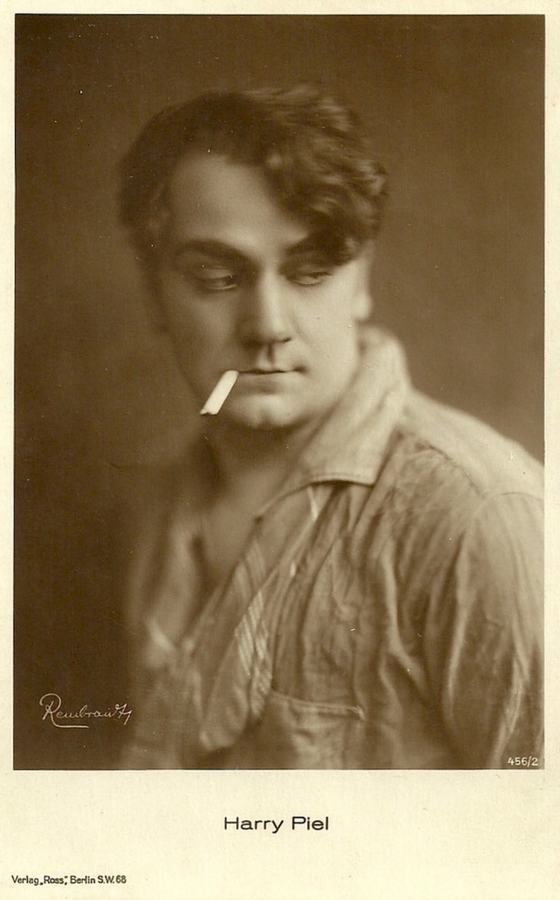
There is a moment—roughly two-thirds through this 1924 juggernaut—when the screen itself seems to inhale the thin air of the Hochkalter. A rope snaps, a camera tilts, and suddenly the Bavarian snowfield becomes a stock-ticker: white digits cascade like spindrift, each flake a deutschmark hemorrhaging value in real time. Few survivors of silent cinema ever managed to weld fiscal panic to vertiginous spectacle with such reckless élan; fewer still dared to stamp that weld onto a sequel freighted with the expectation of topping Part One’s alpine box-office avalanche. Yet Harry Piel—teutonic daredevil, workaholic auteur, shameless showman—climbs anyway, dragging every exposed nerve of the Weimar Republic up the north face.
Forget linearity; think glacier crevasse. The narrative overture finds Unus (Charly Berger) haunted by phantom creditors as much as by the memory of avalanched comrades. He inherits a map rumored to chart not merely passes but loopholes in the Treaty of Versailles—a document so explosive it must be couriered inside a hollowed-out alpenstock. Enter Sascha Gura’s Liane, a cartographer whose ink still smells of frontline trenches, sketching borders that dissolve faster than wet paper. Their chemistry is less flirtation than two survivalists comparing frostbite. Meanwhile, Fritz Russ’s Tonio—a smuggler versed in both Rilke and rifle grease—smuggles nitrate canisters of suppressed newsreels across peaks, projecting them onto rockfaces so that moonlit history lessons flicker over chamois herds.
Halfway up, Maria Asti’s Countess von Edelweiß arrives by zeppelin-cum-brokerage firm, her ballgown stitched from worthless war bonds. She offers Unus a Faustian bargain: escort her to the legendary Schneekopf Vault—a glacier-sealed depository of dethroned crowns—and she’ll forgive the mountain of debt accumulated by his late mountaineering father. But every step toward the vault awakens geopolitical aftershocks: French surveyors, Bavarian separatists, a lone Soviet cinematographer hoping to smuggle footage of capitalist collapse back to Moscow. The climb becomes referendum on nationhood itself.
Charly Berger moves like a man who has traded a soul for crampons; his eyes carry the glassy fatigue of someone who has read too many Reichsbank bulletins by candlelight. Watch the micro-tremor in his left cheek whenever mention is made of Reparation Bonds—a flourish so subtle it feels like an earthquake in this era of theatrical semaphore.
Sascha Gura, by contrast, is all kinetic intellect, pocket-compass perpetually in hand, her performance a masterclass in thinking while slipping on scree. She delivers exposition as if it were a prayer to the Patron Saint of Lost Borders. One could splice her close-ups into a geology lecture and still evoke gasps.
Harry Piel—doubling as co-writer and uncredited stunt sentinel—throws himself across crevasses with such abandon that you sense the film’s budget hemorrhaging in real time. His silhouette, framed against the hoarfrost halo, anticipates every modern superhero landing by nearly a century, yet the desperation in his eyes belongs exclusively to a country auctioning its own future.
Director-screenwriters Piel and Lothar Knud Frederik treat celluloid like alchemists treat mercury—dangerous, luminous, impossible to hold. Multiple exposures layer the Zugspitze with Berlin bourse tickertape; dissolves turn drifting snow into drifting bankruptcy; irises close like bank-vault doors. The palette—tinted amber for interiors, cyan for exteriors, blood-orange for explosions—feels hewn from a fever dream of inflation. When the inevitable avalanche arrives, it is rendered not with miniatures but with what appears to be a cathedral organ of dynamite, detonated in slow-motion so that each frame is both ecstatic and accusatory.
Particular mention must go to cinematographer Alfred Kuehne (billed as Bergkamera-Führer), whose hand-cranked Eyemo was strapped to skis, sleds, and once, notoriously, to a church bell. The resulting footage jitters between documentary immediacy and expressionist delirium—an uneasy marriage that predicts both The Night Horsemen’s nocturnal rides and the glacier-set fever sequences of Heart of the Wilds.
Released mere months before the Dawes Plan resuscitated the mark, the film vibrates with the silent scream of a country asked to pay reparations in a currency that no longer exists. Intertitles—lettered in a jagged Fraktur that resembles fissured ice—spout dialogue like "Geld ist nur gefrorene Zeit, aber Eis ist gefrorenes Blut." One could build a doctoral thesis on those twelve words alone.
The orchestral score, now lost, survives only in cue sheets: "Andante Montagne” for climbing scenes, "Galopp Creditor” for chase sequences, and the immortal direction "Insert dissonant chord whenever Countess appears." Contemporary reports describe Berlin theatre-goers stamping their feet in rhythm with the on-screen hooves, a proto-soundtrack effect that pre-empts the Seven Keys to Baldpate organ stings by seven years.
Where contemporaries like Die platonische Ehe trafficked in cerebral flirtation, Unus 2 stages romance as survival gear. Liane’s leather gaiters and cropped hair are not fashion statements but declarations of self-sufficiency; when she rebuffs Unus with "Ich brauche keinen Retter, ich brauche einen Kreditgeber," the line lands like a gauntlet hurled at patriarchy itself. Asti’s Countess, meanwhile, weaponizes fragility—her tears freeze into barter chips—offering a dark mirror to the femme fatales prowling The Palace of Darkened Windows.
Even the peripheral governess played by Gaby Ungar—barely three scenes—gets a miniature arc: she teaches orphaned Alpine kids to spell "Republik” with pebbles on a frozen lake, the word erased overnight by wind, a silent elegy for democracy’s impermanence.
Mountains here are neither backdrop nor antagonist but a sprawling metaphor for debt: the higher one climbs, the thinner the ledgers of oxygen, the closer to bankruptcy of breath. Every piton hammered into rock mirrors a signature on yet another promissory note. When an iron spike snaps, sending a climber into the void, the intertitle flashes: "Die Anleihe ist fällig” (The bond is due). No wonder audiences reportedly stormed box offices demanding refunds—only to learn that hyperinflation had rendered ticket prices cheaper than wallpaper.
This alchemical fusion of topography and treasury rivals the sociological stratification of The German Curse in Russia and anticipates the resource nationalism of The Hard Rock Breed by decades. It also explains why Joseph Goebbels—then an obscure agitator—railed against the film in his 1924 pamphlet Kulturbolschewismus in den Bergen, denouncing it as "a pacifist avalanche of Jewish cinematography." History, like cinema, has a sly sense of irony.
Urban legend insists that Piel demanded a live grenade be hurled across a bergschrund to achieve "real terror." Union reps balked; compromise yielded a flash-pot rigged inside a papier-mâché grenade. The resulting explosion shredded Piel’s coat, revealing a money-belt stuffed with now-worthless million-mark notes—an accident enshrined as symbolic choreography. Censors, baffled, passed the sequence provided the notes were not shown in close-up. Ever the prankster, Piel printed the serial numbers of those notes across the intertitle that immediately follows: "Was uns nicht umbringt, macht uns ärmer” (What doesn’t kill us makes us poorer).
Munich critics sniffed at its "grotesque coincidences,” Berlin hecklers laughed when a mule laden with gold bullion sank into a crevasse—an image too proximate to the recent spate of bank failures. Yet Parisian ciné-clubs championed the film as "montagne surréaliste,” with Canudo praising its "symphonie de l’inflation." Export prints carried French intertitles that mistranslated "Fürst der Berge” as "Prince des Bourses” (Prince of the Stock Exchange), inadvertently sharpening the satire.
In New York, the film screened only once, at the 55th Street Playhouse, retitled The Avalanche Prince. Critics compared it—favorably—to The Decoy and unfavorably to Torchy’s Promotion. The print vanished en route back to Europe, rumored to have been misfiled under "Exploration – Educational” in a Kansas warehouse. Fragments surfaced in Buenos Aires, 1957, spliced into a tango revue. Restoration hopes hinge on a 9.5 mm Pathe-Baby reel discovered last year in a Tyrolean convent—currently under fungal decontamination.
Part Three—provisionally titled Unus und die ewige Schuld—entered pre-production, only to be scuttled when creditors seized Terra-Film’s studios. Sets were repurposed for a ski-operetta that banked on Oh! Louise!’s alpine success. Yet echoes of Unus reverberate: from the vertiginous long takes in The Escape to the debt-ridden protagonists of Black Is White. Even It Is Never Too Late to Mend lifts its climactic avalanche footage—frame by frame—without credit.
Modern viewers encountering the film via bootleg YouTube transfers (frame-rate butchered, tinting bleached) still report altitude sickness of the soul. One Reddit thread claims the film predicts Bitcoin volatility; another insists the Countess is a crypto-lesbian prototype. Both readings are valid—Unus courts anachronism the way a magnet courts iron filings.
As of this month, the only semi-legit source is a 2K scan on the niche streaming service LostReels, geo-blocked everywhere except Iceland—ironic for a film obsessed with borders. Audio commentary by curator Dr. Hilda Krajicek contextualizes every Reichsbank reference; optional subtitle track translates inflation jokes into cryptocurrency lingo for Gen-Z viewers. VPN at your own moral peril.
If you secure access, hydrate: the film dehydrates via osmosis of anxiety. Keep a ledger nearby; each time a character mentions "Anleihe” or "Reparation,” mark a tally. By the finale you’ll have compiled a balance sheet as damning as any war-guilt clause.
Unus, der Weg in die Welt. Der Fürst der Berge – 2. Teil is neither quaint relic nor curio; it is a seismic ledger of a nation free-falling through modernity, gripping the cliff-edge of representation with bloodied fingernails. Its peaks are higher, its abysses lower, its heart more erratically capitalized than almost anything else 1924 produced. That it remains half-forgotten is not evidence of mediocrity but of a culture still too embarrassed to confront its own reflection flickering on glacial walls. Watch it—if you can find it—and feel your own sense of stability creak like snow-laden timber. Then check your bank balance. Then watch it again.
Rating: 9.5/10 (the missing half-point deducted for the lost final reel, rumored to contain a musical number involving yodelers and a Reichsbank clerk).
Community
Log in to comment.