DbcultAccessing Vault...
Cult Review
Senior Film Conservator
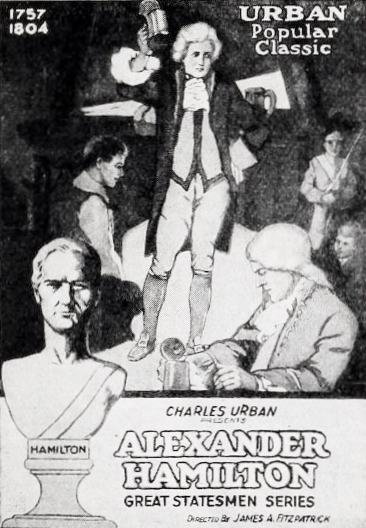
To witness John G. Adolfi’s Alexander Hamilton is to step into a time capsule that captures the very moment Hollywood began to grapple with the gravity of the spoken word. Released in 1931, a mere four years after the sound revolution, the film serves as a magnificent, if occasionally static, showcase for the idiosyncratic genius of George Arliss. Arliss, who also co-authored the play upon which this celluloid venture is based, approaches the title role with the meticulous precision of a watchmaker and the flamboyant charisma of a stage veteran. He does not merely play Hamilton; he inhabits the intellectual arrogance and the patriotic fervor of the man who arguably invented the American economic engine.
The film’s architecture is decidedly proscenium-bound, a relic of its theatrical origins that works surprisingly well for the subject matter. In an era where many films were attempting the kinetic energy of Sure-Fire Flint, Adolfi chooses a more deliberate, conversational pace. This is a movie of rooms, of hushed whispers in corridors, and of the rhythmic clinking of quill pens against inkwells. The tension is not found in physical altercations but in the clash of philosophies. When Hamilton faces off against his detractors, the air crackles with a sophisticated vitriol that modern political dramas often fail to replicate.
Unlike the raw, untamed landscapes often seen in Laws and Outlaws, the Philadelphia of 1790 is presented here as a burgeoning metropolis of ideas. The production design emphasizes a certain neoclassical austerity, reflecting the Enlightenment ideals that Hamilton sought to institutionalize. Yet, beneath this veneer of order lies the same primal hunger for power that one might find in the more visceral Pençe. The stakes are nothing less than the survival of a fragile republic, and Arliss conveys this weight through every subtle twitch of his brow.
The narrative brilliance of the film lies in its refusal to ignore the Maria Reynolds scandal. While Hamilton is busy constructing a financial fortress, his personal life becomes a vulnerability exploited by his enemies. This subplot introduces a layer of melodrama that contrasts sharply with the dry legislative debates. It reminds the viewer that the architects of history were men of flesh and blood, susceptible to the same 'atavistic' impulses explored in Atavismo dell'anima. The blackmail sequence is handled with a delicate touch, emphasizing Hamilton’s intellectual vanity—he is a man who believes he can outthink any predicament, only to find himself ensnared by his own human frailty.
There is a poignant sense of sacrificial duty throughout the second act. Much like the titular figure in Nurse Cavell, Hamilton is forced to choose between personal reputation and the greater good. His decision to publish the details of his indiscretion to prove his financial integrity is portrayed as a moment of agonizing nobility. It is here that the film transcends its period-piece trappings and becomes a timeless meditation on the cost of public service.
When comparing this 1931 effort to other contemporary works, the differences in tone are striking. While a film like The Return of Eve might lean into a more allegorical or pastoral innocence, *Alexander Hamilton* is cynical, urban, and deeply concerned with the machinery of civilization. It lacks the mythological abstraction of Il Fauno, opting instead for a gritty, albeit polished, realism. The dialogue is dense, requiring an attentive ear, much like the complex social dynamics found in Worlds Apart.
The cinematography, while largely static, utilizes shadows to great effect during the late-night sessions of Congress. There is a sense of 'meatless days and sleepless nights'—a direct thematic echo of the struggle for survival seen in Meatless Days and Sleepless Nights. The lighting reflects the internal state of the characters; Hamilton is often bathed in a sharp, unforgiving light, while his adversaries, Monroe and Jefferson, are frequently relegated to the softer, more deceptive shadows of the political periphery.
George Arliss’s performance is a masterclass in the 'Great Man' school of acting. He possesses a unique ability to make the act of thinking look cinematic. Every pause is pregnant with calculation. In many ways, his Hamilton is a 'breaker' of old systems, much like the protagonist in The Breaker, dismantling the agrarian fantasies of his peers to build a modern industrial state. His chemistry with the supporting cast—particularly Montagu Love as Jefferson—is electric. The intellectual sparring matches between them are the film’s true action sequences, far more thrilling than the physical conflicts in The War of the Tongs.
The film also touches upon the social parasites that cling to great men, a theme resonant with the narrative of Girlies and Grubbers. The Reynolds family represents this parasitic element, reminding the audience that Hamilton’s brilliance did not exempt him from being preyed upon by those who recognized his weaknesses. This intersection of high-minded policy and low-brow extortion gives the film a narrative texture that feels surprisingly modern.
While modern audiences, conditioned by the hip-hop sensibilities of Lin-Manuel Miranda, might find this version of Hamilton somewhat stiff, it offers a necessary counterpoint. This is Hamilton as he was viewed in the early 20th century: a pillar of stability and a martyr to his own intellect. The film functions as a cinematic treatise on How Uncle Sam Prepares for the complexities of global finance. It captures the 'fire' of revolution—an echo of the passion in A Tüz—and channels it into the cold, hard reality of banking and credit.
Ultimately, the film explores The Price of Possession—not of material goods, but of one's own destiny. Hamilton possessed the vision to see a future America, but that vision required him to possess a level of control over his own narrative that he ultimately could not maintain. The final scenes, depicting the resolution of the scandal and the solidification of his financial plans, leave the viewer with a bittersweet taste. We see the birth of a superpower, but we also see the exhaustion of its primary architect.
In the grand tapestry of biographical cinema, Alexander Hamilton (1931) stands as a testament to the power of performance over spectacle. It is a film that respects the intelligence of its audience, demanding an engagement with the intricacies of 18th-century policy while delivering a deeply human story of pride and penance. It remains an essential watch for anyone seeking to understand the cinematic evolution of the American hero, proving that even in the early days of the 'talkies,' Hollywood was capable of profound psychological depth and sophisticated political commentary.
IMDb —
1927
Community
Log in to comment.