DbcultAccessing Vault...
Cult Review
Senior Film Conservator
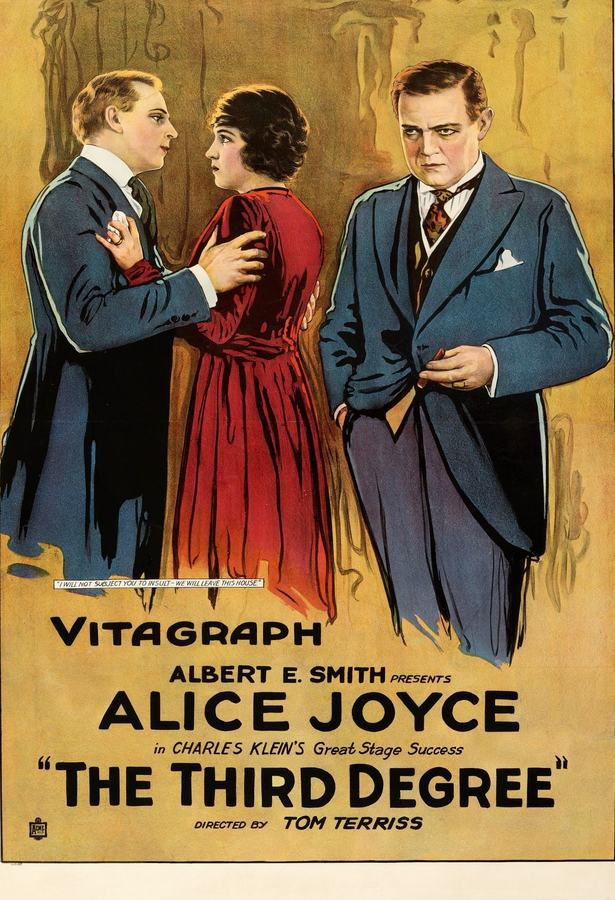
In the annals of early American cinema, few films possess the visceral, enduring relevance of Tom Terriss’s 1919 production, The Third Degree. While many contemporary works were preoccupied with pastoral escapism or the burgeoning glamor of Hollywood, this Vitagraph release plunged headlong into the murky waters of institutional corruption and the fallibility of the human mind. It is a work that feels disturbingly prescient, predating the modern discourse on police reform and the psychological complexities of the 'sweatbox' interrogation by over a century.
The cinematic landscape of 1919 was one of transition. The world was reeling from the Great War, and the silver screen was beginning to reflect a more cynical, socially conscious worldview. The Third Degree stands as a monumental pillar in this evolution. The plot, derived from Charles Klein’s 1909 play, tackles the nefarious practices of the New York City police department. The narrative catalyst is the murder of Robert Underwood, a man whose death serves as the epicenter of a social and legal earthquake. When Howard Jeffries Jr. is discovered near the body, the machinery of the state grinds into motion, not to seek justice, but to manufacture a culprit.
The sequence depicting the interrogation is a masterclass in silent-era tension. Unlike the more whimsical sleuthing found in Mistinguett détective, The Third Degree eschews the romanticism of the detective genre for something far more sinister. The camera lingers on the sweat-beaded brow of Howard, the harsh glint of the interrogators' eyes, and the claustrophobic framing that mirrors his shrinking mental space. It is a proto-noir aesthetic that utilizes shadows not just for mood, but as a representation of the obfuscation of truth.
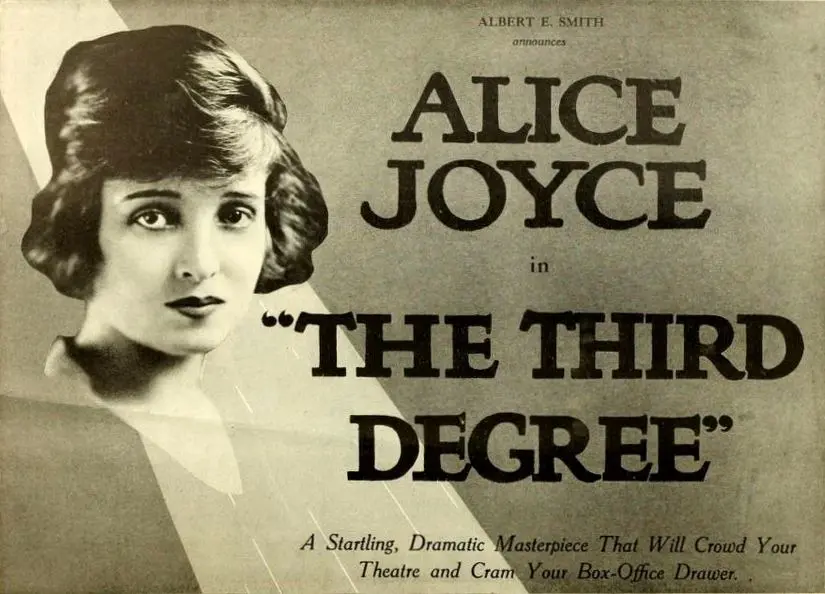
Alice Joyce, often referred to as the 'Madonna of the Screen,' delivers a performance that anchors the film’s moral gravity. As Annie Jeffries, she transcends the typical 'damsel in distress' trope of the 1910s. Her struggle is not merely one of domestic concern but a proletarian battle against an aristocratic and legal establishment that views her and her husband as expendable. In this regard, the film shares a thematic DNA with The Daughters of Men, which similarly dissected the friction between labor, capital, and the law.
Joyce’s Annie is the film’s intellectual engine. While the men in the story are either paralyzed by fear or blinded by their own authority, Annie navigates the social strata with a sharp, desperate intelligence. Her interactions with the high-society Jeffries family—who are more concerned with the stain on their reputation than the innocence of their kin—provide a scathing critique of class-based morality. This dynamic is reminiscent of the social stratification explored in The Scarlet Woman, where the protagonist must fight against the preconceived notions of a judgmental society.
What makes The Third Degree so intellectually stimulating is its focus on the 'suggestibility' of the human mind. The film illustrates how a person, when pushed to the brink of exhaustion and subjected to unrelenting psychological pressure, will eventually concede to any reality proposed by their captors. This was a radical concept for 1919. It challenged the fundamental legal assumption that a confession is the ultimate proof of guilt. In a era where films like Delo Beilisa were examining the horrors of blood libel and state-sponsored persecution, The Third Degree brought the focus to the systemic flaws within the American democratic framework.
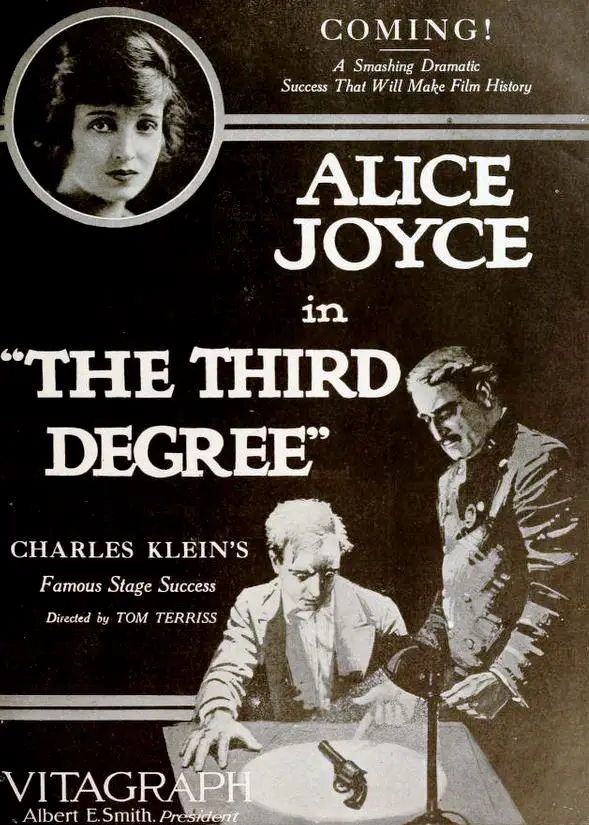
The technical execution of the film is a testament to the Vitagraph Company’s prowess. The cinematography avoids the static, stagey feel that plagued many adaptations of theatrical plays. Instead, there is a fluidity to the movement and a deliberate use of close-ups that heighten the emotional stakes. The contrast between the opulent interiors of the Jeffries mansion and the stark, utilitarian aesthetic of the precinct creates a visual dichotomy that emphasizes the distance between the law and those it purports to serve.
When comparing the visual ambition of this film to other contemporary releases, such as the evocative but more localized El último malón, one can see the Hollywood machine beginning to perfect the art of the 'social problem film.' The Third Degree isn't just a story; it’s an argument. It uses the medium of film to lobby for a change in police procedure, making it an early ancestor of the modern documentary exposé.
The supporting cast also deserves recognition. Hedda Hopper, long before she became the feared gossip columnist of Hollywood’s Golden Age, provides a nuanced performance that adds layers to the film’s domestic drama. The interactions between the characters are fraught with the tension of unspoken truths, a hallmark of the sophisticated writing by Charles Klein, Eugene Mullin, and Phil Lang. The screenplay manages to weave a complex tapestry of guilt, innocence, and the often-blurred lines between the two.
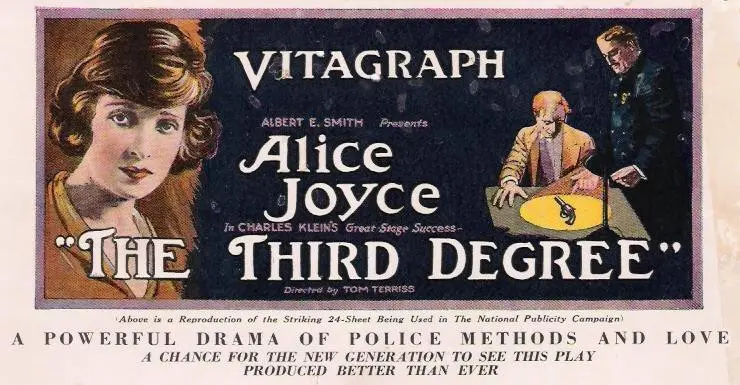
To truly appreciate The Third Degree, one must view it within the broader context of 1919’s global output. While Torpedoing of the Oceania focused on the visceral spectacle of war, and Stranded in Arcady offered a more traditional adventure narrative, The Third Degree was part of a darker, more introspective trend. Films like Ludi i strasti or the German Der Weg, der zur Verdammnis führt were pushing boundaries in terms of subject matter, exploring human vice and social decay. The Third Degree fits squarely into this international movement of realism.
Even when compared to lighter fare like A Burglar for a Night, which treated crime with a certain levity, the 1919 Vitagraph film remains somber and unwavering. It refuses to give the audience an easy out. Even as the resolution approaches, the scars left by the interrogation are evident. The 'happy ending' is tempered by the knowledge of how easily the system could have crushed an innocent soul. This emotional complexity is what elevates it above the melodramas like Tears and Smiles or the Danish Naar Hjertet sælges.
As we look back at The Third Degree from the vantage point of the 21st century, its power has not dissipated. The 'third degree' as a concept has been legally abolished, but the psychological tactics it pioneered—isolation, leading questions, and the exhaustion of the suspect—remain topics of intense legal and ethical debate. The film serves as a haunting reminder of the dangers of unchecked police power. It is a cinematic ancestor to films like The Wrong Man or 12 Angry Men, focusing on the agonizing possibility of a miscarriage of justice.
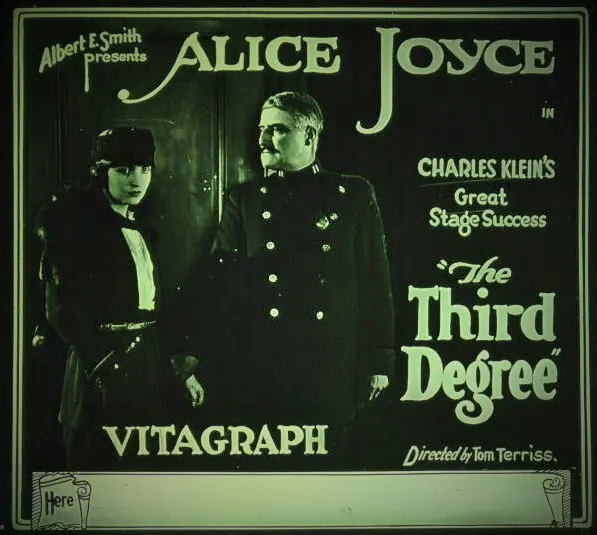
The film also explores the theme of redemption, not for the criminal, but for the family. The way Annie fights to reclaim her husband’s honor is a powerful testament to the strength of the human spirit. It echoes the themes of moral endurance found in Unto Those Who Sin and the atmospheric dread of The Raven. In every frame, there is a sense of urgency, a plea for a more humane and rational approach to law enforcement.
In conclusion, The Third Degree (1919) is an essential watch for anyone interested in the history of social justice in cinema. It is a film that demands much from its audience, asking us to confront the uncomfortable reality that the law is only as just as the men who enforce it. Through the lens of Alice Joyce’s stirring performance and Tom Terriss’s taut direction, it remains a searing indictment of institutional cruelty. It is a shadow-drenched journey through the dark heart of the American legal system, as poignant today as it was when it first flickered onto screens in a world trying to find its moral compass after the chaos of war. Whether compared to the silent mysteries of En la sombra or the grand social dramas of its time, The Third Degree stands tall as a beacon of cinematic integrity and social provocation.
"A confession is only as true as the freedom with which it is given."
IMDb —
1921
Community
Log in to comment.