DbcultAccessing Vault...
6.5/10
Senior Film Conservator
A definitive 6.5/10 rating for a film that redefined the boundaries of cult cinema. Manizales City remains a cornerstone of transgressive art.
Is Manizales City a film that warrants your attention in the digital age? Short answer: Yes, but only if you are willing to trade narrative polish for a raw, unfiltered pulse of 1920s South American life.
This film is for the visual historian and the cinephile who finds beauty in the unedited grain of reality; it is decidedly not for the viewer who requires a structured plot or a clear protagonist to remain engaged.
1) This film works because it captures the friction between urban ambition and folk tradition without the sanitization of modern travel documentaries.
2) This film fails because its pacing is entirely dictated by the duration of the events it records, leading to sections that feel overlong and repetitive to a modern eye.
3) You should watch it if you want to witness the exact moment a society tries to reconcile its colonial past with an industrial future.
To answer the question of value: Manizales City is an essential artifact. In an era where we are saturated with 4K drone footage of exotic locales, the static, ground-level gaze of Félix R. Restrepo offers something more profound. It offers a sense of weight. When you see the stone facades of the 'Chicago of Colombia,' you aren't just looking at buildings; you are looking at a statement of intent. The film is worth watching because it documents a specific type of hope that was prevalent in 1925—the hope that architecture could civilize the rugged terrain of the Andes.
However, be warned. This is not a 'fun' watch. It is a demanding watch. The sequence involving the bullfight is graphic and lacks the cinematic 'tricks' we use today to soften the blow. It is brutal. It is honest. It is life as it was. If you can handle that, the reward is a deeper understanding of Colombian heritage.
The first act of the film is a masterclass in civic pride. Restrepo pans across the skyline of Manizales, focusing on the sharp lines of the masonry and the bustling activity of the streets. The comparison to Chicago isn't just hyperbole; it’s a reflection of the coffee-driven wealth that was pouring into the region. Unlike the satirical take on modernization found in We Moderns, Manizales City takes its progress with deadly seriousness.
There is a specific shot of a government building that feels almost like a challenge to the mountains surrounding it. The camera remains fixed, allowing the viewer to absorb the scale. It reminds me of the industrial optimism in Northern Lights, where the environment is a character to be conquered. But in Manizales, the environment always seems to be peering over the shoulder of the buildings. The Andes are ever-present, a silent reminder of the town's isolation.
The film takes a sharp turn when it moves from the stillness of architecture to the kinetic energy of the bullfight. This is where Restrepo’s lack of professional 'gloss' becomes his greatest strength. The bullfight is captured with a documentary detachment that makes the spectacle feel more immediate. You can almost smell the dust and the sweat. It is a stark contrast to the fictionalized drama of films like The Heart Bandit.
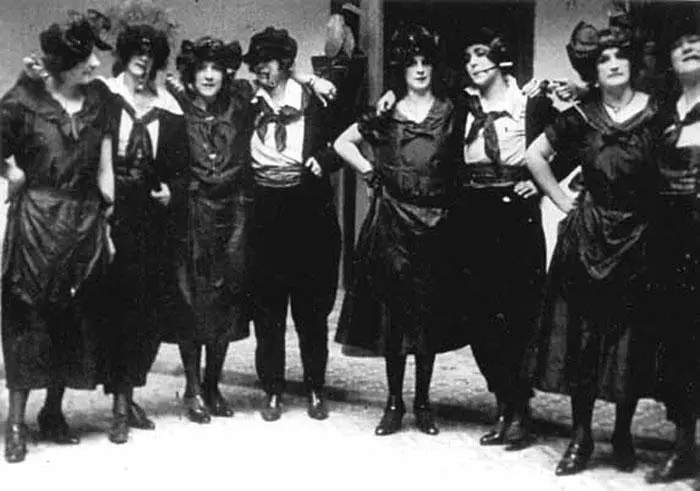
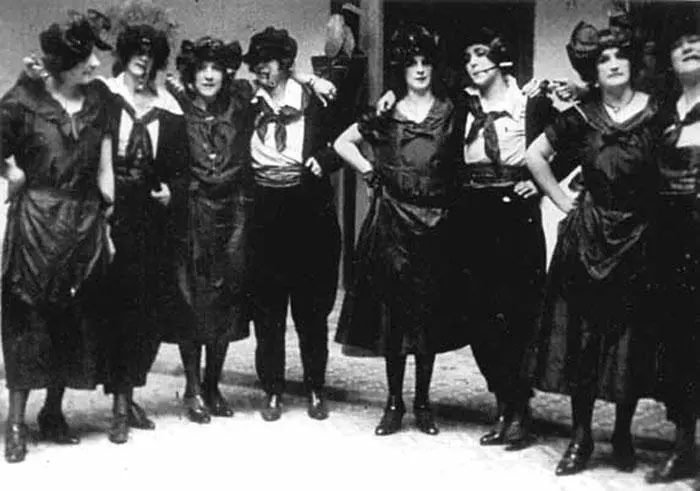
The carnival sequence that follows is a riot of texture. Even in black and white, the 'color' of the event is palpable. The masks, the costumes, and the fluid movement of the crowds create a dizzying effect. It is here that the film sheds its 'industrial' skin and reveals its heart. The people of Manizales are not just workers in the 'Chicago of Colombia'; they are the inheritors of a vibrant, chaotic tradition. This section feels like a precursor to the avant-garde experiments of the late 1920s, yet it remains grounded in ethnographic truth.
The most striking and debatable sequence in the film is the funeral procession. In many Western cultures of the time, death was a somber, silent affair. Here, it is a dance. Restrepo captures the funeral as a community event, a final celebration of life that is both haunting and exhilarating. It is a moment of pure cultural dissonance for the viewer.
Why dance at a funeral? The film doesn't explain; it simply observes. This lack of hand-holding is what makes Manizales City superior to many of its contemporaries. It doesn't judge the 'otherness' of the ritual. It presents it as a fact. This sequence alone makes the film more interesting than the standard social dramas like Her Good Name or the political maneuvering in Politik och brott.
Technically, the film is a product of its time, but that’s not a slight. The cinematography is functional. It isn't trying to be The Fugitive Futurist with trick shots or visionary editing. Restrepo’s goal was documentation. However, his choice of angles—particularly during the street parades—shows an innate understanding of depth. He places the camera where the action is thickest, forcing the viewer into the crowd.
The pacing is the film's biggest hurdle. Without a narrative arc, the middle section can feel like a series of disjointed vignettes. You move from a building to a bull to a dancer without much connective tissue. It’s messy. But it’s a beautiful mess. It reflects the reality of a 75th-anniversary celebration where everything happens at once and nothing is particularly organized. It lacks the comedic timing of Potash and Perlmutter, but it gains a sense of gravity that fiction often lacks.
Pros:
- Unrivaled historical documentation of 1920s Colombia.
- Bold, unedited look at cultural rituals like bullfighting and funeral dances.
- Strong sense of place and atmosphere.
- A rare glimpse into the industrial optimism of the era.
Cons:
- Pacing is slow and can feel repetitive.
- Some scenes are graphic and may be difficult for sensitive viewers.
- The technical quality is limited by the equipment of the time.
Manizales City is a fascinating, if occasionally grueling, piece of cinema history. It doesn't have the whimsy of Alice Is Stage Struck or the melodrama of Forbidden Fruit. It is something different entirely. It is a witness. While it may not be a 'masterpiece' in the sense of perfect construction, it is a masterpiece of preservation. It preserves a spirit of a city that was trying to build itself into a modern giant while still holding the hand of its ancient traditions. It’s flawed. But it works. If you care about where we’ve been, you need to see where Manizales was in 1925.

IMDb 5.2
1934
Community
Log in to comment.