DbcultAccessing Vault...
7.7/10
Senior Film Conservator
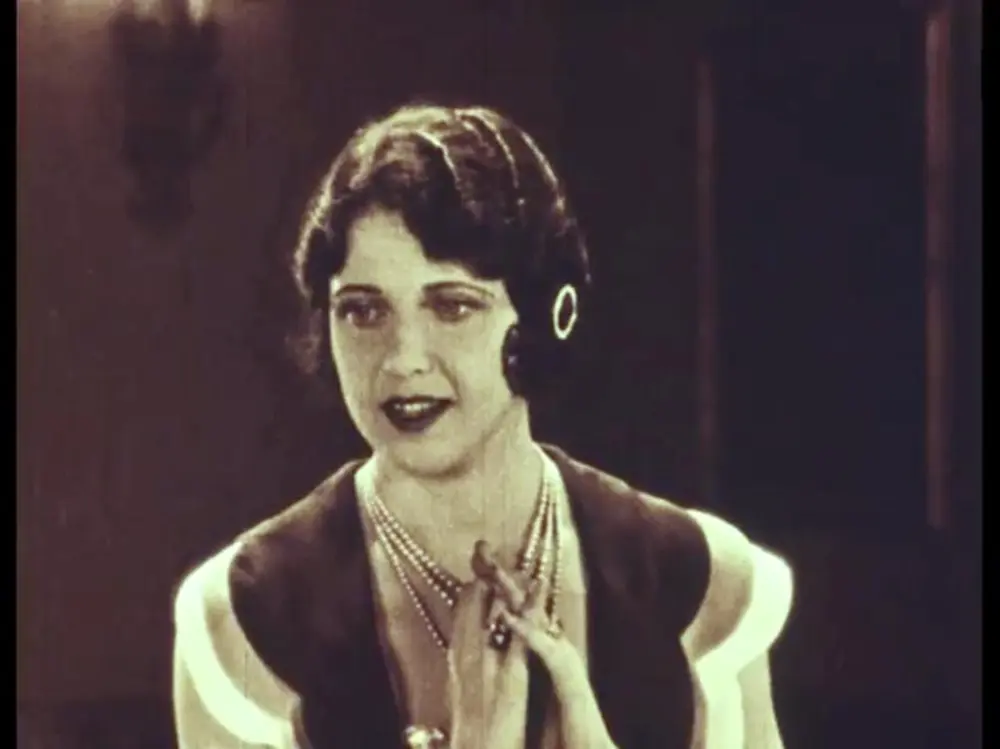
A definitive 7.7/10 rating for a film that redefined the boundaries of cult cinema. Many Scrappy Returns remains a cornerstone of transgressive art.
Is Many Scrappy Returns worth watching today? Short answer: yes, but with significant caveats. This 1928 silent short offers a delightful, if brief, diversion for enthusiasts of silent-era slapstick and character-driven comedy, particularly those who appreciate the nuanced comedic stylings of Charley Chase. However, it will likely prove a challenging watch for casual viewers accustomed to modern narrative pacing and humor, or those sensitive to the era's often-problematic gender dynamics.
This film works because of its precise comedic timing, the understated brilliance of its physical performances, and its unwavering commitment to a single, escalating misunderstanding. It fails because its episodic nature and predictable plot arc, even for a short, can feel thin, and its reliance on dated tropes might alienate contemporary audiences. You should watch it if you cherish the artistry of silent cinema, find joy in subtle slapstick, and are eager for a historical laugh that still holds a surprising amount of charm.
The premise of Many Scrappy Returns is as old as comedy itself: a man, his wife, his mistress, and the inevitable complications that arise from such a tangled web. Here, H.M. Walker, the writer, crafts a scenario around Wellington, a man whose marital dissatisfaction leads him directly into the arms of his French maid. This infidelity, simmering beneath the surface, is the initial spark, but it's the arrival of his brother Charley and Charley's wife that truly ignites the comedic fuse.
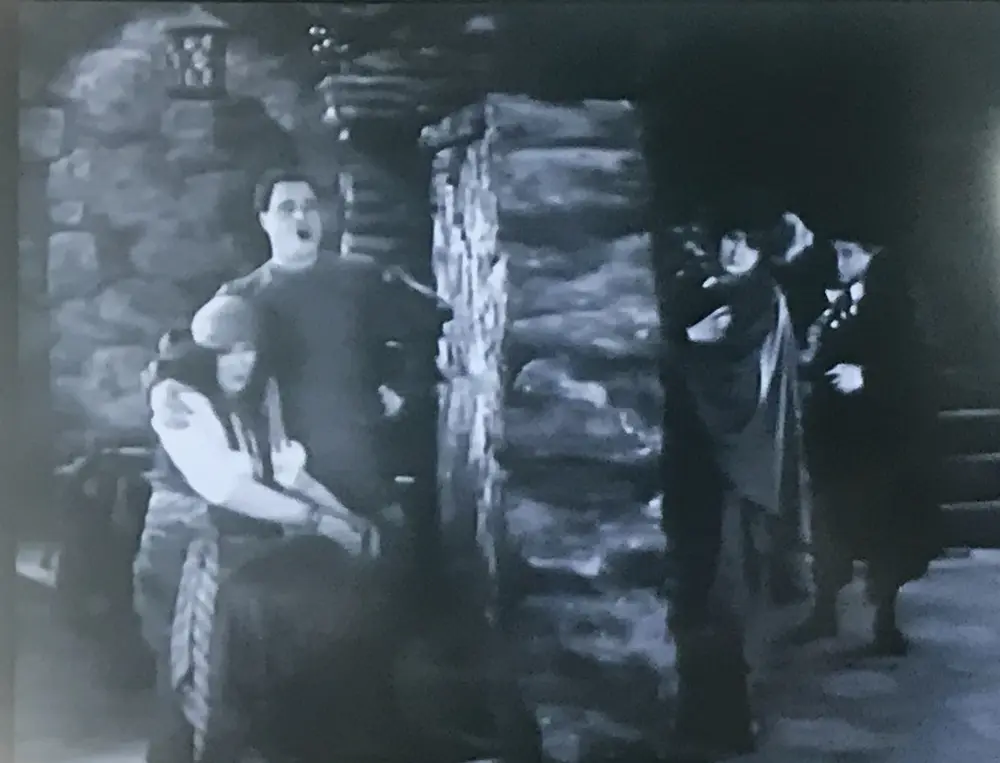
The film's central engine is a classic case of mistaken identity. The maid's jealous husband, a hulking figure of barely contained rage, arrives on the scene, eager to catch his wife in the act. However, a crucial misstep occurs: he mistakes Charley for Wellington. This simple, yet potent, misunderstanding sets off a chain reaction of frantic evasions, whispered accusations, and increasingly desperate attempts by both brothers to avoid confrontation.
The humor, while reliant on a premise that certainly feels problematic by today's standards, is executed with a surprising lightness. It’s a farce, pure and simple, where the consequences are more embarrassing than genuinely tragic. The film doesn't preach; it merely observes the absurdity of human folly, particularly when lust and fear intertwine in a confined domestic space. The brilliance lies in the meticulous choreography of the chaos, particularly a sequence involving multiple doors and characters narrowly missing each other, a staple of silent-era comedy perfected here.
This film, like many from its era, serves as a fascinating time capsule, reflecting not just the comedic sensibilities of the 1920s but also the societal norms and anxieties. It's a reminder that while humor evolves, the fundamental human predicaments often remain the same. The film doesn't just entertain; it subtly educates us on the roots of modern situational comedy.
The plot, while straightforward, allows for a relentless escalation of comedic tension. Each near-discovery, each whispered aside, adds another layer to the brothers' predicament. It's a testament to the script's efficiency that, despite its brevity, it manages to build a palpable sense of impending doom, only to consistently subvert it with another unexpected turn of events. This is not a film that attempts to explore the moral complexities of infidelity; rather, it gleefully exploits its potential for slapstick and farce.
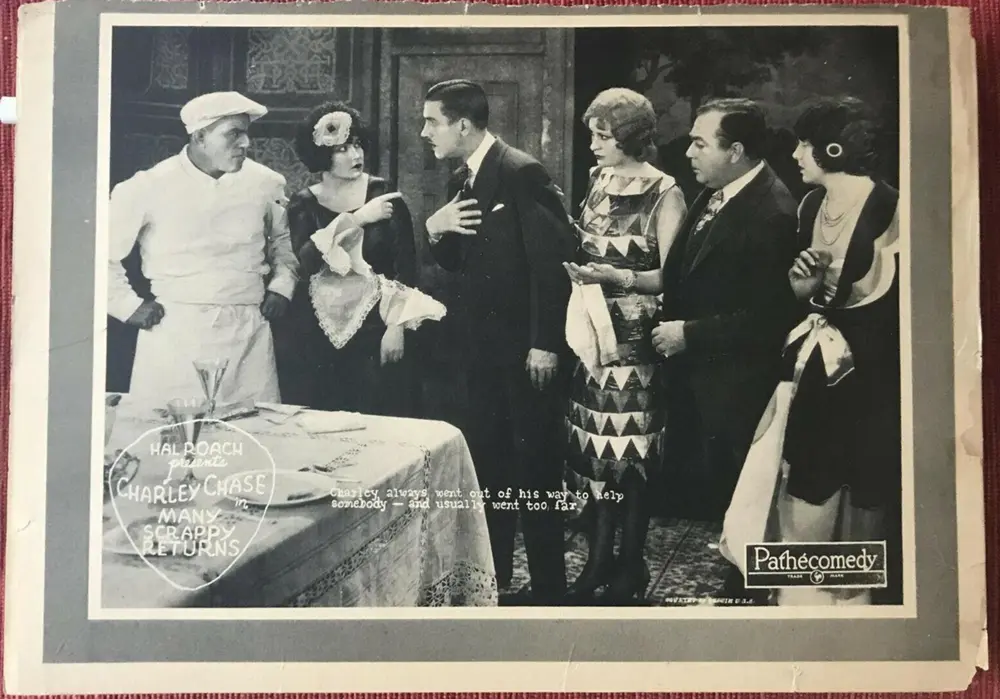
In silent cinema, the actor's body and face are the primary instruments of storytelling, and Many Scrappy Returns boasts a cast perfectly attuned to this demanding art form. At its heart is Charley Chase, whose performance is a masterclass in understated comedic exasperation. Unlike the broad physical gags of some contemporaries, Chase often relies on subtle reactions – a weary sigh, a quick glance to the heavens, a barely perceptible shrug – that convey a world of meaning.
Chase's character, Charley, is the reluctant participant, constantly finding himself entangled in his brother's mess. His comedic genius lies in his ability to portray a man desperately trying to maintain decorum while chaos erupts around him. Consider the scene where he is forced to feign affection for the maid to avoid detection; Chase’s expression perfectly balances reluctant compliance with utter mortification. It’s this nuanced approach that sets him apart from the more overtly expressive styles of, say, Young Sherlocks or even some of Chaplin's earlier works.
Eugene Pallette, as the philandering brother Wellington, provides a blustery counterpoint. Pallette, known for his distinctive voice in later sound films, here uses his imposing physicality and expressive face to convey a man easily flustered and perpetually on the verge of being caught. His reactions are broader, more overtly panicked, creating a delightful contrast with Chase's more restrained performance. The dynamic between the two brothers, one perpetually creating problems and the other perpetually trying to solve them, is the film's strongest asset.
Valentina Zimina, as the French maid, plays a pivotal role. Her performance is less about dialogue and more about the allure and subsequent panic she conveys through her expressions and body language. She is the catalyst for much of the film's action, and her ability to switch between coquettish charm and wide-eyed terror is key to the film's comedic rhythm. Even the supporting cast, including the menacing Bull Montana as the jealous husband, delivers precisely what is needed, embodying their roles with a clarity essential for silent storytelling.
The film's true genius lies not just in its gags, but in the actors' collective ability to convey complex emotional states with minimal gestures. Charley Chase, in particular, demonstrates a remarkable talent for reluctant complicity, making his character's plight genuinely amusing rather than just farcical. It's a testament to the power of performance without words.
H.M. Walker's direction in Many Scrappy Returns is commendably efficient and focused. For a silent short, the primary goal is often to set up gags clearly and execute them with maximum comedic impact, and Walker achieves this with precision. There are no grand directorial flourishes; instead, the camera is placed strategically to capture the physical comedy and the actors' reactions, ensuring that the audience is always privy to the escalating absurdity.
The pacing is typical of the era's shorts: rapid-fire. The setup is quick, the conflict is introduced almost immediately, and the action rarely lets up. This relentless forward momentum is crucial for maintaining audience engagement in a film without spoken dialogue. The film builds its comedic tension through a series of escalating near-misses and increasingly desperate improvisations from the characters. The sequence where the jealous husband repeatedly enters and exits rooms, just missing one of the brothers, is a prime example of this tight, almost musical, pacing.
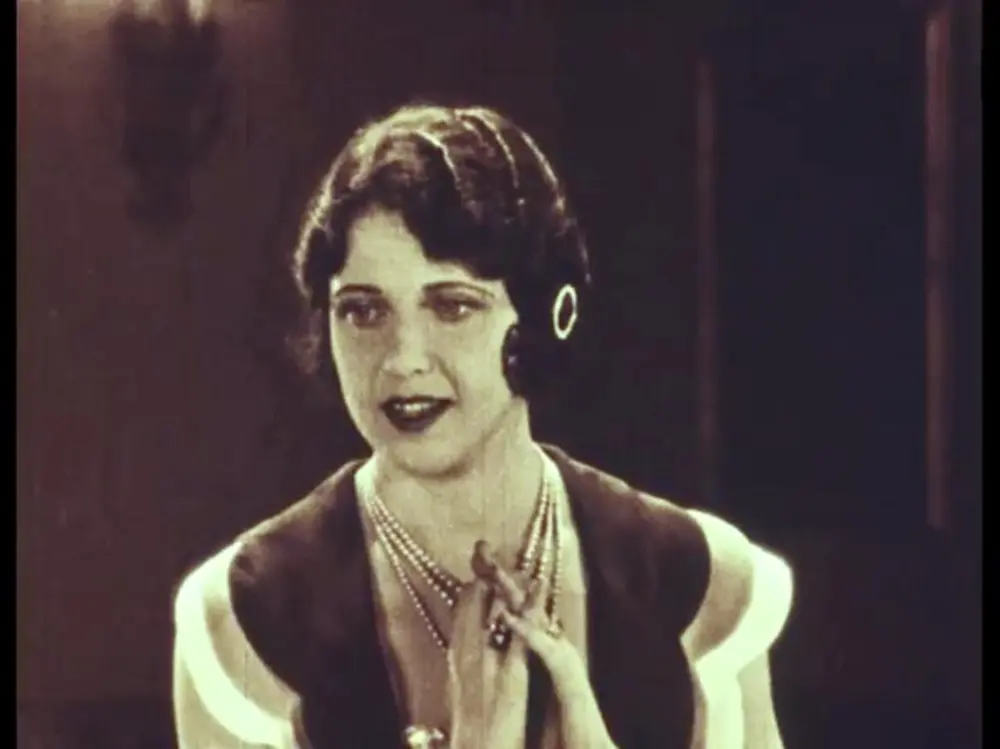
Intertitles are used sparingly but effectively, providing just enough context to propel the narrative without bogging down the visual comedy. They function as signposts, guiding the audience through the plot's twists and turns, rather than attempting to deliver lengthy exposition. This economy of storytelling is a hallmark of successful silent shorts, understanding that visual storytelling should always take precedence.
It works. But it’s flawed. While the direction is competent, it never truly transcends its functional nature. There are moments of genuine inspiration in the blocking and comedic timing, but it doesn't possess the stylistic ambition or visual flair one might find in a Buster Keaton or F.W. Murnau feature. However, for a short comedy, its effectiveness is undeniable. The focus remains squarely on the performances and the gags, a strategy that pays off handsomely.
The cinematography of Many Scrappy Returns is, like its direction, functional and clear. The camera work is straightforward, designed to capture the comedic action without drawing undue attention to itself. There are no elaborate tracking shots or complex compositions; instead, the framing is typically medium to wide, allowing the audience to take in the full scope of the physical comedy and the interactions between the characters. This approach ensures that the gags land effectively and that the actors' expressions are always visible.
The lighting, while basic by modern standards, is effective in illuminating the domestic setting and the characters. The film's aesthetic is one of practical utility, prioritizing clarity over artistic experimentation. This is common for short comedies of the era, where the budget and runtime often necessitated a no-frills approach. It’s a stark contrast to the more experimental visuals seen in some dramatic features of the time, or even the more polished look of contemporary films like The Princess of Park Row.
The tone of the film is undeniably light and farcical. Despite the underlying theme of infidelity, the movie never delves into dramatic or moralistic territory. Instead, it maintains a consistent air of playful absurdity. The stakes, while high for the characters, are presented in such a way that the audience understands this is all in good fun. There's a certain innocence to the humor, even with its risqué premise, that prevents it from feeling genuinely malicious or mean-spirited. This is a film designed to elicit chuckles and guffaws, not deep introspection.
The period details—from the costumes to the set dressing of the middle-class home—provide a charming glimpse into the late 1920s. These elements, while not central to the plot, add an authentic texture to the film, grounding the outlandish comedy in a recognizable reality. It's these subtle touches that help transport the viewer back to a different era, making the film not just a comedy but a cultural artifact.
Many Scrappy Returns is a delightful, if minor, entry in the silent comedy canon. Its value today lies less in its groundbreaking narrative and more in its expert execution of a well-worn comedic formula. Charley Chase, as always, is the film's beating heart, delivering a performance that is both technically precise and genuinely endearing. He makes the absurd believable and the embarrassing hilarious.
While its premise might feel a little quaint, or even uncomfortable, to modern sensibilities, the sheer craftsmanship of its comedic timing and the physical artistry of its performers transcend the decades. For those willing to engage with the unique language of silent film, this short offers legitimate laughs and a valuable glimpse into the foundational elements of slapstick. It's not a profound cinematic experience, but it is an undeniably fun one, particularly for those who appreciate the subtle genius of its leading man. Consider it a worthy, if brief, diversion for a curious evening.
IMDb —
1931
Community
Log in to comment.