DbcultAccessing Vault...
Cult Review
Senior Film Conservator
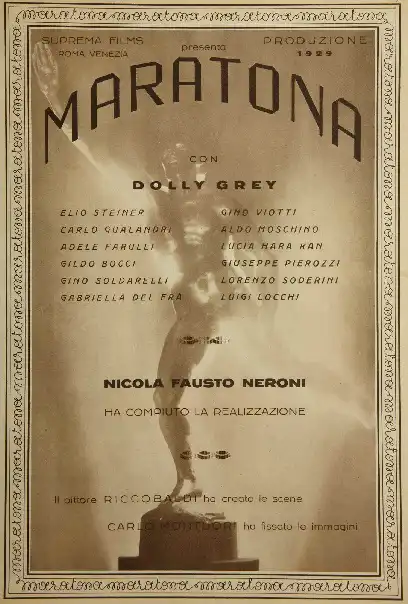
So, 'Maratona.' Right off the bat, this isn't for everyone. If you’re into fast-paced action or modern storytelling, you’ll probably find yourself checking your watch quite a bit. But for anyone who loves digging into **really old movies**, especially from Italy's early talkie era, this one offers something special. It's a slow, steady burn, a true period piece that feels like peeking into a forgotten corner of history. 🎥
The film centers on Paolo, played by Elio Steiner, a young runner with a quiet determination. His reasons for running the marathon are a bit hazy at first, maybe just pure grit, maybe something deeper. He doesn't say much. Steiner has this sort of **earnest, almost wide-eyed look** that really sells his struggle without needing a ton of dialogue. It’s effective, even if the acting style is very much of its time.
There's a lot of focus on the actual *act* of running. You get these long, unbroken shots of feet hitting pavement. Or dirt, mostly dirt. The camera, it just sort of sits there, letting the runners pass. It feels less like a modern sports movie and more like a **documentary on human endurance**.
One scene that stuck with me involved Paolo pausing, just for a moment, to look at his worn-out shoes. The laces are fraying, the leather creased and cracked. It's a small detail, but it tells you everything about the miles he’s put in and maybe the lack of resources he has. It's a brief, *very quiet* beat.
The crowd scenes are interesting. They're not huge, sprawling masses like you’d see today. Instead, they feel more like local gatherings, people cheering with a bit less coordinated energy. You can almost see individual faces, almost hear their distinct shouts, even though the sound quality is… well, it’s 1930. The way they all move as one, then break apart, it feels almost **choreographed, but in a raw way**.
There’s a subplot involving a woman, Coletta, who seems to be waiting for him, or watching him from the sidelines. Coletta Pagliani plays her with a kind of gentle concern. Their interactions are mostly through glances, maybe a whispered word or two. It feels very *Italian* in that understated, emotional way. No big speeches, just quiet understanding. 🤫
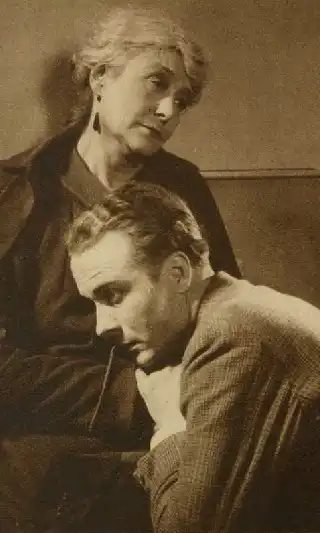
The sound design, for an early talkie, is often quite sparse. You get the crunch of footsteps, the occasional distant cheer, maybe some heavy breathing that sounds a little too close to the microphone. It gives the film a certain **unvarnished quality**, a rawness that sometimes works, sometimes feels a bit empty. The silence can be quite potent, actually.
You can almost feel the movie trying to convince you this moment matters, especially during the middle stretches of the race. Paolo hits a wall, physically and mentally. The camera stays with him, for *ages*. You just watch him push through, his face a mask of effort. It’s not dramatic in a modern sense, no swelling music. Just the **pain, laid bare**.
There's a point where another runner, played by Luigi Locchi, offers Paolo a quick drink from his own bottle. No words are exchanged. Just a nod. It’s a tiny, almost blink-and-you-miss-it gesture of sportsmanship that really resonated. It made me think about how much harder these races must have been back then, without all the modern support.
The pacing is definitely a challenge. It meanders a bit, much like a real marathon, I suppose. There are moments that drag, where you might wonder if anything is actually happening. Then something small will catch your eye – a specific look, a change in the light – and you're pulled back in. It's a film that asks for your patience, and rewards it with a quiet, authentic feel.
I found myself admiring the sheer technical effort involved in making a film like this almost a century ago. The way they captured the outdoor scenes, the sense of scale. It’s not flashy, but it’s **solid, honest filmmaking**. 🎬
Ultimately, 'Maratona' is an experience. Not a blockbuster, not a tear-jerker. It’s a glimpse into an older world, a simpler story told with a very particular rhythm. If you're game for that kind of journey, it’s worth a look. Just don't expect a sprint. It's definitely a long-distance run.
IMDb 6.8
1936
Community
Log in to comment.