DbcultAccessing Vault...
Cult Review
Senior Film Conservator
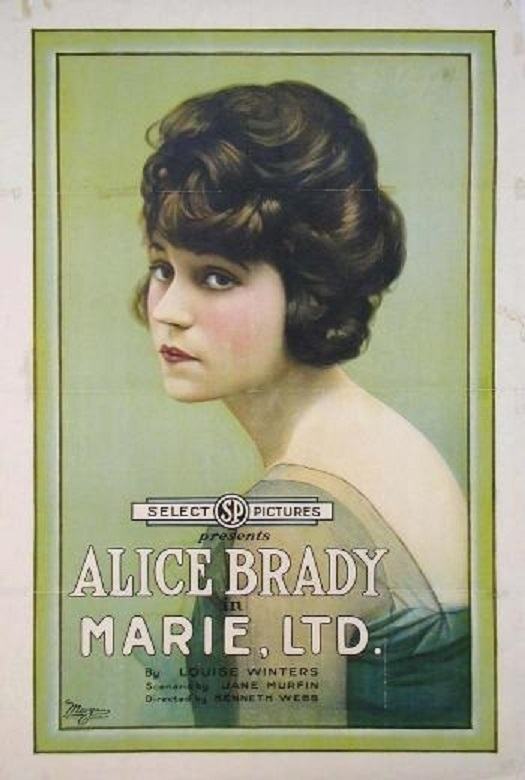
"Marie, Ltd.", a silent era gem from 1917, plunges its audience into the glittering yet morally ambiguous world of Fifth Avenue society, a realm where appearances are meticulously curated and financial realities often starkly diverge from the polished facade. This cinematic narrative, penned with remarkable insight by Jane Murfin and Louise Winter, is far more than a simple melodrama; it's a shrewd commentary on the economic pressures faced by women, the lengths to which they might go to maintain status, and the often-painful process of youthful disillusionment. It forces us to confront the uncomfortable truth that behind every luxurious hat or elegant gown, there might be a tangled web of secrets and compromises, a quiet desperation masked by outward opulence. The film masterfully captures the very essence of the Gilded Age's contradictions, where immense wealth often coexisted with moral compromise and a strict, yet easily manipulated, social hierarchy.
Our protagonist, Drina Hilliard, portrayed with an earnest vivacity by the remarkable Alice Brady, arrives in New York City, a beacon of wide-eyed innocence fresh from a Western upbringing with her father. Her journey is fueled by a profound desire to reconnect with her mother, Marie (Josephine Whittell), whose eponymous millinery shop on Fifth Avenue has seemingly provided the financial bedrock for Drina's college education and comfortable life. The premise itself sets up a classic narrative device: the innocent abroad encountering the sophisticated, often corrupt, metropolis. Drina’s initial vision of her mother, a successful businesswoman, is one of admirable independence and entrepreneurial spirit, a testament to the burgeoning opportunities for women in certain spheres, yet one that, as the story unfolds, proves to be a carefully constructed illusion.
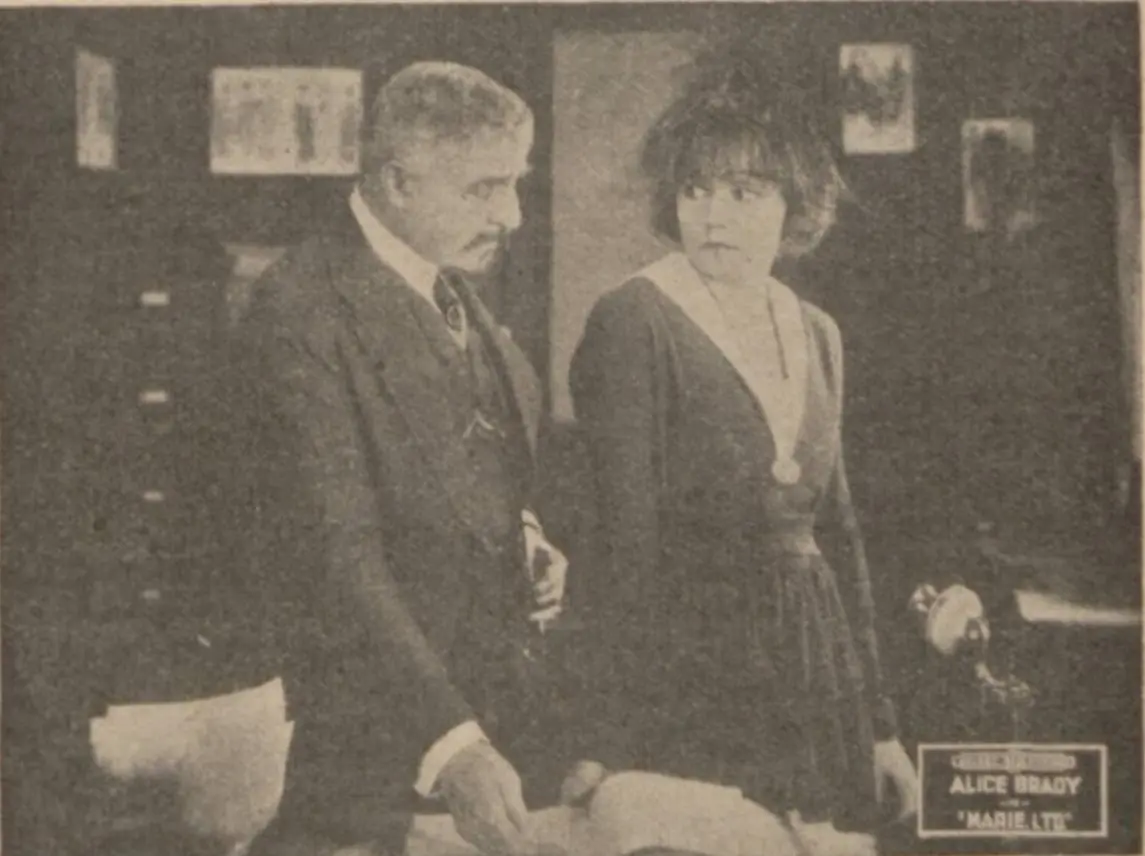
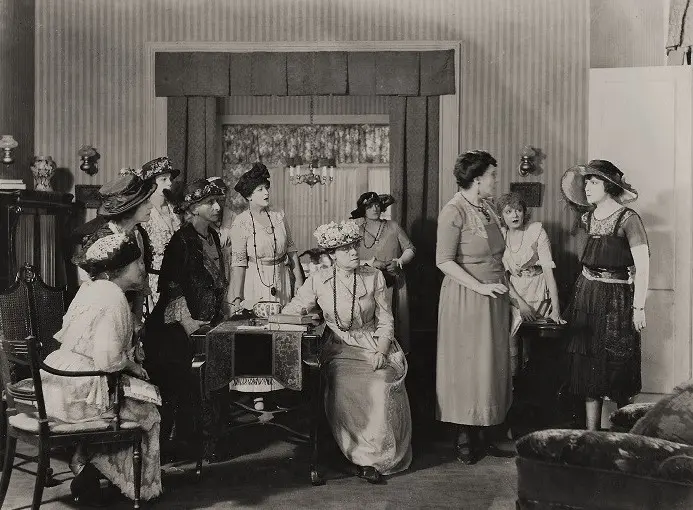
Yet, the moment Drina steps into Marie's world, a subtle dissonance begins to emerge. Marie is conveniently absent, vacationing in Atlantic City, which grants Drina an unsupervised window into the inner workings of Marie, Ltd. What she uncovers is a far cry from legitimate commerce. The seemingly profitable enterprise, it turns out, is built upon a foundation of elaborate deception: Marie vastly overcharges her affluent clientele, then shrewdly divides the inflated profits with these very women, whose rich husbands or lovers ultimately foot the exorbitant bills. It's a remarkably cynical yet pragmatic system, a testament to the limited avenues of financial agency available to women of the era, even those seemingly at the top of the social ladder. This revelation shatters Drina's naive perception, forcing her to confront the morally ambiguous undercurrents of her mother's success. It’s a moment of profound awakening, a loss of innocence that echoes the societal unveilings seen in dramas like "The Innocence of Ruth", where a protagonist's sheltered view of the world is irrevocably altered by harsh realities. The film brilliantly uses the millinery as a symbol—a place where heads are adorned, but also where secrets are woven into the very fabric of society.
Upon Marie's return, the tension escalates, masterfully orchestrated by the screenplay from Murfin and Winter. Josephine Whittell delivers a nuanced performance as Marie, a woman caught between maternal affection and the desperate need to maintain her precarious financial edifice. Marie, sensing Drina's burgeoning awareness and perhaps hoping to secure her daughter's future within this intricate social game, attempts to orchestrate a marriage between Drina and Colonel Lambert (Frank Losee). Lambert is depicted as an "old rounder," a man whose wealth is clearly tied to the patronage of multiple women, his bills for a dozen hats serving as a metaphor for his various liaisons and the transactional nature of his relationships. This proposal is not about love but about expediency, a transaction designed to secure Drina's place in a system Marie knows all too well. It highlights the deeply ingrained transactional nature of high society relationships, where social standing and financial security often trump genuine affection, a bitter pill for Drina to swallow after her upbringing in the more straightforward West.
Drina, however, is not easily swayed. Her heart has already been captured by Blair Carson (Leslie Austin), a man whose introduction to the narrative is far more heroic and genuine. He's the one who bravely drove bandits from their New York-bound train, a stark contrast to the Colonel's morally compromised existence. This early encounter establishes Blair as a figure of integrity and courage, representing a path of genuine connection and moral clarity that stands in direct opposition to Marie's world of veiled deceptions. The burgeoning romance between Drina and Blair offers a glimmer of hope for a life built on authenticity, a stark counterpoint to the artifice surrounding them. This romantic thread, while seemingly conventional, serves a vital purpose, grounding the film's social commentary in a relatable human drama, reminiscent of the emotional complexities and moral dilemmas found in films like "Tangled Hearts", where love must navigate a treacherous social landscape.
The narrative, however, is designed to test these nascent ideals to their absolute limits. A cruel twist of fate, or perhaps just the insidious machinations of the convoluted social scene, presents Drina with a devastating sight: Blair in the company of Zelie (Gladys Valerie), a showgirl recently "cast off" by none other than Colonel Lambert. This moment of apparent betrayal, whether real or misunderstood, throws Drina into an emotional maelstrom, demonstrating the fragility of trust and the power of misperception. It's a classic misunderstanding trope, but one that effectively pushes Drina to the brink of despair. Simultaneously, the audience becomes acutely aware of Marie's deteriorating health and the imminent threat of bankruptcy looming over Marie, Ltd. The combination of personal heartbreak and the looming financial ruin of her mother's enterprise places immense, almost unbearable, pressure on Drina. She finds herself in a desperate dilemma, contemplating the unthinkable: accepting the Colonel's proposal, not for love, but out of a perceived duty to save her mother and herself from destitution. This difficult choice underscores the intense societal pressures on women to secure their future through marriage, a theme explored in various forms in films like "To Honor and Obey", which often delve into the sacrifices demanded by social contracts.
Just as Drina stands at this precipice, ready to sacrifice her happiness for perceived security, Blair reappears. His passionate confession of love, arriving at the eleventh hour, is the dramatic pivot the narrative demands and delivers with satisfying emotional force. It reaffirms the power of genuine affection over material gain and societal expectation, a powerful assertion of individual choice against the tide of convention. This timely intervention not only rescues Drina from a loveless marriage but also serves as a profound catalyst for Marie's own transformation. Witnessing her daughter's steadfastness and the genuine love offered by Blair, Marie experiences a profound change of heart. She vows to run her store legitimately, signaling a commitment to ethical business practices and a courageous rejection of the deceptive lifestyle that had defined her. This redemption arc, while swift, is emotionally resonant, suggesting that even deeply ingrained habits can be broken when confronted with pure love and moral clarity, offering a hopeful vision of personal reform.
The film concludes with a rather charming, if slightly cynical, resolution for the secondary characters. Colonel Lambert and Zelie, both having lost their respective prospects (Drina and Blair, and the Colonel's financial patronage), find solace in each other's company. This pairing, born of mutual loss and perhaps a shared understanding of the transactional nature of their world, adds a layer of wry humor to the ending, suggesting that some individuals are simply destined to operate within the established social order, even if it means finding comfort in shared defeat. It provides a neatly tied, albeit somewhat bittersweet, conclusion for these figures, contrasting sharply with the newfound moral rectitude of Marie and the romantic triumph of Drina and Blair, highlighting the film's nuanced understanding of human nature and societal roles.
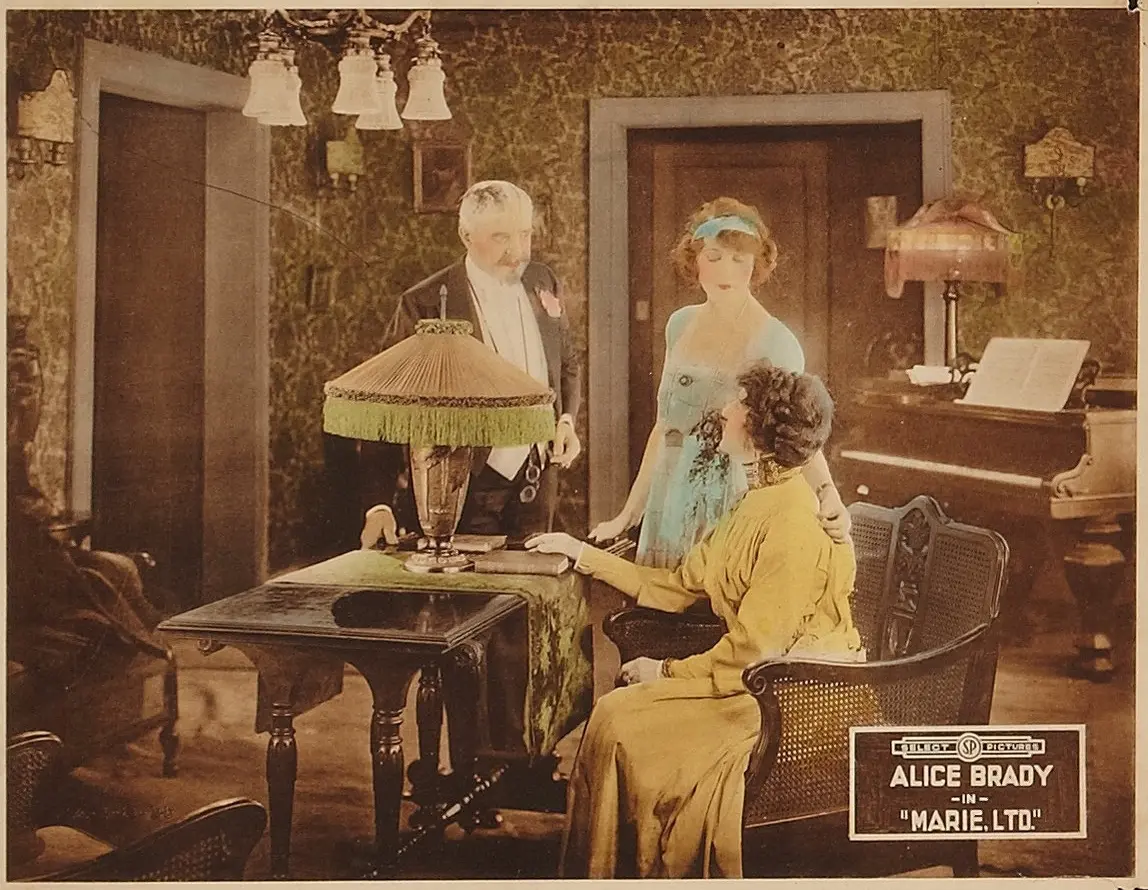
The performances are a cornerstone of "Marie, Ltd." Alice Brady, already a seasoned actress by 1917, imbues Drina with an authentic blend of youthful idealism and burgeoning maturity. Her emotional range, conveyed through the expressive pantomime characteristic of silent film, allows the audience to deeply empathize with her journey from innocent joy to profound disillusionment and ultimately, to a more mature understanding of love and integrity. Her nuanced facial expressions and body language convey volumes, drawing the viewer intimately into Drina's internal struggles. Josephine Whittell as Marie is equally compelling, presenting a character who is neither purely villainous nor entirely sympathetic. Marie is a product of her environment, making choices born of necessity and societal pressure, and Whittell masterfully conveys this internal conflict, particularly in her moments of vulnerability and her ultimate decision to change. The transformation is believable precisely because Whittell allows us to see the woman beneath the hardened exterior. The supporting cast, including Leslie Austin as the earnest Blair, Frank Losee as the worldly Colonel Lambert, and Gladys Valerie as the vivacious Zelie, all contribute effectively to the intricate social tapestry of the film, each embodying their archetypes with conviction.
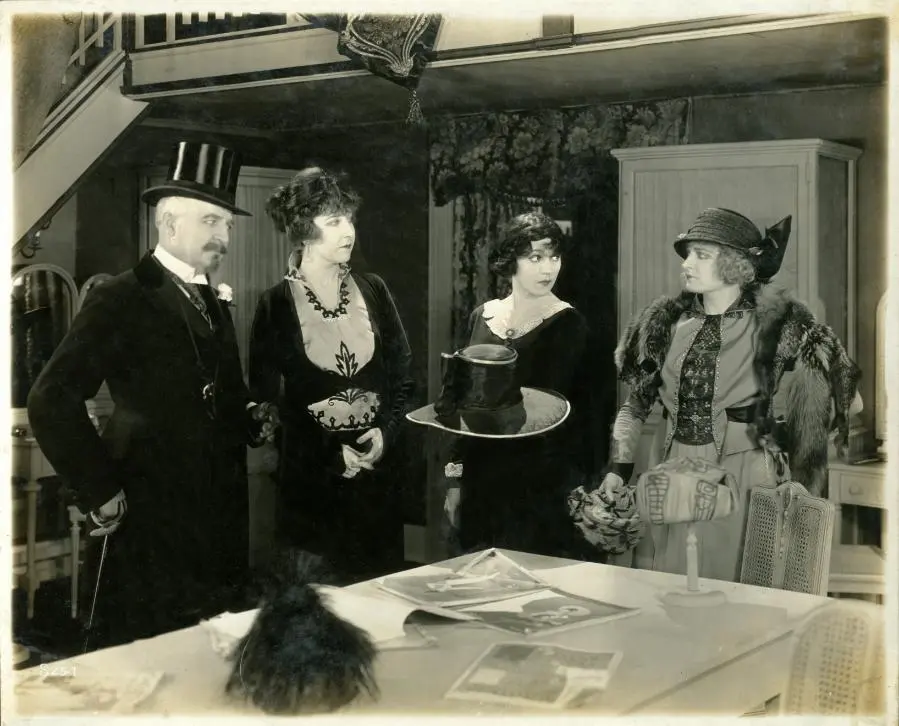
From a directorial standpoint, the film, while not overtly flashy, demonstrates a keen understanding of visual storytelling inherent to the silent medium. The sets and costumes, particularly those within Marie's opulent Fifth Avenue shop, are crucial in establishing the luxurious yet deceptive atmosphere. The intricate hats themselves become characters, silent witnesses to the transactions and deceptions. The silent film era relied heavily on such visual cues, and "Marie, Ltd." uses them effectively to highlight the contrast between the glittering surface and the underlying moral murkiness. The pacing maintains a steady rhythm, building dramatic tension through Drina's discoveries and emotional struggles, culminating in the climactic moments of decision and confession. The intertitles, though not available for direct analysis here, undoubtedly served as vital narrative bridges, clarifying character motivations and advancing the intricate plot with precision, ensuring the audience remained fully engaged with the unfolding drama, even without spoken dialogue.
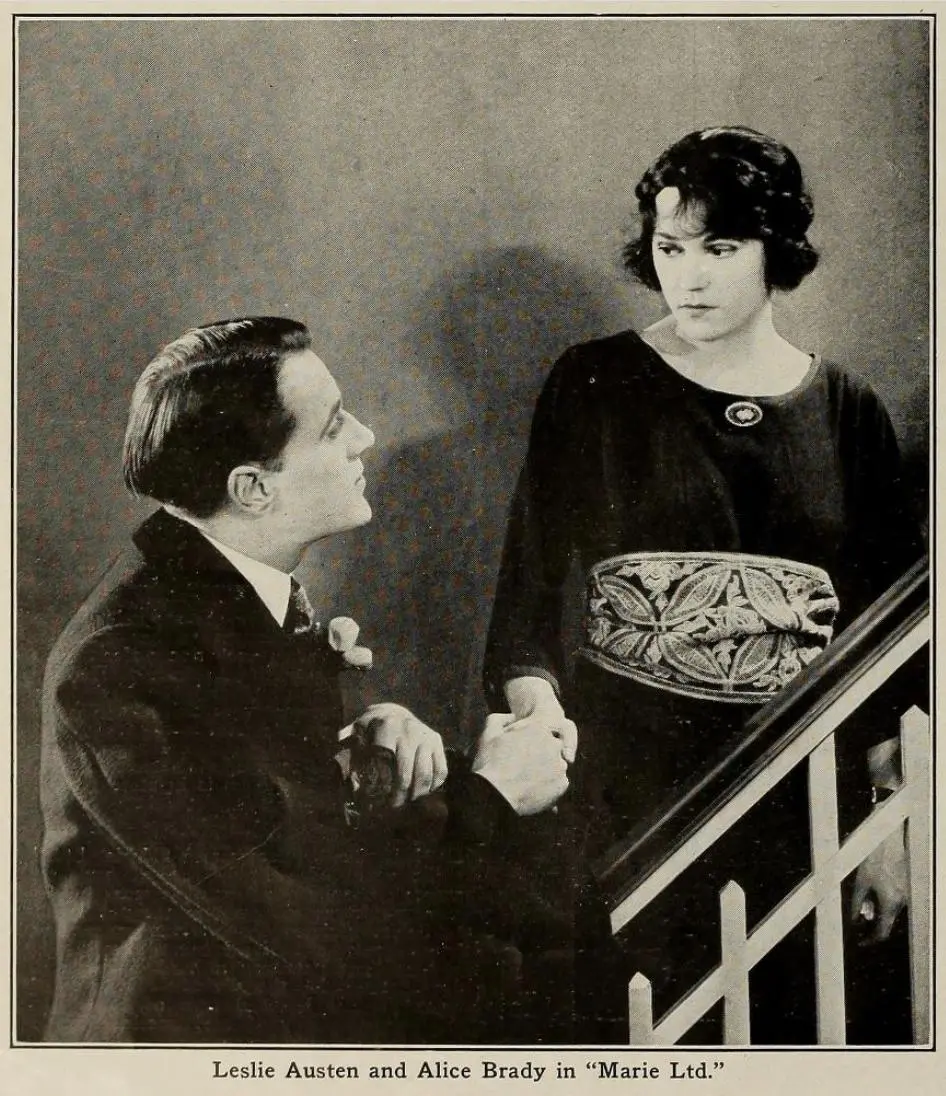
Thematically, "Marie, Ltd." offers a fascinating lens through which to view early 20th-century American society. It critiques the hypocrisy of the upper echelons, where wealth often dictated morality and women, despite their apparent independence, were often forced into elaborate schemes to maintain their social standing or secure their financial futures. The millinery shop itself becomes a powerful metaphor: a place where beauty and artistry are applied to conceal, to create an illusion of perfection that belies the messy realities beneath. Drina's journey is one of shedding these illusions, seeking a truth that transcends the superficial glitter of Fifth Avenue. Her rejection of Colonel Lambert's offer, despite the dire circumstances, is a powerful statement about personal integrity and the pursuit of genuine happiness, aligning with the core message of films like "The Keys to Happiness", which often explore the pursuit of true fulfillment over mere material gain. The film subtly argues that true wealth lies not in accumulation, but in authenticity and honest relationships.
The film’s focus on a mother-daughter relationship under duress is particularly poignant and adds significant emotional depth. Marie's initial actions, while morally questionable, undeniably stem from a desire to provide for her daughter, even if it means perpetuating a cycle of deception that ultimately harms them both. Drina's discovery forces both women to re-evaluate their values, leading to a potential for reconciliation and a more honest foundation for their relationship. This dynamic adds a layer of emotional complexity that elevates the film beyond a simple morality play, transforming it into a nuanced exploration of inherited expectations, the breaking of generational cycles, and the difficult, often painful, path towards authenticity and mutual respect. It’s a powerful examination of the bonds that connect us and the compromises we make for those we love.
In conclusion, "Marie, Ltd." stands as a compelling example of early cinema's capacity for intricate storytelling and incisive social commentary. It is a film that, despite its age, resonates with contemporary themes of authenticity, economic disparity, and the search for integrity in a world often dominated by appearances. The performances are strong, the narrative engaging, and its critique of societal artifice remains remarkably relevant, making it a timeless piece of cinematic history. It's a testament to the enduring power of silent film to capture the complexities of the human condition without uttering a single spoken word, relying instead on the universal language of emotion, gesture, and meticulously crafted visual narrative. For those interested in the social dramas of the early 20th century, the nuanced portrayal of female agency, or simply a well-crafted story of moral awakening and romance, "Marie, Ltd." is an absolute must-see, a fascinating glimpse into a bygone era whose lessons still echo today with surprising clarity and poignancy.
IMDb 5.5
1931
Community
Log in to comment.