DbcultAccessing Vault...
Cult Review
Senior Film Conservator
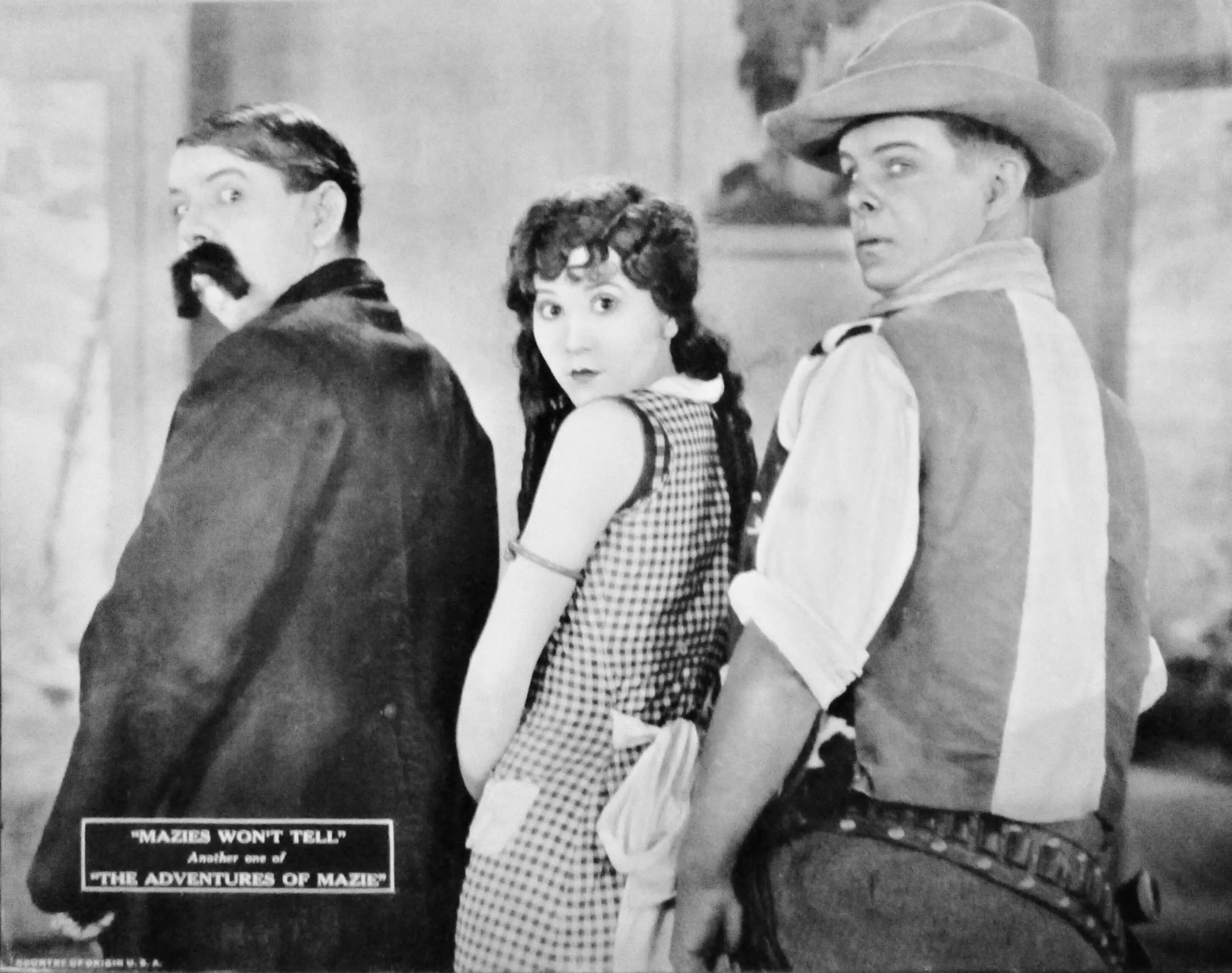
Is Mazie Won't Tell worth a look in the modern era? Short answer: No, unless you are a dedicated historian of silent-era slapstick or an Alberta Vaughn completionist. This 1927 relic is a curious artifact that captures the frantic energy of the late silent period but struggles to balance its mean-spirited humor with its redemptive arc. It is a film for those who appreciate the evolution of the 'working girl' trope in cinema, but it is certainly not for viewers who demand logical character motivations or high-stakes tension.
1) This film works because Alberta Vaughn’s screen presence is undeniable, providing a grounded emotional center to a plot that frequently threatens to spin into nonsense. 2) This film fails because the central 'pals' played by Al Cooke and Kit Guard are fundamentally unlikable, making their incompetence feel more like harassment than humor. 3) You should watch it if you want to see how 1920s cinema handled workplace politics and the 'wrongly accused' narrative before the advent of the Hays Code.
Mazie Won't Tell is a difficult recommendation for the casual viewer. While it possesses the visual charm inherent to mid-20s productions, the pacing is erratic and the comedy often feels dated. If you are looking for a definitive example of the era's wit, you might be better served by exploring The Scarecrow. However, for those interested in the specific sub-genre of 'detective spoofs,' this film offers a fascinating, if flawed, blueprint.
The inciting incident of Mazie Won't Tell is, by modern standards, incredibly cruel. The 'pals' Al and Kit essentially destroy Mazie's livelihood to spite a woman they don't like. There is a cynical edge to this setup that the film never quite reconciles. In many ways, it mirrors the workplace anxieties found in Any Woman, though it swaps melodrama for pratfalls. The bathing suit photo, intended as a scandalous reveal, highlights the puritanical workplace standards of 1927, yet the film treats Mazie's firing as a mere stepping stone to the next gag.
Vaughn plays Mazie with a resilience that feels modern. When she is fired, she doesn't weep; she pivots. This energy carries the film through its sluggish middle act, where the action shifts to a 'swell dance.' Here, the film attempts to satirize high society, a common theme in 1920s comedy, but it lacks the sharp social commentary of something like Anything Once. Instead, it relies on the physical comedy of Cooke and Guard, whose brand of 'rotten detective' work feels like a precursor to the Three Stooges, albeit with less polished choreography.
The second half of the film transforms into a proto-heist movie. The inclusion of a burglar in league with the boss's sweetheart adds a layer of noir-lite to the proceedings. This is where the film is at its most interesting. The way the jewels are planted in Mazie's room is a classic 'frame-up' beat, reminiscent of the narrative structure in Torchy's Frame-Up. However, the resolution feels rushed. The vindication of Mazie is less about her own agency and more about the accidental exposure of the real criminals.
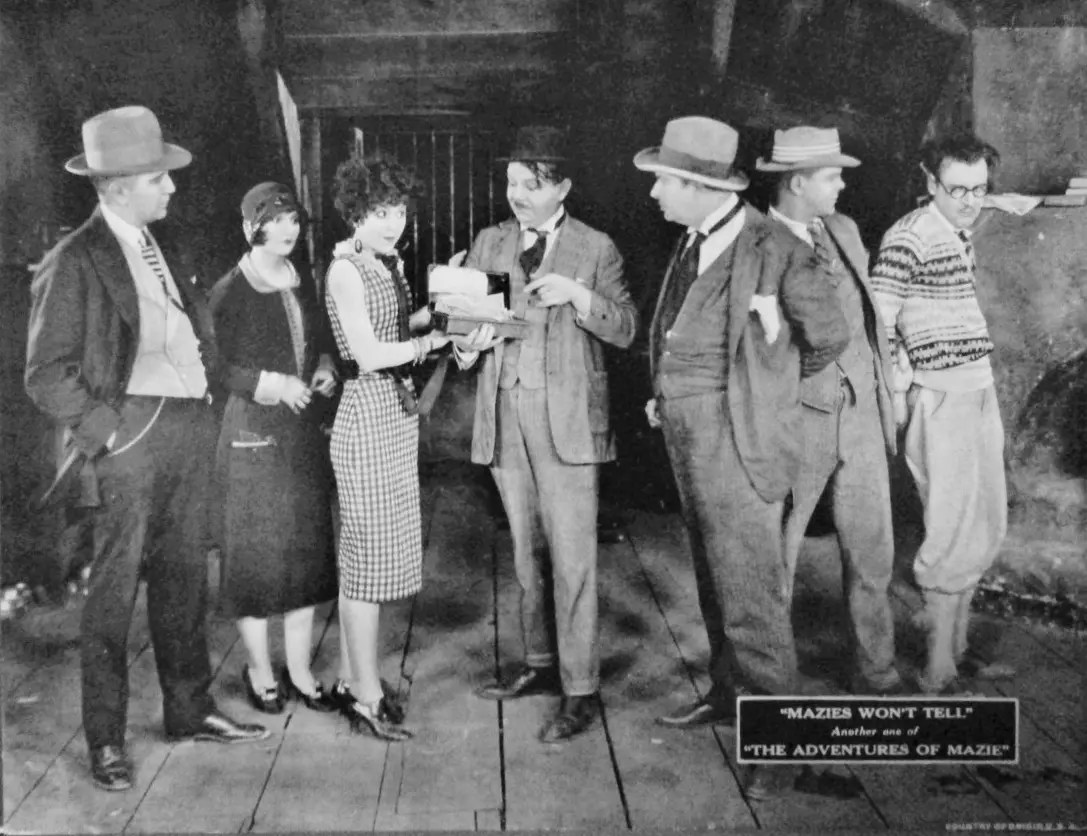
One cannot discuss this film without mentioning the cinematography. While not as experimental as The Dancer of the Nile, the use of lighting during the dance sequence is surprisingly effective. The shadows in Mazie's room during the discovery of the jewels create a genuine sense of dread that contrasts sharply with the earlier slapstick. It’s a tonal whiplash that defines the film. It works. But it’s flawed.
Alberta Vaughn was a star for a reason. In Mazie Won't Tell, she manages to convey a wide range of emotions—betrayal, confusion, and eventually, a quiet dignity—without the over-the-top gesticulation that plagued many of her contemporaries. Her performance is a masterclass in silent subtlety. Contrast this with Al Cooke and Kit Guard, who seem to be in a different movie entirely. Their performance is loud, even in silence. They represent the broad, vaudevillian roots of cinema, while Vaughn represents its future.
The direction by the uncredited (or varied) hands behind the production follows a standard house style. There are few flourishes. However, the pacing of the final ten minutes is breathless. The way the plot threads converge at the dance is handled with more grace than the opening act would suggest. It lacks the atmospheric depth of Där fyren blinkar, but it serves the low-brow needs of its audience perfectly.
Interestingly, the writing credits include Doris Anderson and Nell Martin. This might explain why Mazie, despite being a victim of a prank, never feels like a helpless damsel. There is a backbone to her character that feels distinctly feminine. She is the only person in the film who isn't trying to play a character; she's just trying to survive her friends. This creates a fascinating tension. The men are playing 'detective,' while the woman is dealing with the real-world consequences of their play-acting.
The dialogue cards (titles) by George Marion Jr. are punchy and occasionally witty, though some of the humor has curdled with age. The 'bathing suit' scandal feels particularly archaic, though it serves as a reminder of the social constraints of the time. It’s a film that exists in the shadow of better works like Corruption, yet it maintains a certain scrappy charm.
Mazie Won't Tell is a cinematic curiosity that highlights the strengths and weaknesses of the late silent era. While it features a standout performance from Alberta Vaughn, it is bogged down by a script that rewards the bad behavior of its male leads. It is a film that asks us to laugh at a woman losing her job, then cheer when the same men who caused her firing 'save' her from a crime they indirectly facilitated. It is a messy, complicated, and occasionally entertaining piece of history. It isn't a masterpiece, but for those willing to look past its flaws, it offers a window into a bygone world of swell dances and rotten detectives. If you have 60 minutes to spare and an interest in the evolution of the comedy-mystery, it's a passably entertaining diversion, but don't expect it to change your life.
IMDb 7.7
1937
Community
Log in to comment.