DbcultAccessing Vault...
6.7/10
Senior Film Conservator
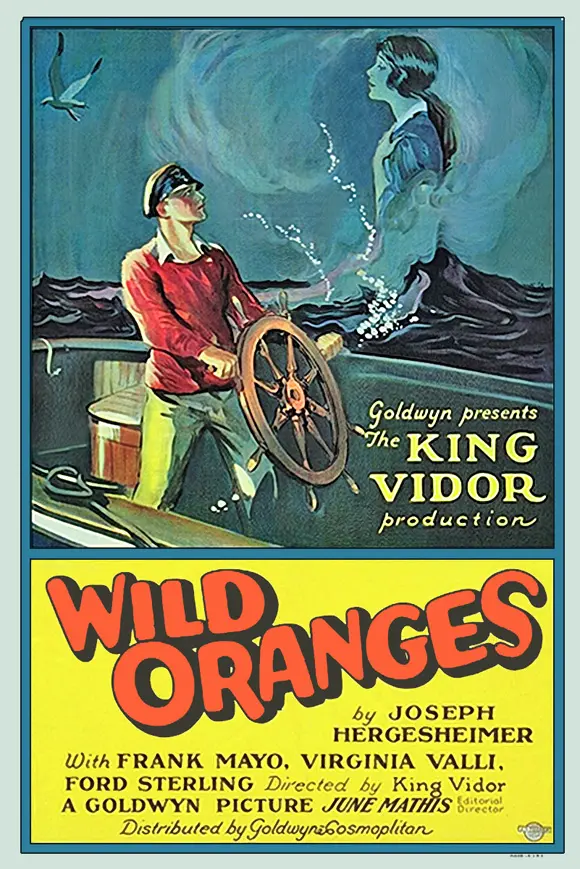
A definitive 6.7/10 rating for a film that redefined the boundaries of cult cinema. Wild Oranges remains a cornerstone of transgressive art.
In the pantheon of silent cinema, few directors possessed the innate ability to translate internal psychological states into external visual landscapes quite like King Vidor. While his later works often lean toward the epic or the socially conscious, Wild Oranges (1924) remains a startlingly intimate, almost suffocating study of human fragility and the predatory nature of isolation. It is a film that breathes with a heavy, humid intensity, capturing the precise moment when grief curdles into a paralyzing stasis. Unlike the more overt melodrama found in If Women Only Knew, Vidor’s approach here is one of simmering dread, where the environment itself feels like an accomplice to the unfolding tragedy.
The film opens not with a flourish of action, but with the quiet, rhythmic motion of the sea. John Woolfolk, portrayed with a weary, hollow-eyed intensity by James Kirkwood, is a protagonist defined by his absence. He is a ghost haunting his own life, sailing a yacht that serves as a floating mausoleum for his lost happiness. This maritime wandering is a poignant synecdoche for the post-war disillusionment of the era, a search for a horizon that never arrives. When he eventually drops anchor in the secluded bay of the Stope estate, the transition from the open sea to the tangled, overgrown shoreline marks a shift from melancholia to horror.
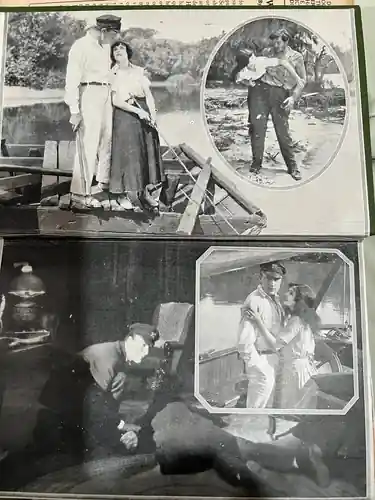
The setting is a masterclass in production design and atmospheric cinematography. The moss-choked trees and the skeletal remains of the mansion suggest a world that has stopped turning. It is a space of desuetude, where the vibrant fruit—the titular wild oranges—serves as a cruel irony against the surrounding rot. In this regard, the film shares a thematic kinship with the domestic claustrophobia seen in Shattered, though Vidor replaces the urban grimness with a Southern Gothic miasma that feels infinitely more inescapable.
At the heart of the island’s terror is Nicholas, played with terrifying physical presence by Charles A. Post. Nicholas is not a sophisticated villain; he is a force of pure, unadulterated id. He represents the return of the repressed—an escaped convict who has shed the veneer of civilization to become something akin to the beasts of the swamp. His interest in Millie Stope (Virginia Valli) is not romantic but predatory. Vidor uses Nicholas to explore the vulnerability of the feminine within a lawless vacuum, a theme that echoes through contemporary works like Venganza de bestia.
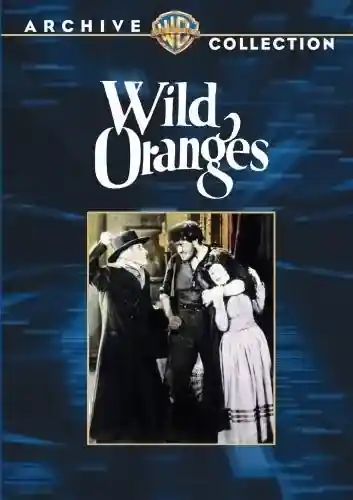
Virginia Valli’s performance is a revelation of silent-era nuance. She portrays Millie as a woman whose spirit has been slowly eroded by fear. Her movements are tentative, her eyes constantly scanning the shadows for the monster that haunts her perimeter. When she encounters Woolfolk, it isn't a simple case of 'love at first sight.' Instead, it is the desperate recognition of a life raft. Their burgeoning connection is a fragile thing, threatened by the looming shadow of Nicholas and the psychological paralysis of her grandfather, Lathrop Stope (Nigel De Brulier).
Technically, Wild Oranges is light-years ahead of many of its contemporaries. Vidor employs a mobile camera that weaves through the undergrowth, creating a sense of being watched that predates the modern slasher film. The use of natural light—or the deliberate absence of it—creates a chiaroscuro effect that mirrors the internal struggles of the characters. The sequence where Nicholas stalks the house is a masterclass in pacing; Vidor understands that the anticipation of violence is often more harrowing than the act itself.
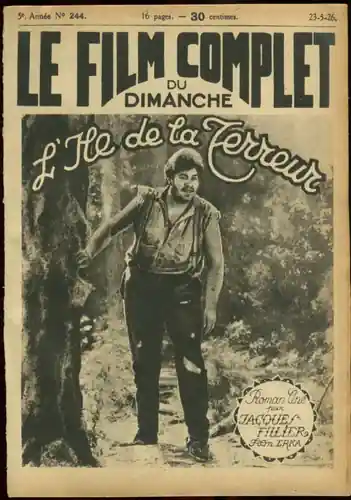
The film’s editing rhythm is equally impressive. It oscillates between the languid, dream-like sequences of Woolfolk’s yacht and the sharp, jagged cuts of the island’s confrontations. This duality highlights the conflict between the civilized world Woolfolk represents and the primordial chaos of the island. While films like Queen of the Sea utilized the ocean for fantasy and spectacle, Vidor uses the water as a barrier, a moat that keeps his characters trapped in their personal hells.
Lathrop Stope’s backstory—fleeing to the island due to political persecution—adds a layer of intellectual weight to the narrative. His fear is not just of Nicholas, but of the 'other' in all its forms. He has built a prison of his own making, a theme of self-imposed exile that resonates with the character arcs in The Unbeliever. Stope’s refusal to act, even when his granddaughter is in mortal peril, is a damning indictment of a specific kind of intellectual cowardice. It is Woolfolk, the man who has already lost everything, who must find the will to fight for someone else’s future.
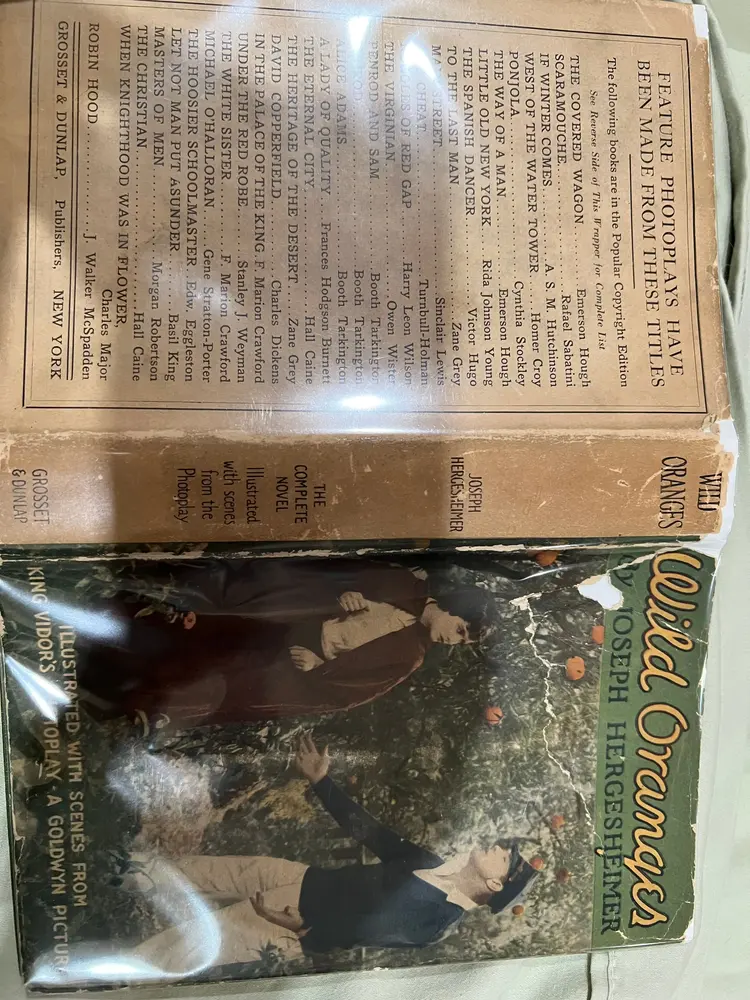
This dynamic elevates Wild Oranges beyond a simple thriller. It becomes an inquiry into the nature of courage. Is courage the absence of fear, or is it the ability to act despite the crushing weight of past trauma? Woolfolk’s journey from a nihilistic sailor to a protective hero is handled with a subtlety that avoids the pitfalls of standard heroics found in The Trigger Trail or A Yankee Princess. His battle with Nicholas is messy, visceral, and devoid of glamour.
As the climax unfolds, the veneer of civilization is completely stripped away. The final confrontation is a grueling physical struggle that feels surprisingly modern in its brutality. Vidor does not look away from the sweat, the blood, or the sheer animalistic desperation of the fight. It is a sequence that would not feel out of place in a 1970s survivalist thriller, yet it is executed with the grace of silent-era artistry. The resolution, while providing a sense of catharsis, remains haunted by the trauma that preceded it. The escape from the island is not a return to a perfect world, but a step toward a new, uncertain reality.
In comparing Wild Oranges to other works of the period, such as the social critiques of Maulwürfe or the romantic entanglements of Two Kinds of Love, one realizes how unique Vidor’s vision was. He was willing to explore the darker corners of the human psyche without the safety net of a traditional happy ending. Even the lighter moments, such as the interactions with the cook Hugo (played by Ford Sterling), are tinged with an underlying tension, reminding us that on this island, no one is truly safe.
"Vidor understands that silence isn't the absence of sound, but the presence of dread. In the rustle of the orange leaves and the creak of the floorboards, he finds a language of terror that transcends the limitations of the silent medium."
The film’s influence can be seen in the lineage of the Southern Gothic genre, from the works of Tennessee Williams to the modern 'swamp noir.' It captures the specific texture of the American South—the beauty and the rot, the hospitality and the hostility. For those accustomed to the more theatrical style of silent films like 'Nfama! or the broad strokes of Don Juan Manuel, Wild Oranges offers a refreshing, if harrowing, alternative. It is a film that demands your full attention, drawing you into its humid embrace and refusing to let go until the final frame.
Ultimately, Wild Oranges is a testament to the power of visual storytelling. Without a single word of spoken dialogue, Vidor communicates the complexities of grief, the paralysis of fear, and the agonizing process of rebirth. It is a masterpiece of atmospheric tension, a precursor to the psychological thrillers of Hitchcock, and a vital piece of cinematic history that deserves to be celebrated alongside Vidor’s more famous works like The Crowd or The Big Parade. It reminds us that sometimes, the most dangerous journeys are not the ones we take across the ocean, but the ones we take into the dark recesses of our own souls.
Whether you are a devotee of silent cinema or a casual viewer looking for a film that lingers long after the credits roll, Wild Oranges is an essential experience. It is a haunting, beautiful, and visceral reminder of why King Vidor remains one of the most significant figures in the history of the moving image. In the world of 1924, amidst the glitz of The Fakers or the international drama of A senki fia, Wild Oranges stood apart as a work of raw, uncompromising art. It remains just as potent today.
IMDb —
1934
Community
Log in to comment.