DbcultAccessing Vault...
5.8/10
Senior Film Conservator
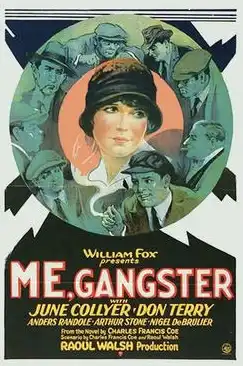
A definitive 5.8/10 rating for a film that redefined the boundaries of cult cinema. Me, Gangster remains a cornerstone of transgressive art.
Raoul Walsh’s Me, Gangster is worth watching today primarily as a historical bridge. It sits at the intersection of the Victorian morality plays of the early silent era and the hard-boiled cynicism that would define the 1930s gangster classics like The Public Enemy. If you are a fan of Walsh’s later work or a student of how crime is depicted on screen, this is essential viewing. However, if you struggle with the slower pacing of silent dramas or the heavy-handed 'crime doesn't pay' messaging of the 1920s, you might find the second half a bit of a slog. It is a film for those who appreciate the texture of 1920s urban life and the evolution of the 'tough guy' archetype.
Don Terry plays Jimmy Williams with a physical presence that feels remarkably modern. Unlike many silent actors who relied on grand, theatrical gestures to convey emotion, Terry uses his stature and a certain brooding stillness. You can see why Walsh cast him; he has the square-jawed, blue-collar intensity that would later become a staple of Walsh’s sound films. In the early scenes, where Jimmy is navigating the crowded, laundry-strewn tenements, Terry carries himself with a cocky swagger that feels genuine. He doesn't look like an actor playing a hood; he looks like a guy who knows exactly which pockets to pick.
The film is framed as a diary or a personal confession, which gives the narrative a subjective grit. We see the world through Jimmy’s eyes, and Walsh doesn't shy away from the environmental factors that push him toward crime. The lighting in the tenement scenes is intentionally oppressive. There’s a specific shot where Jimmy is looking out a window at a patch of sky, and the shadows of the fire escape create a literal cage across his face. It’s a bit on the nose, but in 1928, it was effective visual shorthand for a life with no exits.
Raoul Walsh was always a director of action and movement, and you can see him straining against the limitations of the silent medium here. The robbery sequence is the film's highlight. The editing rhythm picks up, moving away from the static compositions of the domestic scenes into something more kinetic. There is a palpable sense of tension as the heist goes south. Walsh uses deep focus in the alleyway scenes, allowing us to see the police approaching in the background while the characters scramble in the foreground. It creates a sense of spatial reality that many of his contemporaries lacked.
Interestingly, the film features an early appearance by Carole Lombard as Rosie. She isn't the lead—that role goes to June Collyer as Mary—but Lombard’s natural screen presence is already evident. Even in a minor role, she manages to inject a bit of life into the background of the underworld scenes, standing out against the more caricatured 'thug' types played by the supporting cast. The contrast between her and the more traditional 'good girl' Mary highlights the film's struggle between being a gritty crime drama and a sentimental romance.
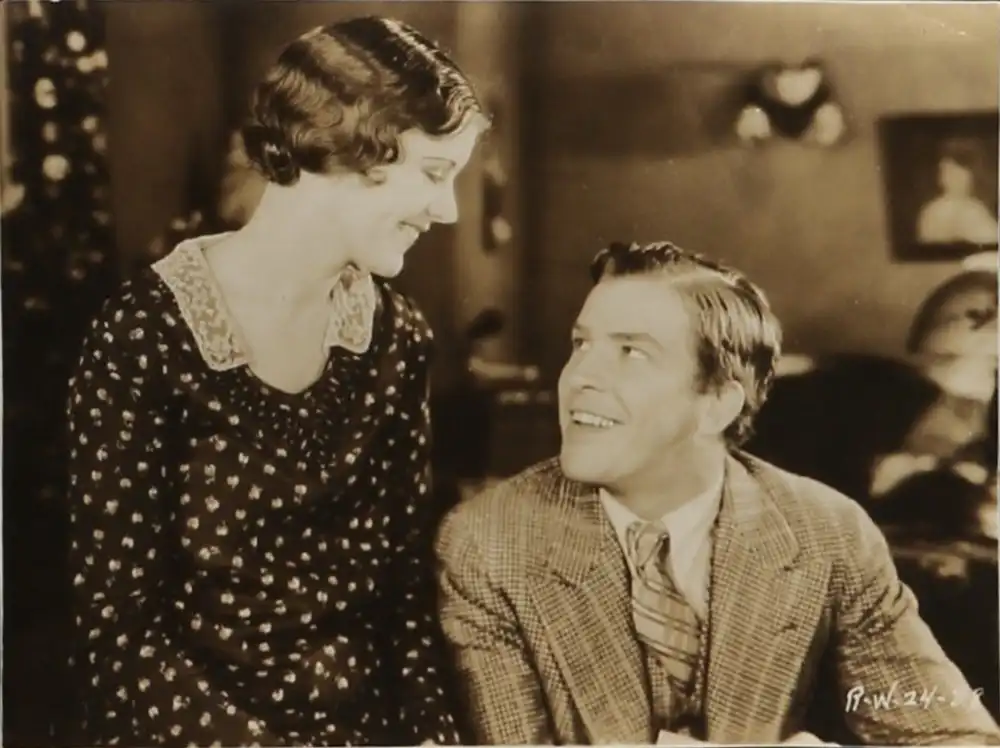
The film’s biggest weakness is its mid-section, specifically the prison sequences. Once Jimmy is caught, the movie shifts from a fast-paced crime story into a slow-moving moral reform drama. The scenes of Jimmy in his cell, reflecting on his choices, feel significantly longer than they need to be. Walsh lingers on reaction shots of Jimmy’s mother (Stella Adams) that lean heavily into the 'dying mother' pathos common in films like That Royle Girl. The dialogue titles become more frequent and more preachy, losing the visual momentum established in the first act.
There is also a strange tonal inconsistency in the way the police are handled. DeWitt Jennings plays the lawman with a stern, almost robotic persistence. While this adds to the feeling of Jimmy being hunted, it also makes the 'reform' aspect of the story feel forced. The transition from a hardened criminal to a man seeking redemption happens through a series of somewhat clunky plot beats rather than a fluid character arc. You get the sense that Walsh was more interested in the crime and the chase than the eventual repentance.
One detail that only someone watching closely would notice is the use of practical locations versus studio sets. Walsh has a knack for blending the two, but there are moments where the artifice of the studio 'street' becomes apparent, especially in the way the light hits the 'brick' walls during the night scenes. However, the costume design for the gangsters—the tilted caps, the oversized overcoats—is spot on. It avoids the polished 'gentleman thief' look of earlier films and opts for something much more street-level and unwashed.
The editing in the final act, as Jimmy tries to go straight while being pulled back by his old associates, regains some of the early energy. There is a brief confrontation in a dimly lit room where the use of a single light source creates a stark, high-contrast look that prefigures the film noir movement of the 1940s. It’s in these moments of visual experimentation that Me, Gangster proves its worth.
Me, Gangster isn't a lost masterpiece on the level of The Big Trail, but it is a vital piece of the puzzle in Raoul Walsh’s career. It lacks the nihilistic punch of his later sound films, mostly because it is tethered to the moral requirements of its time. However, the muscular direction and Don Terry's grounded performance make it more than just a museum piece. It’s a gritty, occasionally sentimental, but always professional piece of filmmaking that shows a master director finding his voice in the shadows of the city.
Watch it if: You want to see the roots of the American gangster film or you're tracking the early career of Carole Lombard.
Skip it if: You have a low tolerance for 1920s sentimentality and 'crime doesn't pay' moralizing.
IMDb 4.4
1929
Community
Log in to comment.