DbcultAccessing Vault...
5.7/10
Senior Film Conservator
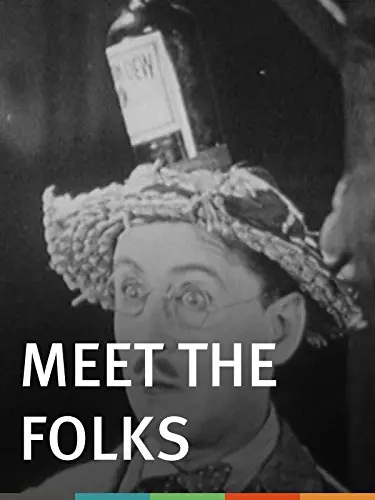
A definitive 5.7/10 rating for a film that redefined the boundaries of cult cinema. Meet the Folks remains a cornerstone of transgressive art.
Is 'Meet the Folks' worth watching today? Short answer: yes, but with significant caveats. This two-reel comedy from 1929 is a fascinating, if sometimes frustrating, window into early American cinema, primarily for silent film enthusiasts and those curious about the comedic stylings of the late 1920s. Casual viewers seeking modern pacing or sophisticated humor will likely find it a struggle.
For a film produced at the precipice of the sound revolution, 'Meet the Folks' offers a curious blend of old and new, a final, fleeting glimpse at a comedic performer whose career was tragically cut short. It's a historical artifact that occasionally sparks with genuine charm, but more often functions as a reminder of how much cinematic language has evolved.
Before delving into the specifics, it's crucial to contextualize 'Meet the Folks.' Released in 1929, it stands on the cusp of a seismic shift in Hollywood. The 'talkies' were rapidly taking over, and silent film, for all its artistry, was becoming a relic. This particular short, running just over 20 minutes, serves as a snapshot of that transitional period, showcasing a comedic formula that would soon be deemed antiquated by the advent of dialogue.
Jimmie Adams, the film's male lead, was a familiar face in two-reel comedies, known for his somewhat meek but earnest persona. His career, though moderately successful in the silent era, was poised for a pivot to singing roles with sound. Sadly, fate intervened, and Adams passed away in 1933. This makes 'Meet the Folks' not just a comedy, but a poignant piece of his filmography, offering a final, silent hurrah.
The narrative of 'Meet the Folks' is delightfully straightforward, a classic rom-com setup amplified by a distinctly rural American twist. Our story begins on the 'Mountain Dew Express,' a charmingly rustic train journeying into the heart of the Tennessee hills. Here, we're introduced to Jimmie Adams' character, a fastidious, somewhat overbearing gentleman whose every move seems meticulously planned, and Gayle Lloyd's character, an 'attractive maiden' whose spirited demeanor promises a more adventurous spirit than her male counterpart.
Their initial encounter is the stuff of classic meet-cutes, a gentle dance of burgeoning attraction against the backdrop of a chugging locomotive. However, this budding romance is swiftly thrown into disarray upon their arrival. The Tennessee hills, it turns out, are not merely a picturesque backdrop but a battleground. Adams and Lloyd quickly discover, to their mutual dismay, that their respective families are embroiled in a generations-old, Hatfields-and-McCoys-style feud, a simmering pot of animosity that regularly boils over into moonshine-fueled skirmishes and comedic chaos.
The film then pivots from sweet romance to a battle of wills and wits, as the young lovers navigate the treacherous landscape of familial loyalty and violent tradition. Can their fledgling affection withstand the absurdity and genuine danger of a full-blown hillbilly war? The plot, while simple, effectively sets up a series of escalating comedic confrontations, all while maintaining the central question of whether love can truly bridge such a deep, culturally ingrained divide.
The success of any silent comedy hinges almost entirely on the physical expressiveness and charisma of its leads. In 'Meet the Folks,' we have a mixed bag, though one that offers fascinating insights into early comedic archetypes.
Jimmie Adams, as the male fusspot, embodies a particular brand of early 20th-century comedic masculinity. His humor stems from his fastidiousness, his slightly bewildered reactions to the rural chaos, and a series of well-executed physical gags. There’s a scene where he attempts to maintain his composure amidst a flurry of flying objects, his face a perfect mask of indignant confusion, that genuinely elicits a chuckle. However, I’d argue that while Adams is competent, his performance often leans more towards 'historically interesting' than 'genuinely hilarious.' His persona, while distinct, lacks the universal resonance of a Keaton or Chaplin; his comedy feels very much a product of its specific time, relying on broad strokes that might not land with contemporary audiences.
Gayle Lloyd, on the other hand, is a revelation. Described merely as an 'attractive maiden,' she brings a vivaciousness and intelligence to her role that elevates the material significantly. Her expressive eyes and confident body language suggest a character who is more than just a damsel in distress; she's an active participant in the chaos, often initiating or reacting with a delightful blend of exasperation and determination. Her chemistry with Adams, though understated, is palpable, providing the necessary emotional anchor for the comedic whirlwind around them. Lloyd's performance is arguably the film's strongest asset, demonstrating a screen presence that feels surprisingly modern in its understated strength.
The supporting cast, including William Blaisdell, Gus Leonard, Patsy O'Byrne, and Billy Engle, largely fulfill their roles as exaggerated hillbilly caricatures. They are loud, boisterous, and prone to slapstick violence, serving the narrative's need for a chaotic backdrop. While their performances are broad, they effectively convey the entrenched, almost theatrical, nature of the feud. One particular sequence involving a chase through a ramshackle cabin showcases their commitment to the physical comedy, even if the characters themselves lack depth. It’s a testament to the era’s comedic sensibilities that these archetypes were so readily embraced.
Directed by Norman Z. McLeod, who would go on to helm classics like 'Monkey Business' and 'The Secret Life of Walter Mitty,' 'Meet the Folks' offers early glimpses of a director learning his craft. The film is a two-reeler, meaning its narrative must be concise and its visual storytelling efficient. McLeod largely succeeds in this, keeping the action moving at a brisk pace.
The cinematography, while not groundbreaking, is functional and occasionally inspired. The opening train sequence, for instance, uses tight framing to emphasize the close proximity of Adams and Lloyd, hinting at their burgeoning connection. Later, when the feud erupts, McLeod employs wider shots to capture the chaotic energy of the brawls, allowing the audience to take in the full scope of the slapstick. There’s a particular shot of the warring families, silhouetted against a dusty backdrop, that momentarily elevates the film beyond mere farce, suggesting a more epic conflict, even if it’s quickly undercut by a pie to the face.
What's perhaps most striking is McLeod's ability to stage comedic set pieces within the confines of a limited budget and short runtime. The sequence involving the families' initial confrontation, escalating from stern glares to a full-blown food fight, is well-choreographed. It’s simple, direct, and effectively communicates the film’s central comedic premise without overstaying its welcome. While not as visually inventive as some of his contemporaries, McLeod’s direction here lays a solid foundation for his future, more celebrated works.
The pacing of 'Meet the Folks' is dictated by its two-reel format: it’s fast. Very fast. The narrative wastes no time in establishing the initial romance, introducing the conflict, and diving headfirst into the comedic mayhem. This rapid-fire approach can be exhilarating, especially for those accustomed to the slower burn of many modern films. The film moves from one gag to the next with relentless energy, rarely pausing for breath or introspection.
The tone is overtly comedic, a blend of romantic comedy and broad slapstick. The 'Hatfields-and-McCoys' feud, while historically rooted in real violence, is treated here with a light, almost farcical touch. The moonshine-fueled warfare is more about pratfalls and exaggerated reactions than genuine peril. This tonal consistency ensures the audience understands they are in for a lighthearted romp, even when the stakes, in theory, involve generational hatred.
However, this relentless pace and singular tone can also be a weakness. There’s little room for character development beyond the initial archetypes, and the resolution, while satisfyingly abrupt for a short, feels somewhat inevitable rather than earned. It works. But it’s flawed. The film doesn't attempt to delve into the nuances of the conflict, preferring instead to use it as a springboard for visual gags. This is not necessarily a criticism, as it aligns with the conventions of the era's short comedies, but it does limit the film's emotional depth and lasting impact.
For silent film aficionados, 'Meet the Folks' is absolutely worth your time. It offers a concise, engaging example of late-silent-era comedy. It showcases the talents of Jimmie Adams in one of his final silent roles and highlights the surprisingly modern appeal of Gayle Lloyd.
For casual viewers, the answer is more nuanced. If you have an appreciation for cinematic history and are willing to embrace the stylistic conventions of the 1920s, you might find its charm infectious. However, if you're accustomed to dialogue-driven humor, intricate plots, or sophisticated character arcs, this film might feel dated and overly simplistic. It's a historical curiosity that occasionally transcends its age, but not consistently.
This film works because of its historical significance and the unexpected charm of its leads, particularly Gayle Lloyd, who brings a much-needed spark. Her performance alone justifies a viewing for those interested in overlooked talents of the era. The direct, unpretentious narrative is also a strength, cutting straight to the comedic core without unnecessary detours.
This film fails because its comedic beats are often dated, and the central conflict, while classic, feels underdeveloped amidst a flurry of slapstick. Some of the humor relies heavily on exaggerated caricatures that may not resonate with contemporary sensibilities, making certain jokes feel more like historical footnotes than genuine laughs.
You should watch it if you appreciate silent cinema's unique rhythm, enjoy classic 'fish out of water' romantic comedies, and are willing to overlook a certain narrative simplicity. It's a delightful, if fleeting, journey into a specific corner of film history, offering a window into the popular entertainment of its day. If you found the silent era antics in Mary Moves In charming, 'Meet the Folks' offers a similar, albeit more frantic, experience.
Its unique appeal lies in its transitional nature. It's a silent film from 1929, right as sound was taking over. This gives it a distinct historical flavor. It's also a rare showcase for Jimmie Adams' specific comedic style, making it a valuable piece of film preservation. It captures a specific moment in American cinematic and cultural history, presenting a romantic comedy trope (forbidden love) through the lens of a regional American feud.
'Meet the Folks' is a charming, if somewhat antiquated, relic of a bygone cinematic era. It’s a two-reel comedy that delivers exactly what it promises: a lighthearted romance entangled in a hilariously exaggerated hillbilly feud. While Jimmie Adams' performance serves more as a historical footnote than a comedic tour de force, Gayle Lloyd’s presence is a definite highlight, injecting much-needed vitality into the proceedings. The film's brisk pacing and unpretentious humor make it an enjoyable, albeit brief, watch for those with a keen interest in silent cinema. It stands as a testament to the enduring appeal of simple storytelling and the energetic performances that once defined an entire industry. It’s not a masterpiece, nor does it pretend to be. But it is a valuable piece of film history, offering genuine smiles and a fascinating glimpse into the past. For those willing to adjust their expectations to the sensibilities of 1929, 'Meet the Folks' offers a delightful, if fleeting, escape.
IMDb 4.8
1919
Community
Log in to comment.