DbcultAccessing Vault...
5.6/10
Senior Film Conservator
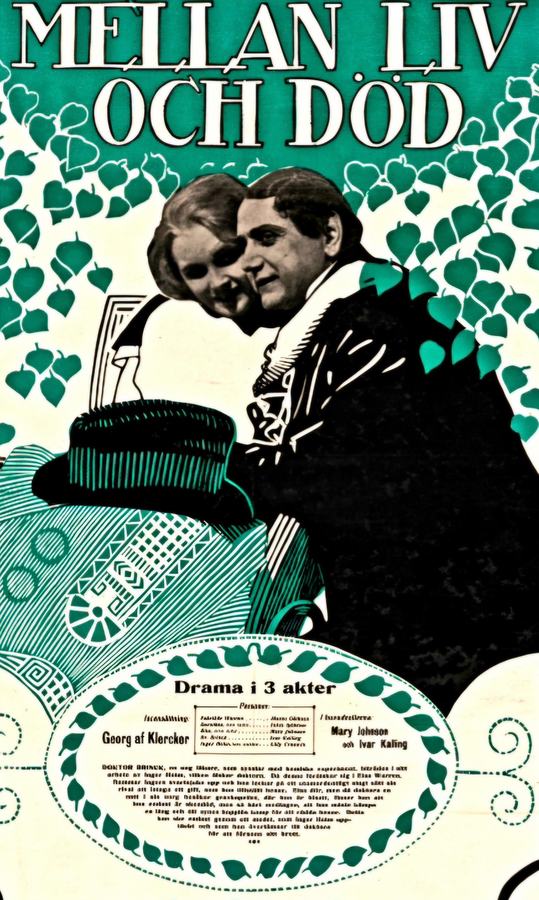
A definitive 5.6/10 rating for a film that redefined the boundaries of cult cinema. Mellan liv och död remains a cornerstone of transgressive art.
In the annals of early Swedish cinema, a particular gem, Mellan liv och död (Between Life and Death), emerges from the visionary direction of Georg af Klercker, offering a poignant glimpse into the human heart's complex machinations amidst the stern pursuit of scientific advancement. This isn't merely a tale; it's an intricate tapestry woven with threads of ambition, unrequited devotion, and the inherent loneliness that can accompany groundbreaking work. Klercker, a director often lauded for his ability to infuse melodrama with genuine emotional weight, crafts a narrative that, despite its silent film origins, speaks volumes through its visual poetry and the compelling performances of its cast.
The film introduces us to Dr. Brinck, portrayed with a compelling blend of intellectual fervor and emotional detachment by Manne Göthson. Brinck is not merely a scientist; he is an embodiment of singular focus, a man whose existence revolves around the crucible of his laboratory. Days bleed into nights as he toils relentlessly, driven by the audacious dream of perfecting a revolutionary medical cure. This pursuit, noble in its intent, inadvertently creates a hermetic world, one that only his dedicated assistant, Inger, is permitted to share. Inger, brought to life with heartbreaking subtlety by Mary Johnson, is the emotional anchor of this narrative. Her presence in the lab transcends professional duty; she is a silent devotee, her every action imbued with an unspoken, fervent love for her brilliant, yet profoundly oblivious, employer.
The genius of Klercker's storytelling lies in establishing this delicate, almost sacred, equilibrium before shattering it with the introduction of an external force: another woman. This new figure, while not necessarily villainous, serves as a catalyst, drawing Dr. Brinck's attention away from the sterile glow of beakers and test tubes, and, more significantly, from Inger's unwavering gaze. The tension in these moments, conveyed without a single spoken word, is palpable. We witness Inger's silent torment, her internal world crumbling as Brinck's affections visibly shift. It's a classic cinematic trope, certainly, but in Klercker's hands, it becomes a deeply human drama, exploring the cruel irony of love found and love lost within the same breath.
Klercker’s direction, characteristic of the silent era, relies heavily on visual cues and the expressive power of his actors. The laboratory itself becomes a character, its starkness contrasting sharply with the burgeoning emotional chaos. The director masterfully uses close-ups to capture the nuances of Inger's despair and Brinck's gradual awakening to a new romance, allowing the audience to feel the weight of unspoken words and unreciprocated feelings. There's a certain theatricality to the performances, as was common for the time, yet Johnson manages to inject a profound realism into Inger's plight, making her suffering universally relatable. One might draw parallels to the way early filmmakers like Victor Sjöström or Mauritz Stiller explored the psychological depths of their characters, often against the backdrop of imposing natural or societal forces. Here, the 'force' is as much internal as external – the crushing weight of unrequited love.
The thematic richness of Mellan liv och död extends beyond mere romantic entanglement. It delves into the very nature of human ambition. Dr. Brinck's relentless pursuit of his cure raises questions about the sacrifices made in the name of progress. Is his eventual distraction a sign of human fallibility, or a necessary step towards a more balanced existence? The film doesn't offer easy answers, instead inviting contemplation on the often-conflicting demands of professional dedication and personal fulfillment. It’s a struggle that resonates, perhaps even more acutely in our modern, hyper-focused world, where the lines between work and life are perpetually blurred.
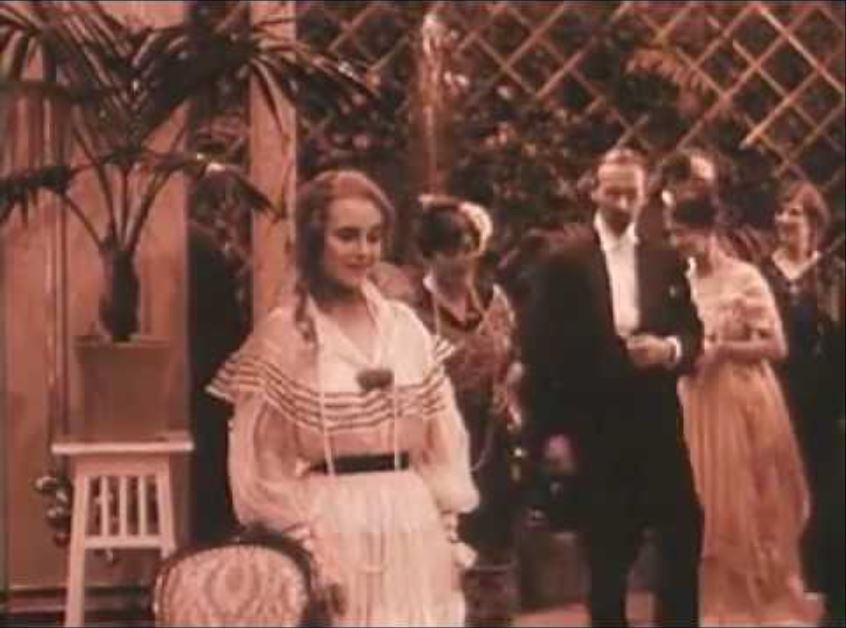
Mary Johnson's portrayal of Inger is nothing short of exceptional. She embodies the quiet strength and profound vulnerability of a woman trapped by her emotions and her societal role. As an assistant, her devotion to Brinck’s work is absolute, yet her personal aspirations are entirely secondary, almost invisible, to him. This predicament, where a woman’s worth and happiness are inextricably tied to the affections of a man, was a common, often tragic, theme in early cinema. One can recall similar portrayals of constrained female agency in films such as The Gilded Cage, where protagonists grappled with societal expectations and personal desires, or even the more explicit struggles for self-determination seen in A Woman's Power. Johnson’s Inger, however, communicates a particularly poignant form of silent suffering, her face a canvas of suppressed longing and eventual heartbreak. Her eyes, often downcast or fixed on Brinck with an intensity he never quite registers, tell a story far deeper than any intertitle could convey.
The supporting cast, including Ivar Kalling and Tekla Sjöblom, contribute effectively to the film's emotional landscape, grounding the central drama within a believable world. Kalling, in particular, may offer a contrasting male perspective, perhaps as a confidant or a more perceptive observer of Inger's plight, further highlighting Brinck's emotional blind spots. Sjöblom’s presence, though potentially brief, would add another layer to the social fabric of the film, perhaps representing societal norms or the broader community witnessing, or being oblivious to, the personal drama unfolding.
Klercker’s visual language is economic yet potent. The often-austere settings of the laboratory, with its gleaming apparatus and ordered chaos, stand in stark contrast to the burgeoning disorder of Brinck’s personal life. The shift in lighting, the framing of two figures – one engrossed in a new love, the other receding into shadow – are all deliberate choices that amplify the emotional stakes. It’s a testament to silent film’s capacity for powerful visual metaphor, where every gesture, every shift in a character's posture, carries immense narrative weight. The very title, Between Life and Death, takes on multiple meanings: the literal life-saving cure, but also the emotional death of a heart broken and the rebirth of another in new romance.
One cannot discuss this film without acknowledging its place in the broader context of Swedish cinema. Georg af Klercker was a prolific director, known for his ability to produce a wide range of films, often with a keen eye for dramatic tension and human psychology. Mellan liv och död stands as a compelling example of his skill in crafting intimate dramas that resonate far beyond their historical context. It’s a film that speaks to the timeless themes of desire, professional dedication, and the often-painful reality of unrequited affection. The narrative’s simplicity allows for a deep exploration of these universal human experiences, making it accessible even to modern audiences accustomed to more complex cinematic structures.
The film also touches upon the inherent loneliness of the pioneering spirit. Dr. Brinck, for all his scientific brilliance, seems isolated in his pursuit, his emotional intelligence lagging behind his intellectual prowess. This internal struggle, the push and pull between a singular, all-consuming passion and the need for human connection, is a powerful undercurrent. It evokes the kind of personal battle depicted in films like Leben heisst kämpfen (Life Means Fighting), where protagonists grapple with internal and external obstacles to achieve their goals, often at great personal cost. Brinck’s fight, however, is not just for a cure, but for a semblance of emotional awareness that seems to elude him until perhaps it is too late for Inger.
In its essence, Mellan liv och död is a masterclass in silent film melodrama. It demonstrates how powerful emotions can be conveyed through subtle glances, body language, and the strategic use of cinematic space. The film’s lasting resonance lies in its unflinching portrayal of the human heart’s fragility and resilience. It reminds us that even in the pursuit of grand scientific breakthroughs, the most profound dramas often unfold in the quiet corners of personal relationships, in the silent sacrifices made, and in the unspoken hopes that sustain or shatter us. Georg af Klercker doesn't just present a story; he presents a mirror to our own desires, our own ambitions, and the indelible marks left by love, whether returned or forever unacknowledged. This is a film that lingers, a testament to the enduring power of early cinema to capture the essence of the human condition with profound simplicity and emotional depth.

IMDb —
1921
Community
Log in to comment.