DbcultAccessing Vault...
5.2/10
Senior Film Conservator
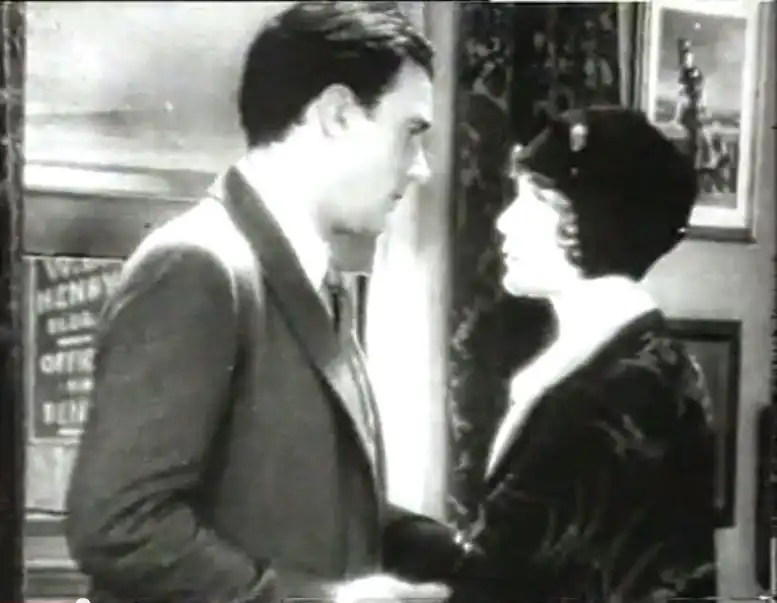
A definitive 5.2/10 rating for a film that redefined the boundaries of cult cinema. Melody of Love remains a cornerstone of transgressive art.
Is Melody of Love worth digging up today? Look, probably not for most people. If you’re a serious student of the early talkie era, or just morbidly curious about cinema’s clumsy adolescence, then maybe. Everyone else? You’ll likely find it a chore, a real test of patience, unless you have a high tolerance for stiff performances and even stiffer sound mixing.
This film, from what feels like a lifetime ago, tries to tell the story of Jack Clark, a songwriter played by Walter Pidgeon, who's completely smitten with a chorus girl named Flo Thompson (Jane Winton). There’s this whole 'boy loves girl, boy goes to war' thing happening, with Jack and his pal Lefty (Tom Dugan) enlisting and heading off to France. It's a simple enough setup, but the execution is where things get... interesting.
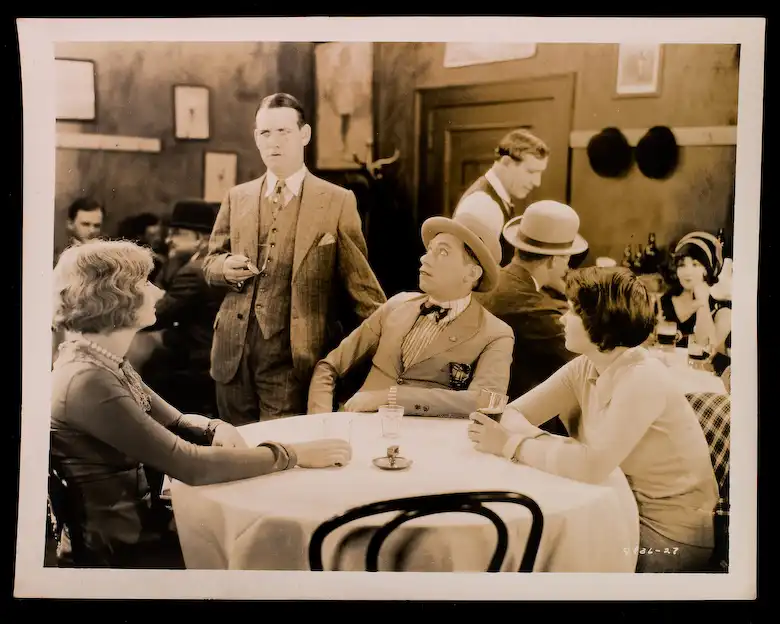
The biggest hurdle, and it’s a big one, is the sound. You can almost feel the actors trying to figure out how to talk into a microphone. There’s a scene early on where Jack is trying to serenade Flo with one of his compositions, and the whole thing feels so unnatural. Pidgeon, who would later become a smooth operator, here sounds almost hesitant, like he’s worried the mic will bite him. His voice seems to drop out at random moments, and the piano accompaniment is either too loud or barely there. It’s not charmingly archaic; it’s just a bit of a mess.
And Flo. Jane Winton gives us a very particular kind of performance that was probably considered 'dramatic' at the time. Every line feels delivered with a capital D. Her reaction shots, especially when Jack tells her he’s going to war, are these long, drawn-out affairs where you see her trying to register emotion. It lingers so long, you start wondering if the editor fell asleep. There’s a moment, right after Jack leaves, where she just stares blankly out a window for what feels like 15 seconds. It’s less poignant and more just… waiting.
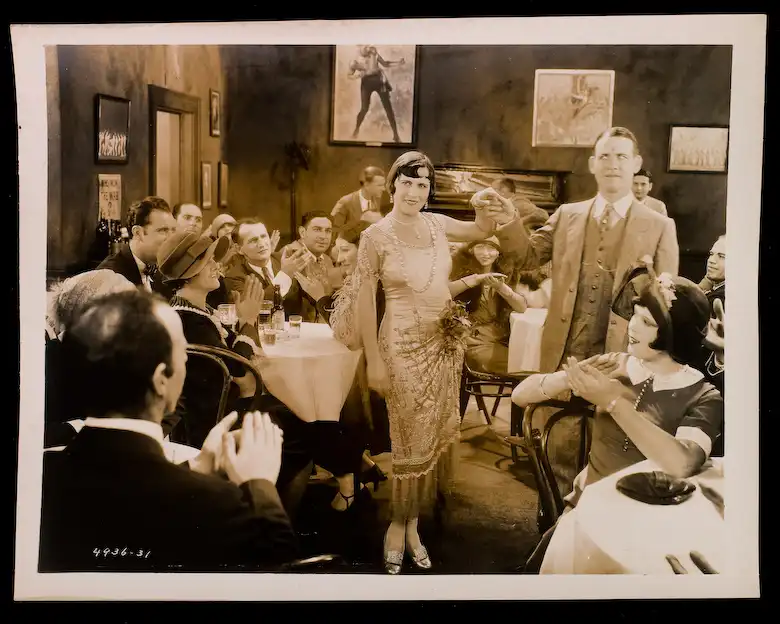
The chemistry between Pidgeon and Winton is a bit like two polite strangers trying to share a small umbrella in the rain. They’re both there, they’re both performing their roles, but there’s no real spark. You don't quite believe this man is so desperately in love he'd write songs for her, or that she'd pine for him from afar. It’s all very much by the numbers.
Then the war kicks in. And oh boy, the tonal shift. One minute we’re in a slightly awkward, albeit earnest, romance, and the next we’re thrust into what looks like a very cheaply staged battlefield. The 'trenches' look like they were dug yesterday in someone's backyard, and the extras in their uniforms move with a strange, almost theatrical stiffness. It’s not gritty; it’s just a bit silly.
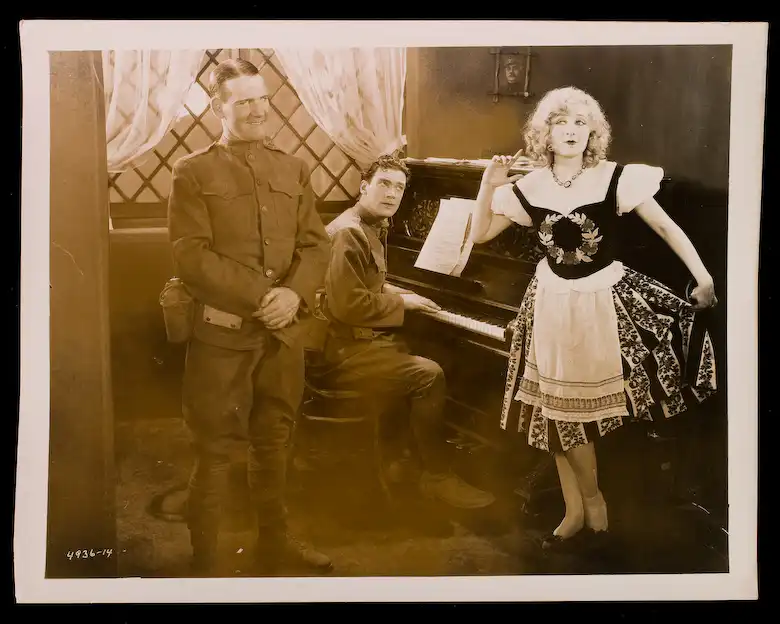
Lefty, Jack’s pal, is clearly meant to be the comic relief, but his gags land with a heavy thud. There's a scene where he tries to flirt with a French local, and the dialogue is so clunky, it’s hard to tell if it’s a language barrier joke or just bad writing. Maybe both. His antics just don't fit the somber backdrop the film is trying to establish. It’s like two different movies stitched together, and not very neatly.
One shot that actually sticks with you, oddly, is a quick pan across a field in France, just before a 'battle' sequence. It's a wide, almost static shot, and for a brief second, you get a sense of the actual landscape, rather than the soundstage. It’s an accidental moment of genuine visual poetry in a film otherwise struggling with its own identity.
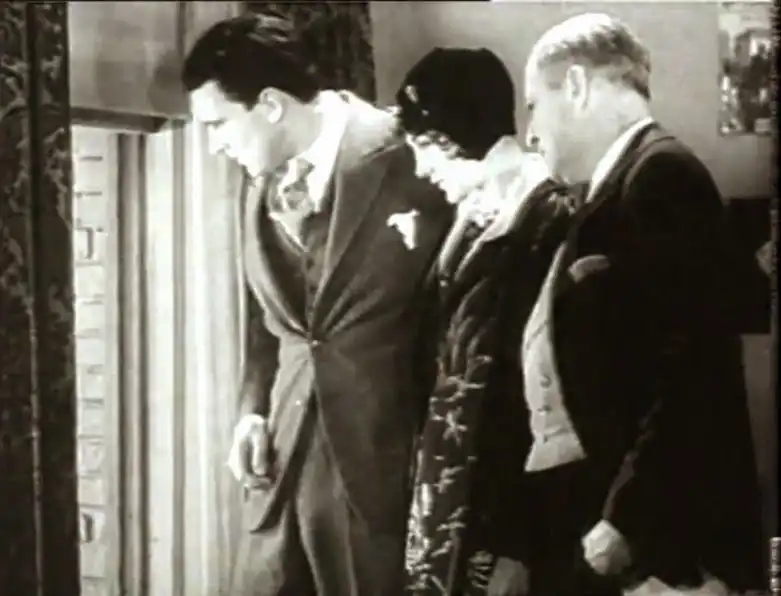
The pacing is a real killer here. Scenes that should be quick exchanges drag on, while others that might have needed more development are rushed. The whole enlistment montage feels like a series of still photos rather than a dynamic sequence. You can almost feel the film trying to convince you that this journey matters, but it’s hard to connect with it when everything feels so stilted.
The 'melody' itself, the songs Jack writes, are fairly forgettable. They blend into the background, not really driving the plot or enhancing the emotion. You’d expect a film titled Melody of Love to have some standout numbers, but they’re just… there.
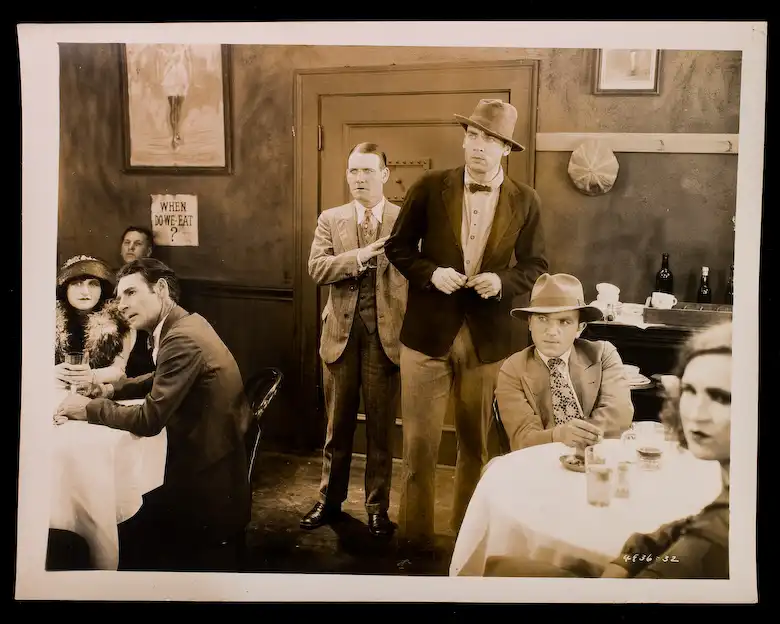
It’s a film that’s more interesting as a historical document than as a piece of entertainment. You watch it and you see the growing pains of a medium figuring itself out. The attempts at seamless transitions, the struggle with sound, the theatrical acting style trying to adapt to the camera. It’s all visible, right there on the screen.
If you prefer your old war movies to actually feel like war, or your romances to have, you know, actual romance, maybe check out something like Guns of Loos for a more straightforward experience, or even a good silent like Fate. Melody of Love is a curio, a film that tried to do too much at a time when cinema was still learning how to walk and chew gum at the same time. It’s earnest, clumsy, and occasionally, unintentionally funny. Not a recommendation for casual viewing, but a fascinating peek behind the curtain for the dedicated.
IMDb —
1924
Community
Log in to comment.