DbcultAccessing Vault...
7.1/10
Senior Film Conservator
A definitive 7.1/10 rating for a film that redefined the boundaries of cult cinema. Qristine remains a cornerstone of transgressive art.
The dawn of Georgian cinema is not merely a chronological marker but a profound aesthetic awakening, crystallized in the 1916 masterpiece Qristine. Directed by Aleksandre Tsutsunava, this film represents a seismic shift from the ephemeral attractions of early moving pictures to a sophisticated, narrative-driven realism that would define the region's artistic output for decades. To watch Qristine today is to witness the birth of a visual language that is simultaneously parochial in its specificity and universal in its tragic resonance. Unlike the stylized melodrama often found in contemporary works like Sumerki zhenskoy dushi, Tsutsunava opts for a raw, almost documentary-like observation of rural life that feels startlingly modern.
The film’s provenance—rooted in the literary naturalism of Egnate Ninoshvili—infuses every frame with a sense of inevitability. Ninoshvili, a writer who chronicled the death throes of feudalism, provides the perfect skeletal structure for a story about a woman crushed by the gears of history. In the pre-revolutionary landscape of Georgia, the individual was often secondary to the collective honor of the village or the economic stability of the household. Qristine captures this tension with a precision that rivals the psychological depth of Jane Eyre, though without the gothic solace of the latter's resolution.
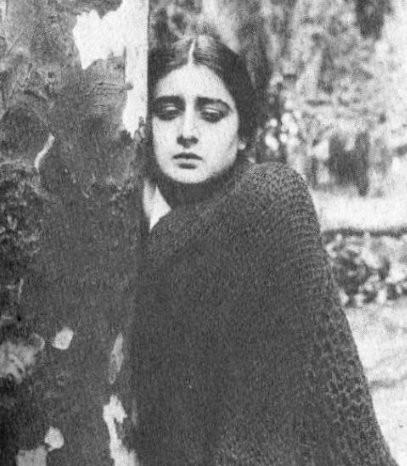
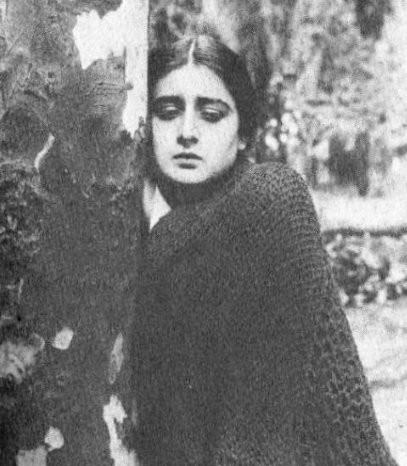
At the heart of this cinematic odyssey is Victori Mataradze, whose portrayal of the title character is a masterclass in silent-era restraint. In an age where theatrical overacting was the norm, Mataradze utilizes her eyes as the primary conduit for the film's emotional weight. Her transformation from a spirited, albeit impoverished, village girl to a hollowed-out specter of her former self is achieved through subtle shifts in posture and gaze. When compared to the performative standards of The Victory of Virtue, Mataradze’s work feels grounded in a lived reality rather than a moralizing allegory.
The supporting cast, featuring stalwarts like Giorgi Pronispireli and Vaso Abashidze, populates a world that feels lived-in and abrasive. These are not mere archetypes; they are the embodiments of a rigid social order. The interactions between Qristine and her family members are particularly agonizing, illustrating how poverty can atrophy even the most fundamental human bonds. The film doesn't shy away from the cruelty inherent in the 'honor' culture of the time, making the protagonist's isolation feel like a physical weight. It shares a thematic kinship with Den Vanærede, yet it avoids the sensationalism of Danish cinema, opting instead for a somber, meditative pace.
Tsutsunava’s use of the Georgian landscape is nothing short of revolutionary. The mountains and valleys of the Caucasus are not merely backdrops; they are active participants in Qristine’s destiny. The vastness of the exterior shots serves to emphasize the protagonist's insignificance in the eyes of the world, while the cramped, dimly lit interiors of the peasant huts create a sense of inescapable doom. This spatial dichotomy is a hallmark of great silent cinema, reminiscent of the atmospheric tension found in Skottet or the isolation of Robinson Crusoe, though localized within a social rather than a geographical wilderness.
The cinematography, despite the technical limitations of 1916, exhibits a keen eye for texture and light. The way the dust hangs in the air during the village scenes or the stark contrast of Qristine's dark shawl against the bleached-out summer fields creates a visual rhythm that is almost musical. There is a sequence involving a wedding that is particularly striking—the festive music (implied by the visuals) and dancing serve as a bitter irony to Qristine’s burgeoning internal tragedy. This juxtaposition of communal joy and individual suffering is a recurring motif that elevates the film from a simple social drama to a profound philosophical inquiry into the nature of empathy.
When examining Qristine alongside international contemporaries, its unique flavor becomes even more apparent. While American films like The Gray Mask were delving into urban mystery and genre tropes, Georgian cinema was birthing itself through a lens of social critique. Even compared to the European explorations of ethics in Fides or the domestic upheavals of Scandal, Qristine possesses a specific, gritty authenticity. It lacks the escapist polish of Business Is Business, choosing instead to wallow in the uncomfortable realities of subsistence living.
The narrative arc of the 'fallen woman' was a staple of early 20th-century cinema, yet Tsutsunava avoids the judgmental tone often found in A Woman's Honor. Instead of moralizing, the film observes. It asks the audience to witness the systemic failures that lead to Qristine's ruin. The betrayal she suffers is not just personal; it is institutional. The church, the family, and the legal system all conspire to ensure her erasure. This thematic density makes the film a precursor to the great Soviet realist works, yet it retains a distinctly Georgian lyricism that is softer and more melancholic than the later agitprop of the 1920s.
The film’s historical context is vital to understanding its impact. 1916 was a year of immense upheaval, with the old world crumbling and the new one yet to be born. Qristine acts as a bridge between these two eras. It critiques the feudal past with the fervor of a revolutionary while maintaining the aesthetic traditions of the 19th-century novel. The 'unhappy destiny' mentioned in the plot summary is not a matter of fate, but of policy. Every obstacle Qristine faces is a man-made construct designed to maintain a status quo that benefits the wealthy and the male.
In many ways, the film is an exploration of The Eternal Strife between the individual soul and the collective will. Qristine’s attempts to find agency—whether through love or work—are systematically thwarted. The film’s conclusion is not a surprise, but a culmination. It is the only logical end for a character who has been stripped of every identifier save for her suffering. This unflinching gaze into the abyss of human cruelty makes Qristine a difficult but essential watch for anyone interested in the evolution of cinematic empathy.
One must also commend the screenplay by Ninoshvili and Tsutsunava. The pacing is deliberate, allowing the audience to steep in the atmosphere of the Georgian countryside. There is a sequence involving a journey that mirrors the existential wandering found in A Tale of the Australian Bush, yet here the 'bush' is a social wilderness of judgment and exclusion. The intertitles are poetic and sparse, giving the visuals the space to breathe and communicate the nuances of the characters' internal states.
The restoration of such a film is a triumph of cultural preservation. To see the grain of the film stock, the flicker of the light, and the tangible textures of the costumes is to be transported back to a pivotal moment in time. The film’s title, simple and singular, places the focus squarely on the human being at the center of the storm. Unlike the sensationalist titles of Den farlige Haand or After Dark, Qristine promises nothing but the truth of a single life, and it delivers that truth with devastating clarity.
As the credits roll (or as the final frame fades into silence), the viewer is left with a profound sense of the transformative power of cinema. Qristine did more than just tell a story; it established a national identity through art. It proved that the Georgian experience—with all its beauty, tragedy, and complexity—was worthy of the silver screen. It paved the way for future masters like Parajanov and Abuladze, setting a high bar for emotional honesty and visual integrity.
Ultimately, Qristine is a testament to the resilience of the human spirit, even when that spirit is finally broken. It is a film that demands to be seen not as a historical curiosity, but as a living, breathing work of art. Its themes of social injustice, the fragility of honor, and the crushing weight of poverty remain as relevant today as they were in 1916. In the pantheon of silent cinema, Qristine stands as a lighthouse, illuminating the dark corners of the human condition with a fierce, unwavering flame. It is a masterpiece of the first order, a harrowing journey through the heart of Georgia, and a foundational pillar of world cinema that continues to resonate with haunting beauty.

IMDb 6.3
1930
Community
Log in to comment.