DbcultAccessing Vault...
Cult Review
Senior Film Conservator
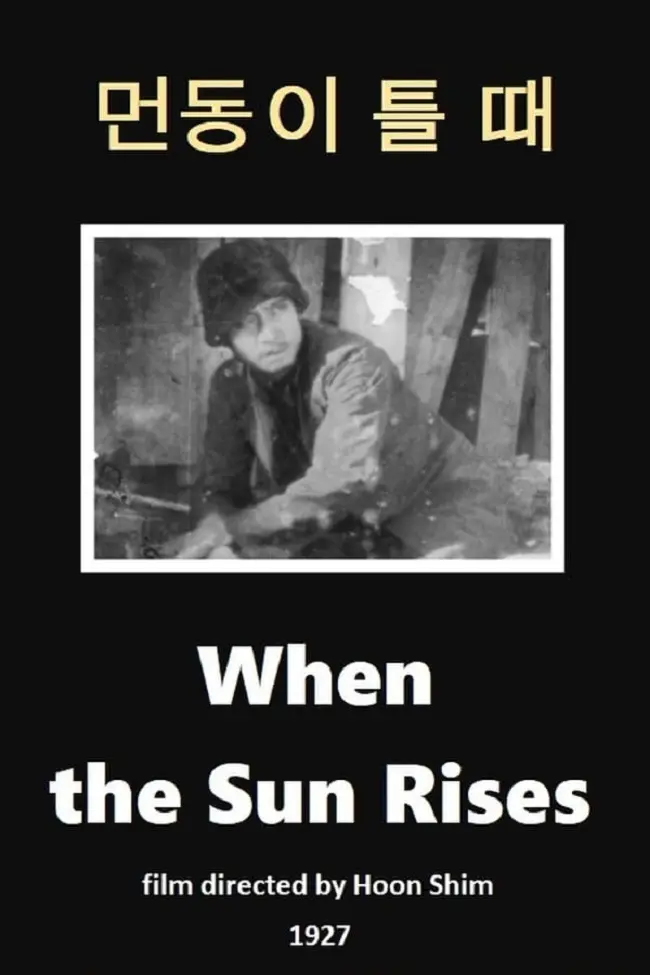
Is Meondong-i teul ttae worth seeking out in the modern era? Short answer: yes, but only if you are willing to trade the polish of contemporary cinema for the raw, haunting echoes of a lost cultural identity. This film is for the cinematic archaeologist and the historian of the human spirit; it is emphatically not for the casual viewer who requires high-octane pacing or digital clarity.
To understand this film, one must look past its age and into its intent. In a landscape dominated by foreign imports and colonial oversight, this production was an act of defiance. It works because it captures a specific, unrepeatable moment of cultural vulnerability. It fails because its melodramatic structure occasionally buckles under the weight of its own symbolism. You should watch it if you want to see the literal birth of Korean cinematic nationalism.
1) This film works because it utilizes the silent medium to convey a level of unspoken grief that dialogue might have cheapened.
2) This film fails because the surviving fragments suggest a pacing that feels glacial to a modern audience unaccustomed to the 'K-melodrama' roots.
3) You should watch it if you have already explored works like Northern Lights and are looking for a more politically charged, East Asian counterpart to early 20th-century social realism.
Hoon Shim was not just a filmmaker; he was a novelist and an activist. In Meondong-i teul ttae, he treats the camera like a pen. The way he frames the protagonist's return to his village is starkly different from the romanticized ruralism seen in God's Country and the Law. Here, the landscape is a character that has been violated. There is a specific shot—or what we know of it from surviving stills and scripts—where the protagonist stands overlooking a valley. He isn't looking at beauty; he is looking at a map of his own displacement.
The acting style of Il-seon Shin and Byeong-Ryong Han avoids the excessive mugging common in 1920s Western comedies like Smith's Baby. Instead, they lean into a heavy, expressionistic stillness. It is a performance of the eyes. When the protagonist realizes his family has moved on, the camera lingers on his face for an uncomfortably long time. It works. But it’s flawed. The stillness sometimes crosses the line into static theater, a common pitfall for directors transitioning from literary backgrounds.
When we look at other films from this era, such as the German production Söhne der Nacht, 1. Teil: Die Verbrecher-GmbH, we see a focus on the gritty urban underworld. Meondong-i teul ttae takes that same grit but applies it to the soul of a nation. While Bismarck was busy building a myth of national power, Hoon Shim was documenting the dismantling of one. It is a fascinating juxtaposition. One film celebrates the state; the other mourns the people.
The cinematography, though limited by the technology of 1920s Korea, attempts a chiaroscuro effect that rivals the moody atmospheres of La p'tite Lili. The use of natural light—specifically the grey, pre-dawn light referenced in the title—serves as a constant visual metaphor. It is never fully dark, but it is never truly bright. This purgatorial lighting choice is perhaps the film's most sophisticated technical achievement.
Yes, for the patient observer.
Meondong-i teul ttae is a ghost. Because much of the original print is lost or fragmented, watching it—or studying its reconstruction—is an exercise in imagination. You are not just watching a movie; you are participating in a recovery effort. If you enjoyed the historical weight of For the Freedom of the World, you will find a similar, albeit more intimate, resonance here. It demands your full attention. It does not provide easy answers.
The pacing of the film is its most controversial element. Unlike the slapstick energy of Hands Up or the fable-like progression of The Fox and the Crow, this film breathes with a heavy, labored chest. Each scene is designed to build a sense of inevitable tragedy. For example, the sequence involving the protagonist's confrontation with his brother is not an action set-piece. It is a slow, agonizing dialogue of gestures and shadows.
This tone is relentless. There is no comic relief. Even A Kentucky Cinderella offered moments of levity amidst its drama, but Hoon Shim refuses to let the audience off the hook. This commitment to misery is what makes the film feel so modern. It anticipates the 'Han' (a unique Korean sentiment of collective grief) that would define much of the nation's later cinema. It is brutal. It is honest. It is exhausting.
Pros:
Cons:
One surprising aspect of Meondong-i teul ttae is how it treats the concept of 'home.' In many Western films of the era, like The Return of Mary, home is a place of restoration. In Hoon Shim's vision, home is a place of further alienation. This subversion of the 'homecoming' trope is what gives the film its lasting power. It suggests that once a person—or a nation—has been broken, there is no simple way to return to the way things were. It is a cynical, yet deeply profound observation for 1927.
Furthermore, the film’s treatment of gender through Jeong-suk Kim’s character is unexpectedly complex. She isn't just a damsel or a victim; she represents the pragmatic survival that the male protagonist is too idealistic to grasp. This creates a friction that is far more interesting than the primary plot of political struggle. It’s a domestic war inside a national one.
Meondong-i teul ttae is a difficult film to love, but an impossible one to ignore if you care about the history of the medium. It lacks the polish of Midst Peaceful Scenes and the adventurous spirit of Not Built for Runnin', but it possesses a gravitas that those films lack. It is a somber, essential piece of the puzzle that is early 20th-century global cinema. While The Battle of Ballots dealt with the politics of the vote, Hoon Shim dealt with the politics of the soul. It is a haunting experience. It is a necessary ghost.
"A film that doesn't just show the dawn, but makes you feel the cold of the night that preceded it."
IMDb 5.9
1935
Community
Log in to comment.