DbcultAccessing Vault...
6.2/10
Senior Film Conservator
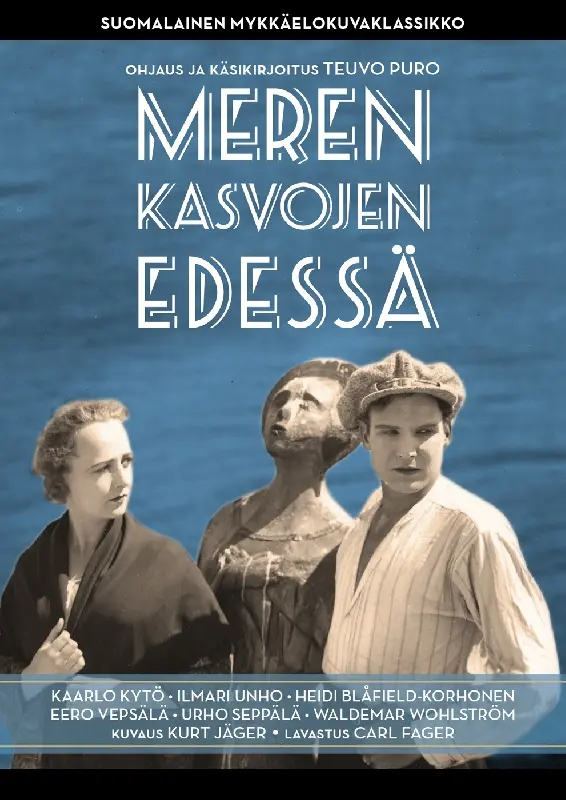
A definitive 6.2/10 rating for a film that redefined the boundaries of cult cinema. Meren kasvojen edessä remains a cornerstone of transgressive art.
Is this film worth watching today? Short answer: Yes, but only if you possess the patience to let a century-old atmosphere seep into your bones. It is a demanding watch that rewards the attentive viewer with a visceral sense of place and a heavy, lingering dread.
This film is for the cinematic historian and the lover of atmospheric Nordic noir who wants to see where the genre's DNA began. It is definitely not for those who require rapid-fire editing, clear-cut heroes, or a soundtrack to tell them exactly how to feel.
This film works because it utilizes the natural landscape of the Finnish coast not just as a setting, but as an oppressive, sentient antagonist that dictates the characters' morality.
This film fails because its middle act leans too heavily on repetitive silent-era pantomime that can feel redundant to a modern audience used to psychological nuance.
You should watch it if you want to experience the raw, unpolished roots of Finnish cinema and see how silence can amplify a family’s internal collapse.
Meren kasvojen edessä (Facing the Face of the Sea) is a film that breathes through its environment. Director Teuvo Puro understands that in a silent medium, the texture of a fisherman’s net or the spray of salt water against a jagged rock conveys more than a title card ever could.
The film captures a specific kind of maritime isolation that feels ancient. Unlike the more adventurous spirit found in The Isle of Lost Ships, Puro’s work is grounded in a bleak, unforgiving reality. There is no escapism here; there is only the sea and the secrets it refuses to wash away.
Take, for example, the scene where the stranger first arrives at the cottage. The camera lingers on the exchange of glances—suspicion from the father, curiosity from the daughter. It is a masterclass in economy. We don't need a back-story; the environment tells us that visitors are rare and usually bring trouble.
Heidi Blåfield delivers a performance that is remarkably controlled for the mid-1920s. While many of her contemporaries in Hollywood were still clutching their chests in fits of theatrical agony, Blåfield uses her eyes to communicate a trapped, domestic desperation.
Her chemistry with Kaarlo Kytö is built on hesitation. There is a specific moment near the shoreline where their hands almost meet, only to be pulled back by the visible weight of her father’s shadow. It is a small gesture, but in this film, it feels like an earthquake.
The father, played by Eero Vepsälä, is a pillar of repressed guilt. He moves with a stiffness that suggests he is physically carrying the secret mentioned in the plot. It is a physical performance that rivals the stoicism seen in The River's End, though with a much darker, more localized edge.
If you are looking for a casual Friday night movie, look elsewhere. Meren kasvojen edessä is a film for the quiet hours. It demands that you turn off your phone and sink into its grainy, monochrome world. The pacing is deliberate, reflecting the slow rhythm of the tides.
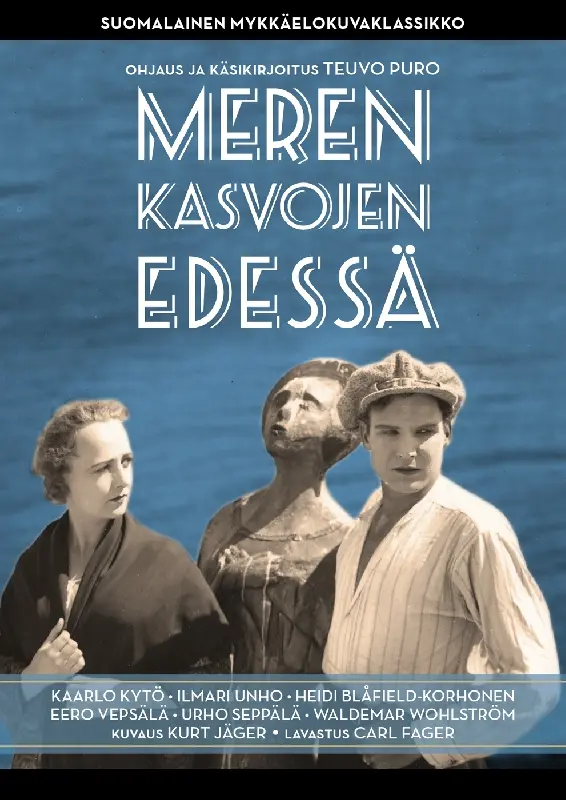
The "terrible secret" at the heart of the story is revealed with a lack of fanfare that might frustrate some. However, this understated approach makes the revelation feel more like a natural erosion than a forced plot twist. It feels honest. It works. But it’s flawed by the standards of modern narrative momentum.
For those who enjoyed the domestic tension of Martha, this film offers a much earlier, much more rugged exploration of how families can become their own prisons. The coastal setting adds a layer of physical danger that heightens the emotional stakes.
The cinematography by Frans Ekebom is the true star here. In an era where lighting was often flat and functional, Ekebom finds depth in the gray Finnish mist. He uses silhouettes to great effect, often framing the characters against the vast, empty horizon.
One particular shot stands out: the daughter standing on a cliffside as a storm approaches. The way the wind whips her clothing while she remains motionless creates a striking visual metaphor for her internal state. It is a moment of pure cinema that transcends the need for dialogue.
Compared to the more staged feel of The Checkmate, Meren kasvojen edessä feels documentary-like in its depiction of coastal life. You can almost smell the fish and the damp wood. This commitment to realism is what keeps the film from feeling like a dated melodrama.
Pros:
The location filming provides an authenticity that studio-bound films of the era lack. The lead performances are surprisingly subtle. The thematic exploration of guilt and isolation remains relevant today.
Cons:
The title cards are sparse, which can lead to confusion during the more complex emotional shifts. The pacing is glacial in parts. The transfer quality of available prints can be hit-or-miss, sometimes obscuring the fine detail of the camerawork.
One unconventional aspect of the film is its treatment of the "stranger." Usually, in these types of stories, the outsider is either a savior or a pure villain. Here, he is a catalyst who is just as flawed and lost as the people he encounters.
He doesn't fix the family; he merely forces them to look at what they’ve been hiding. It’s a cynical take for 1926. It suggests that some things can't be mended, only acknowledged. This lack of a traditional moral arc makes the film feel surprisingly modern.
The film shares a certain gritty DNA with High and Dry, but while that film leans into the humor of its situation, Puro stays firmly in the shadows. There is no relief here, only the cold reality of the sea.
Meren kasvojen edessä is a somber, beautiful, and occasionally frustrating piece of film history. It is a movie that respects the intelligence of its audience, refusing to over-explain its central mystery until the very end. The performances by Blåfield and Vepsälä elevate it above standard silent fare.
While it lacks the polish of contemporary Hollywood silents, it possesses a soul that is uniquely Finnish—stoic, enduring, and deeply connected to the natural world. It is a stark reminder that the most terrifying secrets aren't monsters, but the things we do to the people we love.
If you can handle the silence, the sea has a lot to tell you. It is a flawed work, but its peaks are high enough to justify the journey through its slower troughs. It is a film that lingers in the mind like the smell of salt after a long day at the shore.

IMDb 4.8
1930
Community
Log in to comment.