DbcultAccessing Vault...
5.2/10
Senior Film Conservator
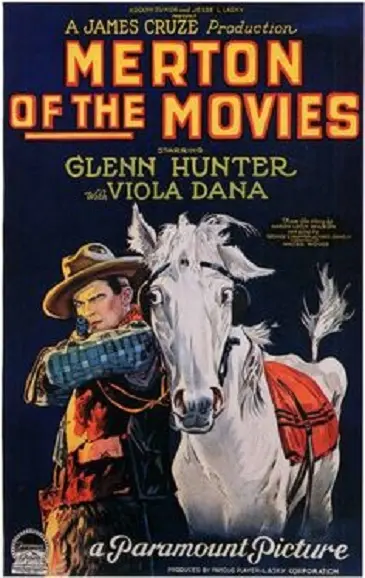
A definitive 5.2/10 rating for a film that redefined the boundaries of cult cinema. Merton of the Movies remains a cornerstone of transgressive art.
In the 1921 silent film Merton of the Movies, Luke Cosgrave assumes the role of Merton Gill, an aspirational thespian enamored with the Western genre. His odyssey, marked by an unrelenting pursuit of stardom, serves as the narrative linchpin, expertly woven with comedic elements and introspective moments.
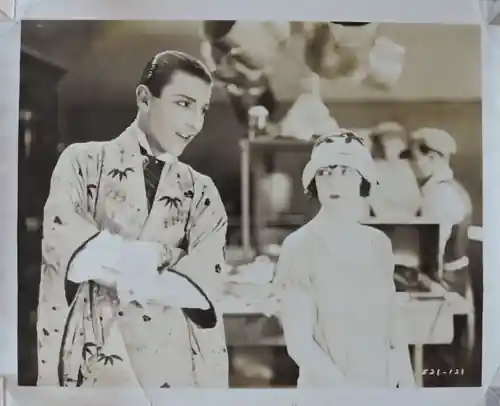
The film's premise, deftly crafted by writers Walter Woods, Marc Connelly, George S. Kaufman, and Harry Leon Wilson, astutely observes the dialectical relationship between Merton's self-perception and the film industry's external validation. This dichotomy births a rich tapestry of character-driven interactions, replete with humor and pathos.
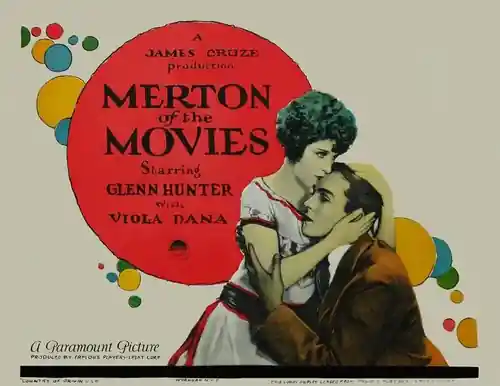
Upon arriving in Hollywood, Merton's distinctive acting style captures the attention of filmmakers, who, rather than catering to his Western hero ambitions, elect to utilize his talents in a manner that subverts his expectations. This pivotal decision catalyzes a series of events that not only challenge Merton's understanding of himself but also offer a scathing critique of the entertainment industry's treatment of aspiring artists.

The supporting cast, including Viola Dana, Eleanor Lawson, and Dorothy Wood, deliver performances that add depth and nuance to the narrative, their characters serving as foils to Merton's journey. The film's use of sea blue and dark orange hues in its cinematography underscores the tensions between Merton's aspirations and the reality of his situation.
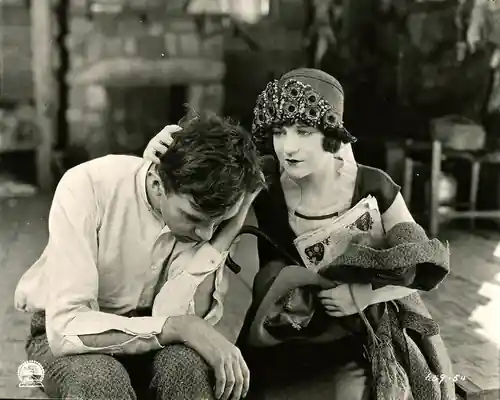
In comparison to contemporaneous films such as The Volunteer and The Red Lane, Merton of the Movies distinguishes itself through its deft handling of comedic timing and its incisive commentary on the performative nature of identity. While films like Pigs in Clover and The Recruit share similar themes of aspiration and disillusionment, Merton of the Movies stands out for its singular focus on the performer's dilemma.

The film's exploration of the tension between artistic ambition and commercial viability resonates with works such as Wife in Name Only and According to Law, which also probe the complexities of identity and societal expectation. However, Merton of the Movies tempers its critique with a yellow-hued optimism, suggesting that even in the face of disillusionment, the performer can find a measure of self-definition.
The performances of the cast, coupled with the direction's sensitive handling of the narrative, yield a cinematic experience that is at once both dark orange-hued in its humor and sea blue-tinged in its introspection. This balance of tones results in a film that not only entertains but also invites reflection on the performative aspects of identity and the capricious nature of fame.
In conclusion, Merton of the Movies is a cinematic treasure that, through its deft narrative and memorable performances, offers a lasting commentary on the human condition. Its exploration of ambition, identity, and the performative nature of self makes it a work of enduring relevance, akin to films like Easy to Make Money and Baronat, which also navigate the complexities of human aspiration.
Ultimately, Merton of the Movies stands as a testament to the power of cinema to illuminate the intricacies of the human experience, its yellow-hued optimism and dark orange-hued humor combining to create a work of lasting significance.
IMDb —
1926
Community
Log in to comment.