DbcultAccessing Vault...
Cult Review
Senior Film Conservator
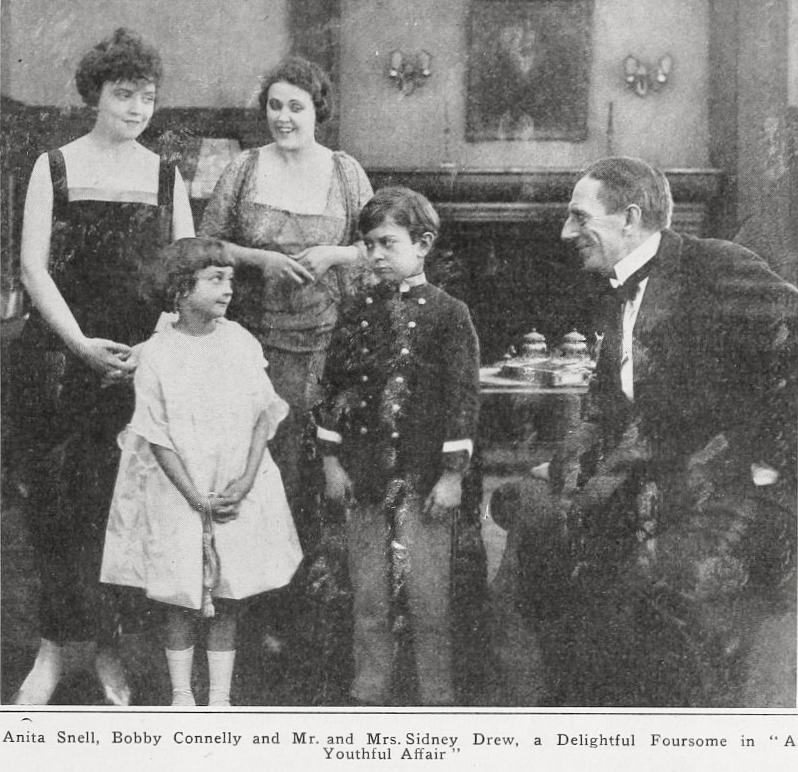
Step into the whimsical world of early 20th-century cinema, and you'll often find yourself enchanted by the particular brand of domestic comedy perfected by Sidney Drew and Mrs. Sidney Drew. Their films, often characterized by their gentle humor, relatable family dynamics, and a keen observational eye for human foibles, stand as delightful time capsules. Among their charming oeuvre, A Youthful Affair emerges as a quintessential example, a brief but potent exploration of nascent affection, generational parallels, and the endearing misunderstandings that bind families. It’s a subtle masterclass in silent storytelling, proving that grand gestures aren't always necessary for profound, or profoundly humorous, impact.
The narrative, penned by the collaborative talents of Mrs. Sidney Drew, Sidney Drew himself, and Tom Bret, unfolds with a disarming simplicity that belies its insightful comedic undercurrents. At its heart is young Bobby Connelly, playing Master Minor, Jr., a boy on the cusp of understanding, or rather, misunderstanding, the complexities of human interaction. His world, for a fleeting moment, becomes entirely consumed by the school's amiable waitress, portrayed with understated grace by Anita Snell. What ignites this youthful passion? A simple, unsolicited extra dish of ice cream. In Bobby's innocent, yet fiercely imaginative, mind, this act of kindness transcends mere service; it becomes an unequivocal declaration of affection, a secret language spoken directly to his burgeoning heart. This singular event propels the entire comedic engine of the film, showcasing how the smallest gestures can balloon into monumental significance within the tender landscape of a child's emotions. It's a testament to the script's cleverness that such a trivial detail can lay the groundwork for a broader, more universal commentary on human nature.
Bobby’s subsequent, earnest confession to his father, Henry Minor, Sr. (Sidney Drew), forms the film’s comedic pivot. Here, the generational mirror is held up, reflecting not just a child’s romantic fantasy, but also the enduring, often comical, patterns of human behavior. Henry, initially amused by his son's fervent conviction, gradually recognizes a familiar pattern, a certain 'chip off the old block' quality in Bobby’s romantic interpretation. It's a moment of profound, yet lighthearted, self-reflection for Henry, as he undoubtedly recalls his own youthful indiscretions and perhaps even his own charmingly misguided romantic pursuits. This realization is the film's true comedic genius – the recognition that while times change, the fundamental mechanics of attraction, misinterpretation, and the often-humorous pursuit of affection remain remarkably consistent across generations. The film doesn't preach; it merely observes, inviting the audience to chuckle knowingly at the shared human experience.
Bobby Connelly, even at a young age, delivers a performance that is both endearing and utterly convincing. His earnestness, the way his eyes light up with perceived reciprocation, and his solemn declaration of love to his father, are all portrayed without a hint of overacting. He embodies the pure, unadulterated belief of a child whose world has been momentarily, yet utterly, transformed by a kind gesture. This authenticity is crucial; without it, the film's central premise might feel forced or overly sentimental. Instead, Connelly grounds the narrative in a believable, charming reality, making Bobby's 'affair' not just a plot device, but a genuine, albeit comical, emotional journey. His performance is a delightful counterpoint to the more seasoned, nuanced portrayal offered by Sidney Drew, creating a dynamic that feels both natural and comically charged.
Sidney Drew, as the patriarch Henry, is the anchor of this domestic comedy. His transition from amused parent to self-aware, nostalgic father is handled with his characteristic subtlety and warmth. Drew had a knack for portraying ordinary men in extraordinary, or at least comically exaggerated, circumstances, and Henry Minor, Sr. is no exception. His reactions are not grand theatrical explosions, but rather a series of internal realizations, communicated through his expressive face and body language – a raised eyebrow, a wry smile, a knowing glance. This understated approach was a hallmark of the Drews’ work, setting them apart from the broader, often more slapstick, comedic styles prevalent in early cinema. Drew’s performance here is not just about delivering laughs; it’s about evoking a sense of shared humanity, a recognition of our own past follies reflected in the innocence of our children. His portrayal lends the film a layer of poignant humor, transforming a simple domestic anecdote into a timeless observation on the human condition.
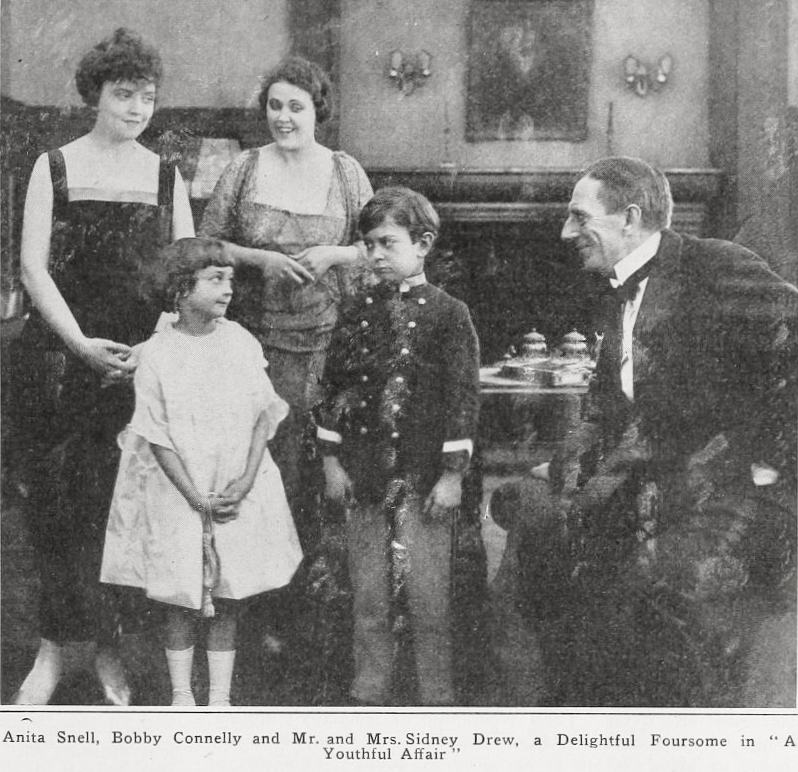
Mrs. Sidney Drew, while not as prominently featured in the immediate comedic thrust of the story, undoubtedly contributed significantly to its overall tone and texture, both in front of and behind the camera. Her presence, often as the grounding force in the family unit, provided a realistic backdrop against which the male protagonists' antics could play out. As a co-writer, her influence on the nuanced, character-driven humor is palpable. The film avoids broad caricatures, instead opting for a more observational style that feels distinctly influenced by the subtle comedic sensibilities she shared with her husband. Anita Snell, as the unassuming waitress, serves as the catalyst for the entire affair. Her performance, though brief, is essential. She embodies the innocent kindness that sparks Bobby's grand romantic delusion, remaining blissfully unaware of the dramatic impact her extra scoop of ice cream has had. Her naturalistic portrayal ensures that the humor stems from Bobby's perception, rather than any intentional flirtation on her part, preserving the film's gentle, innocent tone.
The central theme of A Youthful Affair resonates far beyond its silent film origins: the enduring cycle of human experience. The 'chip off the old block' motif isn't merely a punchline; it's a profound, yet humorous, commentary on heredity, learned behavior, and the often-unconscious ways we mirror our predecessors. It suggests that while the specifics of our lives may differ, the fundamental emotional landscapes – the thrill of a first crush, the pangs of misinterpretation, the awkwardness of burgeoning feelings – remain remarkably consistent across generations. This timelessness is what elevates the film beyond a simple comedic short; it becomes a universal narrative about growing up, seeing oneself in others, and the perpetual, often delightful, human quest for connection, however misguided. The film's gentle exploration of misinterpretation is also key. It's not about malice or deception, but about the innocent, often humorous, ways we project our desires and expectations onto the actions of others, particularly in the realm of romance. This makes the humor empathetic rather than cynical, inviting a shared smile of recognition from the audience.
From a filmmaking perspective, A Youthful Affair exemplifies the strengths of early silent cinema. The direction, likely overseen by Sidney Drew himself, emphasizes clear storytelling through visual cues and character reactions. Dialogue cards are used sparingly, allowing the actors’ expressions and gestures to carry the emotional weight and comedic timing. The pacing is brisk, typical of short films of the era, but never rushed, allowing each comedic beat to land effectively. The screenwriting collaboration between Mrs. Sidney Drew, Sidney Drew, and Tom Bret shines through in the film's tight narrative structure and its ability to derive significant humor from a seemingly trivial premise. They understood the power of observation and character-driven comedy, eschewing broad physical gags for more nuanced, relatable situations. This approach solidified the Drews’ reputation as purveyors of sophisticated domestic humor, a refreshing contrast to the more boisterous slapstick often dominating the screen.
The Drews occupied a unique and cherished niche in the nascent film industry. Their focus on domestic comedies, often starring themselves as a married couple, offered audiences a relatable and comforting escape. While other filmmakers were exploring epic historical dramas like The Woman God Forgot or grand adventures such as Queen of the Sea, the Drews found profundity and humor in the everyday. Their films were the cinematic equivalent of a warm, familiar embrace, a stark contrast to the dramatic intensity found in narratives like The Unpardonable Sin, or the darker explorations of human nature seen in The Devil's Playground. Instead, A Youthful Affair aligns more closely with the charming simplicity of films like The Five Faults of Flo, which also focused on character-driven foibles, albeit with a different moral compass. Their work carved out a space for intelligent, observational comedy that continues to resonate today, influencing countless sitcoms and domestic dramas that followed. They proved that compelling storytelling didn't always require elaborate sets or dramatic plot twists; sometimes, all it took was a well-observed moment of human interaction.
Comparing A Youthful Affair to other films of its era highlights its particular charm. While films like Heart Strings or Tangled Hearts explored the more serious or dramatic facets of romance and emotion, the Drews consistently opted for a lighter, more comedic touch. Even when dealing with themes of affection, their approach was to find the humor in human frailty and misperception, rather than to delve into melodrama. This film, in its depiction of familial bonds and the passing down of traits, shares a thematic thread with narratives exploring parent-child relationships, though often with a much lighter tone than, say, the more serious familial drama of En Søns Kærlighed or the historical friendship depicted in The Chosen Prince, or the Friendship of David and Jonathan. The film's unassuming nature also contrasts with the more overtly thrilling or action-packed features of the time, such as Sporting Life or mystery films like The Gray Mask. Its strength lies in its quiet power to evoke genuine smiles and knowing nods, a testament to the universal appeal of its subject matter.
Ultimately, A Youthful Affair stands as a delightful, albeit brief, cinematic experience. It’s more than just a historical curiosity; it’s a vibrant piece of early film that demonstrates the enduring power of character-driven comedy and universal themes. The collaborative efforts of the writers and the nuanced performances of the cast, particularly Bobby Connelly and Sidney Drew, coalesce to create a film that is both charmingly nostalgic and surprisingly resonant. It reminds us that some aspects of the human experience – the innocent thrill of a crush, the humorous misinterpretations that pepper our interactions, and the subtle ways we echo our parents – are truly timeless. For anyone seeking a glimpse into the sophisticated humor of early silent cinema, or simply a heartwarming chuckle, this film is an absolute treat, a shining example of why the Drews' legacy in film continues to captivate and entertain. It’s a gentle reminder that sometimes, the most profound observations are made not through grand pronouncements, but through the simple, everyday affairs of the heart.
IMDb —
1923
Community
Log in to comment.