DbcultAccessing Vault...
7.4/10
Senior Film Conservator
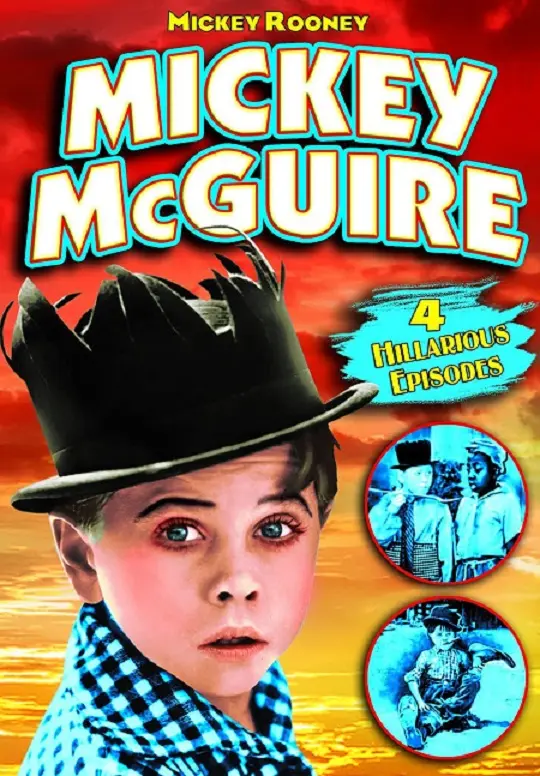
A definitive 7.4/10 rating for a film that redefined the boundaries of cult cinema. Mickey's Battle remains a cornerstone of transgressive art.
Is Mickey's Battle worth revisiting in our modern cinematic landscape? Short answer: yes, but with significant caveats. This early vehicle for the incomparable Mickey Rooney is a fascinating time capsule, a spirited underdog story that will resonate deeply with fans of classic Hollywood melodrama and those interested in the social narratives of the era. However, viewers accustomed to contemporary pacing and nuanced character development might find its broad strokes and predictable structure a challenge.
It's a film for the romantics of cinema history, for those who appreciate the raw, unpolished energy of a young star on the rise, and for anyone who cherishes stories of community resilience against overwhelming odds. It is emphatically not for audiences seeking gritty realism, complex moral dilemmas, or a subversion of traditional narrative arcs. This is classic Hollywood, through and through, for better or worse.
At its heart, Mickey's Battle is a testament to the power of youthful exuberance and the enduring spirit of community. It’s a film that, despite its age, still manages to land a few emotional jabs, largely thanks to its central performance and its earnest thematic concerns. It works. But it’s flawed.
One cannot discuss Mickey's Battle without immediately addressing the force of nature that is Mickey Rooney. Even in his nascent years, Rooney possessed an undeniable charisma, an effervescent energy that threatened to burst off the screen. Here, as the titular Mickey, he embodies the scrappy, hopeful spirit of a generation.
His performance is less about subtle nuance and more about raw, unfiltered emotion. When Mickey’s community center is threatened, Rooney’s face registers a blend of boyish indignation and burgeoning determination. It's a performance built on physicality – the way he bounces on the balls of his feet, the quick, expressive gestures, the wide-eyed earnestness that shifts seamlessly into fierce resolve.
Consider the training montage, however brief, where Mickey first learns the ropes from his grizzled mentor. Rooney doesn’t just mimic boxing moves; he sells the idea of a boy transforming, of discipline slowly carving away at impetuousness. It’s a compelling, if somewhat over-the-top, portrayal that anchors the entire film.
The rest of the cast, including Monty Banks Jr. as Mickey's rival and Delia Bogard in a supportive role, largely serves as a backdrop to Rooney's star power. They perform their roles adequately, fulfilling archetypes without truly inhabiting them. The mentor figure, played by an uncredited actor, offers some moments of quiet dignity, but even he exists primarily to facilitate Mickey's journey, rather than embark on his own.
It's a common criticism of early star vehicles, where the supporting players often feel less like fully-fledged characters and more like narrative props. This is certainly the case here. While their performances are sufficient, they lack the memorable impact that could have elevated the film beyond a mere showcase for its young lead.
The direction in Mickey's Battle is straightforward, prioritizing clear storytelling over stylistic flourish. The camera largely remains a passive observer, allowing the action and Rooney's performance to drive the narrative. This isn’t a film attempting to redefine cinematic language; it's content with delivering a heartfelt story in an accessible manner.
However, there are moments where the direction shines through its simplicity. The framing of the final boxing match, for instance, uses tight close-ups on the fighters’ faces juxtaposed with wider shots of the anxious crowd. This effectively conveys the tension and stakes of the moment, making the audience feel every punch and every gasp.
The cinematography, while not groundbreaking, is functional and often evocative of its period. The black and white palette, rather than feeling restrictive, lends a certain authenticity to the Depression-era setting. Shadows are used to good effect in the grittier scenes of the neighborhood, hinting at the hardships faced by its residents, while the boxing ring itself is often bathed in a stark, almost theatrical light, elevating the arena to a place of destiny.
One particularly effective shot involves the slow pan across the faces of the community members watching Mickey's fight. Each face tells a story of hope, fear, and collective investment. It’s a simple technique, yet it powerfully communicates the weight of expectation on Mickey’s young shoulders. This is where the film's visual language truly aligns with its thematic core.
Compared to more experimental films of the era, such as the German Expressionist works like Mania. Die Geschichte einer Zigarettenarbeiterin, Mickey's Battle adopts a decidedly realist approach. It aims for direct emotional impact rather than abstract visual poetry. This choice makes it incredibly accessible, but perhaps limits its artistic longevity in certain critical circles.
The pacing of Mickey's Battle is surprisingly brisk for a film of its time, especially given its relatively straightforward plot. It moves with a steady, almost rhythmic ascent, building momentum towards the inevitable climactic fight. The early scenes establish Mickey's character and the community's plight with efficiency, avoiding unnecessary exposition.
There are no meandering subplots here. Every scene, every interaction, feels geared towards pushing Mickey closer to the ring. This directness can be a strength, maintaining audience engagement, but it also occasionally sacrifices opportunities for deeper character exploration or more complex narrative twists. It’s a film that knows exactly where it’s going and rushes to get there.
The tone oscillates between earnest drama and heartwarming sentimentality. It never descends into bleakness, even when depicting poverty, instead choosing to emphasize resilience and hope. This optimistic outlook is characteristic of many films of the era, offering a form of escapism and reassurance to audiences facing real-world hardships.
However, this unwavering optimism can sometimes feel a little too saccharine. The villain, for example, is so cartoonishly evil that any genuine threat he poses is diluted. A touch more ambiguity, a hint of a grey area, might have lent the narrative more dramatic weight. It's an interesting contrast to the darker, more cynical undertones found in later films like The Woman Under Cover, which explored moral complexities with greater depth.
Beyond the boxing gloves and the youthful ambition, Mickey's Battle is a poignant exploration of community versus unchecked capitalism. The threat to the youth center isn't just a plot device; it's a symbol of the larger struggles faced by working-class neighborhoods during the economic downturn of the 1930s. The film champions collective action and mutual support as the antidote to individual greed.
Mickey's fight isn't merely for personal glory; it's a proxy battle for his entire community's survival. This elevates the stakes beyond the personal, imbuing the boxing ring with a surprising amount of socio-economic significance. It’s a powerful, if somewhat simplistic, message that still resonates today in discussions about gentrification and social inequality.
The film also touches upon themes of mentorship and finding purpose. Mickey's relationship with the former boxer, a man who has lost his way, is a beautiful, understated aspect of the narrative. It highlights how guidance and belief can reignite a spark in both the mentor and the mentee. This particular dynamic is one of the more genuinely affecting elements of the film, offering a quiet counterpoint to the more bombastic boxing sequences.
Yes, for specific audiences. If you appreciate classic Hollywood narratives, enjoy early Mickey Rooney performances, and are drawn to simple yet earnest underdog stories, Mickey's Battle offers genuine charm. Its historical context alone makes it a valuable watch for film historians or those interested in the social commentary embedded in Depression-era cinema. It’s a spirited, if unsophisticated, piece of film history that continues to entertain on its own terms.
Mickey's Battle is not a forgotten masterpiece, nor does it attempt to be. What it is, however, is a vibrant and undeniably charming piece of filmmaking that serves as a vital document of early Hollywood and the nascent career of one of its most dynamic stars. Mickey Rooney, even in his youth, commands the screen with an infectious energy that papered over many of the film’s narrative shortcomings. His performance alone is worth the price of admission, or rather, the click of the play button.
While the plot may be as straightforward as a left hook, and the villain as subtle as a brick, the film's heart is firmly in the right place. It’s a story about fighting for what’s right, for your community, and for a future that seems just out of reach. It’s a narrative that, despite its age, still possesses a certain timeless appeal.
For those who appreciate the unvarnished charm of early cinema and the sheer force of personality that was Mickey Rooney, Mickey's Battle delivers a solid, if not spectacular, punch. It’s a film that resonates with a simpler, more earnest era, and while it won’t redefine your understanding of cinema, it will certainly entertain and perhaps even inspire a quiet cheer for the underdog. Go in with appropriate expectations, and you'll find a spirited fight worth watching.
IMDb 6.7
1933
Community
Log in to comment.