DbcultAccessing Vault...
7.7/10
Senior Film Conservator
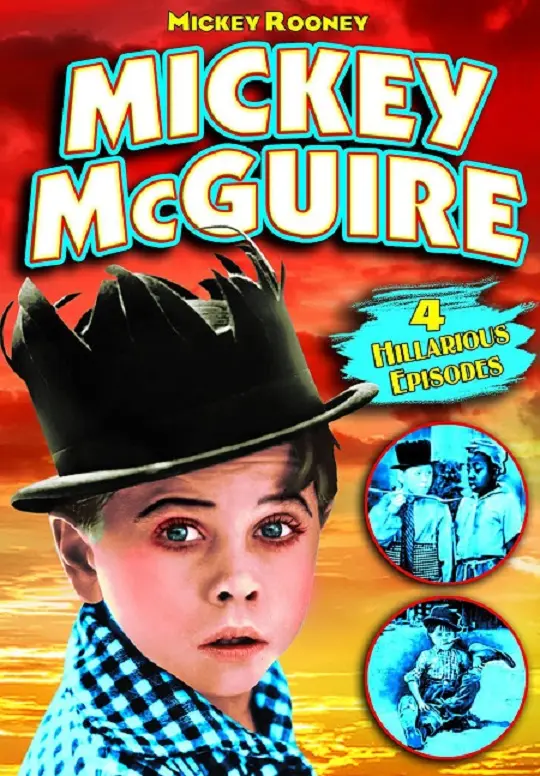
A definitive 7.7/10 rating for a film that redefined the boundaries of cult cinema. Mickey's Pals remains a cornerstone of transgressive art.
Is Mickey's Pals a forgotten masterpiece of the short-form era? Short answer: no, but it is an essential artifact for anyone obsessed with the evolution of the child star.
This film is for the cinematic archaeologist and the Mickey Rooney completist; it is decidedly not for those who demand high-fidelity sound or sophisticated, modern pacing. It sits in a strange purgatory between the silent era’s physical grace and the talkies' verbal wit, often leaning into the former with a loud, clattering intensity.
1) This film works because of Mickey Rooney’s terrifyingly high energy levels, which anchor even the most nonsensical plot points.
2) This film fails because the sound editing is abrasive and the narrative structure is virtually non-existent, even by 1930s short standards.
3) You should watch it if you want to see the exact moment a young Joe Yule Jr. transformed into the powerhouse known as Mickey Rooney.
Mickey's Pals is best viewed as a historical document of Mickey Rooney's early screen presence. It showcases the transition of vaudeville-style comedy into the short film format. For fans of 1930s cinema, it provides a gritty alternative to the more polished Our Gang series. It is a raw look at the 'Toonerville' aesthetic that dominated early comic strips.
Watching Mickey Rooney in this short is like watching a live wire dance in a puddle. There is a frantic, almost desperate need to entertain that permeates every frame he occupies. Unlike the more subdued child actors of the era, Rooney isn't just playing a character; he is colonizing the screen. In the pet show sequence, his ability to command a group of rowdy children and animals simultaneously is a precursor to the leading man he would become at MGM.
It is fascinating to compare his work here to later efforts like Keep Smiling. In the latter, the polish of the studio system is evident, but in Mickey's Pals, we see the rough-cut diamond. He is loud. He is aggressive. He is occasionally annoying. But he is never, ever boring. This is the performance of a child who knew his career depended on being the loudest person in the room.
The film captures a specific type of American childhood that has since vanished. It’s a world of dirt lots, oversized caps, and a complete lack of parental supervision. Rooney’s Mickey McGuire is the king of this wasteland, and his performance reflects the survivalist instincts of a Depression-era kid. He doesn't just act; he survives the scene.
While Rooney is the sun around which this short orbits, the supporting cast provides necessary, albeit chaotic, texture. Billy Barty, a legend in his own right, appears here in his infancy. His physical comedy is already remarkably advanced. There is a moment where Barty’s character interacts with a goat that feels more genuinely funny than any of the scripted dialogue. It is pure, unadulterated slapstick that reminds us why Barty remained a Hollywood fixture for decades.
Jimmy Robinson as Hambone offers a performance that is, admittedly, a product of its time. However, looking past the dated tropes, his comedic timing is sharp. He plays off Rooney with a weary cynicism that balances Mickey’s manic optimism. This dynamic is similar to the ensemble work seen in Bowled Over, where the group's chemistry outweighs the individual gags.
The presence of Delia Bogard as Tomboy Taylor adds a necessary layer of gender-defying grit. She isn't there to be the 'girl' in the group; she is there to be one of the pals. Her participation in the more physical stunts is a testament to the egalitarian nature of these low-budget shorts. They didn't have time for delicacy.
Technically, Mickey's Pals is a mess. But it is an interesting mess. The direction by Jesse Duffy feels like he was just trying to keep the camera pointed at the action before it moved out of frame. The cinematography is functional, lacking the artistic ambition found in something like The Napoleonic Epics, but it captures the dusty, sun-bleached reality of its locations.
The pacing is where the film truly struggles. It moves in fits and starts. A scene will build momentum, only to be cut short by a jarring transition or a joke that overstays its welcome. It lacks the rhythmic precision of the Hal Roach shorts. However, this lack of polish gives it a 'street' feel that is missing from the more corporate child-star vehicles of the 1940s.
Consider the sound design. In 1934, capturing clear audio on a location like a dusty backlot was a nightmare. You can hear the struggle in every line of dialogue. There’s a constant hiss and pop that creates an unintended layer of atmosphere. It’s loud. It’s messy. It’s Rooney. It feels like a transmission from a lost world.
If you are looking for a laugh-out-loud comedy that holds up by modern standards, you will be disappointed. The humor is broad, the stereotypes are present, and the plot is thin. However, if you are interested in the history of the Hollywood star system, it is indispensable. It is a bridge between the vaudeville stage and the silver screen.
Compared to other shorts like A Social Sleuth, Mickey's Pals feels more grounded in a specific reality. It doesn't try to be a miniature feature film; it is content being a snapshot of a moment. It is a minor work, but a revealing one. It shows us that Mickey Rooney didn't just become a star overnight; he fought for it in the dirt of the Toonerville backlots.
"Mickey's Pals is not a film you watch for the story; you watch it to see a young legend refuse to be ignored by the camera."
Pros:
Cons:
Mickey's Pals is a loud, clattering piece of cinematic history that survives on the sheer willpower of its cast. It is flawed. It is dated. It is often exhausting. Yet, there is a pulse to it that many more polished films lack. It represents the end of an era for the Mickey McGuire series and the beginning of a legacy for its star. If you can stomach the technical shortcomings, you'll find a fascinating glimpse into the machinery of early Hollywood comedy. It isn't a masterpiece, but it is a vital footnote. Watch it for Rooney, stay for Barty, and appreciate it as a relic of a time when movies were still figuring out how to talk.
IMDb 5.3
1926
Community
Log in to comment.