DbcultAccessing Vault...
Cult Review
Senior Film Conservator
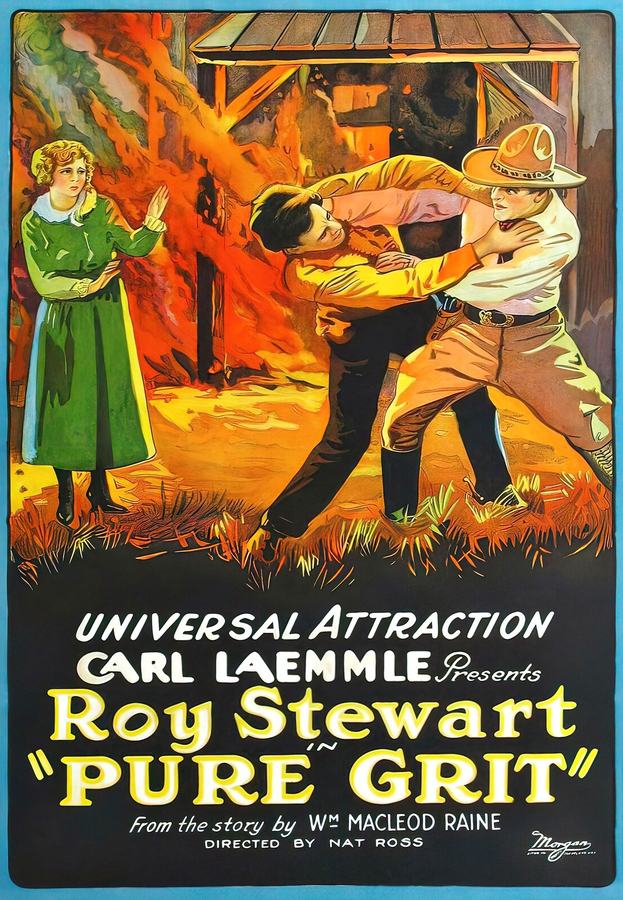
The silent era of the American Western is frequently dismissed as a monolithic parade of white-hatted heroes and two-dimensional villains, yet Pure Grit (1923) stands as a defiant rebuttal to such reductive historiography. Directed with a keen eye for atmospheric tension, this film eschews the pastoral simplicity of its contemporaries to delve into a narrative of profound psychological displacement. It is not merely a chase film; it is a study of the imposter—a theme that resonates with the same dark gravity found in early dramatic works like The Wildcat or the deceptive layers of The Brass Check.
At the heart of the conflict is Jere Austin’s Jim Kemp, a character whose villainy is predicated not on brute force, but on the grotesque violation of the domestic sphere. By murdering Stella Bolling’s brother and subsequently donning his persona, Kemp weaponizes Stella's trauma. This narrative gambit elevates the stakes beyond mere cattle rustling or border skirmishes; it touches upon a primal fear of the stranger-within. Esther Ralston, portraying Stella, delivers a performance of nuanced fragility that slowly hardens into the titular 'grit.' Her role here offers an intriguing contrast to the archetypal heroines of the period, perhaps echoing the emotional complexity seen in Poor, Dear Margaret Kirby.
Roy Stewart enters the frame as Bob Evans, a Texas Ranger who embodies the stoic law of the land. Stewart’s physicality is imposing, yet he avoids the histrionics that sometimes plagued silent-era protagonists. His pursuit of Kemp is methodical, a slow-burn escalation that mirrors the vast, unforgiving landscapes of the borderlands. The film utilizes the rugged topography not just as a backdrop, but as a silent witness to the unfolding moral crisis. The cinematography captures the isolation of the frontier with a starkness that reminds one of the visual grandeur found in The Ten Commandments, though on a more intimate, visceral scale.
The inclusion of a rustler band provides the necessary kinetic energy for the second act. These anonymous outlaws serve as the chaotic foil to Evans’ ordered pursuit. The action sequences are choreographed with a frantic, unpolished realism that distinguishes Pure Grit from the more theatrical Westerns of the early 1910s. There is a sense of genuine peril here, a desperation that feels more aligned with the gritty realism of The Spanish Jade than the romanticized adventures common to the genre.
Writers Isadore Bernstein and William MacLeod Raine demonstrate a sophisticated grasp of narrative economy. Every title card serves a purpose, every lingering close-up builds the dread of Kemp’s impending exposure. The film’s pacing is relentless, driving toward a climax that is both literally and figuratively explosive. The burning cabin sequence is a triumph of early special effects and stunt work. As the flames consume the structure, they also consume the lies Kemp has woven. It is a moment of high melodrama that manages to feel earned rather than manufactured, much like the tragic inevitability of Romeo and Juliet (1916).
The rescue of Stella from the inferno by Evans is the quintessential 'hero’s moment,' but in the context of Pure Grit, it feels like a restoration of the natural order. The fire acts as a crucible, stripping away the deception and leaving only the fundamental truth of the characters. This use of environmental hazards to mirror internal turmoil is a technique also explored in European cinema of the time, such as in Der Eisenbahnkönig, where industrial machinery serves a similar thematic purpose.
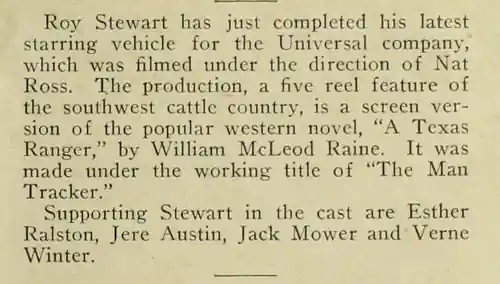
Wesley Barry and Jack Mower provide solid supporting turns, fleshing out a world that feels inhabited and worn. However, it is the chemistry—or rather, the chilling lack thereof—between Austin and Ralston that dictates the film’s tone. Austin’s ability to pivot between the 'protective brother' and the 'hunted killer' is a masterclass in silent screen acting. He doesn't rely on mustache-twirling tropes; his villainy is found in the stillness of his gaze. This subtlety is often overlooked in discussions of 1920s cinema, where the broad gestures of films like Little Miss Happiness often set the standard for audience expectations.
In many ways, Pure Grit shares a thematic DNA with The Man Who Found Himself, though it approaches the concept of self-discovery through the lens of violent external conflict rather than internal reflection. The film posits that true character is only revealed when the veneer of civilization is stripped away, leaving only the raw instinct for survival and the unyielding pursuit of justice.
Technically, the film exhibits a remarkable fluidity. The transition from the claustrophobic interiors of the Bolling home to the expansive, dust-choked trails of the border is handled with a sophisticated understanding of spatial dynamics. The editing, particularly during the Ranger’s route of the rustlers, utilizes cross-cutting to build a sense of simultaneous action that was quite advanced for its time. This rhythmic editing style recalls the intensity of La rafale, emphasizing the speed and danger of the chase.
One cannot discuss Pure Grit without acknowledging its place in the evolution of the Western hero. Roy Stewart’s Bob Evans is not a knight-errant; he is a professional. His motivations are grounded in duty rather than personal vendetta, a shift toward the procedural Western that would eventually dominate the genre in the decades to follow. This professionalized heroism can be seen as a precursor to the legalistic dramas of the era, such as According to the Code.
The final image of the film—the smoldering ruins of the cabin against the dawn—serves as a powerful metaphor for the end of the frontier's lawless era. The 'pure grit' of the title refers not just to the physical toughness required to survive the desert, but the moral fortitude required to see through the deception of the wicked. It is a film that demands much of its characters and, by extension, its audience. It avoids the easy sentimentality of Father and Son, opting instead for a resolution that feels hard-won and permanent.
For the modern viewer, Pure Grit offers a fascinating window into a transitional moment in cinema history. It possesses the raw energy of the early silents while hinting at the psychological complexity of the noir-Westerns that would emerge twenty years later. It is a work of significant craft, anchored by performances that transcend the limitations of the medium. Whether analyzed as a genre piece or a psychological thriller, it remains a compelling testament to the power of visual storytelling. Its exploration of identity and betrayal is as resonant today as it was in 1923, proving that while the technology of film may change, the human stories of deception and redemption remain eternal. Like the complex puzzles of The Catspaw or the moral quandaries of The Clue, Pure Grit invites us to look beneath the surface and confront the uncomfortable truths of the human condition.
Ultimately, the film succeeds because it understands that the greatest threat on the frontier wasn't the elements or the indigenous populations, but the capacity for man to deceive his neighbor. In the character of Jim Kemp, we see the ultimate frontier nightmare: the man who kills the brother and steals the home. In Bob Evans, we see the only possible remedy: a man of unshakeable duty and pure grit. This is a essential viewing for any serious student of the Western, a film that manages to be both a thrilling adventure and a somber reflection on the nature of truth in a world built on shadows and dust. It stands tall alongside other examinations of ego and vanity like Conceit, reminding us that the masks we wear are often our own undoing.
IMDb —
1925
Community
Log in to comment.