DbcultAccessing Vault...
5.2/10
Senior Film Conservator
A definitive 5.2/10 rating for a film that redefined the boundaries of cult cinema. The Dancin' Fool remains a cornerstone of transgressive art.
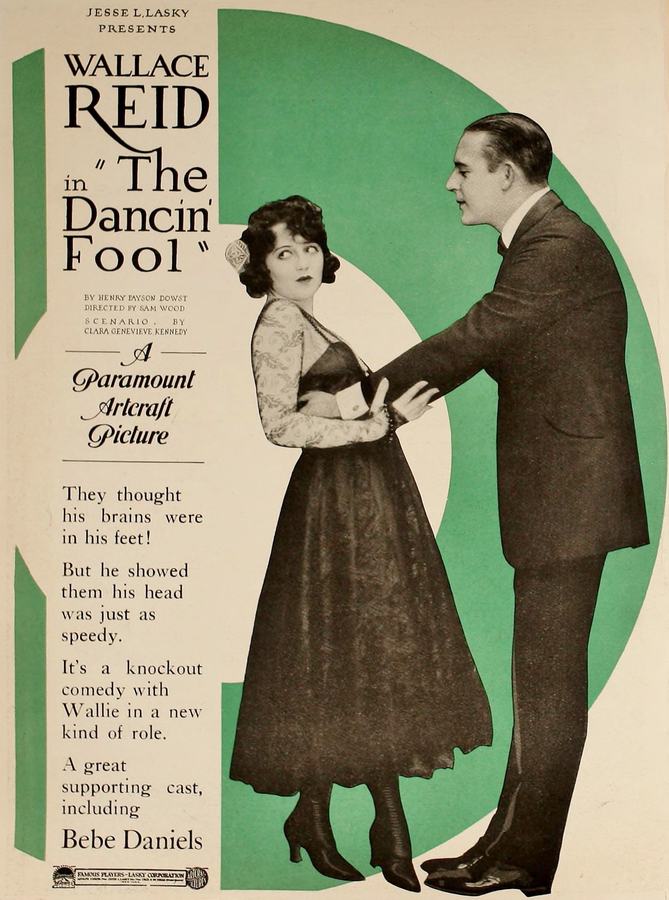
Broadway chandeliers once dripped with enough wattage to bleach ambition itself, yet few beams lingered on the lanky silhouette of Sylvester Tibble—the hero of The Dancin' Fool. Emerging in March 1922, this Paramount silent arrived when newspapers still hashed out whether jazz was sedition or salvation. Director Sam Wood, never shy about marrying populist sentiment to nimble-footed spectacle, treats the jug business like a church relic and the cabaret like a revival tent, letting each realm seep into the other until commerce and choreography share a single heartbeat.
Sylvester’s odyssey begins not with a trumpet flare but with the plop of wet clay on a wooden turntable. Uncle Enoch’s pottery shed reeks of vinegar glazes and ancestral disappointment; the camera, almost embarrassed, peers through a haze of dust motes as the protagonist counts six crumpled singles—his weekly wage—like relics of a distant saint. That miserly paycheck is a passport nowhere until Junie Budd sashays in, a cornucopia of legs and laughter who could sell sand in the Sahara. She doesn’t merely teach steps; she installs electricity in Sylvester’s vertebrae.
The ensuing rehearsal montages—cross-fades between moonlit rooftops and mirror-walled dance studios—feel decades ahead of their time. A solitary violin bleeds into a full brass section, and suddenly the film is intoxicated on its own momentum. Wood overlays close-ups of tapping shoes with macro shots of ticker-tape, hinting that every shuffle-ball-change will later transmute into revenue. It’s visual alchemy, turning terpsichorean sweat into stock-market gold.
When Harkins, the corporate vulture, circles the jug works, the screenplay’s ironic tension tightens: the same feet that fox-trot across Broadway must now stampede through ledgers and purchase orders. The climax isn’t a dance-off but a board-room pirouette where Sylvester, once mocked as a “dancin’ fool,” unleashes a ledger-demain of modern sales tactics—catalogs, radio ads, even proto-influencer endorsements—to rescue the firm. Capitalism itself does a back-flip, and the film exhales a subversive whisper: art and acumen can share the same stage.
Wallace Reid, matinee idol nearing the twilight of his career, injects Sylvester with a concoction of hayseed awe and urban hunger. Watch his pupils dilate when Junie extends her hand—those eyes are silent film projectors themselves, bewildered yet voracious. Reid’s physical comedy, all elbows and kneecaps at first, gradually tightens into feline precision; it’s a transformation mapped on the sinews, not the script pages.
Bebe Daniels, as Junie, radiates the confident languor of someone who has already memorized tomorrow’s headlines. She punctuates her taps with micro-grins—those half-second smirks that assure the audience she’s always one beat ahead of the orchestra. In the quieter sequences, when Junie rests her chin against a battered piano, Daniels lets vulnerability seep through the kohl, hinting that professional merriment extracts its pound of flesh.

The supporting ensemble operates like a Greek chorus dipped in bootleg gin. Tully Marshall’s Uncle Enoch is a growling anachronism, his spectacles sliding down the bridge of contempt; Ruth Ashby provides flapper counsel, popping moral quandies like bubble gum; while Raymond Hatton’s bean-counter physicality furnishes the film with its best sight-gags—watch him calculate losses with an abacus that clacks in sync with off-screen tap shoes.
Cinematographer Alfred Gilks, years before he would glamorize Dietrich, treats chiaroscuro like a dance partner here. In the cabaret scenes, he carves the space with venetian-blind shadows, letting shafts of light slice across Bebe Daniels’s limbs so that every high-kick seems to sever a beam. Conversely, the jug factory sequences bloom under diffused daylight, the airborne clay dust forming a humble nimbus around workers—an industrial Annunciation.
Wood’s camera occasionally pirouettes itself: a 360-degree pan across a Broadway rooftop as neon signs stutter to life, advertising everything from cigarettes to Turkish baths. The shot is so modern you half-expect to see pixelated billboards. It’s a reminder that the Roaring Twenties were already globalized, already dizzy with information overload; we just swapped bulbs for LEDs.
The editing rhythm mimics tap phrasing—short bursts, then sustained long takes where tension percolates. A match-cut from a dancer’s elevated leg to a crane hoisting clay jugs makes the manufacturing process look balletic, collapsing the Marxist dichotomy between labor and leisure. One could read the entire film as capitalist propaganda, or as socialist allegory where the worker seizes the means of production through terpsichorean solidarity. The ambiguity is delicious.
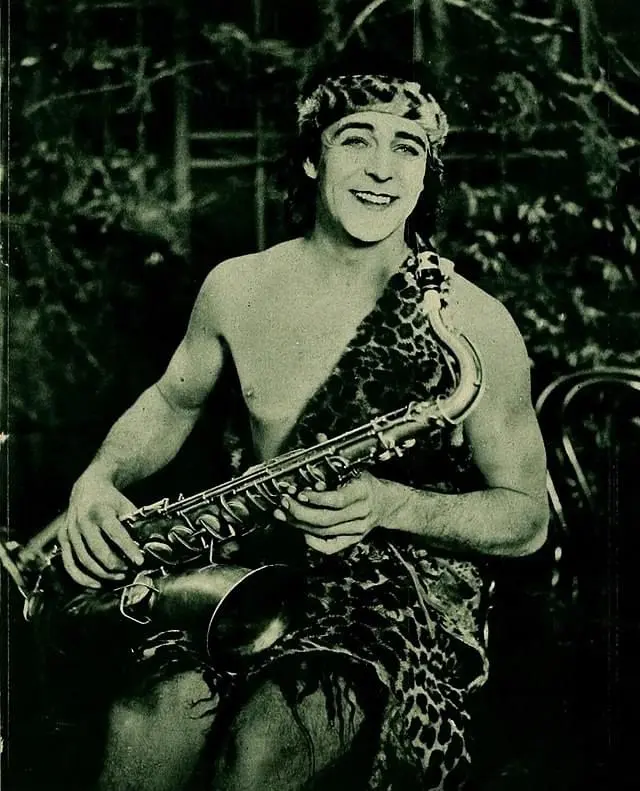
Original 1922 screenings boasted a compiled score of Irving Berlin fragments, novelty piano, and on-stage saxophonists who might riff off the audience’s applause. Today, most revival houses pair the film with new compositions. I caught a 16 mm print at Brooklyn’s Spectacle Theater accompanied by a three-piece electro-chamber ensemble: cello loops, analog synth arpeggios, brushed snare. The collision of 1920s footwork with 21st-century glitch beats revealed how porous the movie truly is; its narrative vertebrae can snap into any musical socket.
On a diegetic level, the absence of spoken dialogue amplifies bodily sound-effects—tap plates on wood, the metallic hiss of a factory press, the pneumatic sigh of subway brakes. The viewer’s brain writes its own libretto. That participatory hallucination is why silent cinema survives: it’s half film, half séance.
Compare Sylvester’s arc to the techno-dorks turned billionaires in The Cloud or the blind sculptor in When Love Was Blind: each protagonist weaponizes a marginalized skill to storm the ramparts of capital. The template is perennial—outlier talent plus technology (or in this case, choreography) equals systemic disruption. Yet The Dancin' Fool predates them by a century, reminding us that disruption isn’t a Silicon Valley invention; it’s encoded in American mythos like Manifest Destiny or the Charleston.
Gender dynamics, meanwhile, tiptoe along a razor. Junie Budd is mentor, muse, and marketable commodity rolled into one. She engineers Sylvester’s metamorphosis, yet the film ends with her assuming the marital tiara, potentially neutralizing her autonomy. Still, Bebe Daniels’s performance is too mercurial to be trapped in a domestic cage; even in the final shot, as she descends a factory staircase now converted into a wedding aisle, her eyes flick toward the camera as if to say, “I’m choreographing this too, fellas.”
The last-known 35 mm nitrate positive languished in the Library of Congress vaults until a 4 K preservation was struck in 2019, funded by a Kickstarter that paired silent-cinephiles with swing-dance revivalists—proof that fandom can be as hybrid as the film itself. Streaming rights remain fragmented; your best bet is specialty Blu-ray from Criterion-adjacent labels or repertory screenings. If you spot it on a marquee, clear your calendar; prints tour like nomads, here today, gone in a pirouette.
We live in an era where side-hustles sprout overnight and TikTok dances mint millionaires—making the parable of a jug-clay tap-dancer more prophetic than quaint. The Dancin' Fool argues that creativity is never frivolous; it’s venture capital in disguise. Every shuffle absorbs the dust of obsolescence—be it pottery kilns, print newspapers, or physical film stock—and converts it into kinetic hope.
So when the credits roll and that final superimposed title card reads “A fool danced—and the world applauded,” you realize the movie isn’t mocking Sylvester. It’s rebranding foolishness as the primal ancestor of innovation. To dance is to risk gravity; to risk gravity is to invent flight.
Seek the film, crank the speakers, let your living room floor become a makeshift stage. Just don’t blame me if tomorrow you quit your six-dollar job and trade spreadsheets for time-steps. History, after all, is littered with fools who preferred the stomp of possibility over the shuffle of safety. And somewhere, in the flicker of nitrate shadows, Wallace Reid and Bebe Daniels are still tapping out a Morse code to the future: keep moving, keep moving, keep moving.

IMDb 7.7
1929
Community
Log in to comment.