DbcultAccessing Vault...
Cult Review
Senior Film Conservator
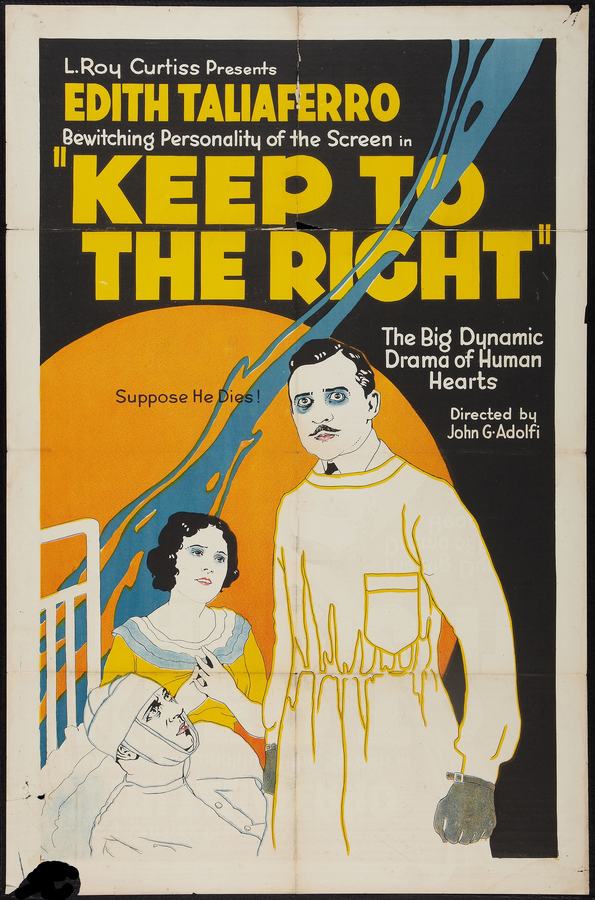
Stepping back into the nascent years of the 20th century, particularly to 1919, one encounters a cinematic landscape brimming with nascent potential, still grappling with the language of visual storytelling. Amidst this ferment, Robert Bronson Stockbridge's 'Who's Your Brother?' emerges not merely as a relic of a bygone era, but as a surprisingly prescient and emotionally charged drama that delves into the profound complexities of human nature, societal prejudice, and the often-agonizing choices demanded by love and duty. This silent film, a product of a world reeling from the Great War and awakening to the horrors of atrocities far from its shores, masterfully weaves a narrative that feels both historically specific and disquietingly timeless. It’s a film that demands more than a passive viewing; it invites introspection, challenging its audience to confront uncomfortable truths about bias, forgiveness, and the true meaning of brotherhood. Its narrative arc, while seemingly melodramatic by contemporary standards, functions as a powerful allegorical framework, allowing for an exploration of themes that resonate with remarkable clarity even today.
At the heart of 'Who's Your Brother?' lies Stephen Field, portrayed with a quiet gravitas by Gladden James. Field is a Jewish financier whose life, despite its material successes, remains profoundly marked by an unspeakable past – the massacre that claimed his wife and young son years prior. This personal tragedy, a wound that never truly heals, fuels his fervent dedication to philanthropic work at a community service center in the United States. His commitment is not merely an act of charity but a deeply personal response to suffering, a way to channel his grief into meaningful action. The film astutely connects this individual trauma to broader global anxieties, particularly when Stephen reads newspaper accounts detailing the horrific massacres of Jews and Armenians in Europe, along with widespread starvation. This narrative thread is particularly poignant given the historical context of its release, just after World War I and preceding the full horrors of the Holocaust, highlighting an early cinematic attempt to grapple with the specter of organized barbarity and humanitarian crises. It serves as a stark reminder that the seeds of prejudice and violence, once sown, can yield a harvest of unimaginable sorrow, and that the call for empathy and aid transcends national borders. Stephen's character embodies a universal truth: that personal pain can often be transmuted into a powerful catalyst for collective good, a testament to resilience in the face of overwhelming despair.
Into this world of quiet dedication steps Esther Field, Stephen's daughter, brought to life with compelling grace by Edith Taliaferro. Esther embodies a vibrant compassion, channeling her energies into entertaining returning soldiers at a canteen – a vital hub of post-war readjustment and fragile hope. It is within this bustling, emotionally charged environment that she encounters Robert Graham, played by Paul Panzer. Graham is a man physically scarred by war, his experiences manifesting as debilitating fainting spells, a palpable representation of the unseen wounds carried by so many veterans. His attraction to Esther is immediate and fervent, a desire for solace and connection in a world still fractured by conflict. However, this burgeoning romance is immediately complicated by the deeply entrenched anti-Semitism of Graham's father, a stark and uncomfortable mirror reflecting the pervasive prejudices of the era. The film doesn't shy away from presenting this bigotry as a tangible force, a corrosive element threatening to poison any genuine human connection.
Adding another layer of complexity to Esther’s emotional landscape is William Morris, a brilliant Jewish surgeon portrayed by Herbert Fortier. Morris represents not only professional excellence but also a quiet dignity that stands in stark contrast to Graham's volatile nature. Esther finds herself drawn to Morris's intellect and character, a connection that transcends mere physical attraction. Yet, in a testament to the unpredictable nature of the heart, or perhaps a lingering sense of duty or pity, she gently refuses Morris's marriage proposal. This refusal, rather than resolving the romantic tension, ignites a furious, almost pathological jealousy in Graham. His response is swift and ugly: a torrent of anti-Semitic invective hurled at Morris, exposing the raw, ugly underbelly of his character and his father's influence. This scene is particularly potent, highlighting how prejudice can be weaponized in moments of personal insecurity and perceived threat, turning a romantic rivalry into something far more sinister. The film, in this regard, shares a thematic thread with a picture like The Green-Eyed Monster, exploring the destructive power of envy, but 'Who's Your Brother?' elevates it by intertwining it with deeply rooted societal bigotry.
The narrative reaches its dramatic crescendo with a catastrophic turn of events. Robert Graham, succumbing to one of his debilitating fainting spells, loses control of his high-powered automobile. The vehicle careens over a precipice, leaving him trapped beneath its wreckage, his life hanging precariously in the balance. In a cruel twist of fate, the only physician capable of saving him is none other than William Morris, the very man he so viciously maligned. This presents Morris with an agonizing moral dilemma, a profound ethical quandary that forms the emotional core of the film. To operate, and potentially fail, would inevitably be interpreted by many as an act of jealous revenge, irrevocably compromising his professional integrity and perhaps even endangering his career. The weight of this decision is palpable, a silent struggle played out across his features, mirroring the internal conflicts of characters in films like Thou Shalt Not, where moral imperatives clash with personal desires and societal expectations.
It is Esther's impassioned plea that ultimately breaks through Morris's ethical paralysis. Her desperate appeal, born of love, compassion, and perhaps a nascent understanding of her own heart, compels him to act. In a profound act of self-abnegation, Morris consents to perform the perilous surgery, effectively sacrificing his own happiness and risking his reputation for the woman he loves and the man who, despite his failings, is still a human life in peril. This decision transcends mere professional obligation; it is an act of profound moral courage and an embodiment of the film's titular question – 'Who's Your Brother?' – suggesting a universal bond that demands compassion even for those who have shown none. The operation is, against all odds, a resounding success, proclaimed a surgical miracle. In the aftermath of this extraordinary display of skill and selflessness, Esther's heart finds its true direction. She chooses to marry Morris, the man whose actions spoke louder than any words, whose compassion eclipsed personal grievance, and whose miracle of healing extended beyond the physical to touch the very soul of humanity. This echoes the theme of ultimate sacrifice found in classic romances like Camille, albeit with a different resolution.
The success of 'Who's Your Brother?' hinges significantly on the caliber of its performances, a testament to the unique demands of silent cinema. Without spoken dialogue, actors were required to convey complex emotions, motivations, and character arcs through exaggerated facial expressions, precise body language, and dramatic gestures. Edith Taliaferro, as Esther, navigates a challenging emotional landscape, from her compassionate work at the canteen to her conflicted affections and ultimately, her decisive plea. Her portrayal manages to convey both vulnerability and an underlying strength, making her final choice feel earned and authentic. Paul Panzer's Robert Graham is a study in contrasts – initially charming, then revealing a darker, prejudiced core, and finally, a man brought to the brink of death. Panzer effectively communicates Graham's internal turmoil and his descent into jealousy, making his eventual rescue all the more poignant. Herbert Fortier's William Morris is perhaps the film's moral compass. Fortier imbues Morris with a quiet dignity, his internal struggle over whether to operate on Graham being one of the film's most powerful, albeit silent, sequences. The audience feels the weight of his ethical dilemma through his posture, his gaze, and the subtle shifts in his demeanor. Gladden James, as Stephen Field, anchors the film with a profound sense of loss and philanthropic purpose, his reflective moments providing crucial thematic depth.
Beyond individual performances, the film's direction, typical of its era, relies heavily on visual cues and intertitles to advance the narrative. While specific directorial choices aren't as elaborately documented as in later eras, the effectiveness of the storytelling lies in its clarity and emotional impact. The use of close-ups during moments of intense emotion – Morris's contemplation, Esther's pleading – would have been critical in drawing the audience into the characters' internal worlds. The contrast between the bustling canteen and the quiet intensity of the operating room, or the dramatic sweep of Graham's car going over the precipice, showcases an understanding of visual dynamics essential for engaging a silent audience. The cinematography, while likely straightforward by modern standards, would have focused on clear compositions and evocative lighting to emphasize mood and character. This reliance on visual storytelling and the actors' ability to project emotion without words often makes silent films incredibly immersive, demanding a different kind of engagement from the viewer, one that prioritizes observation and interpretation over auditory cues. The film, in its narrative construction, shares a certain dramatic directness with tales of moral fortitude and challenging decisions, much like The Pride of Jennico, where character is tested under duress.
'Who's Your Brother?' transcends its period setting to offer a remarkably potent commentary on social issues that, regrettably, remain pertinent today. The film's unflinching portrayal of anti-Semitism, particularly through Graham's father and Graham's own outburst, serves as a stark reminder of the insidious nature of prejudice. It illustrates how deeply ingrained biases can fuel hatred, even within seemingly civilized societies, and how easily they can erupt under pressure. The context of European massacres, hinted at in Stephen Field's newspaper reading, adds a chilling layer of prescience, foreshadowing the darker chapters of the 20th century. This aspect of the film makes it a valuable historical document, reflecting early anxieties about global conflict and humanitarian responsibility, much like other socially conscious films of the era, such as The American Way, which might have explored national identity and values.
Furthermore, the film's exploration of war's aftermath – through Robert Graham's physical and psychological wounds, and Esther's work with returning soldiers – speaks to the enduring trauma of conflict. It acknowledges that victory on the battlefield often comes with a heavy price for individuals and communities, a theme that continues to resonate in contemporary cinema. The central moral dilemma faced by William Morris is a profound meditation on ethics, forgiveness, and the capacity for self-sacrifice. It challenges the audience to consider whether one can truly extend compassion to those who have wronged them, and whether the pursuit of a higher moral good justifies personal cost. This narrative choice elevates the film from a simple melodrama to a significant exploration of human virtue and the redemptive power of empathy. Its message, that true brotherhood (or sisterhood) extends beyond tribal loyalties and demands a universal humanitarian response, is as vital now as it was a century ago. It argues that our shared humanity should always supersede our differences, an ideal that, while often aspirational, remains profoundly necessary.
'Who's Your Brother?' stands as a compelling example of early cinema's ability to tackle complex, sensitive subjects with nuance and emotional depth. Its narrative, while rooted in the dramatic conventions of its time, offers a powerful lens through which to examine enduring human struggles: the corrosive nature of prejudice, the healing power of philanthropy, the sacrifices demanded by love, and the profound ethical choices that define our character. The film's legacy lies not just in its historical significance as a silent era production, but in its timeless message. It reminds us that empathy and moral courage are not easy virtues, especially when confronted with hatred and personal grievance, but they are ultimately the forces that bind us and elevate us. For those willing to engage with the unique artistry of silent film, 'Who's Your Brother?' offers a rich, thought-provoking experience, a testament to the enduring power of storytelling to illuminate the human condition across generations.
IMDb —
1913
Community
Log in to comment.