DbcultAccessing Vault...
Cult Review
Senior Film Conservator
From the moment the flickering frames of Midinettes begin to dance across the screen, a palpable sense of early 20th-century Parisian vitality, tinged with the melancholic undertones of societal stratification, immediately envelops the viewer. Louis Mercanton and René Hervil, with a directorial synergy that is both precise and profoundly empathetic, craft a narrative that transcends its silent origins, speaking volumes about the human condition, particularly the often-unseen struggles and triumphs of young working women in a city synonymous with glamour yet underscored by relentless toil. This is not merely a period piece; it's a timeless exploration of aspiration, disillusionment, and the steadfast spirit required to navigate a world that offers both tantalizing promises and harsh realities.
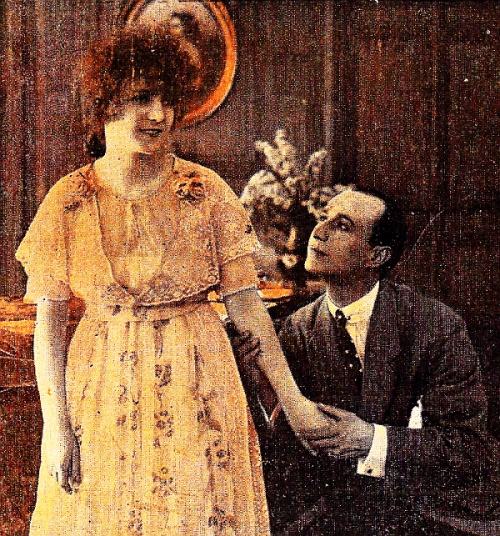
The film opens in the bustling heart of a grand couture house, a veritable hive of activity where the eponymous midinettes — seamstresses and shopgirls — dedicate their days to meticulously crafting garments for the city's elite. Here, amidst the swish of silks and the rhythmic hum of sewing machines, we meet Colette, brought to life with an exquisite blend of innocence and burgeoning resilience by Suzanne Grandais. Her portrayal is a masterclass in silent film acting, conveying a universe of emotion with just a glance, a subtle shift in posture, or the delicate tremble of her hands. Colette dreams beyond the confines of her humble station, her eyes often straying towards the grand boulevards visible from the atelier window, yearning for a life of beauty and artistic fulfillment that seems perpetually just out of reach.
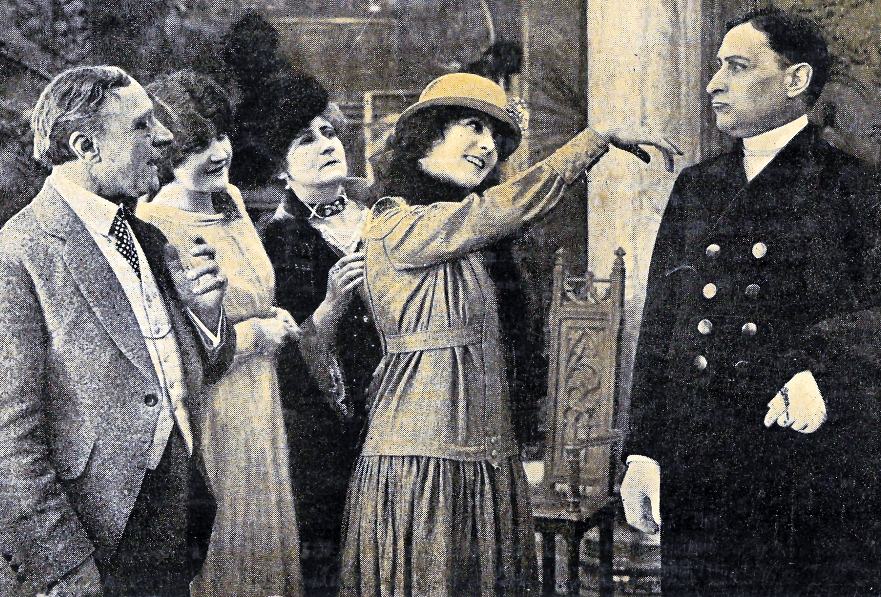
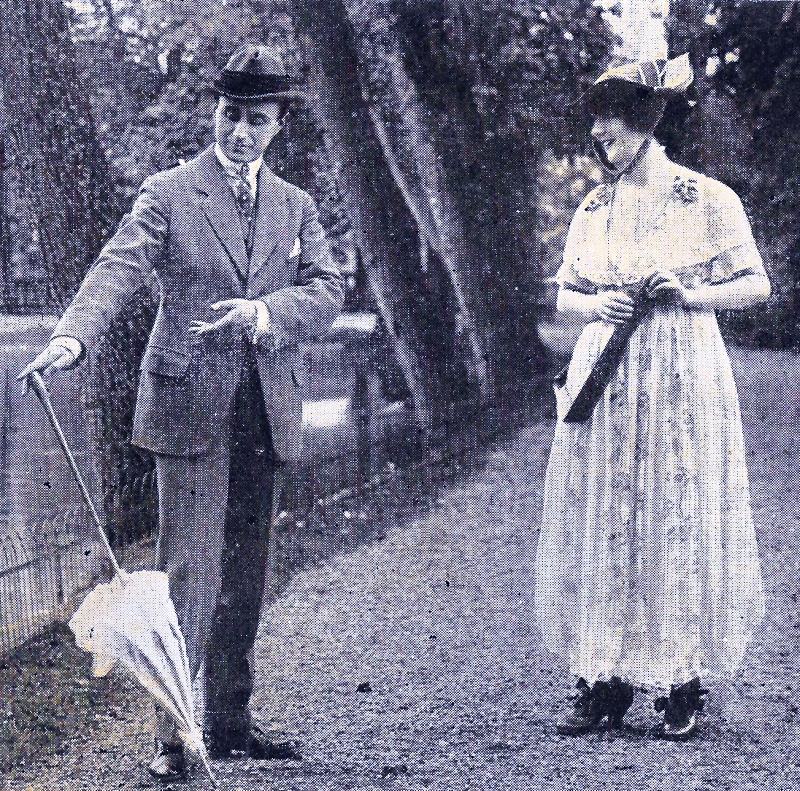
Her world takes an unexpected turn with the introduction of Jean, a struggling artist whose bohemian charm, embodied by Jean Peyrière, is both captivating and, ultimately, a source of profound complexity. Peyrière imbues Jean with an alluring artistic temperament, a man whose passion for his craft is undeniable, yet whose practical resolve often falters under pressure. The initial blossoming of their romance, depicted through tender, elegantly composed scenes of shared glances and stolen moments in the Parisian parks, feels genuinely earned. It’s a classic tale of two souls from disparate worlds finding common ground in their shared artistic sensibilities, a narrative trope that, in the hands of Mercanton and Hervil, feels fresh and deeply resonant. The juxtaposition of Colette's meticulous, tangible craft with Jean's more abstract, often precarious artistic pursuits forms a fascinating thematic backbone, highlighting different forms of creation and their respective societal values.
The ensemble cast surrounding Colette is equally compelling, each character serving as a vital thread in the film's rich tapestry. Sarah Rafale, as the pragmatic and fiercely protective Geneviève, offers a grounding presence. Her warnings to Colette about the fickle nature of men, particularly those from the artistic circles, are delivered with a world-weary wisdom that speaks volumes about her own experiences. Geneviève's loyalty is unwavering, a beacon of true friendship in a city that often feels indifferent. On the other hand, Marie-Ange Fériel's Babette, with her ambitious glint and calculated charm, represents a different path for a midinette – one of strategic social climbing and leveraging beauty for advantage. The dynamic between these three women provides a nuanced exploration of female solidarity, rivalry, and differing approaches to survival in a patriarchal society. Their interactions, though wordless, paint a vivid picture of camaraderie and the unspoken bonds forged in shared adversity.
The film's visual language is consistently stunning. The cinematography, a testament to the era's burgeoning artistry, captures the duality of Paris with remarkable skill. We see the grandeur of its boulevards and opulent salons, often bathed in a soft, romantic light, contrasting sharply with the grittier, more shadowed backstreets and the cramped, industrious interiors of the ateliers. This visual dichotomy serves to underscore the class divide inherent in the narrative. The costumes, naturally, play a pivotal role, not just as period-appropriate attire but as symbols of aspiration, identity, and societal expectation. Colette's simple, well-maintained dresses speak of her diligence and humility, while the extravagant gowns she helps create for others represent the dreams she harbors and the world she yearns to enter.
As the plot thickens, Jean's artistic struggles lead him into the orbit of Madame Dubois, portrayed with a chilling blend of superficial grace and subtle menace by Berthe Jalabert. Dubois, a wealthy patroness, initially appears as a benevolent figure, offering Jean financial support and artistic opportunities. However, her motives are quickly revealed to be less than altruistic, her patronage laced with a possessive desire that threatens to ensnare Jean and, by extension, devastate Colette. This segment of the film deftly explores themes of power dynamics, artistic integrity versus commercial compromise, and the vulnerability of those dependent on the whims of the wealthy. Anthony Gildès and Marcel Marquet, in their supporting roles, further flesh out the social landscape, adding layers of bureaucratic formality and societal judgment that Colette must navigate.
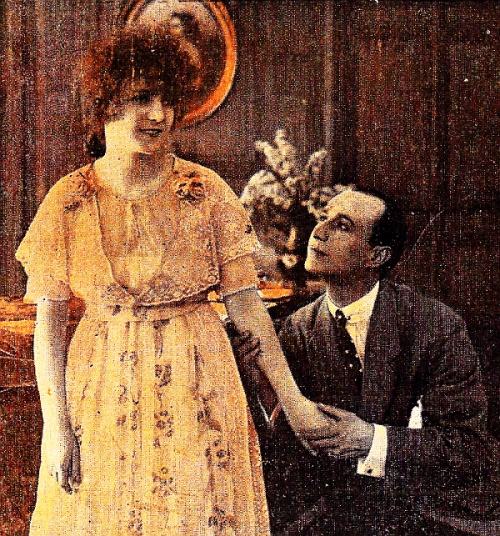
The narrative’s strength lies in its refusal to offer simplistic resolutions. Colette's journey is one of gradual, painful disillusionment. The romantic ideal she held for Jean, and perhaps for the 'artistic life' itself, slowly unravels as she witnesses his compromises and the ease with which he is swayed by Madame Dubois’s influence. This isn't a sudden, melodramatic betrayal, but a more insidious erosion of trust and respect, making her eventual realization all the more poignant. It's a testament to the writers, Louis Mercanton and René Hervil, that they allow Colette to experience this complex emotional arc, making her transformation from a hopeful ingenue to a woman of quiet strength feel profoundly authentic. Her sorrow is not one of weakness, but of awakening.
The climax of Midinettes is set against the backdrop of a dazzling fashion show, an event that perfectly encapsulates the film’s central conflict between illusion and reality. Here, the fruits of the midinettes' labor are paraded before an admiring, oblivious audience, while behind the scenes, personal dramas unfold. It's a brilliant narrative device, allowing for a concentrated moment where Colette must make a definitive choice about her future. The tension is palpable, not through overt action, but through the subtle interplay of gazes, the unspoken words, and the weight of past events. Suzanne Grandais, in these crucial scenes, delivers a performance that is both heartbreaking and empowering, her eyes conveying a newfound resolve that transcends the immediate pain of her situation.
In terms of thematic resonance, Midinettes shares a spiritual kinship with other films that explore the struggles of women navigating challenging societal landscapes. One might draw parallels, for instance, with the stark realities faced by the protagonist in The Foundling, where a young woman's journey through adversity similarly tests her resilience and self-worth. Both films, despite their differing specific plots, delve into the profound strength required for women to forge their own paths in eras that often sought to constrain them. Similarly, the class dynamics and the allure of a seemingly better life, often revealed to be hollow, echo sentiments found in works like Der Lumpenbaron, which also examines the precariousness of social standing and the illusions of grandeur. While Midinettes is distinctly Parisian in its flavor, its underlying messages about human ambition, the price of integrity, and the search for authentic connection are universal.
The film’s ending, rather than offering a simplistic 'happily ever after,' opts for a more mature and realistic conclusion. Colette doesn't necessarily achieve all her initial dreams in the fairytale sense, but she gains something far more valuable: self-awareness and an unwavering sense of her own dignity. She learns that true fulfillment comes not from external validation or romantic ideals, but from inner strength and the courage to make difficult choices. This nuanced resolution elevates Midinettes beyond mere melodrama, cementing its status as a thoughtful and deeply affecting work of early cinema.
The direction by Mercanton and Hervil is remarkable for its subtlety and attention to detail. They understand that in silent film, every gesture, every facial expression, and every compositional choice must convey meaning. There's a particular elegance in their staging of crowd scenes, where individual stories are allowed to unfold within the larger tableau of Parisian life. The use of light and shadow is particularly effective in establishing mood, with the bright, optimistic hues of Colette's early romance gradually giving way to the more somber, reflective tones of her disillusionment. The film avoids overt theatrics, instead relying on a quiet intensity that draws the viewer into Colette's emotional world.
Ultimately, Midinettes is more than just a historical curiosity; it is a vibrant, emotionally rich piece of cinema that speaks to enduring human experiences. It celebrates the often-unsung resilience of working women, critiques the superficiality of certain societal circles, and champions the quiet power of self-discovery. For cinephiles and anyone interested in the social history of the early 20th century, this film offers a compelling and beautifully crafted window into a bygone era, yet its themes remain strikingly pertinent today. It reminds us that even in the most glittering of cities, true value often lies not in what one wears or whom one knows, but in the integrity of one’s spirit and the courage to live authentically.
The performances, particularly that of Suzanne Grandais, are a testament to the power of silent acting. Her ability to convey complex emotions without uttering a single word is mesmerizing, cementing her as a talent whose work deserves far wider recognition. The chemistry between her and Jean Peyrière, even as their characters navigate increasingly fraught emotional territory, is palpable, adding a layer of tragic beauty to their ill-fated romance. The supporting players, including Brodsky and Jane Danjou, contribute significantly to the film's immersive atmosphere, each painting their characters with distinct, memorable strokes that enhance the overall realism and emotional depth of the narrative.
In an era often defined by grand spectacles, Mercanton and Hervil chose instead to focus on the intimate, the personal, and the profoundly human. Midinettes is a film that lingers long after the final frame, prompting reflection on the choices we make, the illusions we chase, and the quiet dignity found in forging one's own path amidst the clamor of the world. It’s a remarkable achievement in silent cinema, a truly illuminating experience that continues to resonate with timeless relevance.

IMDb 5.1
1925
Community
Log in to comment.