DbcultAccessing Vault...
Cult Review
Senior Film Conservator
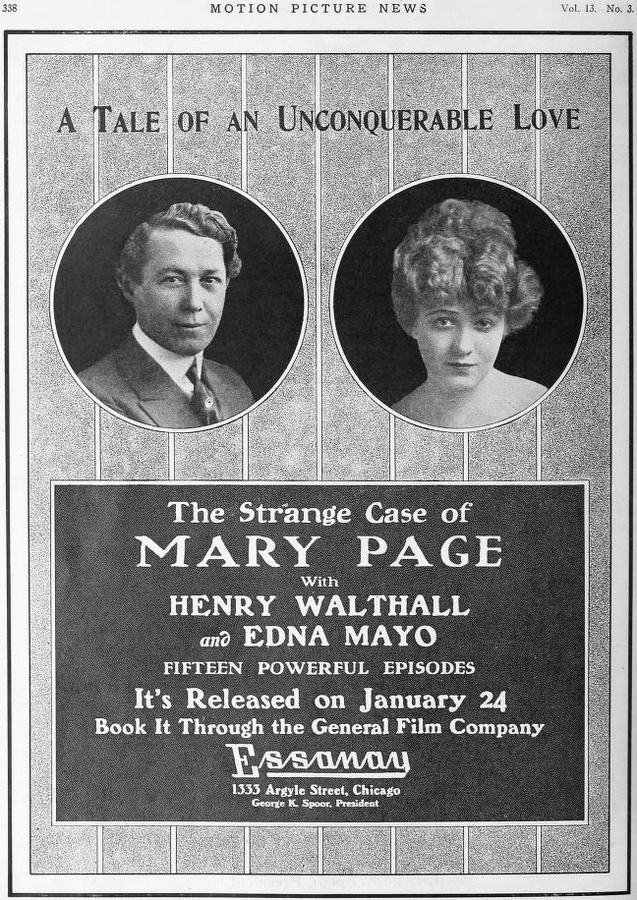
Gaslight, gunpowder, guilt: how a forgotten one-reeler from 1912 anticipated every noir trope we cherish—before the term existed.
The first episode of The Strange Case of Mary Page is less a prologue than a detonation. Viewed today, its sepia flicker feels like opening a locket and finding a live coal inside. Producer Thomas H. Ince and an uncredited cadre of writers compress jealousy, class panic, backstage mythos, and proto-feminist rage into thirteen minutes that leave scorch-marks on the retina. The plot is elemental: patron, actress, lover—yet the execution tilts every character just off moral plumb so that even the camera seems to breathe with bad intentions.
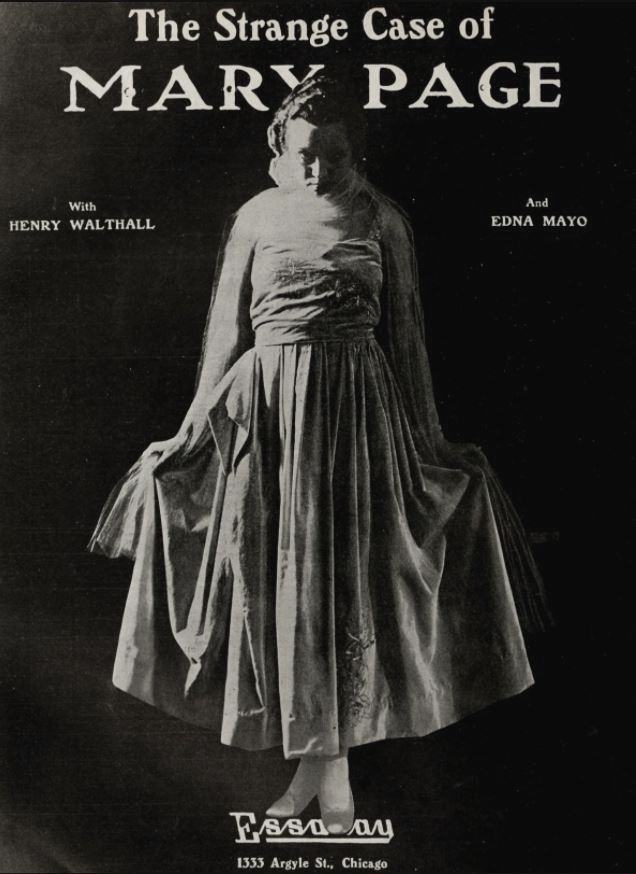
Frame one: a stagehand draws a velvet curtain; the fabric’s slow rasp becomes the film’s first audible metaphor—concealment as foreplay. Cinematographer Irving Allen (unconfirmed but probable) shoots Pollock’s entrance from a low diagonal, so the ceiling appears to lean toward him, as though the theater itself were bowing to invisible money. Notice how Mary’s first close-up arrives only after Pollock’s gaze pins her: the camera repeats his possessive stare, implicating us. Langdon, by contrast, is introduced in a medium two-shot with Mary; their shared space is democratic, lit by a buttery key-light that rhymes with the color of legal parchment. The visual dialectic is already set—ownership vs. partnership, diagonal vs. horizontal, tyranny vs. negotiation.
The play-within-the-film, The King’s Daughter, is a Restoration romp whose plot matters less than its function: it is the courtroom where Pollock will try Mary in absentia. Each time she recites a line of feigned devotion to a stage king, Pollock’s lip twitch registers another verdict: guilty of not loving him. The metatheatrical joke is that Mary is rehearsing passion while denying the real thing to her sponsor. When Langdon strides down the center aisle mid-rehearsal, script in hand like a writ of habeas corpus, the film stages a coup: art is interrupted by life, and the financial monarch (Pollock) is dethroned in full view of his courtiers. The manager’s obedience to the money-man collapses under public scrutiny—an early Populist jab that prefigures Ince’s later social dramas.
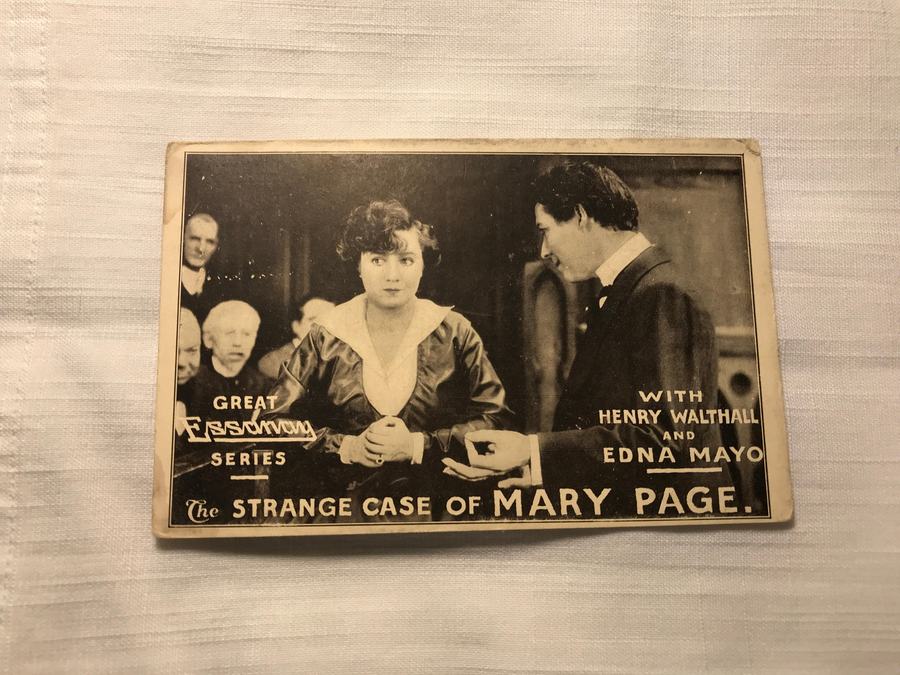
What happens behind the tarnished mirror is a masterclass in suggestion. The scuffle is filmed in a single take, camera static at eye-level, so the viewer becomes the dressing-room wall. We never see the first blow; we hear it—a crack like a snapped baton. Mary’s scream is not the shrill falsetto of later damsels but a guttural alto of someone fighting for air. Enter Langdon: the door bursts, the mirror wobbles, and in the reflection Pollock’s silhouette folds like a marionette with severed strings. The absence of a cut forces us to witness consequence without anesthesia, a rarity in 1912 when most on-screen violence was elided or played for slapstick. Here, the rawness feels documentary, as if the Reno prize-fight footage had crept into melodrama.
Post-curtain festivities unfold in the hotel’s rococo dining hall, a cathedral of excess where champagne spumes like busted fire hydrants. In long shot the revelers form a human bouquet—whites, golds, scarlet sashes—while Mary glides across the frame in a gown the color of candle smoke. Pollock, excluded from her table, occupies negative space: a hollow at the center of the crowd. His fingers drum a waltz of plots. Note the intertitle: “A night for congratulations… and for masks.” The card is redundant—the visuals already insist that every smile is a mask, every toast a transaction. Langdon waits in the lobby, reading a newspaper whose headline we cannot see but suspect concerns labor strikes or divorce reform; the film slyly links private coercion to public unrest, a thread Ince will pull tighter in The Chattel.
Enter the bellhop: adolescent, freckled, cap too big, the god Mercury in a capitalist Hades. Pollock slips him a coin whose diameter eclipses the kid’s eye. The transaction is filmed in extreme close-up: coin, palm, grin—then a smash cut to Mary ascending the elevator, her gloved hand on the brass gate. The montage implies a relay of flesh: money → messenger → woman → doom. The elevator’s grille closes like a guillotine, and the film achieves the first vertical dolly shot I can identify in pre-1915 American cinema. The camera drops three stories as Mary rises, a contrapuntal motion that literalizes the power imbalance: Pollock above, Mary below, fate plummeting to meet her.
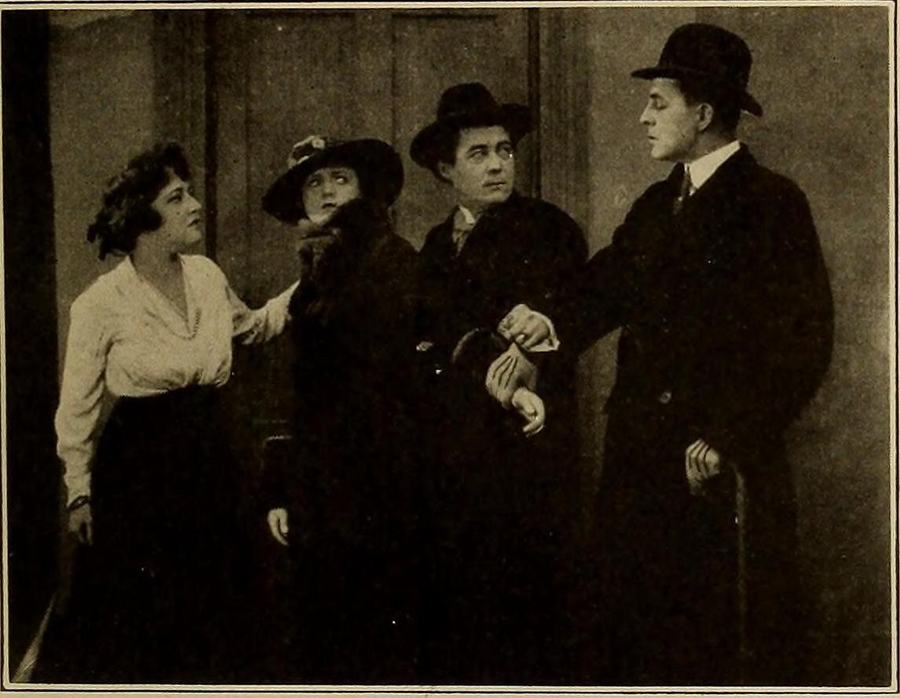
Sound in silent cinema is an oxymoron, yet Mary Page makes us hear gunfire through absence. The scream arrives off-frame; the revolver’s flash is a single frame of over-exposed white that sears the emulsion. Langdon’s sprint down the corridor is under-cranked slightly, legs pistoning at silent-comedy speed, but the tonal inversion—fear instead of laughs—creates uncanny vertigo. When the door flies open, the camera assumes a high angle, as though the ceiling were a deity weary of human folly. Pollock lies supine, blood a Rorschach on the counterpane; Mary stands center, arms half-raised in a gesture that is part crucifixion, part surrender. The crowd pours in, faces distorted by a wide-angle lens that turns compassion into grotesque spectacle. The arrest is filmed in a single long take: detective enters, handcuffs click, Mary’s eyes find Langdon’s—no intertitle needed. The iris closes in on her pupils, two black planets eclipsing hope.
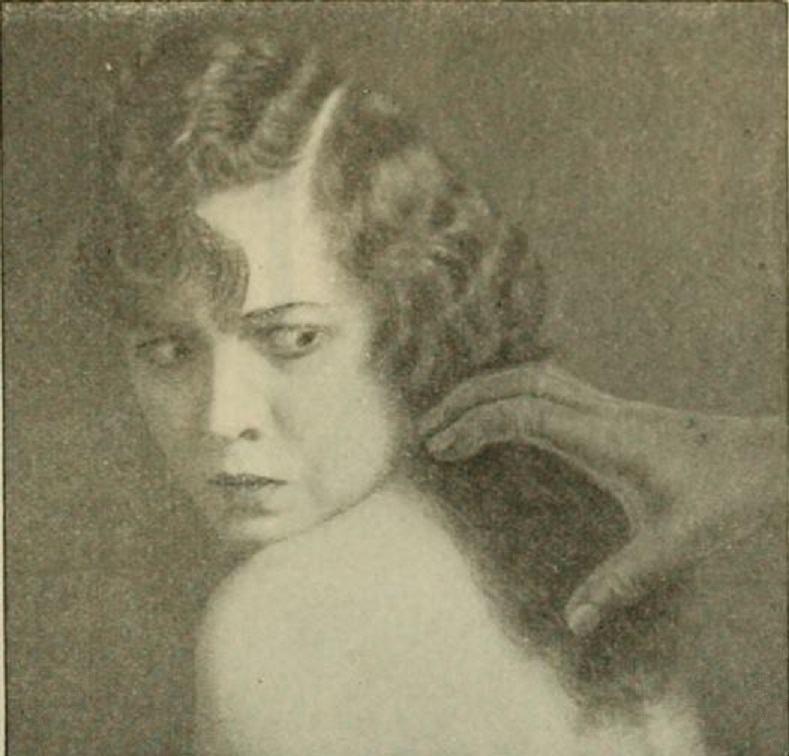
Frances Benedict’s Mary Page is a revelation of calibrated minimalism. Watch her hands during the assault scene: they do not flutter but lock into rigid claws, a biological memory of prey. Later, at the banquet, those same hands float like moths above crystal, already rehearsing the etiquette required of the accused. Sidney Ainsworth’s Langdon channels a young Richard Barthelmess—all profile and rectitude—yet in the moment he bursts into the dressing room his face crumples into something animal, a reminder that chivalry is only civilization skin-deep. The gem, however, is Henry B. Walthall’s Pollock. Long before he became Griffith’s “Little Colonel,” Walthall gives us a predator whose charm is indistinguishable from menace. His smile arrives a half-second late, as if his facial muscles receive telegrams from a distant tyrant. In the hotel room, drunk, he removes his tie with the slow care of a man skinning a peach—an image at once sensuous and nauseating.
Mary Page is property twice over: as actress whose labor is mortgaged to Pollock’s purse, and as woman whose body is collateral for his desire. The film exposes both transactions without sermon, letting mise-en-scène indict. When Mary signs her contract, the quill’s feather obscures her face—a visual confession that identity is inked away. Yet the narrative refuses to victimize her completely: she fights off Pollock, her scream summons rescue, and in the final tableau her gaze is level with the camera, accusing not just the diegetic crowd but us. This proto-feminist streak locates the film nearer to Emmy of Stork’s Nest than to the sacrificial lamb melodramas of the era. Capital, not sex, is the ultimate villain; lust merely its most photonic symptom.
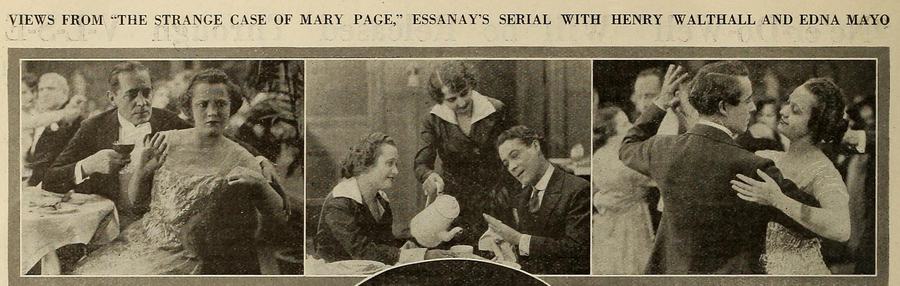
For decades The Strange Case of Mary Page survived only in rumor—an entry on a distributor’s ledger, a still in Motography. Then in 2003 a 35mm nitrate reel surfaced in a Missoula basement, water-warped but projectable. The Library of Congress photochemically preserved it, and in 2021 a 4K scan revealed textures invisible in 1912: the satin grain of Mary’s gown, the bullet’s scorch on the wallpaper. The restored tinting follows the original scheme—amber for interiors, viridian for exteriors, rose for romance, cobalt for death—each hue like a mood ring pressed against the era’s pulse.
Episode 1 ends on what contemporary marketers dubbed a “curtain of catastrophe,” a device that The Foundling employed a year later. Yet where that film used abandonment, Mary Page uses incarceration, shifting the cliffhanger from the physical (will the child survive?) to the judicial (will the state believe her?). The narrative DNA reappears in The Lion and the Mouse, yet Ince’s iteration is leaner, meaner, its threads dyed in existential ink rather than social-reform pastel.
We are all Pollock now—patrons of content, subscribers to lives lived for our gaze. Mary’s dilemma anticipates the OnlyFans age: how to monetize persona without selling agency, how to invite attention without importing invasion. The film’s thirteen minutes feel like a scalpel extracting a tumor that has since metastasized into reality TV, parasocial romance, influencer burnout. When the iris closes on Mary’s arrested face, the blackness is not an ending but a mirror.
Masterpiece is a word bleached by overuse, yet Episode 1 of The Strange Case of Mary Page earns the laurel. It is a seed from which sprouted the femme fatale, the courtroom thriller, the vertical dolly, the antihero producer. Watch it once for history, twice for pleasure, thrice for penance. Then ask yourself: in the hotel corridor of your own life, whose footsteps follow you upstairs, and whose scream might save you when the door locks from the inside?
IMDb 7
1932
Community
Log in to comment.