DbcultAccessing Vault...
Cult Review
Senior Film Conservator
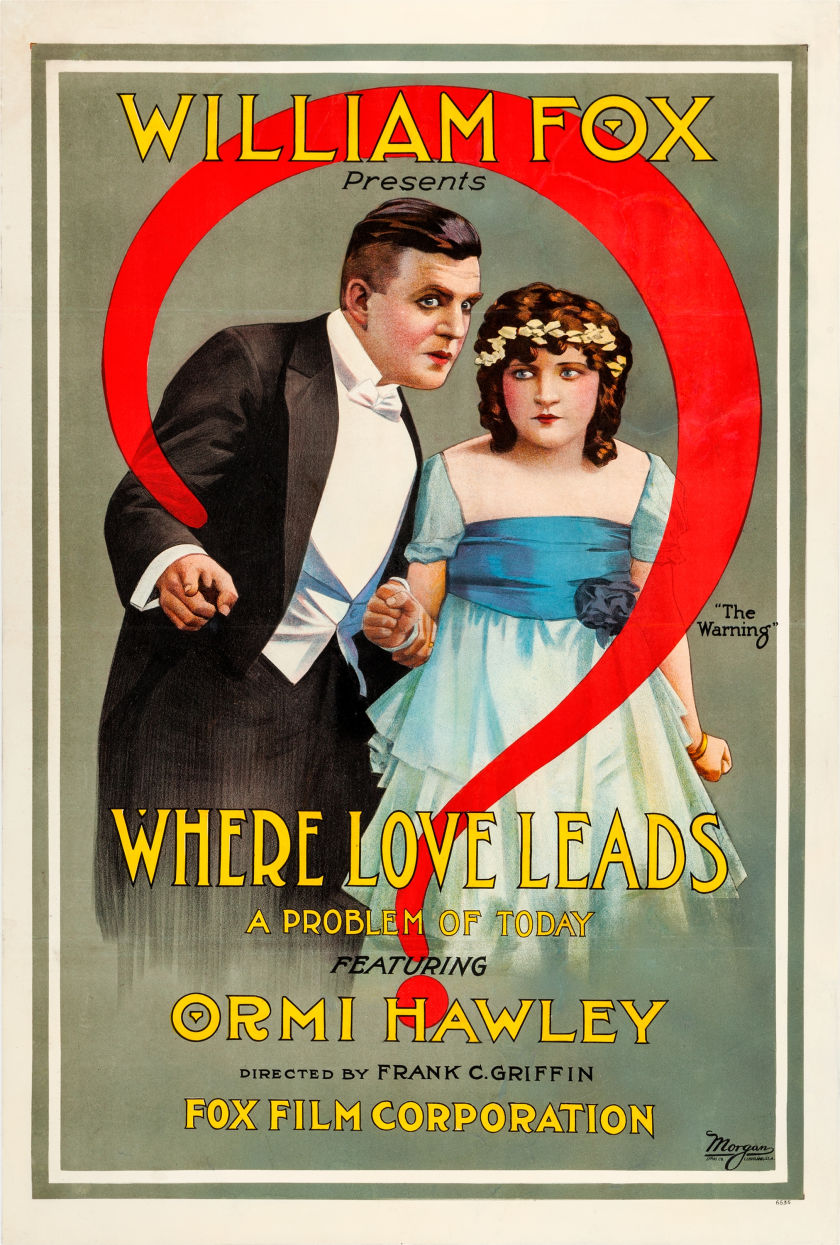
Stepping back into the cinematic landscape of 1916, one encounters Where Love Leads, a film that, despite the passage of more than a century, still manages to pluck at the heartstrings with its earnest portrayal of devotion, societal constraints, and the unwavering pursuit of justice. Frank Griffin, the visionary writer behind this melodrama, crafts a narrative that, while perhaps familiar in its foundational elements, elevates itself through a compelling sincerity and a cast that imbues their roles with a palpable humanity. This isn't just a relic; it's a vibrant testament to the storytelling power of the silent film era, a time when gestures, expressions, and the sheer force of visual composition carried the entire weight of emotion.
At its core, Where Love Leads is a study in contrasts, meticulously painted across the canvas of a burgeoning modern world still clinging to rigid social hierarchies. We are introduced to Eleanor Vance, brought to life with exquisite nuance by Ilean Hume. Hume’s performance is a masterclass in silent film acting, her expressive eyes and delicate yet resolute gestures conveying a spectrum of emotions—from the quiet despair of her constrained existence under the thumb of her Uncle Alistair, to the luminous joy of nascent love, and finally, the steely resolve born of adversity. She embodies the quintessential heroine of the era: pure of heart, yet possessing an inner strength that belies her fragile exterior. Her plight, an orphaned ward dictated by the whims of a calculating guardian, immediately garners audience sympathy.
Royal Byron, as the passionate sculptor Julian Thorne, provides the perfect counterpoint to Hume's Eleanor. Byron portrays Julian with a blend of artistic idealism and a raw, untamed spirit. His struggles are not merely financial; they are an artist's battle against a world that often values pedigree over talent, wealth over worth. Their romance, blossoming in the secluded sanctity of Julian’s studio, feels authentic, a sanctuary from the gilded cage Eleanor inhabits. The cinematography here often emphasizes this dichotomy: the stark, creative energy of Julian's world versus the sterile, ornate opulence of Alistair's estate. The use of light and shadow, a hallmark of early cinema, beautifully underscores their stolen moments, casting them in a romantic glow that contrasts sharply with the gloom of their separation.
Albert Gran, as Uncle Alistair, delivers a performance that is chilling in its quiet malevolence. He isn't a mustache-twirling villain in the caricatured sense, but rather a man driven by avarice and an unyielding devotion to social climbing. Gran's Alistair is insidious, his actions cloaked in a veneer of paternal concern, making his betrayals all the more impactful. His manipulation of Eleanor, pushing her towards the odious Reginald Sterling (Herbert Evans), is a painful reminder of how societal expectations could crush individual desires. Evans, in turn, plays Reginald with just the right amount of oily condescension, making him a truly detestable suitor whose sole appeal lies in his financial prospects. The audience yearns for Eleanor's escape from this suffocating arrangement.
Ormi Hawley, in her role as Martha, Eleanor's confidante and domestic servant, provides a much-needed warmth and moral compass. Her quiet loyalty and unspoken understanding of Eleanor's plight offer a glimpse into the hidden lives and sympathies within the rigid social structures of the time. Similarly, Charles Craig's portrayal of Mr. Finch, the initially cynical art dealer, adds another layer to the narrative, representing the often-unforgiving world of commerce and art, but ultimately showing a capacity for redemption and recognition of true talent. Even minor roles, like Hayden Stevenson's brief but impactful appearance, contribute to the tapestry of this intricate drama, each character serving a distinct purpose in propelling the plot forward and deepening the thematic resonance.
Frank Griffin’s screenplay for Where Love Leads is a masterclass in the construction of a compelling melodrama. It’s a story that understands the power of escalating stakes, personal sacrifice, and the eventual triumph of virtue. Griffin masterfully builds tension, particularly in the meticulous orchestration of Julian's framing and Eleanor's forced engagement. The intertitles, crucial in silent cinema, are used judiciously, providing necessary exposition without ever feeling intrusive, allowing the visual storytelling to take precedence. The pacing, though deliberate by modern standards, is perfectly calibrated for its era, allowing moments of emotional intensity to fully register with the audience.
The film delves deep into several enduring themes. Firstly, the pervasive issue of social class and its indelible impact on personal freedom. Eleanor and Julian’s love is deemed 'unsuitable' not because of a lack of character or affection, but solely due to Julian’s economic standing. This societal barrier, enforced by Alistair, forms the central conflict, reflecting a widespread concern of the early 20th century. One might draw parallels to the class struggles depicted in films like The Woman, where societal expectations often dictate individual destinies, or even the stark economic realities faced by characters in Strike, albeit in a different context. Here, however, the focus is intensely personal, demonstrating how systemic issues manifest in individual suffering.
Secondly, the film explores the theme of sacrifice and redemption. Eleanor's agonizing decision to accept Reginald's proposal, believing it will somehow protect Julian, is a powerful act of selflessness, albeit one born of manipulation. Julian's subsequent journey from despair to determined vindication, culminating in his dramatic intervention, is a classic redemptive arc. This narrative thread resonates with the moral complexities often found in stories like John Needham's Double, where characters must navigate difficult choices with far-reaching consequences, or the personal battles for integrity seen in The Seed of the Fathers.
Finally, the unwavering power of love serves as the film's guiding principle, living up to its very title. It is love that spurs Eleanor's sacrifice, and it is love that fuels Julian's relentless pursuit of truth. Even when hope seems lost, the underlying current of their affection persists, ultimately guiding them through the tempest of adversity. This enduring quality of love, able to transcend obstacles, is a timeless cinematic motif, seen in countless romantic dramas, and Where Love Leads articulates it with a conviction that feels remarkably fresh.
For a film from 1916, the visual grammar of Where Love Leads is remarkably sophisticated. The compositions are often striking, utilizing depth and framing to emphasize emotional states or power dynamics. Consider the scenes within Uncle Alistair's mansion: the wide shots often dwarf Eleanor, physically representing her diminished agency, while close-ups on Hume's face convey her inner turmoil with powerful clarity. Conversely, the more intimate shots in Julian's studio feel open and liberating, despite the confined space, highlighting the freedom they find in each other's presence.
The use of set design and costumes, while functional, also serves to underscore the narrative's themes. The stark opulence of the wealthy homes versus the humble, yet creatively rich, environment of Julian's studio speaks volumes without a single word. The costumes worn by Eleanor, initially restrictive and formal, gradually reflect her journey, culminating in the symbolic white of her wedding dress, which becomes a poignant symbol of her coerced fate before true love intervenes. The overall aesthetic contributes significantly to the mood and atmosphere, immersing the viewer in the era's sensibilities.
Moreover, the film’s climax, the dramatic interruption of the wedding, is executed with a flair that would become a staple of cinematic melodrama. The tension is palpable, built through quick cuts between Julian's desperate rush and Eleanor's resigned walk down the aisle. The ensuing confrontation, where Alistair's deceit is exposed, is handled with an impactful blend of heightened emotion and narrative clarity, ensuring the audience feels the full weight of the revelation. This scene, in particular, showcases the effective use of dramatic timing, a crucial element in silent filmmaking, and echoes the dramatic revelations seen in films like The Diamond from the Sky or Secret Love, where long-held secrets finally come to light with transformative power.
While Where Love Leads may not be as widely discussed as some of its more famous contemporaries, it remains a vital piece of cinematic history, offering insights into the popular entertainment and social anxieties of its time. It’s a film that, through its unvarnished emotionality, reminds us of the universal nature of human desires: the yearning for connection, the struggle against injustice, and the hope for a love that conquers all. The performances, particularly from Hume and Byron, transcend the limitations of the medium, speaking directly to the viewer's heart. Their silent pleas, their joyous glances, and their anguished expressions resonate with an authenticity that defies the decades.
For those interested in the evolution of storytelling, the craft of early cinema, or simply a compelling human drama, Where Love Leads is a rewarding watch. It stands as a testament to Frank Griffin's skill as a writer and the enduring power of classic melodrama. It serves as a valuable comparison point for understanding the narrative structures and character archetypes that would continue to define cinema for decades. One might compare its earnestness to the heartfelt narratives of In Mizzoura or the powerful emotional arcs found in The Kiss, showcasing the deep emotional resonance achievable even without spoken dialogue.
In a world saturated with complex narratives and cutting-edge special effects, there is a profound beauty in the simplicity and sincerity of films like Where Love Leads. It strips away the superfluous, focusing solely on the raw human experience. It reminds us that at the heart of every great story, regardless of its technological trappings, lies the compelling drama of human connection, conflict, and ultimately, the triumph of the spirit. The film, in its quiet grandeur, asks us to consider where our own loves might lead us, through trials and triumphs, towards our truest selves. It’s a compelling argument for the preservation and appreciation of these early cinematic treasures, for they continue to offer lessons in both art and humanity.
The journey of Eleanor and Julian, orchestrated by Griffin and brought to life by a dedicated cast, is more than just a period piece; it’s a universal tale of resilience. The film's ability to evoke such strong emotional responses without a single spoken word is a powerful reminder of the unique artistry of silent cinema. It’s a world where a glance can convey volumes, a touch can speak of endless yearning, and a dramatic entrance can shatter a meticulously constructed lie. The sheer expressive force of actors like Ilean Hume and Royal Byron, navigating these emotional landscapes, is what truly elevates Where Love Leads from mere historical artifact to a genuinely engaging piece of storytelling. Their performances are a beacon, illuminating the depths of human feeling against a backdrop of rigid social norms and personal betrayal.
Concluding thoughts on Where Love Leads invariably circle back to its enduring message: that authentic love, when pursued with courage and conviction, possesses an almost alchemical power to transform circumstances and expose falsehoods. It’s a narrative that, despite its melodramatic flourishes, feels deeply resonant, reminding us that the human heart’s capacity for both cruelty and compassion remains unchanged across generations. This is a film that deserves to be rediscovered, not just as a historical curiosity, but as a vibrant, emotionally charged drama that continues to speak to the timeless struggle for happiness and integrity. It is a cinematic experience that, much like the path of true love, is ultimately rewarding and profoundly moving.
IMDb 5.5
1927
Community
Log in to comment.